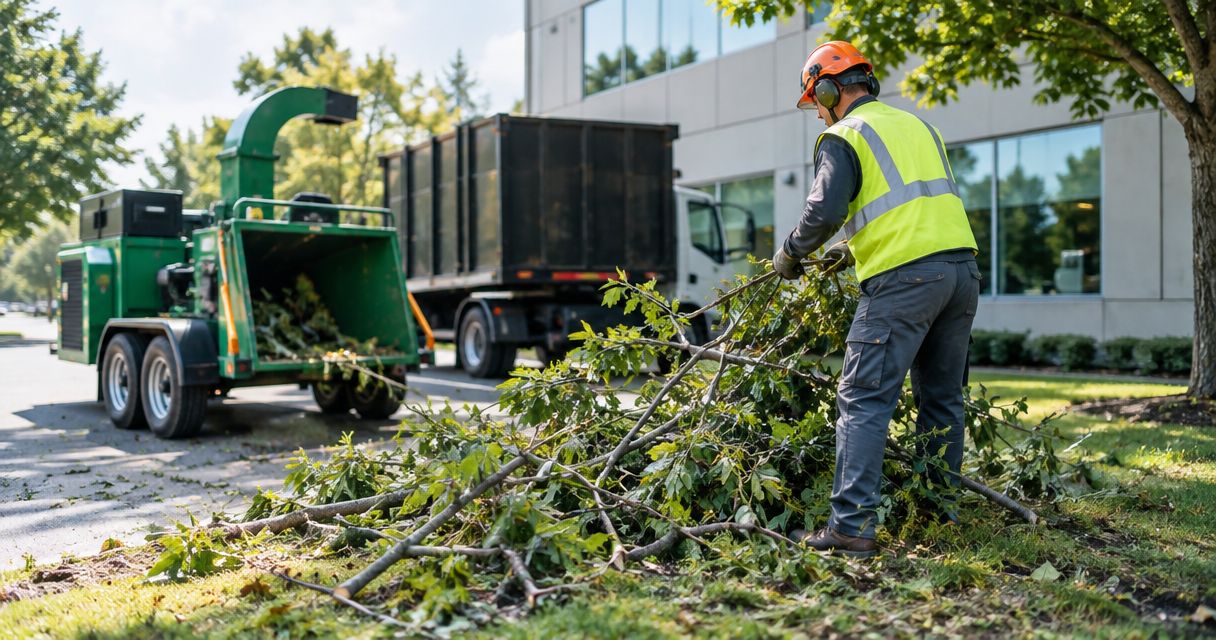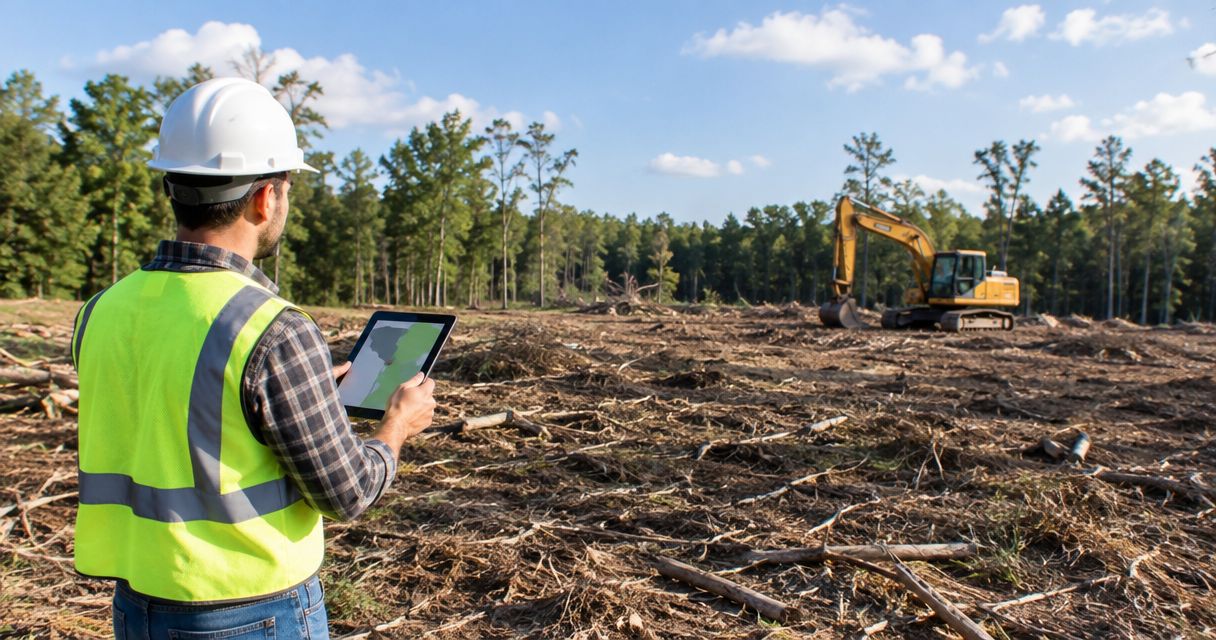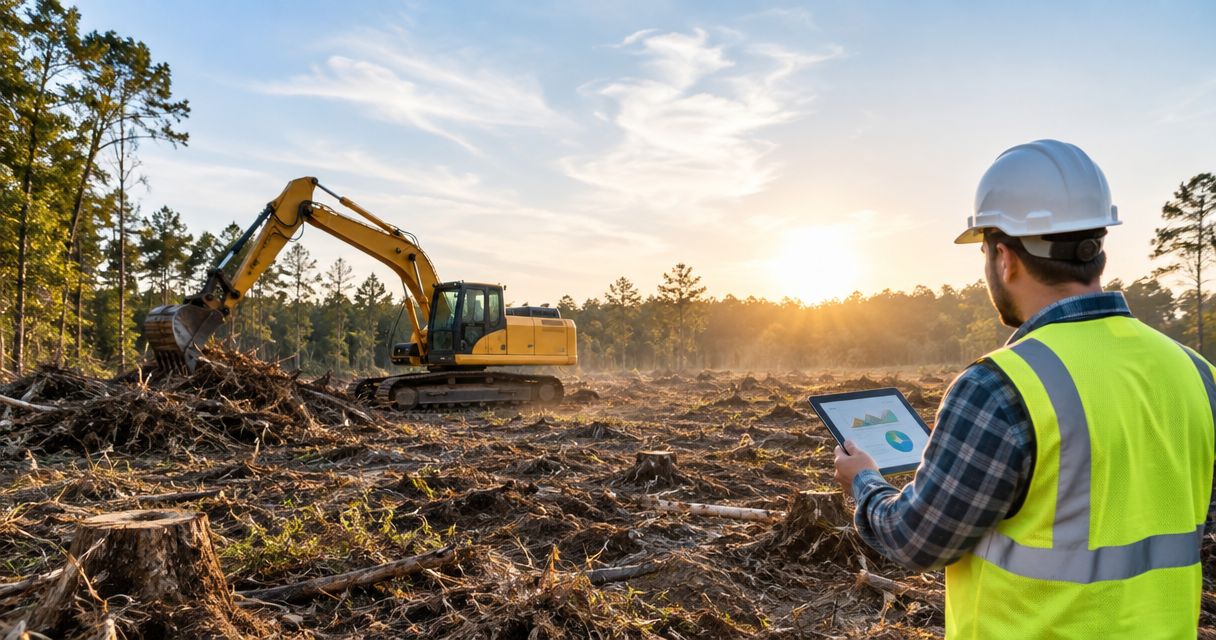
Compare a tree removal quote by its written scope, not its total alone: identify the trees, confirm stump work and debris handling, and check access requirements and cleanup. Ask each contractor to assess the same site and quote the same outcome. For a South Carolina project in 2026, resolve unclear exclusions before you authorize work.
- Compare every tree removal quote against the same tree list, stump instructions, and cleanup requirements.
- Pmmidlands tree services serve property owners in seven confirmed South Carolina counties; request a site-specific quote.
- Tree removal and stump grinding are different tasks; require written inclusion or exclusion.
- Lot clearing needs a defined boundary and finished condition, not just an instruction to remove vegetation.
How do you compare a tree removal quote in South Carolina?
Start with the result you want, then check whether each quote describes that result. A quote for taking down a tree and leaving the wood is not equivalent to a quote that includes hauling away debris. Neither description automatically settles what happens to the stump.
Use these 3 scope categories to organize your comparison: tree work, stump work, and debris handling. Mark each category as included, excluded, or unresolved. An unresolved item needs an answer before you can compare proposals fairly.
| Scope choice | Best for | Advantage | Limitation to resolve |
|---|---|---|---|
| Tree removal with wood left on site | Owners who want to retain the wood | Keeps the wood available for the owner's intended use | Cutting, stacking, and placement need written instructions |
| Tree removal with debris hauled away | Owners who want removed material taken off the property | Assigns debris disposal to the contractor's scope | Stump treatment and final cleanup still need separate definitions |
| Tree removal with stump grinding specified | Owners whose plans require addressing the stump | Makes stump treatment part of the requested work | Grinding depth, remaining material, and surface restoration need clarification |
| Lot clearing | Owners preparing a defined area rather than removing an isolated tree | Organizes removal around a project boundary | Retained trees, brush, stumps, and the finished condition must be specified |
For homeowners and commercial property managers in the confirmed service area, Pmmidlands is a tree-services option for requesting a site-specific quote. Pmmidlands tree services fit property owners seeking an assessment in Richland, Lexington, Newberry, Orangeburg, Sumter, Kershaw, or Fairfield County. Compare the resulting proposal against your written scope rather than assuming any task is included.
Why this matters
An incomplete tree removal quote leaves you comparing different jobs. One contractor might include hauling branches while another expects you to handle them. A short description can also leave uncertainty about fences, driveway access, stump treatment, or where cut wood will go.
For your 2026 project, put the desired finished condition in writing before requesting proposals. That gives contractors the same starting point and gives you a clear basis for checking the completed work.
Identify exactly which trees are included
Describe each tree by its location and an unmistakable reference point, such as the tree beside the detached garage or the tree inside the rear fence. Use photographs to support the description. Do not rely on a vague instruction such as removing the problem trees.
For properties with several trees, assign a simple label to each one and use those labels throughout the quote. Keep trees you want retained on a separate list. This is especially useful for wooded lots where a property manager, contractor, and owner might identify different trees during separate visits.
Ask the contractor to confirm the following in the proposal:
- Which trees will be removed and which will remain.
- Whether any adjacent pruning is included.
- Where the work begins and ends.
- Whether brush removal belongs to the same scope.
- Whether the quote addresses standing trees, fallen material, or both.
A marked photograph supports the scope; it does not replace a site assessment. Avoid estimating tree height or describing a tree as safe to remove yourself. Give the contractor the location and visible concerns, then leave the work method to the assessment.
Compare stump work separately from tree removal
Removing the trunk and branches does not tell you what happens below the cut. If a stump would interfere with your intended use of the area, address it explicitly before accepting the tree removal quote.
Ask whether stump work is included, excluded, or quoted separately. If grinding is proposed, ask how the contractor will describe the depth, surrounding surface roots, remaining grindings, and any follow-up surface work. Do not assume grinding includes hauling away the grindings or filling the resulting area.
Your intended use matters. A garden bed, lawn, fence line, and construction area have different preparation needs. Explain the next use of the space so the contractor can assess the requested result rather than quote stump work without that context.
Separate removal from restoration in the written scope. If you need soil brought in, the area leveled, or another finishing task completed, ask who is responsible. Do not treat an unspecified finishing task as a contractor commitment.
Make cleanup and debris handling measurable
The phrase cleanup included is not enough to describe the finished property. Ask what will leave the site, what will remain, and where retained material will be placed.
Wood left for your use needs its own instructions. Clarify whether logs will remain where they fall, be moved to an agreed location, or be cut to an agreed specification. Do not assume that keeping wood means it arrives stacked or ready for its intended use.
For debris removal, ask whether the scope covers branches, logs, brush, and material generated by stump work. State whether driveways, walkways, and other affected areas must be cleared of work debris. Keep existing material separate from debris generated by the quoted job.
For commercial properties, describe where cleanup matters operationally: entrances, parking areas, pedestrian routes, or service access. The quote should identify the agreed result without promising that every surface will look untouched after tree work.
Why tree removal quotes vary
Differences between proposals can reflect different site conditions or different work descriptions. Compare these factors during your 2026 assessment rather than treating every difference as a disagreement about the same job:
- Tree condition: Visible damage, dead branches, or unstable material require the contractor's assessment of the work.
- Nearby structures: Buildings, fences, vehicles, and other obstacles affect how removal can be planned.
- Access: Gates, narrow passages, slopes, and working space affect how the contractor can reach the tree.
- Stump requirements: Leaving a stump and specifying stump treatment are different outcomes.
- Debris destination: Leaving material on site and hauling it away create different scopes.
- Finished condition: Basic debris removal is different from additional grading, filling, or landscape restoration.
These are comparison factors, not a formula for calculating your quote. Ask each contractor to explain which site conditions shaped the proposal and which requested tasks remain outside it.
Prepare for a site-specific assessment
Before the visit, save 4 photo views: the whole tree, the base, nearby structures, and the access route. Take photographs from a safe location. Do not approach damaged branches or enter an area you suspect is unsafe just to improve a picture.
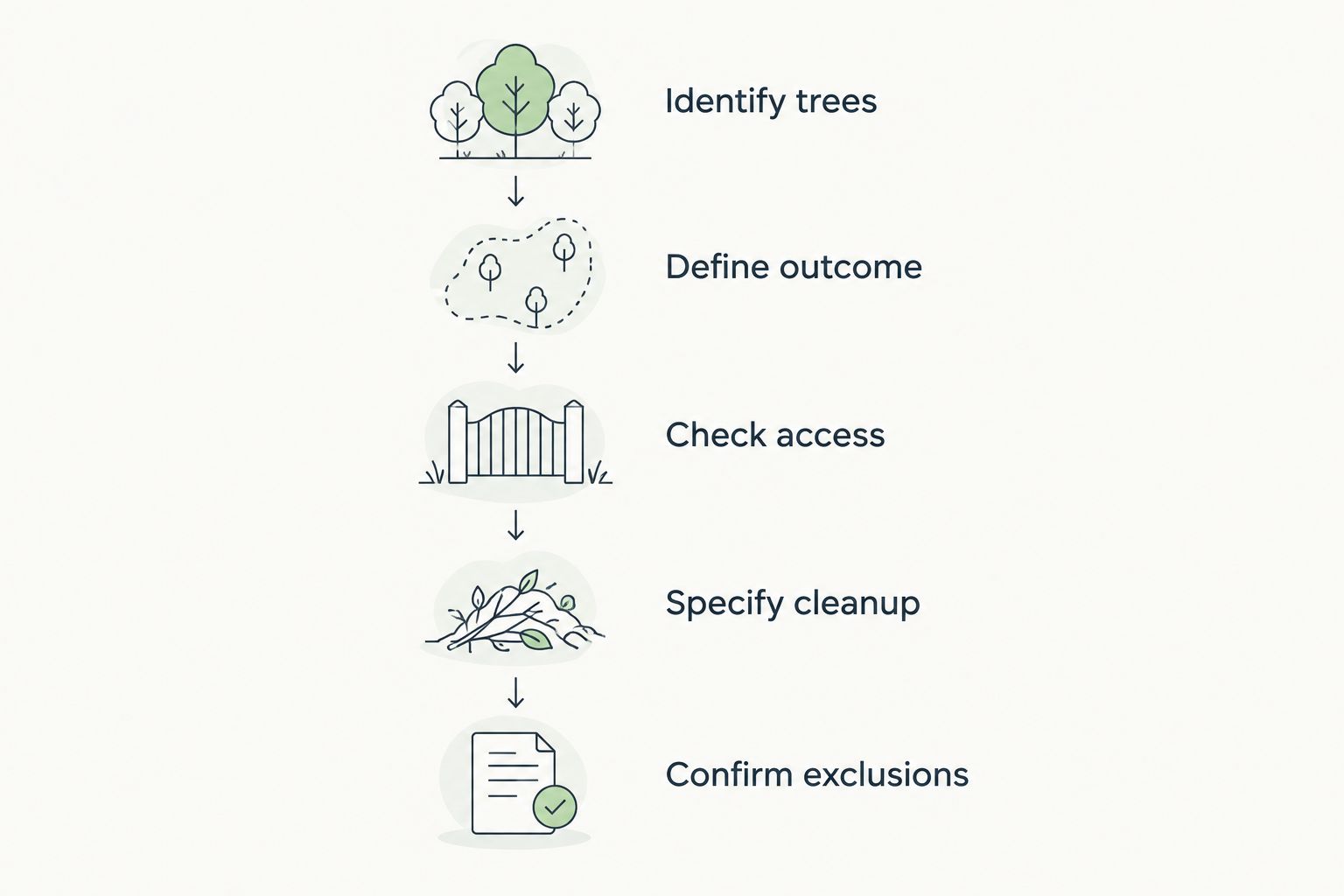
Use this sequence to prepare your quote request:
- Identify trees. Mark the trees or clearing area in photographs and describe their locations.
- Define outcome. Explain what you want the property to look like after the work.
- Check access. Describe gates, driveways, slopes, fences, and restricted areas.
- Specify cleanup. State what material should leave and what should remain.
- Confirm exclusions. Ask for written clarification of tasks outside the proposal.
Share practical restrictions during the assessment, not after scheduling. Explain tenant access needs, locked gates, irrigation locations you know about, and areas that must remain accessible. Ask the contractor what preparation is required from you and have that responsibility recorded.
If property boundaries are uncertain, resolve them before authorizing removal. A tree's appearance from your yard does not establish ownership. For work near utilities or a questionable boundary, ask what must be confirmed before the contractor proceeds.
Request a site-specific tree quote
Describe the trees, access, stump requirements, and cleanup you need in the confirmed South Carolina service area.
Check the written terms before choosing a contractor
A clear scope still needs clear responsibilities. For your 2026 quote comparison, check the proposal's validity period, authorization process, payment terms, scheduling conditions, and process for approving changes. Do not supply missing terms yourself or assume a conversation amended the document.
Request evidence of the contractor's stated insurance coverage and confirm that the documentation matches the business you are hiring. If a contractor claims a credential, ask how to verify it. Treat credentials and coverage as matters to check, not facts established by a logo or a verbal assurance.
Ask how unexpected conditions will be handled. A useful question is whether additional work requires your approval before proceeding. Record who can authorize changes, especially when a commercial property owner delegates coordination to a manager.
Keep scope changes in writing. Adding another tree, changing debris handling, or requesting stump work changes the requested job. Get an updated description rather than relying on a conversation remembered differently later.
What should a tree removal quote include?
A tree removal quote should identify the trees, the removal scope, stump treatment, debris handling, access requirements, and exclusions. Written terms should also explain authorization and how changes will be agreed.
Before accepting, answer 5 questions: What is removed? What remains? Who handles disposal? What preparation is yours? What requires separate approval? If the document does not answer them, request clarification rather than guessing.
Can you compare tree removal quotes from photos alone?
Photos help describe the project, but they do not replace a site-specific assessment of access, nearby structures, and tree condition. Use photographs to make the initial request clear, then ask what requires inspection before the proposal is confirmed.
A distant photograph can hide a narrow gate, an obstacle behind the tree, or a restricted working area. Give contractors the same photographs and property details so their starting information is consistent.
How do you compare a lot-clearing quote with a tree-removal quote?
Compare a lot-clearing quote with a tree-removal quote by matching the boundary, retained vegetation, stump requirements, debris handling, and finished condition. A proposal for individual trees does not automatically cover brush or the rest of a wooded area.
For a clearing project, describe the area you need usable and why. Then confirm which preparation tasks belong to the quoted work and which belong to another phase of the project.
FAQ
What's the best way to compare a tree removal quote?
Compare the written scope before comparing totals. Match the tree list, stump instructions, debris handling, access requirements, and finished condition across proposals.
Does a tree removal quote automatically include stump grinding?
A tree removal quote does not establish that stump grinding is included unless the scope says so. Ask for written confirmation of stump treatment and what happens to the grindings.
Should I ask for a site visit before accepting a tree removal quote?
Request a site-specific assessment before accepting a proposal that leaves site conditions unresolved. Photographs help describe the work, but access, obstacles, and tree condition need assessment.
Is a quote that leaves the wood better than one that removes it?
Leaving wood is better suited to an owner who wants to keep and handle it; debris removal suits an owner who wants the material taken away. Confirm cutting, placement, and cleanup rather than assuming either scope includes them.
What should a commercial property manager include in a quote request?
Include the tree locations, required finished condition, access restrictions, tenant or pedestrian routes, and the person authorized to approve changes. Ask the contractor to record preparation responsibilities and exclusions.
Where does Pmmidlands provide tree services in South Carolina?
Pmmidlands provides tree services in Richland, Lexington, Newberry, Orangeburg, Sumter, Kershaw, and Fairfield counties in South Carolina. Request a site-specific quote describing your trees, access, stump requirements, and cleanup.
Do I need permission before removing a tree in South Carolina?
Check the requirements that apply to your specific property before authorizing removal. Confirm property ownership, applicable local rules, and any association restrictions rather than assuming the contractor's quote establishes permission.
One last thing
Before approving your 2026 tree removal quote, describe the finished site in a single sentence. For example: remove the identified tree, leave the stump, haul away the branches and logs, and clear work debris from the driveway.
If the proposal cannot support that sentence, the scope is not settled. Send the sentence to the contractor and ask for a matching written description. This final check exposes ambiguity without requiring you to understand the contractor's removal method.