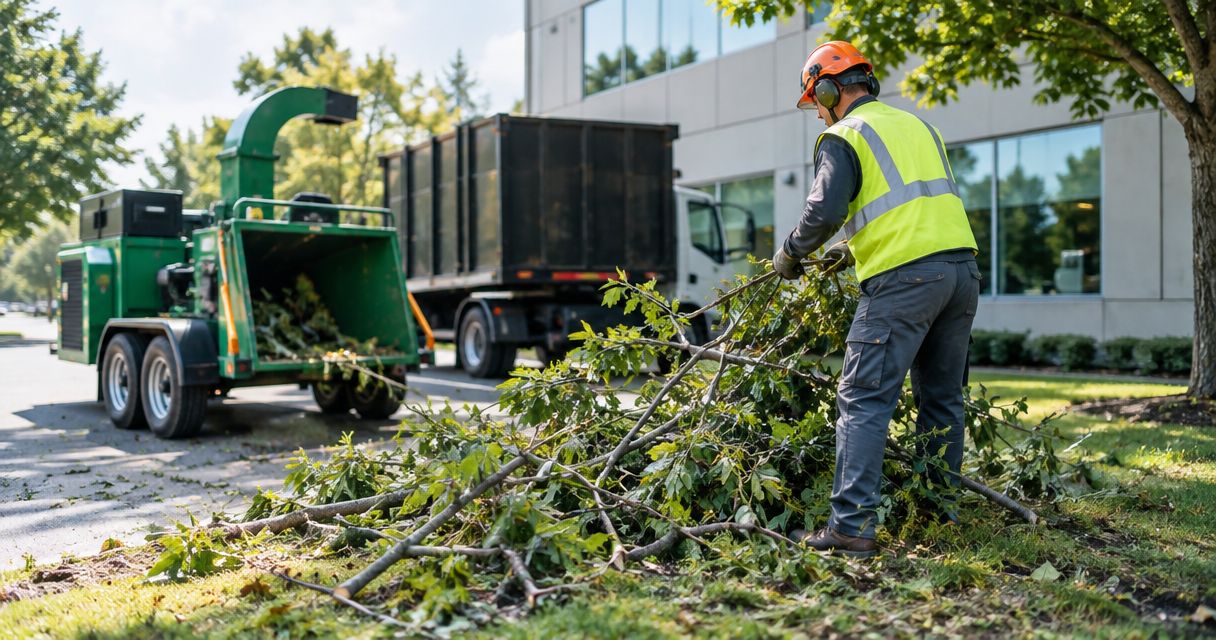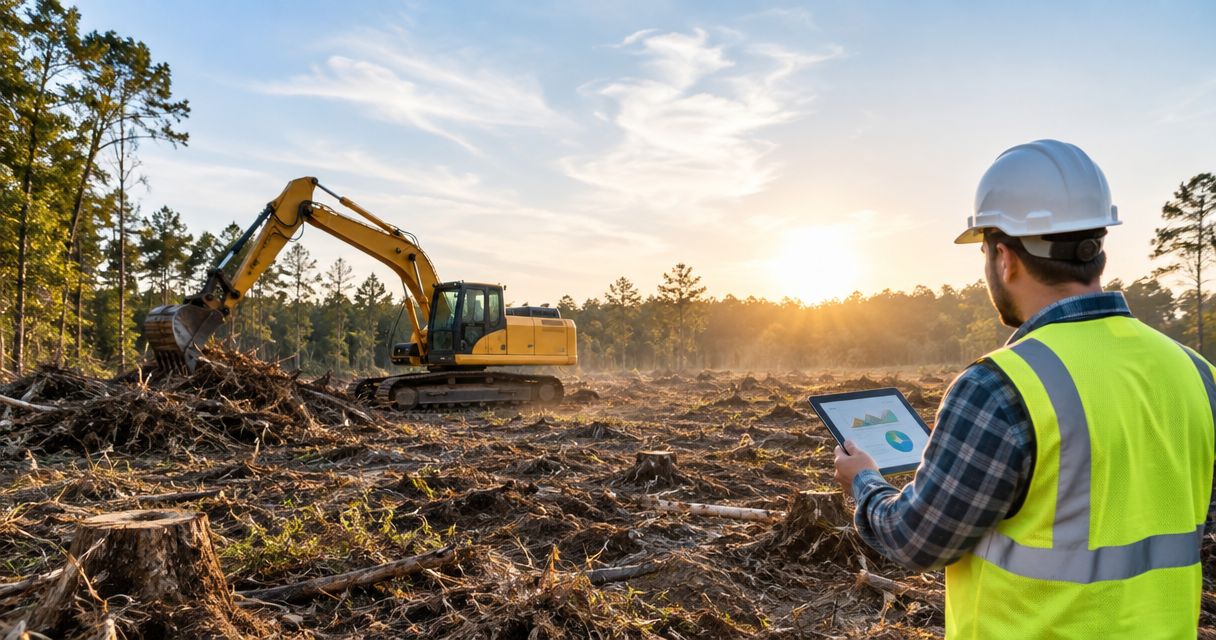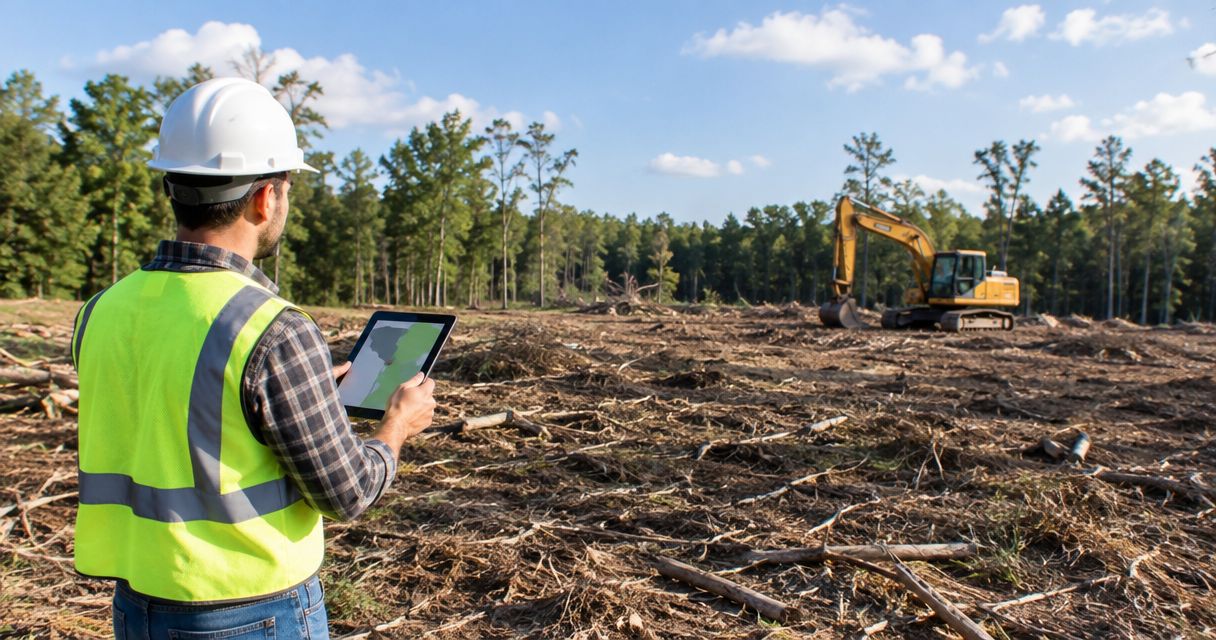
Prepare a property for lot clearing by defining the intended use, confirming boundaries, locating utilities, marking what must stay, and agreeing on access and cleanup before work begins. A site assessment should settle the clearing limits and finished condition; removing vegetation alone does not establish property lines, authorize excavation, or make the ground ready for construction. Use this 2026 checklist to prepare for a site-specific quote without taking on hazardous tree work yourself.
- Prepare for lot clearing by confirming boundaries, utilities, retained trees, access, and the required finished condition.
- Pmmidlands is a tree-services option for property owners in its confirmed South Carolina service area seeking a site-specific quote.
- Separate vegetation removal, stump removal, debris disposal, and grading in your requested scope.
- Do not start cutting or digging until clearing limits, utility concerns, and required approvals are resolved.
Why this matters
A useful clearing quote starts with a defined job, not just a request to remove everything. Your contractor needs to know where work stops, what stays, how the property can be accessed, and what you expect to use afterward. Otherwise, two quotes can describe different outcomes while appearing to cover the same project.
Pmmidlands provides tree services in Richland, Lexington, Newberry, Orangeburg, Sumter, Kershaw, and Fairfield counties in South Carolina. For property owners requesting tree services within that area, preparation means gathering the information needed for a site-specific discussion—not guessing which equipment or completion date the job requires.
How do you prepare a property for lot clearing?
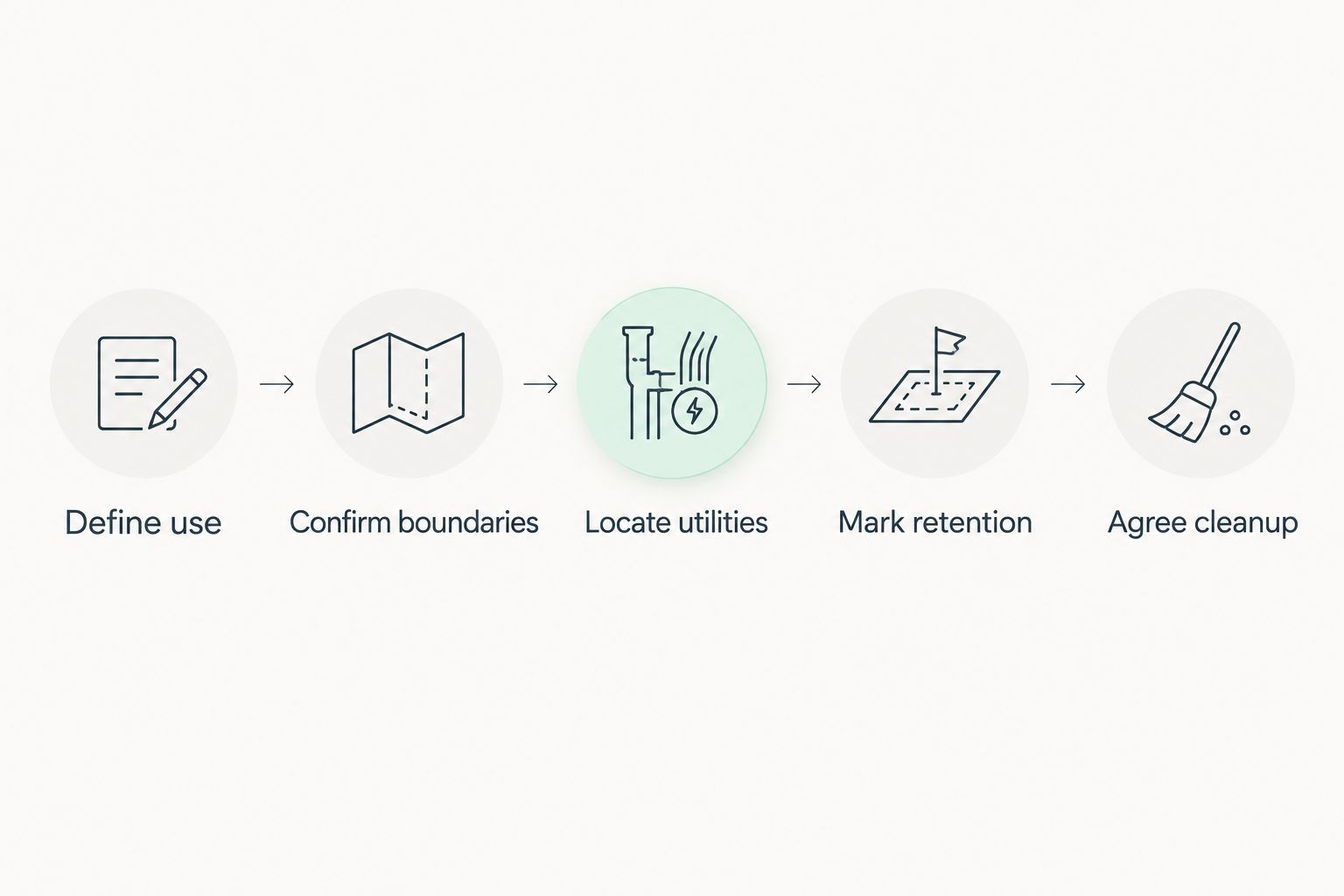
Complete these 5 preparation steps before authorizing lot clearing: define the use, confirm boundaries, locate utilities, mark retention, and agree on cleanup. Walk the accessible parts of the property and record questions for the contractor. Do not enter unstable areas, climb trees, handle hanging limbs, or attempt to expose buried utilities yourself.
The sequence matters. You cannot set a reliable clearing boundary until you understand the property limits, and you cannot specify the finished condition until you know what the land will be used for.
1. Define use
Start with the purpose of the cleared area. A yard expansion, an access route, a building site, and a vegetation-management project do not necessarily require the same clearing limits or finished surface. Describe the intended use plainly, and identify which decisions depend on a builder, designer, or other project professional.
Make a simple property sketch showing the proposed work area, existing structures, driveway, gates, and anything you want protected. Label it as a planning sketch rather than a survey. Photographs help explain visible conditions, but they do not replace a site visit or establish legal boundaries.
For a construction project, distinguish clearing from the later work. Tree and brush removal is not the same as grading, drainage design, compaction, or foundation preparation. Ask which activities belong in the clearing quote and which require a separate scope.
Give the contractor your intended outcome rather than prescribing an unverified method. Saying you need access to a particular area is useful; assuming every tree must come out to create that access can commit the project to unnecessary removal.
2. Confirm boundaries
Identify the property lines before setting the clearing perimeter. A fence, mowing line, or edge of vegetation is not proof of a legal boundary. If the location is uncertain, resolve it with appropriate records and a licensed surveyor before directing removal near the disputed edge.
Answer 2 boundary questions: where does your ownership end, and where should the clearing stop? Those lines are not always identical. A setback, easement, retained landscape area, or project requirement can limit work within land you own.
Check recorded easements, applicable restrictions, and any required approvals with the relevant authority or responsible party. For a 2026 project, confirm current requirements rather than relying on an old permit or a neighbor's experience. Ownership alone does not settle every permission question.
Show the contractor the confirmed work limits during the site assessment. If temporary markers are used, agree on what they mean and avoid placing stakes where they could interfere with utilities. Do not ask a clearing crew to resolve a boundary dispute through guesswork.
3. Locate utilities
Contact the 811 service before digging and follow the applicable locating process. Explain the planned work accurately, including stump excavation or other ground disturbance. Surface vegetation can hide utility features, and removing a stump involves more than cutting the visible trunk.
Ask which facilities the locating process covers and arrange separate identification of private lines when necessary. Private irrigation, lighting, septic components, and other owner-installed systems need attention too. Do not assume every underground feature will be identified by one request.
Point out overhead lines, service connections, utility structures, wells, and septic areas during the site visit. Keep people away from branches or trees contacting electrical lines, and contact the utility about electrical hazards. Do not touch or attempt to move affected vegetation.
Utility markings are constraints, not permission to excavate carelessly. Tell the contractor about the planned disturbance and any unresolved locations. Preserve markings and follow the applicable instructions before work proceeds.
4. Mark retention
Identify trees, shrubs, screening, fences, and other features that must remain. Agree on a clear marking method with the contractor so a retained tree cannot be confused with a removal target. Put the retention instructions in the written scope, not only in a conversation.
Protecting a tree means considering more than its trunk. Roots and surrounding soil can be affected by excavation, vehicle traffic, and material storage. Ask how access and staging will avoid damaging the trees you intend to keep.
Photograph retained features and existing conditions from safe locations. Include nearby buildings, pavement, gates, and drainage features. These photographs give both parties a shared reference when discussing access and protection; they are not a substitute for evaluating the site.
If you are uncertain about a tree's condition or suitability for retention, request an assessment before deciding. Do not label a tree safe because it looks healthy from the ground, or assume a damaged tree requires a particular removal method without inspection.
5. Agree cleanup
Walk through the proposed access route and identify gate openings, tight turns, parked vehicles, low branches, and surfaces that need protection. Tell the contractor about known soft ground or drainage problems. Let the site assessment determine whether the route suits the proposed work.
Decide where removed material can be handled and what must leave the property. Logs, branches, chips, brush, and stumps are different materials. A request to clear vegetation does not tell the contractor whether you want any of them retained.
Confirm 3 scope decisions in writing: what gets removed, what happens to the material, and what condition remains. State whether stump treatment or removal, backfilling, grading, or other ground work is included, excluded, or awaiting a separate assessment.
Before the agreed work date, move personal property out of the work and access areas where safe. Arrange to keep residents, employees, visitors, and pets outside the contractor's work zone. Ask the contractor to explain the access restrictions for the actual job rather than inventing your own safety distance.
Which clearing scope matches your property?
Choose the scope by the intended result. Selective removal is best for keeping identified vegetation; broader clearing is best for a defined area that requires vegetation removal. Neither description settles stump handling, disposal, or grading, so specify those separately.
| Scope choice | Best for | Main benefit | Limitation to resolve |
|---|---|---|---|
| Selective removal | Keeping named trees or screening | Makes retention part of the job | Requires clear markings and protection planning |
| Broader vegetation clearing | Opening a defined work area | Gives the contractor a clear removal boundary | Does not automatically include a construction-ready surface |
| Stump removal within scope | Areas where remaining stumps conflict with the intended use | Addresses below-ground obstructions | Requires utility checks and a decision about resulting ground disturbance |
| Retaining selected material | Owners with a defined use for logs or chips | Establishes what stays on the property | Requires an agreed placement area and handling instructions |
Do not choose broader clearing just because the property looks overgrown. First identify the access or usable space you need. A defined scope gives you a basis for comparing quotes and prevents retained vegetation from becoming an afterthought.
Why lot-clearing preparation varies
The preparation checklist stays consistent, but the site determines which questions need the most attention. For a 2026 lot-clearing project, discuss these factors during the assessment:
- Vegetation: Identify trees, brush, and retained planting areas so removal limits are explicit.
- Access: Show entrances, turns, structures, and surfaces that constrain movement through the property.
- Ground conditions: Point out visible slopes, wet areas, and drainage features without assuming their causes.
- Utilities and site systems: Identify overhead facilities and known buried or private infrastructure.
- Material handling: Specify removal, retention, and placement instructions for the resulting debris.
- Intended finish: Explain whether the next use requires additional stump, grading, drainage, or construction work.
These factors belong in the scope discussion, not in assumptions about a standard job. Ask the contractor to identify unresolved conditions before you approve the work.
What should you send when requesting a quote?
Send the property location, intended use, a description of the proposed clearing area, and photographs taken from safe positions. Add known access restrictions, retention instructions, and questions about stumps or debris. If you have a relevant survey or project plan, identify it clearly and distinguish it from your own sketch.
Request a site-specific written scope for your 2026 project. Ask it to identify removal limits, exclusions, material handling, access arrangements, and the finished condition. If the plans change after assessment, confirm the revised scope before work begins.
For Pmmidlands tree services, describe the property and requested work when asking for a quote. The confirmed service area covers the named South Carolina counties; the suitability and scope of an individual project still require discussion. A service-area match is not a substitute for a site assessment.
Discuss your clearing project
Prepare your location, clearing limits, access details, and cleanup questions for a site-specific quote.
Should I remove brush before the site assessment?
You do not need to remove brush simply to request an assessment. Photograph the area from a safe position and explain any access problem. Ask the contractor what preparation is appropriate before cutting vegetation that could hide utilities, debris, or uneven ground.
Does lot clearing include stump removal?
Lot clearing includes stump removal only when the agreed scope says so. Ask whether stumps remain, are ground, or are excavated, and what happens to the resulting material or disturbed ground. Do not treat those outcomes as interchangeable.
Can I leave trees along the property boundary?
You can request retained trees along a confirmed boundary, subject to the property's constraints and the planned work. Identify them before quoting and discuss protection of roots and surrounding soil. Resolve uncertain ownership or boundary positions before authorizing nearby removal.
FAQ
What's the first thing I should do before lot clearing?
Define the intended use and proposed clearing area first. Then confirm boundaries, utility concerns, retained vegetation, access, and the required finished condition before authorizing work.
Do I need a survey before clearing my property?
Resolve uncertain property boundaries before clearing near them. A fence or vegetation edge does not establish the legal line; consult a licensed surveyor when the boundary is unclear.
Should I call 811 before removing stumps?
Contact the 811 service before stump work that involves digging and follow the applicable locating process. Ask what is covered and arrange identification of private underground facilities when necessary.
How do I protect trees I want to keep?
Identify retained trees in the written scope and agree on visible markings with the contractor. Discuss protection of roots and soil from excavation, traffic, and material storage.
Does clearing make a lot ready to build on?
Vegetation removal alone does not make a lot ready for construction. Grading, drainage, ground preparation, approvals, and other requirements depend on the project and need separate confirmation.
What should a lot-clearing quote include in 2026?
A 2026 lot-clearing quote should define the removal area, retained features, material handling, exclusions, and finished condition. Confirm whether stump work and any ground preparation are included.
Where does Pmmidlands provide tree services?
Pmmidlands provides tree services in Richland, Lexington, Newberry, Orangeburg, Sumter, Kershaw, and Fairfield counties in South Carolina. Describe your location and requested work when asking for a site-specific quote.
One last thing
Before approving your 2026 clearing scope, finish this sentence: When the work is complete, I need to be able to use this area for… Then ask whether the quoted work delivers that condition or only removes vegetation.
That distinction is easy to miss. An open area with remaining stumps, retained debris, or disturbed ground is a different result from an area prepared for its next use. Resolve the difference on paper before work starts.