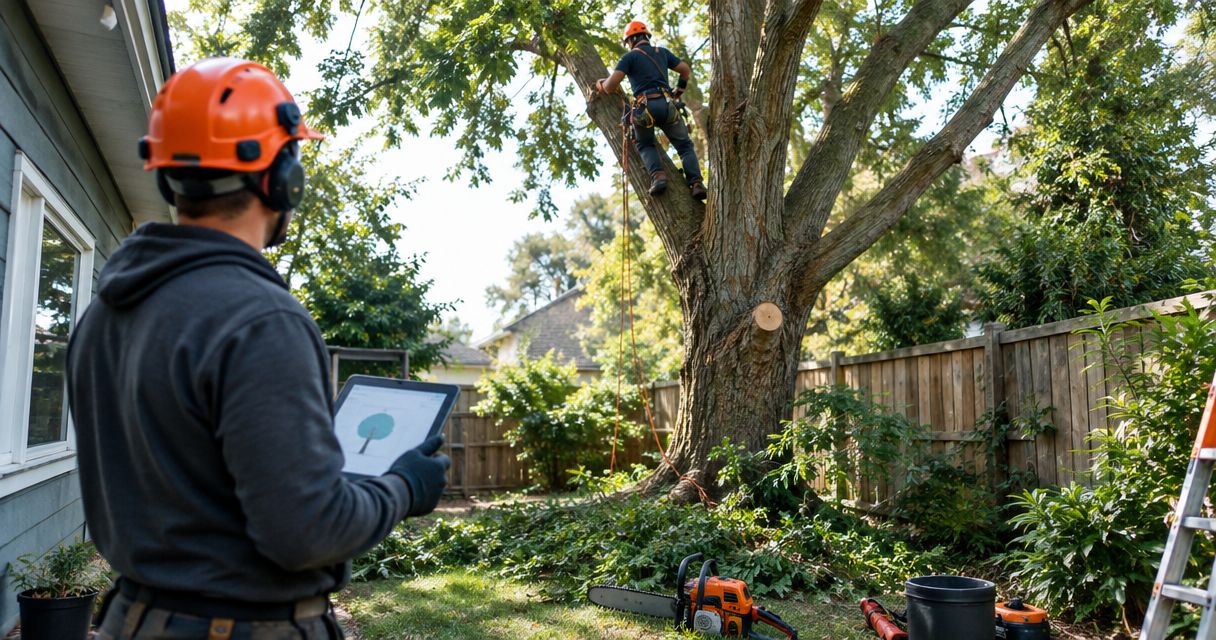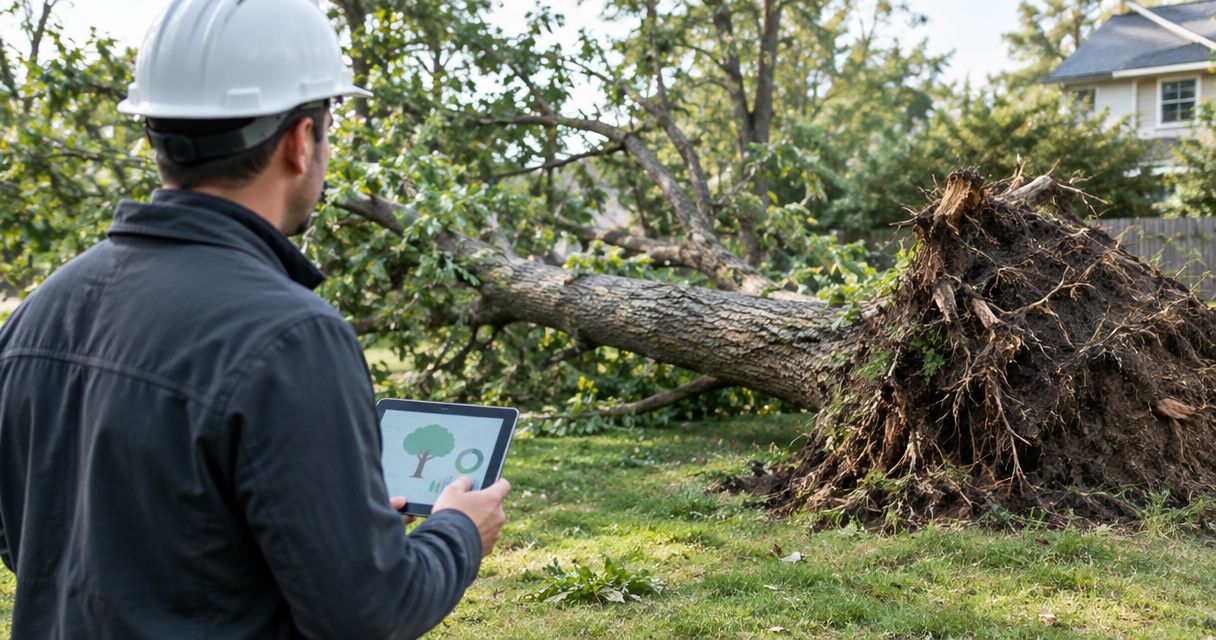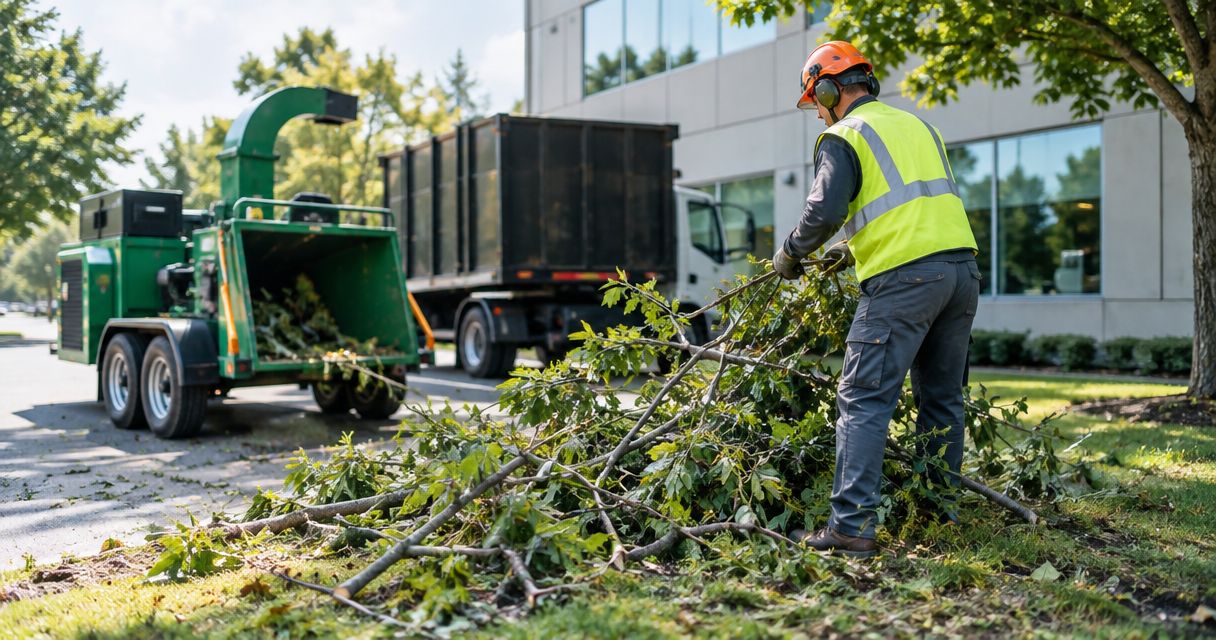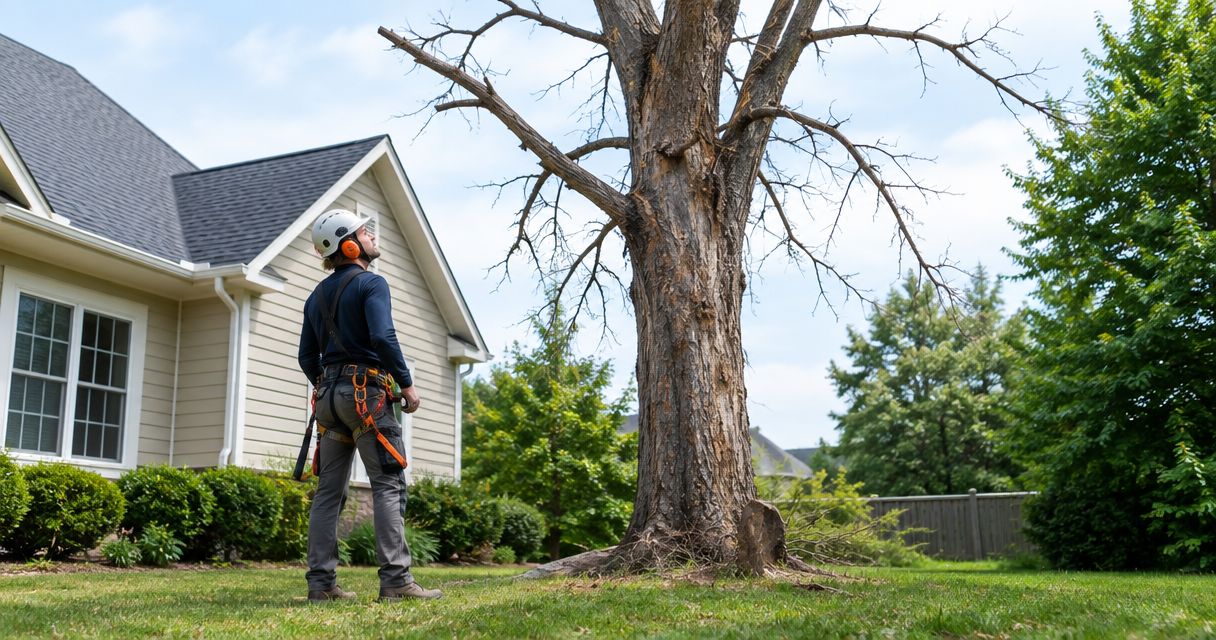
Arrange dead tree removal near a house by requesting a site assessment before agreeing to a removal method or written quote. Keep people away from the tree, report any contact with power lines to the utility, and explain which buildings and access routes are nearby. Confirm whether the proposed work includes debris removal and stump work; removing the tree does not automatically define either task.
- Dead tree removal near a house needs a site assessment, not a removal plan based only on photographs.
- Pmmidlands is a tree-services option for property owners in its confirmed South Carolina service area.
- Compare tree removal quotes by scope: tree work, debris removal, stump work, and property protection.
- Keep people away from damaged trees and contact the utility when power lines are involved.
How do you arrange dead tree removal near a house?
Start with the immediate safety concern, then arrange an assessment and request a written scope. Do not choose a cutting method yourself or assume that an open-looking yard provides a safe place to drop the tree. Dead branches and weakened wood make that decision a professional site-assessment task.
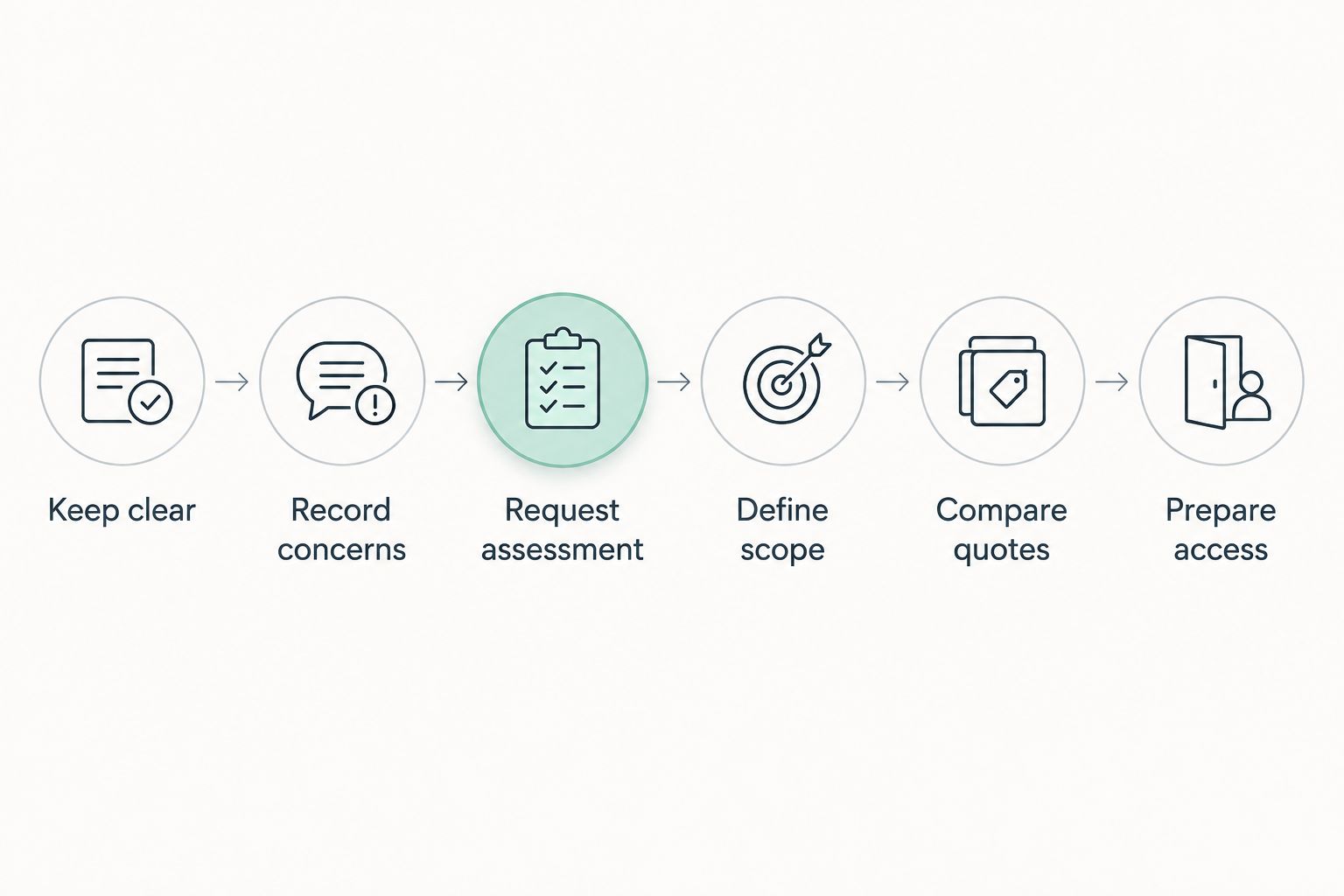
Use this sequence when arranging work in 2026:
- Keep clear. Move people and pets away without walking beneath suspect branches. Do not approach the tree to test whether its trunk or roots are stable.
- Record concerns. From a safe location, describe the tree's position relative to the house, driveway, fences, neighboring property, and overhead lines.
- Request assessment. Give the service provider your property location, the access limitations you know about, and any recent changes you have observed.
- Define scope. Ask what tree work, debris removal, stump work, and cleanup the proposal includes.
- Compare quotes. Compare written proposals for the same work rather than comparing totals for different scopes.
- Prepare access. Follow the provider's instructions about parking, pets, gates, and areas that must remain clear.
For properties in Richland, Lexington, Newberry, Orangeburg, Sumter, Kershaw, or Fairfield counties, contact Pmmidlands to request a site-specific tree-services quote. Explain that the tree is near a house when you make the initial inquiry, not after receiving a proposal.
The assessment should establish what can be done safely at your property. Photographs help explain the request, but they do not establish the condition of concealed wood, the stability of roots, or the practical removal route.
Why this matters
A dead tree near a house creates a planning problem as well as a tree-health problem. The person assessing it needs to consider the tree, the structures around it, and the route for carrying out the work.
Your goal is not simply to have the trunk disappear. You need a clear agreement about what will happen to branches, wood, the stump, and the areas used for access. A detailed scope helps prevent a removal job from ending with work you expected but never requested.
Pmmidlands is a relevant tree-services option for property owners in its confirmed South Carolina counties. Suitability for your particular job still depends on the site assessment and the work described in the proposal; a service-area match alone does not settle the removal plan.
What should you tell the tree service before the visit?
Give the provider information that changes how the property can be assessed. You do not need to identify the tree species or diagnose the decay before making contact.
For a 2026 quote request, describe:
- Property location: Include the address and county so the provider can confirm the service area.
- Nearby structures: Identify the house, garage, shed, fence, driveway, and neighboring buildings near the tree.
- Overhead lines: Explain whether branches are near wires or whether you have seen contact. Do not approach to verify it.
- Visible changes: Report fallen limbs, newly visible cracks, a changed lean, or soil movement around the base.
- Access restrictions: Mention locked gates, narrow entrances, steps, steep ground, and areas you cannot authorize the provider to enter.
- Requested outcome: State whether you want the wood removed, the stump addressed, or the area prepared for another use.
Take photographs only from a safe position. A wider view showing the tree and house can explain the relationship better than a close-up of bark alone.
For a commercial property, also identify occupied entrances, tenant parking, and pedestrian routes. Explain who can approve access restrictions and who needs notice before work begins. Do not promise tenants a completion date before the provider confirms the schedule.
Tree removal, branch work, and stump work are different scopes
Specify the outcome, not just the phrase tree removal. Whole-tree removal, branch removal, and stump work address different parts of the problem. None should be assumed to include the others.
| Work scope | Best for | What it addresses | Limitation to clarify |
|---|---|---|---|
| Whole-tree removal | A tree assessed as needing removal | Removing the standing tree | Debris handling and stump work still need explicit agreement |
| Branch removal | A tree assessed as suitable to retain | Removing selected branches | It does not resolve the condition of a dead trunk or unstable roots |
| Stump work | A project where the remaining stump affects the intended use | Addressing the stump after tree removal | Method, remaining material, and ground restoration need clarification |
Branch work is not a substitute for assessing a dead tree. Likewise, stump work is not the starting point while a hazardous standing tree remains unresolved.
Ask the provider to describe where each scope ends. If the proposal says wood will remain on site, establish where it will be placed. If you want an area suitable for planting, explain that intended use rather than assuming the removal quote includes soil preparation.
Why dead tree removal plans vary
The removal plan depends on conditions at the property. A tree that appears straightforward from the street can have access or structural constraints that are not visible from that angle.
These factors need assessment:
- Tree condition: Dead branches, decay, cracks, and root concerns affect how the tree can be handled.
- Building proximity: Roofs, walls, windows, and outbuildings limit the space available for work.
- Power lines: Electrical hazards require coordination with the utility rather than an ordinary homeowner removal decision.
- Access and terrain: Entrances, slopes, ground conditions, and obstacles affect access to the work area.
- Property boundaries: Work affecting neighboring land needs a clear understanding of ownership and permission.
- Final scope: Leaving wood, removing debris, addressing the stump, and restoring disturbed areas are different outcomes.
Ask why the proposed method fits your property. A useful explanation connects the plan to specific constraints, such as the house position or available access. It does not need to promise that every condition is knowable before work starts.
Your 2026 written quote should explain how any necessary scope changes will be discussed and approved. Do not treat an unspecified change as permission for additional work.
What should a written tree removal quote include?
A usable proposal identifies the tree and describes the work closely enough that both parties understand the same outcome. When several trees stand together, use a photograph or an agreed description to prevent confusion.
Check the proposal for:
- The specific tree or trees covered by the work.
- The removal scope and any branches or nearby trees expressly excluded.
- Whether branches, trunk sections, and other debris will leave the property.
- Whether stump work is included or requires a separate agreement.
- Access arrangements and the areas that need protection or clearance.
- Who handles any necessary permissions or utility coordination.
- The cleanup endpoint and how changes to the agreed scope are authorized.
Also ask for documentation of applicable insurance and qualifications. Do not infer either from a business name, a vehicle, or a verbal assurance.
Use the guide to comparing a tree removal quote in South Carolina when reviewing proposals. A proposal that leaves out debris or stump work is not equivalent to one that includes it. Settle those differences before choosing a provider.
Request a site-specific tree removal quote
Describe the tree, nearby buildings, access restrictions, and the cleanup you want.
How should you prepare the property for removal?
Prepare only after the provider explains which areas need to be clear. Do not prune, climb, attach ropes, or move fallen material beneath unstable branches to make the job easier.
From safe areas, arrange parking and gate access as instructed. Identify irrigation, septic components, buried services, and other features the provider needs to consider; use the appropriate utility-location process before work that disturbs the ground.
Keep children and pets out of the work area. For rental or commercial property, tell occupants which entrances or parking areas will be restricted and who to contact with access questions.
Before work begins, review the agreed scope again. For a 2026 project involving later landscaping or construction, explain that next use now: it affects whether leaving a stump or wood on site meets your needs.
Can you remove a dead tree near a house yourself?
Do not treat dead tree removal near a house as a routine homeowner cutting job. Brittle branches, weakened wood, structures, and electrical lines create hazards that require an on-site assessment and an appropriate work plan.
You can help by supplying information and arranging access. That is different from deciding where the tree should fall or trying to pull it away from the house.
If the tree contacts a power line, stay away and contact the utility. If there is immediate danger to people, contact emergency services rather than waiting for a routine quote appointment.
Does dead tree removal include the stump and cleanup?
Dead tree removal includes stump work and cleanup only when the agreed scope says so. Ask for each task to be stated explicitly rather than relying on the word removal.
Specify whether you want wood left on site or taken away. Then clarify what the finished area will look like and what further landscaping or ground work remains outside the agreement.
Do you need permission to remove a dead tree?
Permission depends on ownership, property rules, and applicable local requirements. Check with the relevant local authority and any homeowners association before authorizing work; do not assume that a dead tree is automatically exempt.
If the tree is on a boundary or access requires neighboring land, resolve ownership and access permission first. Ask who is responsible for confirming any requirements before the work is scheduled.
FAQ
What's the first thing to do about a dead tree near my house?
Keep people away from the tree and request an on-site assessment. If the tree contacts power lines, stay away and contact the utility rather than approaching it.
Can a tree service quote dead tree removal from photos?
Photos can support an initial discussion, but they do not replace a site assessment for removal near a house. The provider needs to evaluate tree condition, access, nearby structures, and electrical hazards.
Does a tree with no leaves definitely need removal?
A tree with no leaves does not automatically need removal. Dormancy and tree-health problems need to be distinguished through an assessment rather than appearance alone.
How much does dead tree removal near a house cost?
Dead tree removal near a house needs a site-specific quote. Tree condition, building proximity, access, utility hazards, debris handling, and stump work define the scope being quoted.
Should I choose branch removal instead of removing the whole tree?
Choose branch removal only when an assessment supports retaining the tree. Removing selected branches does not resolve a dead trunk or unstable roots.
Does Pmmidlands serve my South Carolina county?
Pmmidlands serves Richland, Lexington, Newberry, Orangeburg, Sumter, Kershaw, and Fairfield counties in South Carolina. Provide your property address when requesting a site-specific tree-services quote.
What should I check before accepting a tree removal quote in 2026?
Before accepting a tree removal quote in 2026, confirm the identified tree, debris handling, stump scope, access arrangements, cleanup, and approval process for changes. Compare proposals only after those items describe the same requested outcome.
One last thing
Describe the area you want after removal, not only the tree you want gone. A remaining stump or pile of wood can conflict with your plans even when the standing tree has been removed exactly as agreed.
When you contact Pmmidlands, explain whether the next step is landscaping, maintaining an open yard, or preparing the property for another project. That gives the site assessment a clear endpoint without assuming additional services are included.