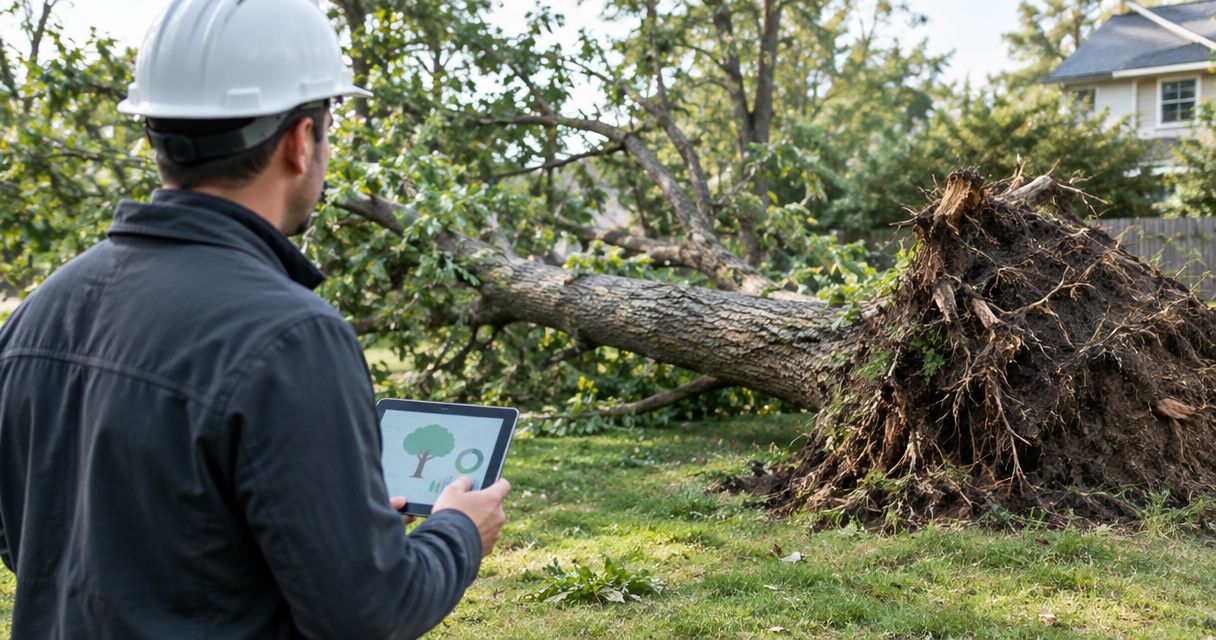
Before fallen tree removal, keep people and pets away, check for immediate hazards from a safe location, and contact the electric utility if the tree touches or lies near power lines. Do not cut, climb on, or pull a fallen tree; loaded branches, an unstable trunk, and a raised root plate can move unexpectedly. Once the area is safe, photograph the damage, contact your insurer when property is affected, and request a site-specific removal quote.
- Fallen tree removal starts with keeping people away and checking for power lines, unstable wood, and damaged structures.
- Call the electric utility about involved power lines; call 911 for an immediate threat to life.
- Photograph damage from a safe position before cleanup, and ask your insurer what documentation it needs.
- Pmmidlands is a tree-services option for property owners in its confirmed South Carolina service area.
What should you do before fallen tree removal?
Make the site safe before you arrange cleanup. A tree lying on the ground is not necessarily stable, and a blocked driveway does not justify approaching a damaged power line. Use this 2026 preparation checklist to separate urgent hazards from the information a removal provider needs.
For properties in the confirmed service area, Pmmidlands is a tree-services option to consider when requesting a site assessment. Describe the situation before anyone arrives, particularly if the tree involves wires, a building, or a blocked entrance.
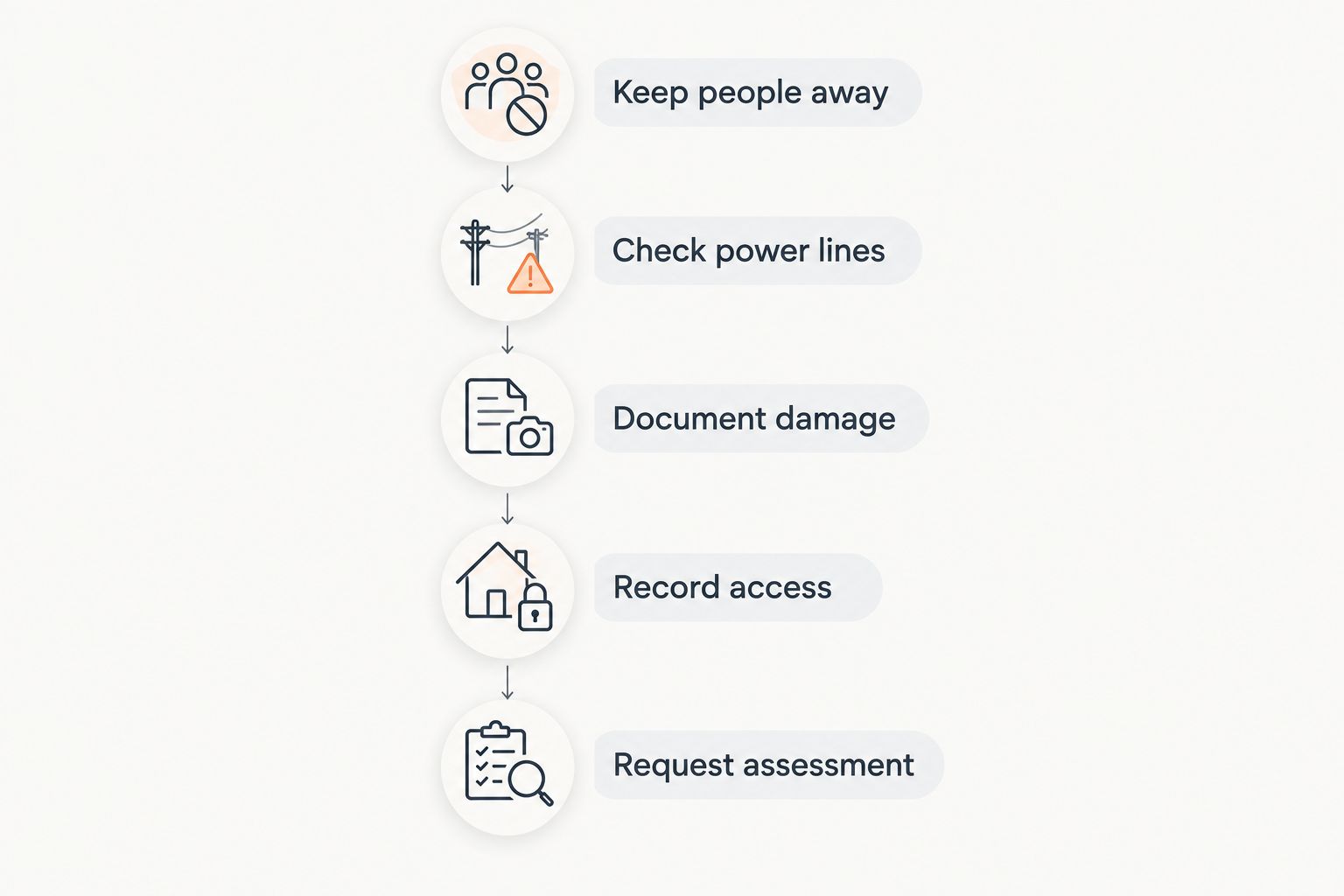
1. Keep people away
Move children, pets, visitors, and workers away from the fallen tree. Do not walk beneath a partly fallen trunk or hanging limbs, and do not let anyone climb over the tree to reach a vehicle or doorway. Choose another route if you can do so safely.
For a commercial property, tell staff which entrance or walkway is closed. Keep delivery drivers and customers from entering the affected area. Do not approach unstable wood just to install a barrier; restrict access from a safe position instead.
If a tree has damaged an occupied building, leave the affected area when you can do so safely. Call 911 if someone is trapped, injured, or faces an immediate threat to life.
2. Check for power-line involvement from a safe location
Look for overhead wires, a damaged service connection, or a line lying across the tree or ground. Treat any fallen wire as energized. A line that is silent or not sparking is not evidence that it is safe.
Contact the electric utility and follow its instructions. Do not touch the tree, a fence, a vehicle, or another object that could be in contact with a wire. Do not attempt to move a branch off a line with a tool.
A tree-removal appointment is not a substitute for utility clearance. Tell the removal provider about suspected electrical involvement before the visit, and keep people away until the utility addresses the hazard.
3. Leave the trunk, branches, and root plate undisturbed
Do not begin cutting simply because the tree has stopped moving. A trunk resting on branches can shift when its supports are disturbed. Bent limbs can release stored force, and an uprooted tree's raised root plate can move as the trunk is cut.
Leave ropes, chains, vehicles, and cutting tools out of the preparation process. Pulling a trunk can change how its weight rests on a roof, fence, or another tree. Your job before the assessment is to identify the situation, not to test its stability.
Describe what you can see from a safe location: a fully grounded trunk, a suspended section, a split trunk, or exposed roots. The removal provider needs to assess how the tree is supported before selecting a removal method.
4. Document damage without entering the hazard area
Take photographs from a safe location. Capture the overall scene, the affected structure or vehicle, and the visible relationship between the tree and nearby objects. Do not step under branches or onto damaged roofing to get a closer picture.
Write down when you discovered the damage and which parts of the property are affected. Keep messages, estimates, and receipts together. For a 2026 insurance claim, ask your insurer which photographs and documents it needs rather than assuming a particular checklist applies.
If property is damaged, contact your insurer before nonurgent cleanup. When urgent action is needed to protect people or prevent further damage, do not delay necessary safety measures for photographs; document what you safely can and follow the insurer's instructions.
5. Record access and the cleanup you want
Describe how a removal crew could reach the tree without requiring you to clear a hazardous path. Note gates, narrow passages, steps, slopes, soft ground, nearby buildings, and the location of parked vehicles. Do not assume that driveway access means the entire work area is accessible.
Decide what you want the finished site to look like. Does the request include the trunk, branches, loose debris, stump, or exposed root plate? Are you asking to retain usable wood or have it removed?
State those preferences in the quote request. Stump work and debris handling need explicit discussion; the phrase fallen tree removal alone does not describe every part of the cleanup.
6. Request a site-specific assessment
Send the provider a short description and safe photographs, then ask what requires an on-site inspection. Include power-line involvement, structural damage, access restrictions, and your intended cleanup scope. Photos help explain the job but do not establish whether the tree is safe to approach.
Ask for a written scope that identifies the work included and any exclusions. Confirm how changes discovered during the assessment will be discussed. Do not treat a preliminary conversation as a guaranteed price or completion date.
Why this matters
Fallen tree removal involves more than clearing visible wood. The tree's weight, its contact with surrounding objects, and the condition of its branches determine what must happen before cleanup. A mistake during preparation can disturb the very supports keeping the tree in place.
For your 2026 removal request, separate urgent hazard control from the final cleanup scope. That distinction helps you contact the right party first and explain the work without promising yourself a result that still needs assessment.
What if the fallen tree is in an open yard?
A tree resting in an open yard still needs a stability assessment. Look from a safe location for hanging limbs, a raised root plate, nearby wires, and parts of the trunk held above the ground. Keep the area unused until the hazards are assessed.
Open access helps you describe the job, but it does not make cutting a homeowner preparation task. Move unaffected vehicles or outdoor items only when their location is safely outside the tree's hazard area. Do not enter that area to protect furniture or landscaping.
What if the fallen tree is on a house or fence?
Do not climb onto the structure or remove branches supporting the trunk. The tree and the damaged structure can affect each other's stability. Report visible damage and tell the removal provider whether anyone is occupying the affected area.
Contact your insurer about property damage and ask whether another professional must assess the building before reentry or repairs. Tree removal and structural repair are different tasks; do not assume a removal quote includes both.
What if the fallen tree blocks access or involves wires?
Use another safe entrance if one exists, and tell other occupants or visitors not to approach the obstruction. If the tree blocks the only safe exit or creates an immediate threat to life, call 911. Avoid trying to squeeze under or climb over the trunk.
When wires are involved, contact the electric utility first. Do not judge electrical safety by appearance, and do not ask a removal provider to work around an unresolved electrical hazard.
| Site condition | First action | Useful preparation | Limitation |
|---|---|---|---|
| Tree in an open yard | Keep people out | Photograph from outside the affected area | Open ground does not prove the tree is stable |
| Tree on a structure | Stay out of the affected area | Report damage and contact the insurer | Removing wood does not assess or repair structural damage |
| Tree blocking access | Use another safe route | Notify occupants, visitors, and the provider | Access urgency does not make climbing over it safe |
| Tree involving wires | Contact the electric utility | Describe the location from a safe position | Cleanup must not proceed through an unresolved electrical hazard |
Why fallen tree removal preparation varies
Your property's conditions determine what information and coordination the job needs. For a 2026 quote request, focus on these factors rather than treating every fallen tree as the same cleanup task:
- Power lines: Suspected electrical contact requires utility involvement before tree work proceeds around the hazard.
- Tree support: A suspended trunk, bent branches, or a raised root plate changes the stability assessment.
- Property damage: Contact with a building, vehicle, or fence adds documentation and coordination needs.
- Access: Gates, slopes, narrow passages, and nearby structures affect how the work area can be reached.
- Cleanup scope: Trunk removal, branch cleanup, retained wood, stump work, and root-plate handling need separate clarification.
- Site use: Homes, rental properties, and commercial sites need clear instructions for keeping occupants and visitors away.
What should you send with a fallen tree removal quote request?
Send your location, a description of the tree's position, photographs taken safely, and the cleanup you want. Include whether wires or structures are involved and whether the tree blocks access. Do not enter the hazard area to measure the trunk or obtain extra photographs.
For a Pmmidlands fallen tree removal inquiry, give the county and property address so the location can be checked. The confirmed service area is Richland, Lexington, Newberry, Orangeburg, Sumter, Kershaw, and Fairfield counties in South Carolina.
Pmmidlands tree services are relevant to property owners seeking a site-specific assessment within those counties. The removal method, work scope, and scheduling still need confirmation for your property. A service-area match does not replace an assessment of wires, damaged structures, or unstable wood.
Request a site-specific tree quote
Describe the fallen tree, access restrictions, visible hazards, and cleanup you need.
Should you contact your insurer before removing a fallen tree?
Contact your insurer before nonurgent removal when the tree has damaged insured property. Ask what documentation it needs and what instructions apply to emergency measures. Do not assume every fallen tree or every cleanup item is covered.
For a 2026 claim, keep the removal estimate and the repair estimate clearly identified. A written scope helps distinguish tree cleanup from work on a roof, fence, vehicle, or other damaged property.
Can you move small branches before the removal crew arrives?
Leave branches within the affected area alone until the hazards have been assessed. A small branch can be supporting other wood, lie beneath a hanging limb, or be near a concealed wire. Size alone does not establish safety.
Prepare information instead of cutting wood. Safe photographs, access notes, and a clear cleanup request help without changing the tree's position.
FAQ
What should I do first when a tree falls on my property?
Keep people and pets away, then check for immediate hazards from a safe location. Contact the electric utility for involved wires and call 911 for an immediate threat to life.
Is a fallen tree safe to cut if it is already on the ground?
A fallen tree is not automatically safe to cut. Supported trunks, bent branches, hanging limbs, and raised root plates can move when disturbed.
Should I take pictures before fallen tree removal?
Take pictures before fallen tree removal only from a safe location. Capture the overall scene and visible damage without approaching wires, unstable wood, or damaged structures.
Who should I call if a fallen tree touches a power line?
Call the electric utility if a fallen tree touches or lies near a power line. Treat the line as energized and follow the utility's instructions before arranging work around it.
Does fallen tree removal include the stump and every branch?
Fallen tree removal includes only the work agreed in the quote. Ask explicitly about branches, debris hauling, retained wood, stump work, and exposed roots.
What should a property manager do before tree cleanup?
A property manager should restrict access from a safe location and notify occupants, staff, and visitors about affected routes. Document damage safely and provide access restrictions and the requested cleanup scope to the removal provider.
Where can I ask Pmmidlands about tree services?
Ask Pmmidlands about tree services for properties in Richland, Lexington, Newberry, Orangeburg, Sumter, Kershaw, and Fairfield counties in South Carolina. Request a site-specific quote and explain any wires, structural damage, or blocked access.
One last thing
Describe what should remain, not just what should disappear. Tell the provider about trees, fences, planting beds, and other property features you want protected, along with any wood you want retained. Keep those preferences in the written scope rather than leaving them to assumptions on removal day.