Hire a professional for small tree removal when the tree can strike a structure, involves power lines, has damaged wood, or cannot be removed without putting people or property at risk. A small trunk does not make a removal straightforward; the branches, roots, access route, and landing area also matter. For a 2026 project, request a site-specific assessment rather than choosing a removal method from height alone.
- Small tree removal needs professional assessment when structures, power lines, damaged wood, or restricted access complicate the job.
- Pmmidlands provides tree services within its confirmed South Carolina service area; request a site-specific quote.
- Compare tree removal, stump work, and debris removal separately so the written scope matches your intended use.
- Do not begin cutting while you are still deciding where the tree or its branches will land.
Why this matters
Small tree removal is a property-management decision before it is a cutting job. You need to protect the things around the tree and decide what condition you want the site left in. Removing the trunk alone does not resolve every landscaping, access, or cleanup concern.
Pmmidlands provides tree services in Richland, Lexington, Newberry, Orangeburg, Sumter, Kershaw, and Fairfield counties in South Carolina. If your property is within that area, request a site-specific quote that identifies the tree, nearby obstacles, and the work you want included. Describe the job rather than assuming a small tree means a simple scope.
When should you hire a professional for small tree removal?
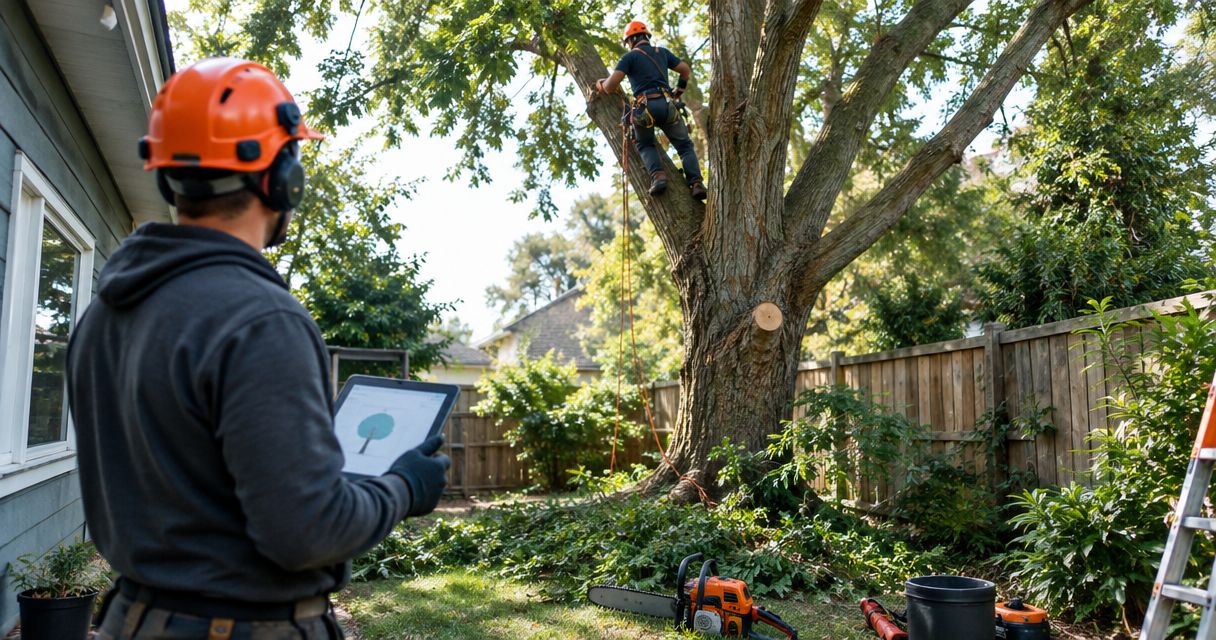
Hire a professional when safe removal depends on controlling the tree's movement, assessing damaged wood, or protecting nearby property. Size is only part of that decision. A relatively small tree beside a house presents a different job from a tree in an open area.
Use these situations to decide what needs assessment before work begins. These are planning categories, not instructions for cutting or a substitute for an on-site inspection.
| Situation | Best for | What professional assessment addresses | Limitation to account for |
|---|---|---|---|
| Tree beside a house, fence, or parked vehicle | Owners protecting nearby property | Branch clearance, landing space, and access | Limited room changes how the removal must be planned |
| Tree near overhead electrical lines | Owners dealing with an electrical hazard | Utility involvement and appropriate clearance procedures | An ordinary tree-removal appointment is not a substitute for utility coordination |
| Dead, split, leaning, or partly fallen tree | Owners facing visible damage | The tree's condition and surrounding exposure | Appearance alone does not establish stability |
| Tree in a tight yard or enclosed courtyard | Owners with restricted access | Entry routes, obstacles, and debris handling | Small tree size does not eliminate access constraints |
| Tree in an open area with no obvious damage | Owners assessing a less obstructed job | Remaining hazards, job boundaries, and cleanup scope | An open area does not prove the tree is safe to remove yourself |
Do not treat the last row as permission to start cutting. If you cannot confidently identify the hazards, arrange an assessment. For your 2026 removal plan, the useful question is not simply how small the tree is, but what its removal can affect.
The tree can reach something you need to protect
A roof, gutter, fence, shed, driveway, or neighboring property deserves attention even when the tree looks modest. Consider the branches as well as the trunk. A tree's visible footprint is not the same as the area that needs protection during removal.
Tell the contractor what sits around the tree and which areas must remain accessible. Include items that are easy to overlook, such as irrigation components, outdoor lighting, or a gate needed for daily access. Let the site assessment establish how those features affect the work.
Electrical lines are nearby
Do not cut, climb, or attempt to pull a tree that involves overhead electrical lines. Contact the electric utility about the situation and follow its instructions. Tree work near energized conductors requires specialized precautions; proximity to a line is not something to judge from a photograph alone.
If a tree or branch is touching a line, keep people away. Do not touch the tree, line, or an object in contact with either. Report an immediate electrical hazard to the utility and use emergency services when there is immediate danger.
The tree is damaged or its condition is uncertain
Dead branches, a split trunk, hanging limbs, or a partially uprooted tree are reasons to seek professional assessment. Describe what you can see from a safe location. Do not move closer just to obtain a better picture.
A new lean or visible root movement also deserves attention. You do not need to diagnose the cause before requesting help; explain what changed and what lies nearby. The assessment should address the actual condition rather than relying on the label of small tree removal.
People use the surrounding space
A tree beside a walkway, rental entrance, parking area, or shared yard creates a coordination issue as well as a removal job. Ask how the work area will be separated from routine use. Do not assume occupants or visitors will notice the hazard themselves.
For a commercial property, identify who can authorize access restrictions and who needs advance notice. Removal planning should account for deliveries, tenant access, and other activities that share the space. The contractor needs that context before agreeing on the work arrangements.
Why small tree removal varies from property to property
Two trees that look similar can require different work because their surroundings differ. These factors should shape the assessment and the written scope, not a guaranteed price or completion date.
- Tree condition: Dead wood, splits, hanging limbs, and root movement require attention before a removal approach is selected.
- Nearby obstacles: Houses, fences, utilities, neighboring property, and parked vehicles affect what must be protected.
- Available access: Gates, slopes, narrow passages, and enclosed yards affect entry and the movement of removed material.
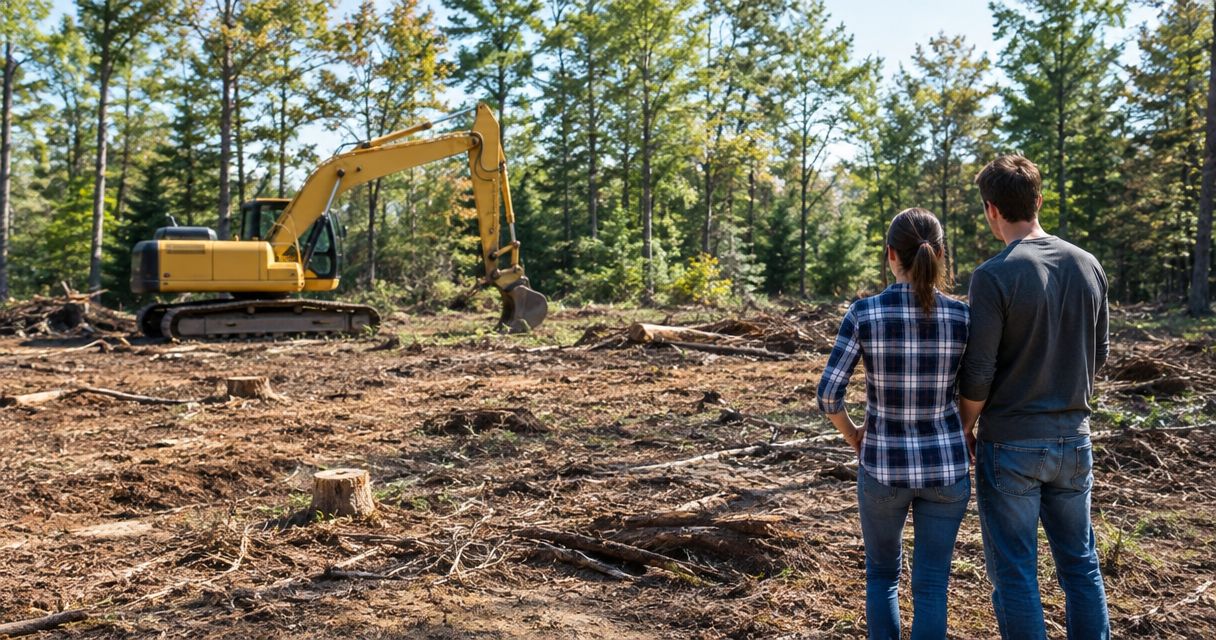
- Landing space: An open lawn and a crowded courtyard present different constraints, even with similarly sized trees.
- Below-ground work: Stump removal, roots, buried services, and the intended use of the ground need separate discussion.
- Cleanup requirements: Leaving material on site, removing debris, and preparing the area for another use are different scope decisions.
For a 2026 quote, explain these conditions in plain language. You do not need to estimate the technical difficulty yourself. Your job is to make the property's constraints and your desired result clear.
How should you prepare for a professional assessment?
Prepare information, not the tree. Do not start cutting branches, digging around roots, or pulling on the trunk to make the job look easier. Changes made before assessment can affect the conditions the contractor needs to evaluate.
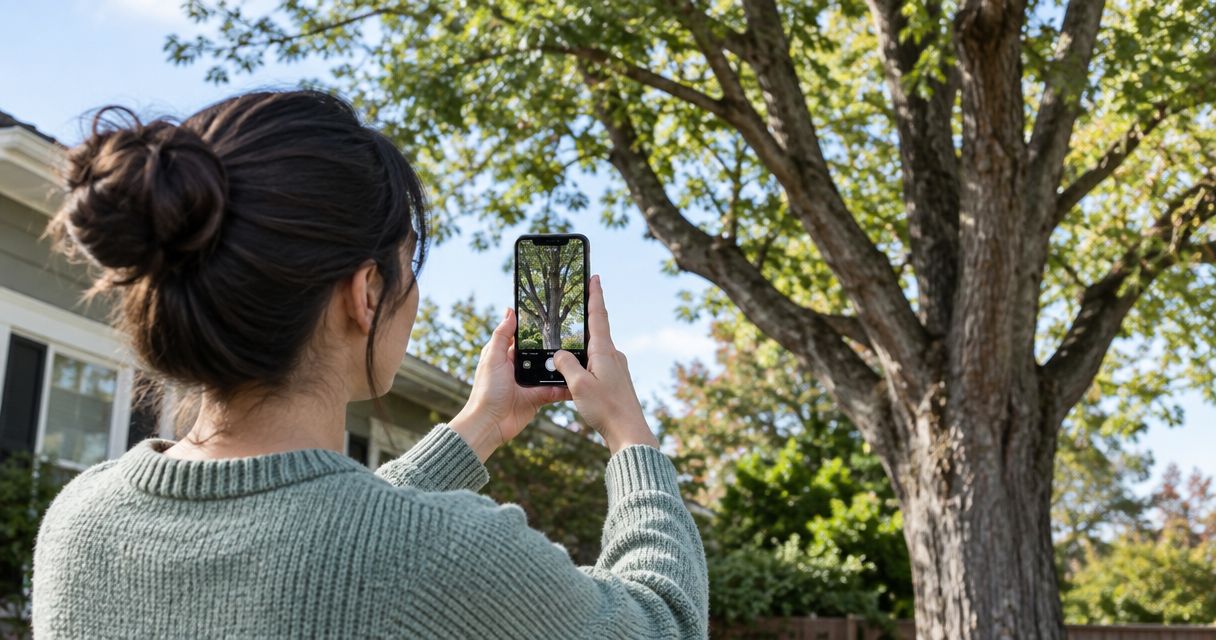
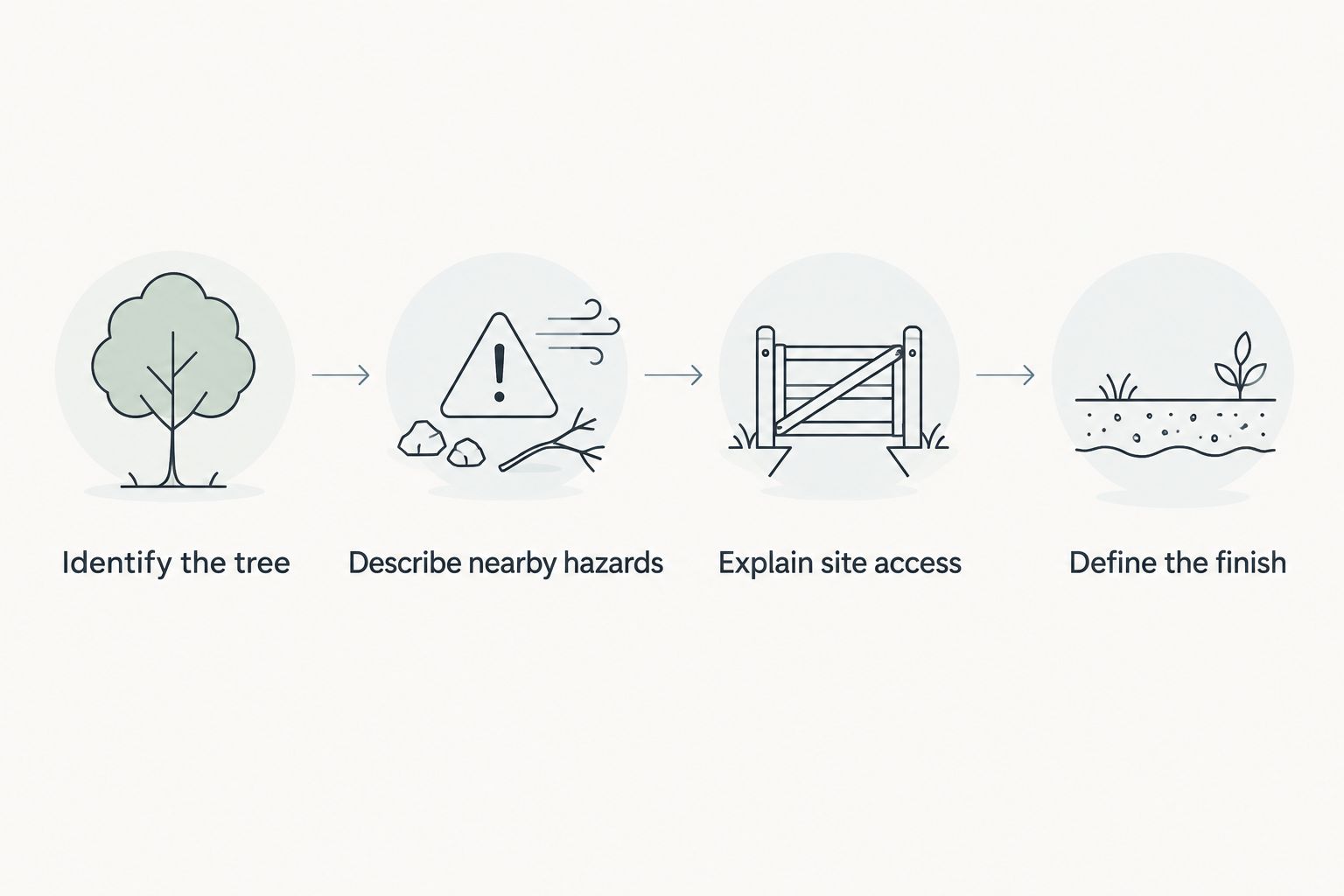
- Identify the tree. Describe its location clearly, especially when several trees are close together. Use a photograph taken from a safe position or a simple property sketch to avoid confusion about the proposed work.
- Describe nearby hazards. Mention structures, electrical lines, damaged branches, exposed roots, and any recent change in the tree's position. State what you observed without guessing at its cause.
- Explain site access. Describe the entry route, gate, parking restrictions, and areas used by residents, staff, or visitors. Tell the contractor about access permissions that need to be arranged.
- Define the finish. Say whether you want only the tree removed or also want stump work, debris removal, and preparation for another use. Ask for each agreed task to appear in the written quote.
Photographs help explain the setting, but they do not replace inspection of the tree and its surroundings. Include a wider view if you can take it safely. A close-up of the trunk alone leaves out the structures, access restrictions, and overhead features that shape the job.
Pmmidlands is a tree-services option for property owners in its confirmed South Carolina counties seeking a site-specific assessment. Request a quote that addresses your property rather than asking for a promise based only on the phrase small tree removal. The written scope should resolve what will happen to the stump and removed material.
Request a site-specific tree removal quote
Describe the tree, nearby hazards, access, and the cleanup you want included.
What should a small tree removal quote include?
A useful quote makes the boundaries of the job clear. Before approving your 2026 work, compare the actual tasks rather than assuming every contractor means the same thing by removal. Ask for clarification wherever a term leaves room for disagreement.
Which tree is being removed?
The quote should identify the tree and its location. This matters on wooded properties, shared boundaries, and sites with several similar trees. Confirm ownership and permission before authorizing work on a tree whose location or ownership is disputed.
If pruning or assessment of a neighboring tree is also discussed, keep that separate from the removal scope. A conversation about surrounding trees should not leave you uncertain about which work you authorized. Clear identification protects both the owner and the contractor from avoidable misunderstandings.
What happens to the stump and debris?
Ask whether the stump remains and whether stump work is included. Then ask what happens to branches, trunk sections, and other removed material. Tree removal, debris removal, and preparation for replanting are not interchangeable descriptions of the finished site.
Explain your intended use of the area. A lawn repair, garden bed, fence project, or construction plan can require different follow-up work. Do not assume that removing the visible tree leaves ground ready for every next step.
What arrangements does the property owner need to make?
Ask what access must be available and which movable items need to be relocated. Confirm how residents, tenants, or staff will be informed about the work area. If utilities or property permissions are involved, establish who needs to coordinate them before work starts.
For tree-service work discussed with Pmmidlands, keep those arrangements in the same written conversation as the scope. That gives you a practical record of the tree, site constraints, and requested finish. It does not replace the assessment, but it reduces ambiguity when you review the quote.
Can you remove a small tree yourself?
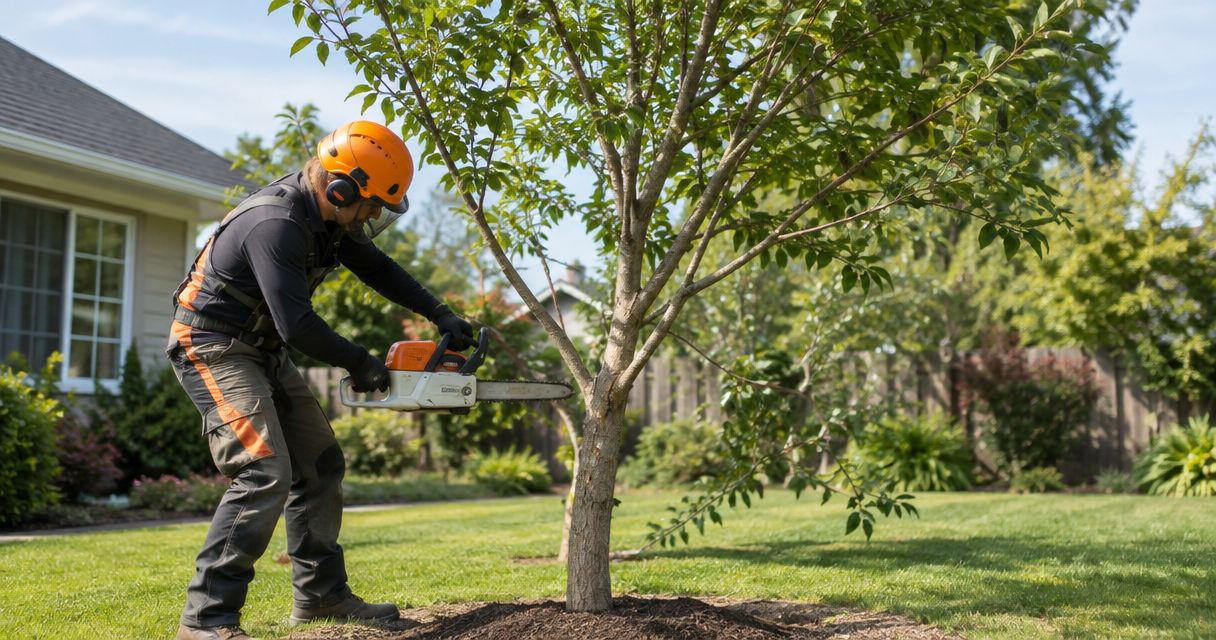
Do not choose DIY removal simply because the tree is small. Electrical exposure, damaged wood, uncertain movement, or insufficient clearance are reasons to stop and seek appropriate help. An unobstructed setting does not establish that you have the knowledge to assess the remaining hazards.
Consider the entire task rather than only the first cut. You must account for people nearby, the surrounding property, and the material left afterward. If any part of that plan is uncertain, request professional assessment instead of learning through the removal itself.
Does small tree removal include stump removal?
Small tree removal includes stump removal only when the agreed scope says so. Ask directly whether the stump remains and what below-ground work is proposed. Do not rely on the word removal to answer that question.
Describe how you intend to use the space afterward. Before work involving excavation or stump grinding, confirm the applicable utility-location arrangements and disclose known private buried services. Above-ground tree removal and below-ground work need separate attention.
Should you wait if the tree is not blocking anything?
Do not use the absence of an obstruction as proof that waiting is safe. A damaged tree can still affect a nearby walkway, building, or neighboring property. Request an assessment when you see hanging limbs, splitting, root movement, or a change in lean.
For nonurgent 2026 planning, explain why you want the tree removed and what will replace it. That helps define the scope without turning a landscaping preference into an unsupported emergency claim. Immediate danger requires a different response from routine quote scheduling.
FAQ
When should I hire a professional for small tree removal?
Hire a professional when structures, electrical lines, damaged wood, limited clearance, or restricted access complicate small tree removal. Request a site-specific assessment rather than deciding from trunk size alone.
Is a small tree next to my house safe to remove myself?
A small tree next to your house is not automatically safe to remove yourself. Branch reach, landing space, tree condition, and nearby property all need assessment before work starts.
Who should I call if a small tree is touching a power line?
Contact the electric utility if a tree is touching a power line, and keep people away from the tree and line. Use emergency services when there is immediate danger; do not attempt to cut or move the tree yourself.
Does tree removal include taking away all the branches?
Tree removal includes taking away branches only when debris removal is part of the agreed scope. Ask whether material will leave the property or remain in a designated location.
Can I get a tree removal quote from photographs?
Photographs can help explain a tree removal request, but they do not replace a site assessment. Include the surrounding area, nearby structures, and access route only when you can photograph them safely.
What should I tell a contractor before a small tree removal assessment?
Tell the contractor which tree you mean, what hazards surround it, how the site is accessed, and what finish you want. Mention stump work, debris handling, property permissions, and known buried services where relevant.
Does Pmmidlands serve my county in South Carolina?
Pmmidlands provides tree services in Richland, Lexington, Newberry, Orangeburg, Sumter, Kershaw, and Fairfield counties in South Carolina. Request a site-specific quote for the tree and work you need assessed.
One last thing
Describe the finished property, not just the tree you want gone. The most useful final question is whether the agreed work leaves the area suitable for your next step. A removed trunk can still leave a stump, debris, or follow-up ground work to arrange.
Before approving the quote, write down that next step: restoring lawn, planting, improving access, or preparing for another contractor. Then check whether the removal scope supports it. That simple comparison prevents an unclear finish from becoming your next project.