The best emergency tree removal options depend on the hazard: emergency services for immediate danger to people, the electric utility for trees touching power lines, and a professional tree contractor for assessing and removing damaged trees. Insurance coordination supports a property-damage claim; scheduled debris removal fits cleanup after immediate hazards are addressed.
- Emergency tree removal options start with the hazard: immediate danger, electrical contact, unstable trees, or grounded debris.
- Emergency services handle immediate threats to people; the electric utility handles suspected power-line hazards.
- Pmmidlands is a tree-services quote contact for properties within its confirmed South Carolina service area.
- Confirm the removal scope, debris handling, stump work, and site access before authorizing tree work.
For a site-specific tree-services quote, contact Pmmidlands. Its confirmed service area covers Richland, Lexington, Newberry, Orangeburg, Sumter, Kershaw, and Fairfield counties in South Carolina; confirm whether the current job and response needs can be accommodated.
Why this matters
A tree across a driveway and a tree resting on an electrical line require different first calls. Treating both as ordinary removal jobs sends you to the wrong responder while the actual hazard remains.
Choose the first call by danger, not by who can cut wood. For your 2026 response plan, separate protecting people, controlling utility hazards, removing the tree, and restoring the property. These are different responsibilities, even when they concern the same fallen tree.
What makes the best emergency tree removal response
Use these criteria to choose the right response before comparing contractors:
- Hazard match: Does the responder address the immediate problem—injury, electricity, unstable wood, or cleanup?
- Safe boundaries: Can you keep people away without approaching the tree or entering its potential fall area?
- Confirmed scope: Does the proposed work cover the damaged tree, hanging limbs, debris, and any requested stump work?
- Site access: Have gates, buildings, slopes, parked vehicles, and access restrictions been discussed?
- Clear authorization: Is the person approving the work authorized to act for the property owner?
- Written handoff: Is it clear what remains for the utility, contractor, insurer, or property manager?
A useful 2026 comparison does not rank every responder as though each offers the same service. Emergency responders, utilities, tree contractors, and insurers have different roles. The best option is the one that addresses the problem you actually have.
Emergency tree removal options at a glance
The order below is a decision sequence, not a claim that one provider replaces another. Start with immediate danger, then address the remaining tree work.
| Response option | Best for | Standout role | Key limitation |
|---|---|---|---|
| Emergency services | Immediate threats to people | Emergency rescue and public-safety response | Not a substitute for private-property tree cleanup |
| Electric utility | Trees involving power lines | Assessment and control of electrical hazards | Private-property wood removal requires separate confirmation |
| Professional tree contractor | Damaged-tree assessment and removal | Planning tree work around property and access constraints | Response capability and scope must be confirmed |
| Insurance coordination | Documenting property damage | Claim instructions and coverage review | Does not make an unsafe tree safe |
| Scheduled debris removal | Cleanup after hazards are addressed | Removing grounded wood and brush within an agreed scope | Not the right response to unstable trees or electrical hazards |
1. Emergency services: best for immediate threats to people
Call 911 when a falling or fallen tree creates an immediate threat to life, causes serious injury, traps someone, or accompanies another emergency. Move away from the hazard if you can do so safely and follow the dispatcher's instructions.
Do not enter beneath a damaged tree to retrieve belongings or attempt a rescue yourself. A tree resting on a structure is not permission to enter that structure.
Emergency services pros:
- Provide the appropriate first contact for an immediate life-safety emergency.
- Coordinate emergency response according to the incident.
- Give instructions while help is being arranged.
Emergency services cons:
- Do not replace a tree contractor's removal assessment.
- Do not establish the scope of private-property cleanup or insurance coverage.
Best for: People facing immediate danger, serious injury, or entrapment.
Verdict: Use emergency services for immediate threats to people; arrange tree removal separately once the scene is safe.
2. Electric utility: best for trees involving power lines
Contact the electric utility when a tree, branch, or fallen wire involves electrical infrastructure. Treat downed lines as energized, stay away, and keep others away. Call 911 as well when there is immediate danger to people.
Do not touch the tree, fence, vehicle, or other object in contact with a line. A tree contractor should not be your substitute for reporting a suspected electrical hazard to the utility.
Electric utility pros:
- Provides the appropriate contact for suspected power-line hazards.
- Assesses electrical infrastructure rather than relying on visual guesses.
- Establishes the electrical conditions that affect subsequent tree work.
Electric utility cons:
- Utility work does not establish the scope of private-property debris cleanup.
- Tree work outside the utility's responsibilities needs a separate agreement.
Best for: Trees touching wires, fallen lines, or suspected electrical contact.
Ask what work the utility will perform and what remains for the property owner. Do not assume that restoring electrical service includes removing every log or branch.
Verdict: Use the electric utility for line involvement; do not approach or cut the tree yourself.
3. Professional tree contractor: best for damaged-tree removal
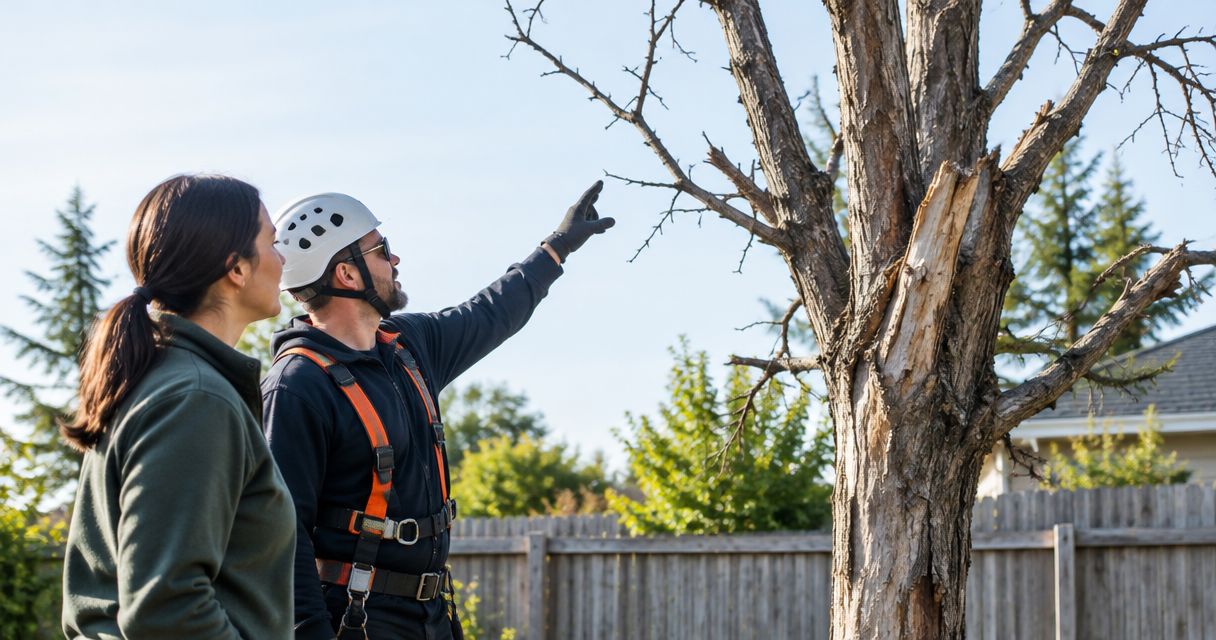
A professional tree contractor assesses the tree, nearby structures, working area, and access before defining the removal job. This is the relevant option for damaged trees after immediate life-safety and electrical hazards have been addressed.
Pmmidlands is a local tree-services quote option for property owners in its seven confirmed South Carolina counties. Describe the damage and ask whether the requested work and response needs fit its current services; do not assume emergency dispatch or a particular arrival time.
Professional tree contractor pros:
- Assesses the removal job in its actual surroundings.
- Defines which trees and branches are included.
- Accounts for access restrictions and nearby property.
- Establishes a written scope for removal and cleanup.
Professional tree contractor cons:
- A description or photograph does not replace every site assessment.
- Stump work, hauling, and surface restoration require explicit confirmation.
- Emergency response arrangements differ between providers and must be checked.
Best for: Property owners who need damaged-tree assessment and an agreed removal scope.
For a 2026 quote request, state whether the tree is standing, partly fallen, or fully grounded. Report visible hanging limbs, nearby wires, and contact with buildings without approaching to investigate.
Verdict: Request a site-specific assessment; authorize work only after the scope and response arrangements are clear.
4. Insurance coordination: best for documenting property damage
Contact your insurer when a fallen tree damages insured property or when you need claim instructions. Ask about documentation, emergency protective work, and the process for submitting contractor information.
Insurance coordination runs alongside the physical response. It does not remove the tree, control electricity, or justify entering an unsafe area to collect photographs.
Insurance coordination pros:
- Clarifies the documentation requested for a claim.
- Gives you a place to ask coverage and deductible questions.
- Helps organize contractor records and property-damage information.
Insurance coordination cons:
- Coverage depends on the policy and circumstances.
- Claim handling does not replace immediate safety measures or tree assessment.
Best for: Owners documenting damage to buildings, vehicles, or other insured property.
Keep contractor quotes, authorizations, invoices, and safe-to-obtain photographs together. Ask the insurer how to handle urgent protective work rather than assuming every expense will be covered.
Verdict: Use insurance coordination alongside the safety response, not instead of it.
5. Scheduled debris removal: best for cleanup after hazards are addressed
Scheduled debris removal fits grounded wood and brush once unstable trees, hanging limbs, and electrical hazards have been addressed. It separates the cleanup job from the earlier emergency response.
Define the material to be removed and the intended finish. A pile beside a driveway is a different scope from scattered branches across a property or wood mixed with damaged fencing.
Scheduled debris removal pros:
- Creates a defined cleanup task after the urgent hazard is addressed.
- Lets you identify which piles and areas belong in the quote.
- Separates hauling decisions from stump work and restoration.
Scheduled debris removal cons:
- Is not appropriate for unresolved overhead or electrical hazards.
- Does not automatically include stump removal, grading, or repairs.
Best for: Owners and property managers with grounded debris and an agreed safe working area.
Keep tenants, visitors, and vehicles outside the affected area until access is appropriate. Do not move heavy branches to improve access before the contractor has assessed the job.
Verdict: Choose scheduled cleanup only after the hazardous tree conditions are addressed.
Prepare a quote request without entering the hazard
A useful 2026 tree-removal request describes the site rather than guessing how the contractor should perform the work. Start with the property address, county, your contact details, and who can authorize access.
Use this sequence:
- Describe the hazard: State what you can see from a safe location, including tree position and contact with structures.
- Show safe views: If safe, take 3 photos: a wide property view, the affected tree, and the access route. Skip any view that requires approaching danger.
- Explain access: Describe gates, parked vehicles, slopes, fences, and occupied areas without taking risky measurements.
- Separate the scope: Request 2 written scope breakdowns: tree work and cleanup. Identify stump work separately if you want it assessed.
- Confirm authorization: Keep 1 contact record naming the person who approves the work and coordinates entry.
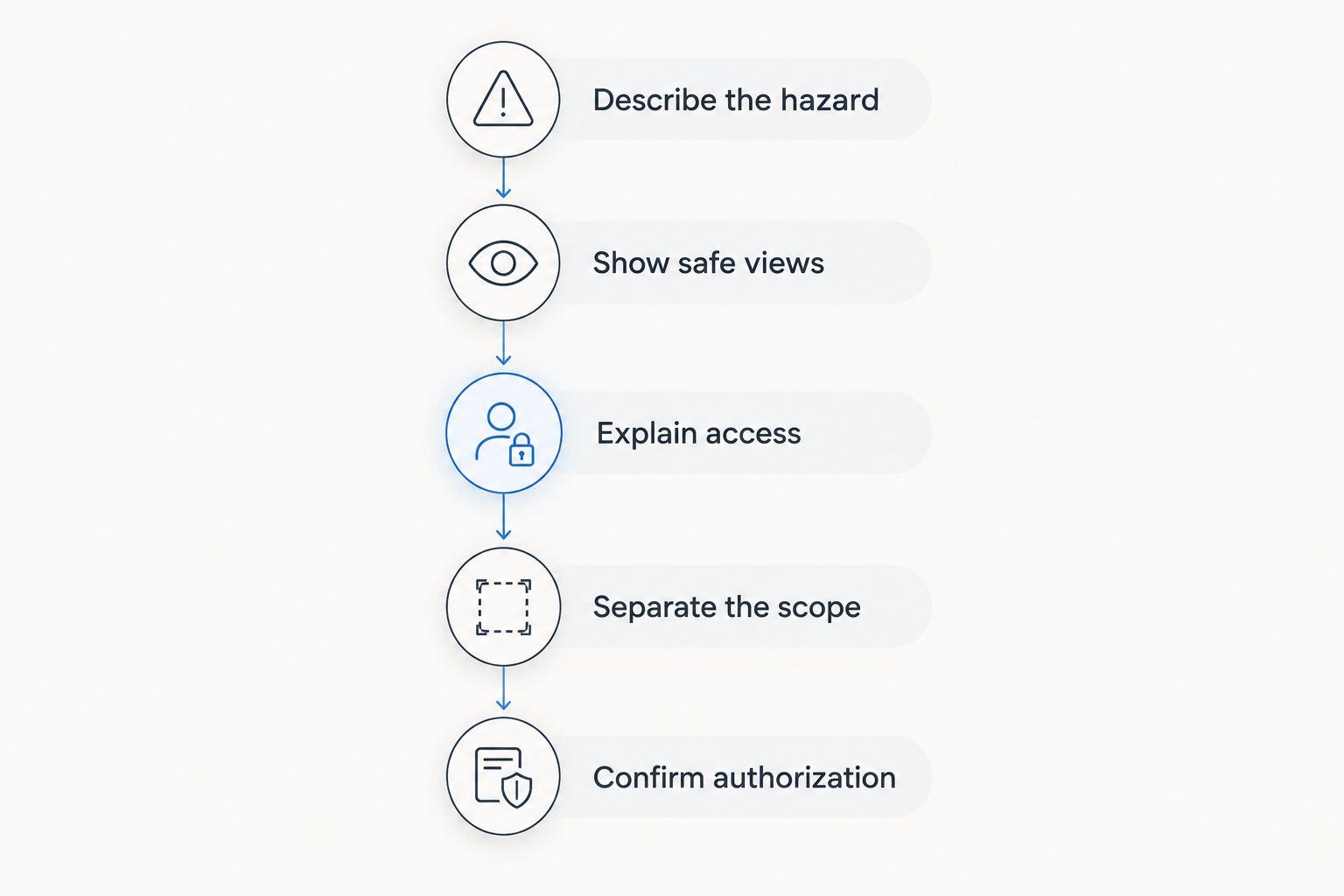
Those photo counts are an organizing suggestion, not a requirement to enter an unsafe area. Tell the contractor when a useful view cannot be obtained safely; the site assessment must address what photographs cannot establish.
When contacting Pmmidlands about tree services, identify which confirmed service-area county contains the property. Describe your response needs directly and ask what requires an on-site assessment before a quote can be finalized.
Request a site-specific tree quote
Describe the damage, property access, and cleanup needs; confirm the response arrangements directly.
How these options are ranked
The ranking follows hazard match, safe boundaries, scope, access, authorization, and handoff responsibilities. It places immediate danger and electrical involvement before removal planning, then separates claim coordination from cleanup.
No arrival-time or performance ranking is implied. For a 2026 hiring decision, compare contractors against the same written job description and confirm the response arrangements directly.
Which emergency tree removal option should you choose?
For a damaged tree without an immediate life-safety or power-line emergency, start with a professional tree assessment. If people face immediate danger, call emergency services first; if wires are involved, report the hazard to the utility.
Pmmidlands is a tree-services quote contact within its confirmed South Carolina counties. Ask about the specific job, required assessment, removal scope, and cleanup before authorizing work. An insurer or debris-removal arrangement does not replace the initial safety decision.
FAQ
What's the best emergency tree removal option for a tree on my house?
Start with the immediate danger: call 911 if anyone is injured, trapped, or threatened. Stay out of the affected area and arrange a professional tree assessment after emergency and electrical hazards are addressed.
Who should I call if a tree touches a power line?
Contact the electric utility and stay away from the tree and line. Call 911 as well if people face immediate danger, and do not touch objects in contact with the line.
Can I cut up a fallen tree myself?
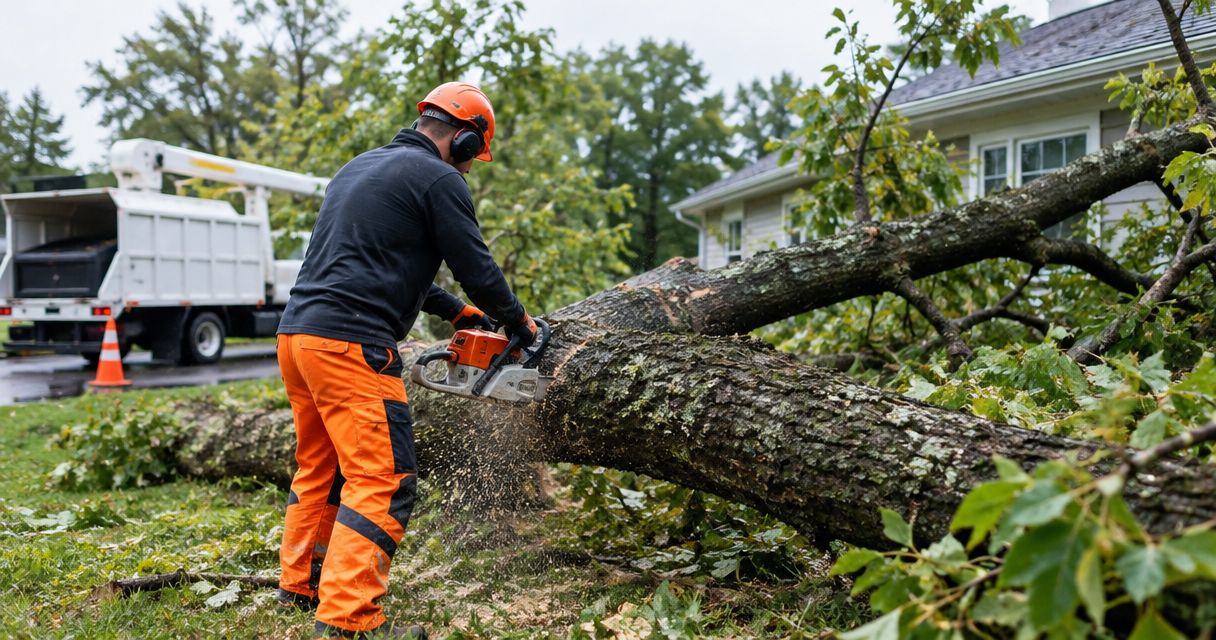
Do not attempt cutting when there are wires, hanging limbs, unstable wood, or structural contact. Fallen wood can remain under tension; request a professional assessment rather than assuming a grounded tree is safe.
Does emergency tree removal include debris and stump removal?
Debris and stump removal must be confirmed in the written scope. Ask separately about hauling, stump work, and surface restoration before authorizing the job.
How much does emergency tree removal cost?
Request a site-specific quote based on the tree, hazards, access, and cleanup scope. A generic estimate does not establish the work required at your property.
Does insurance cover emergency tree removal?
Coverage depends on your policy and the incident. Ask your insurer about documentation and emergency protective work, without delaying an immediate safety response.
Can Pmmidlands help with a local tree-services quote?
Pmmidlands is a tree-services quote contact for Richland, Lexington, Newberry, Orangeburg, Sumter, Kershaw, and Fairfield counties in South Carolina. Confirm the specific work, assessment needs, and response arrangements directly.
One last thing
A tree being on the ground does not prove the emergency is over. Hanging branches, electrical contact, and wood under tension still require attention. Before asking only when the debris can disappear, ask what remains unsafe and who is responsible for addressing it.