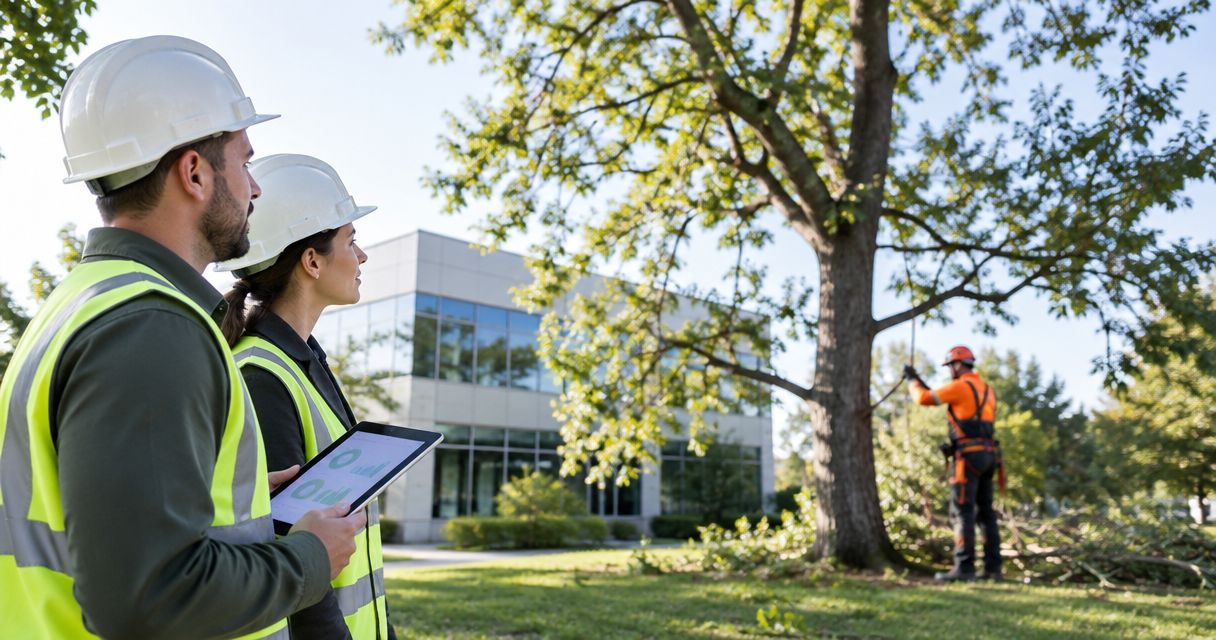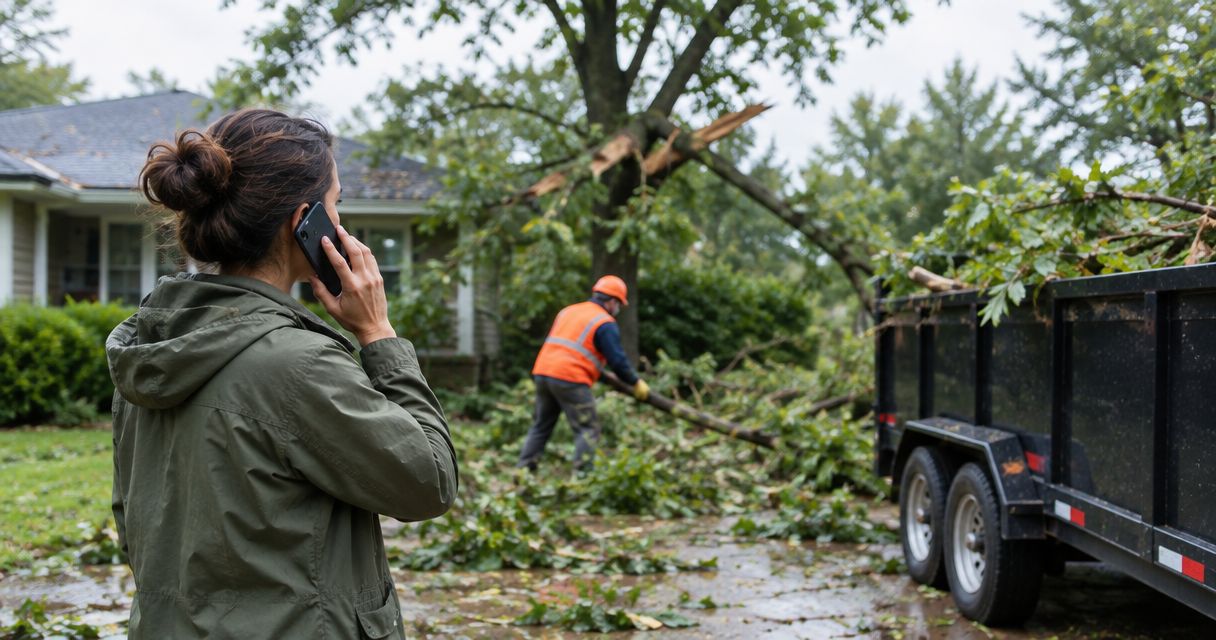
Arrange tree debris removal after a storm by keeping people away from unstable trees and utility lines, documenting damage from a safe location, and requesting a site-specific cleanup quote. Describe what fell, where it landed, and whether you need cutting, hauling, or additional tree work. Before approving the job, confirm who handles utility clearance, access, disposal, and any damage beneath the debris.
- Tree debris removal starts with hazard control, not cutting or moving branches.
- Separate loose debris cleanup from fallen tree removal and stump work before requesting a quote.
- Confirm hauling, disposal, access, and the cleanup endpoint in writing.
- Pmmidlands is a tree-services contact for property owners seeking a site-specific assessment in its confirmed South Carolina counties.
How do you arrange tree debris removal after a storm?
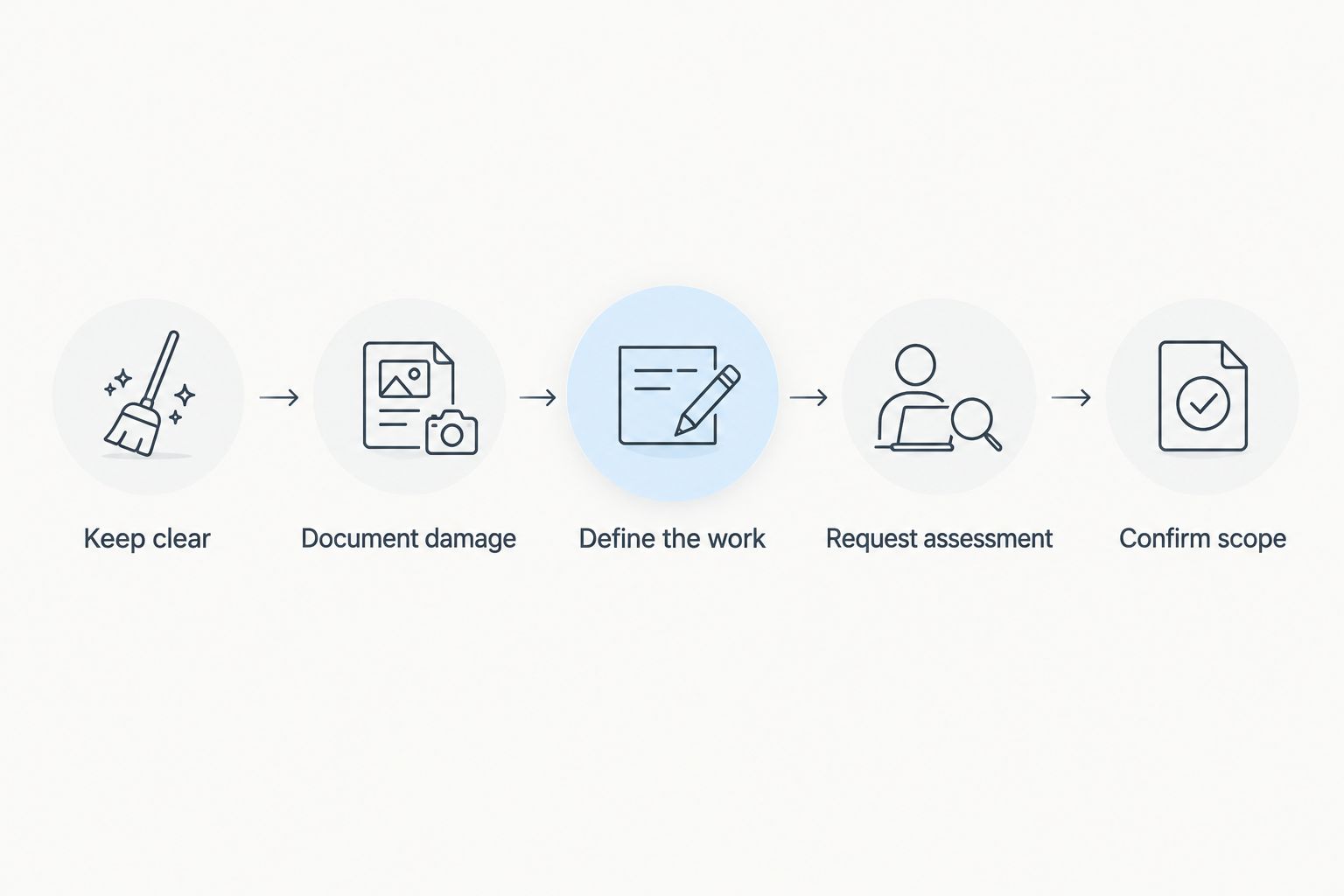
Use the following sequence for your 2026 storm cleanup. Treat a tree touching a wire, resting on a building, or holding suspended branches as a hazard assessment first—not a routine hauling job. For property owners in Richland, Lexington, Newberry, Orangeburg, Sumter, Kershaw, or Fairfield County, Pmmidlands is a tree-services contact for discussing the site.
- Keep clear. Keep residents, visitors, pets, and vehicles away from damaged trees and fallen limbs. Do not walk beneath hanging branches or approach wires caught in debris. Contact the utility about damaged lines; call emergency services when there is immediate danger.
- Document damage. Photograph the affected area from safe ground before cleanup changes the scene. Capture the debris, nearby structures, and available access without climbing, moving branches, or stepping into the damaged area.
- Define the work. Identify loose branches, a fallen trunk, damaged standing trees, and uprooted material separately. Explain whether your goal is opening an entrance, clearing the entire property, or preparing a defined area for repair.
- Request assessment. Give the contractor your property location, photographs, access restrictions, and known hazards. Ask which parts require an on-site inspection before the contractor can define the work.
- Confirm scope. Get a written description of cutting, loading, hauling, disposal, and the agreed cleanup endpoint. Resolve responsibility for utility clearance and any separate repair work before work begins.
Each step answers a different question. Safety determines whether anyone can enter; documentation records the condition; scope determines what the contractor is actually quoting. Do not skip directly from a photograph to approval while those questions remain unresolved.
Why this matters
A storm cleanup request can describe very different jobs. A pile of loose branches beside an accessible driveway is not the same assignment as a trunk lying across a fence with broken limbs overhead. The location and condition of the wood matter as much as the pile itself.
For a 2026 cleanup request, describe the result you need rather than asking only for debris removal. An open driveway, a cleared lawn, and a property ready for fence repair have different boundaries. Naming that endpoint helps you compare quotes without assuming that every contractor includes the same work.
Cleanup also changes the evidence of storm damage. If you intend to make an insurance claim, contact your insurer about documentation and claim requirements. Do not delay emergency safety measures to preserve photographs, and do not assume that a contractor's invoice establishes coverage.
What work should your debris removal quote include?
Separate the cleanup into its actual tasks. The following comparison distinguishes common work scopes; it does not establish that any particular contractor offers every service. Ask which tasks belong in your quote and which need a separate assessment.
| Work scope | Best for | What it addresses | Limitation to confirm |
|---|---|---|---|
| Loose debris collection and hauling | Branches already on the ground | Gathering, loading, and removing agreed material | Does not necessarily include cutting a fallen trunk or treating damaged standing trees |
| Fallen tree removal | A trunk or substantial tree sections blocking an area | Cutting and removing the fallen tree | Hanging limbs, trapped wood, utility contact, or structural damage need assessment |
| Damaged standing tree work | Broken or unstable material still attached to a tree | Addressing the remaining tree hazard | Ground cleanup alone leaves this work unresolved |
| Stump or root-ball work | A project that requires the remaining stump or uprooted base addressed | A separately defined ground-level task | Does not automatically include grading, soil replacement, or surface restoration |
Loose debris collection: define the material and destination
Tell the contractor whether the debris is scattered across the property or already gathered. Identify anything mixed into it, including fence pieces, roofing material, or household waste. A load containing mixed storm damage needs a different disposal discussion from a load containing only branches.
Confirm whether material will leave the property or remain in an agreed location. If you want some wood retained, state that before cutting begins. Do not assume hauling includes every pile on the site or that removal means the ground will be restored.
Fallen tree removal: identify what the trunk is touching
Describe whether the trunk rests on open ground, a fence, a roof, a vehicle, or another tree. Fallen wood can remain under tension, and cutting it can cause movement. Do not test its stability by pushing it, climbing on it, or attempting a trial cut.
A photograph helps show the arrangement, but it cannot establish how the tree will move during removal. Ask for an on-site assessment when the trunk is trapped, supported by a structure, or entangled with other damaged material.
Remaining tree damage: include what is still overhead
Look from a safe location for broken limbs that remain attached or caught in nearby branches. Tell the contractor about visible damage without approaching the tree to inspect it closely. Ground-level hauling does not resolve overhead hazards.
Ask whether the quote addresses only material already down or also includes assessment of damaged standing trees. That distinction matters when you want to reopen a walkway, parking area, or yard after cleanup.
Stumps and root balls: keep restoration separate
A removed trunk does not mean the stump or uprooted base has been addressed. If your next project involves rebuilding a fence, reopening a landscaped area, or repairing a driveway edge, explain that use during the assessment.
Confirm the intended condition of the ground afterward. Stump work, filling a depression, grading, and repairing landscaping are separate scope questions. They should not be treated as automatic parts of debris hauling.
Why tree debris removal requirements vary
The useful question is not just how much wood fell. Ask what must happen to remove it safely and leave the agreed area usable. These factors belong in your 2026 request:
- Debris condition: Loose limbs, tangled branches, and a fallen trunk require different handling. Identify what is present rather than describing everything as brush.
- Contact with structures or utilities: Trees against roofs, fences, vehicles, or lines require coordination before removal. Tell the contractor what the wood touches.
- Access: Gates, narrow passages, parked vehicles, slopes, and soft ground affect how the site can be approached. Describe restrictions without guessing which equipment is needed.
- Remaining hazards: Broken overhead limbs and damaged standing trees need attention beyond collection of material on the ground. Keep those areas closed pending assessment.
- Disposal scope: Taking everything away, leaving selected wood, and handling mixed waste are different instructions. State your preference and confirm what the contractor accepts.
- Cleanup endpoint: Clearing an entrance differs from removing scattered branches throughout a property. Specify the boundaries and any follow-on repair needs.
Do not estimate tree height or debris volume simply to make your request look precise. Clear photographs and a description of the affected area are more useful than unsupported measurements. Let the site assessment establish the details needed for the work plan.
What should you send when requesting a quote?
Give the contractor enough information to understand both the damage and the approach to it. Your initial request should identify the property address and county, the area affected, what is blocked, and whether anyone has reported utility contact or structural damage.
For your 2026 request, include photographs showing the overall scene, the debris from safe viewpoints, and the route into the work area. Mention gates, shared driveways, occupied buildings, and surfaces you want protected. Do not enter a hazardous area to get a better image.
The guide to requesting a tree removal quote using photos covers a closely related preparation step. Photographs help explain the job; they do not replace inspection of hidden supports, damaged limbs, or conditions beneath the wood.
Use this short request outline:
- Property location and county.
- Debris description and where it landed.
- Blocked entrances, walkways, or parking areas.
- Known utility contact or damage to structures.
- Available access and areas to avoid.
- Requested removal boundaries and whether hauling is required.
For commercial properties, identify the person authorized to approve the work and explain how occupants use the affected area. Keep the closure in place until the hazard has been assessed; reopening access is a separate decision from arranging a quote.
What should you confirm before approving cleanup?
Approve a defined job, not an undefined promise to clean up. Read the proposed scope against the outcome you requested. If the quote says debris removal, ask exactly which material, locations, and tasks that description covers.
Confirm whether cutting, loading, hauling, and disposal are included. Ask what happens to material discovered beneath the visible pile and how additional work will be approved. Also identify tasks that remain outside the agreement, such as utility work, roof repairs, fence repairs, or ground restoration.
Discuss access before the crew arrives. Explain where vehicles can enter, which areas must remain clear, and whether gates or parked vehicles need attention. Do not move hazardous wood yourself to create access; tell the contractor about the obstruction.
Pmmidlands serves tree-service inquiries within its confirmed South Carolina counties. Request a site-specific assessment rather than assuming a general debris description establishes the final scope. A photo-only discussion has a clear limit: conditions hidden beneath or within storm-damaged trees still require assessment.
Request a site-specific tree service quote
Describe storm damage, access, and the material you want removed from your property.
Can you move storm branches before the contractor arrives?
Leave storm branches alone when they are near wires, beneath hanging limbs, or tangled with a fallen tree. Clearing a small-looking branch is not safe if reaching it requires entering the hazard area. Do not cut wood held under tension or pull material from beneath a trunk.
For loose material in an otherwise safe area, ask whether gathering it would help the agreed job. Keep entrances and public routes clear without moving debris into a roadway or assuming curbside collection is available.
Should you ask about public storm debris collection first?
Check current local collection instructions before placing tree debris at the curb. Contact the relevant local authority about accepted material, placement rules, and whether storm collection applies to your address. Do not infer eligibility from a neighbor's pile.
Use the instructions issued for the specific 2026 storm event. Public collection, if offered, does not establish that a damaged tree is safe to cut or that material on private property will be collected from where it lies.
FAQ
How do I arrange tree debris removal after a storm?
Keep people away from hazards, document the damage safely, and request a site-specific quote. Confirm cutting, hauling, disposal, and the cleanup boundaries before approving work.
Who should I call if a fallen tree is touching a power line?
Contact the utility and stay away from the tree, wire, and surrounding area. Call emergency services if there is immediate danger, and do not attempt to move or cut the wood.
Does tree debris removal include the stump?
Tree debris removal does not automatically include stump work. Ask for stump or root-ball work to be identified separately, along with any ground restoration you need.
Can a contractor quote storm cleanup from photos?
Photographs help a contractor understand the job, but hazardous or obscured conditions require a site assessment. Send safe views of the debris, nearby structures, and access route.
Will insurance cover tree debris removal after a storm?
Your insurer must determine coverage under your policy and claim circumstances. Document the damage safely and ask about claim requirements before non-emergency cleanup changes the scene.
Where can I ask Pmmidlands about tree services?
Pmmidlands' confirmed service area covers Richland, Lexington, Newberry, Orangeburg, Sumter, Kershaw, and Fairfield counties in South Carolina. Describe your storm damage and request a site-specific assessment.
How do I compare storm debris removal quotes in 2026?
Compare the same removal boundaries and tasks in every 2026 quote. Check whether cutting, loading, hauling, disposal, remaining tree hazards, and ground restoration are included or excluded.
One last thing
Agree on what stays as clearly as what goes. Marking the intended cleanup boundary in a photograph taken from safe ground helps distinguish storm debris from wood you want retained, undamaged landscaping, or material belonging to someone else. Explain those distinctions before approving removal.
The endpoint should be understandable without standing beside the pile. State which entrance or area must be cleared, which material must leave, and which repairs remain a separate job. That is a stronger instruction than asking for the property to look cleaned up.