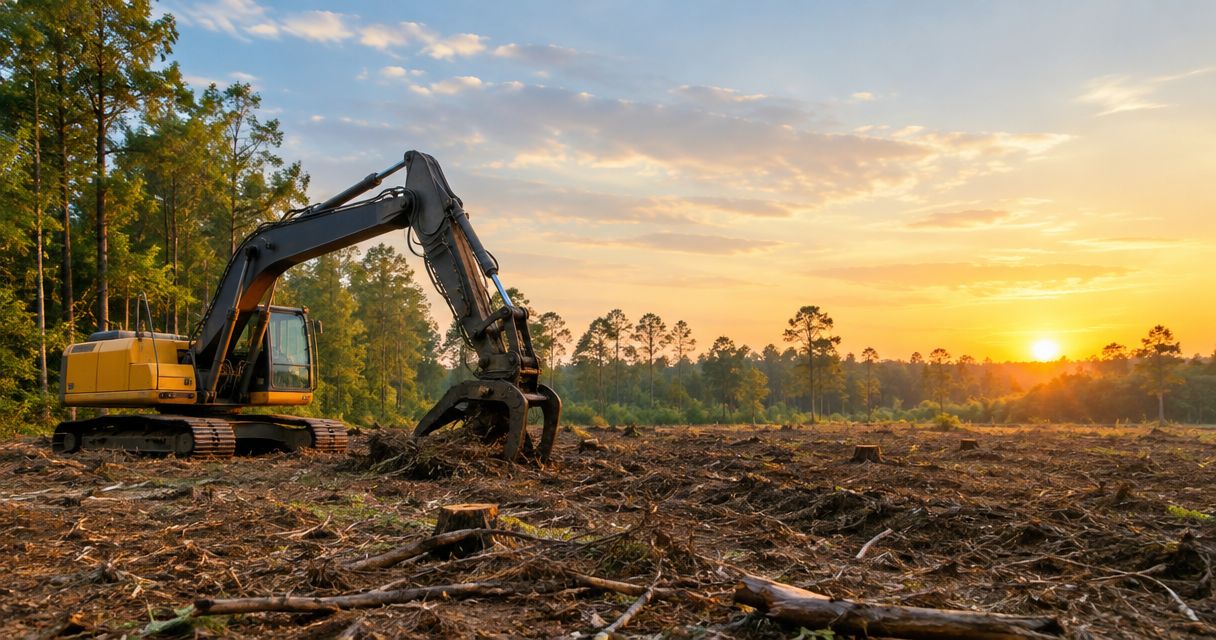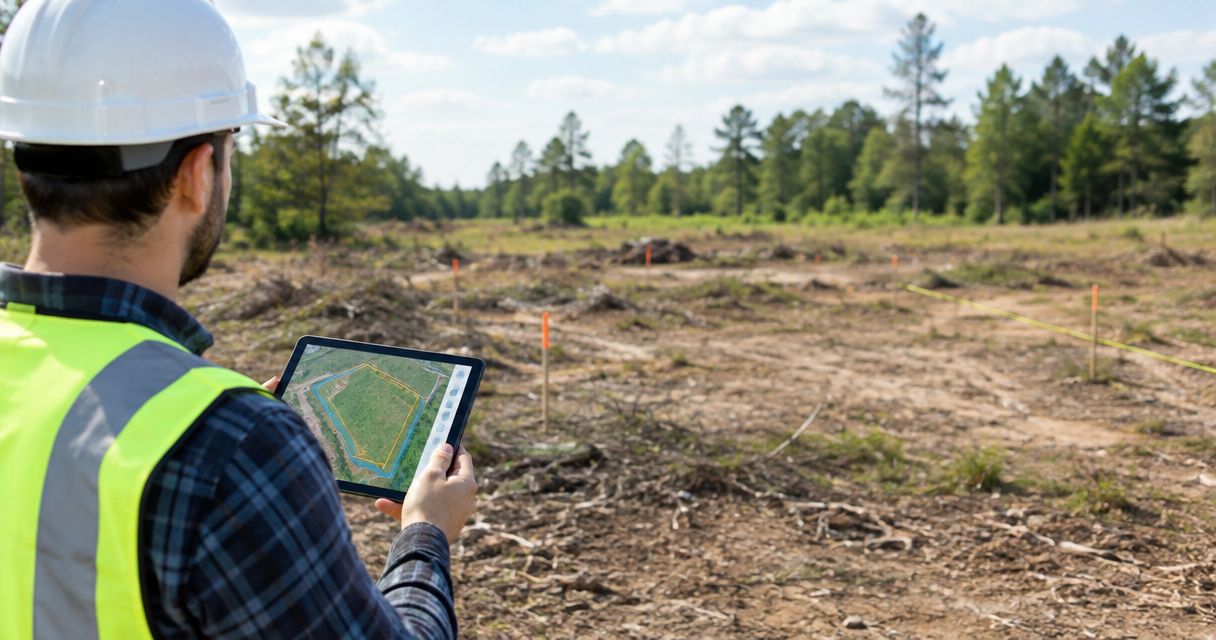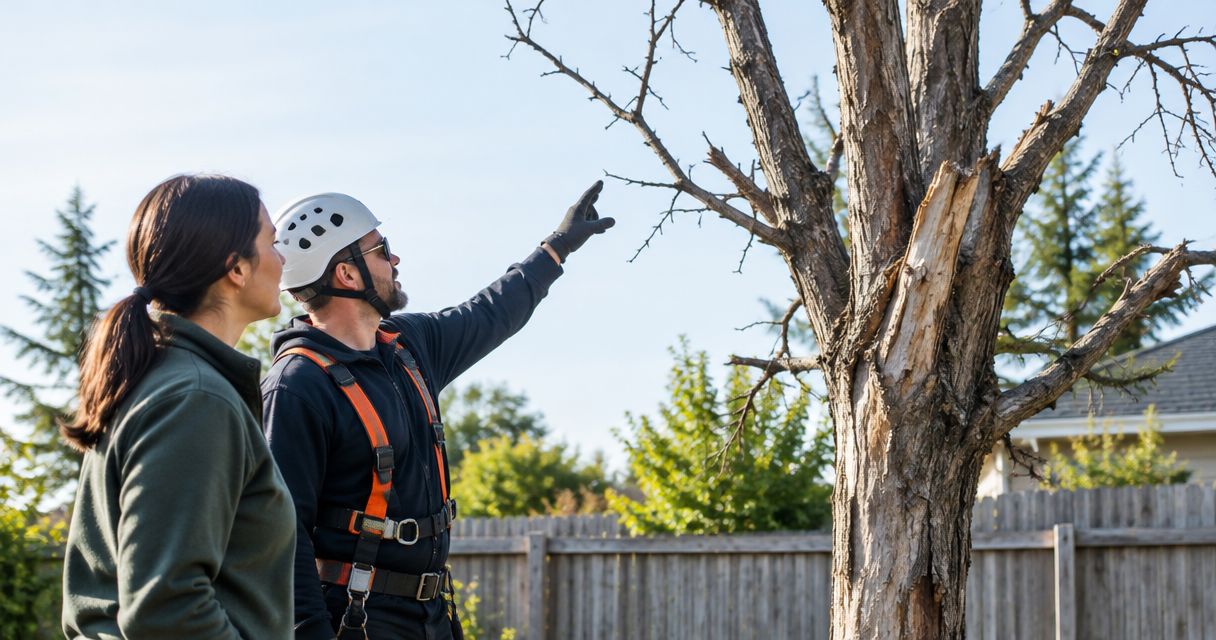
Best overall for keeping selected trees: selective clearing. Best for reducing dense undergrowth without removing every root: forestry mulching. Best for narrow, sensitive areas: hand clearing. This 2026 guide to forestry mulching vs land clearing compares five approaches by the finished result you need—not by how empty the property looks afterward.
- Forestry mulching vs land clearing starts with intended use: vegetation management and construction preparation need different scopes.
- Choose selective clearing when you need usable space while keeping selected trees.
- Choose forestry mulching for surface vegetation management, not a stump-free building footprint.
- Ask Pmmidlands for a site-specific tree-services quote in its confirmed South Carolina service area.
Why this matters
Clearing vegetation is not the same as preparing land for construction. A property can look open while roots, stumps, buried debris, or unsuitable ground remain in the planned work area.
For your 2026 project, define the finished use before choosing a method. A walking path, a maintained yard, and a new driveway require different results. Buy the scope that supports the next use—not the largest clearing operation.
For homeowners and property managers in Richland, Lexington, Newberry, Orangeburg, Sumter, Kershaw, and Fairfield counties, Pmmidlands is a tree-services contact for a site-specific quote. Describe the result you need and ask which work the proposed scope includes; do not assume every clearing method is offered.
What makes the best alternative to full land clearing?
Judge each approach against these criteria before comparing quotes:
- Finished use: Decide whether you need access, vegetation control, a yard, or a construction footprint.
- Trees to retain: Identify trees and vegetation that must remain before work begins.
- Stump outcome: Specify whether stumps can stay, need grinding, or require removal for the planned use.
- Ground disturbance: Discuss roots, slopes, drainage, and exposed soil during the assessment.
- Access and obstacles: Show gates, fences, overhead lines, utilities, buildings, and restricted working areas.
- Debris outcome: State whether cut material should remain as mulch, be stacked, or leave the property.
A useful quote addresses these decisions explicitly. A short description such as “clear the lot” leaves too much unresolved.
Forestry mulching vs land clearing at a glance
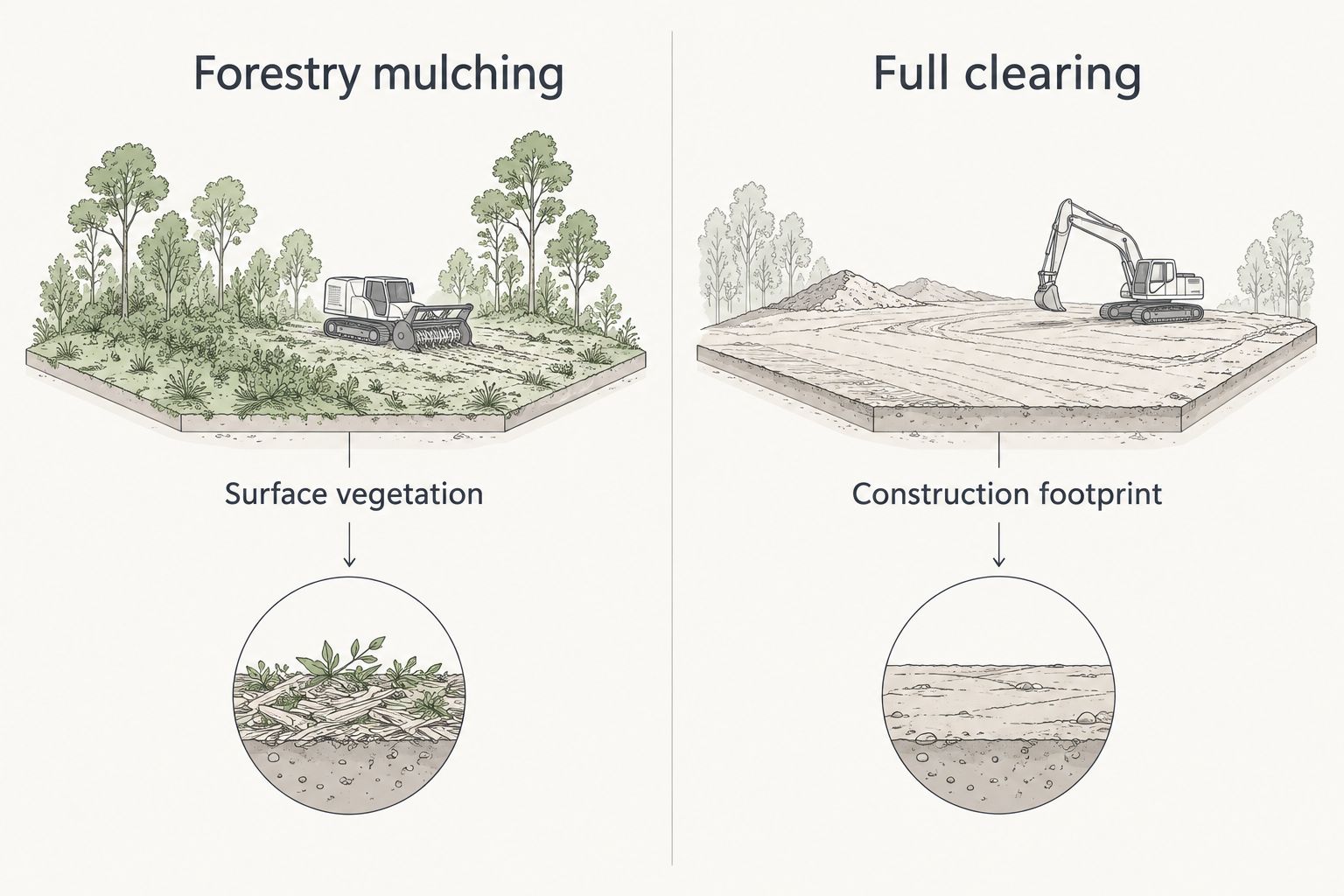
These five approaches are alternatives or complements, not interchangeable packages. Forestry mulching is itself a vegetation-clearing method; here, “full clearing” means broader removal within a defined project footprint.
| Approach | Best for | Standout feature | Key limitation |
|---|---|---|---|
| Selective clearing | Keeping selected trees while opening usable space | Targets marked vegetation rather than the entire lot | Requires clear retention boundaries |
| Forestry mulching | Managing dense surface vegetation | Processes vegetation into material left on the ground | Does not establish a root-free construction area |
| Brush cutting | Maintaining accessible areas with light growth | Cuts vegetation without requiring whole-lot removal | Leaves roots and requires repeat maintenance |
| Hand clearing | Small, confined, or sensitive areas | Allows detailed work around selected features | Poor fit for extensive heavy vegetation |
| Full clearing | Removing vegetation from a defined development footprint | Supports a broader removal scope | Does not automatically include grading or construction preparation |
In a 2026 quote comparison, the method name is only the starting point. Compare the retained trees, remaining stumps, debris handling, and final ground condition on the same basis.
1. Selective clearing: best for keeping selected trees
Selective clearing removes specified vegetation while retaining trees or other features you want. It is a scope decision rather than a single technique: the contractor determines the work needed after assessing the site.
Choose this approach when you want room around a house, a defined access route, or a more usable portion of an overgrown property. Mark both removal areas and retention areas. Protecting a tree requires attention to its root area, not just avoiding its trunk.
Selective clearing pros:
- Keeps the project focused on the space you actually need.
- Allows selected trees and screening vegetation to remain.
- Supports separate treatment of different property areas.
Selective clearing cons:
- Unclear markings create uncertainty about what stays.
- Working around retained trees requires protection planning.
Best for: Property owners who want usable space without clearing the whole parcel.
For your 2026 plan, explain what will happen beneath the retained trees afterward. Parking, grading, and repeated traffic need discussion before the clearing scope is agreed.
Verdict: Buy selective clearing when retaining specific trees is a requirement.
2. Forestry mulching: best for managing dense undergrowth
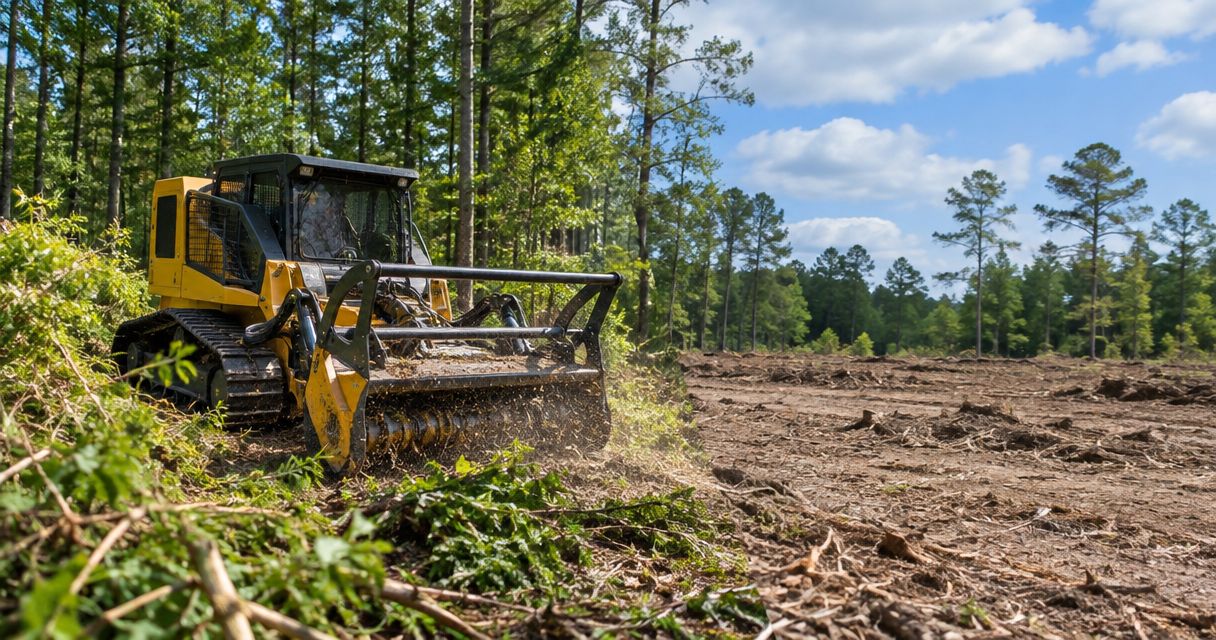
Forestry mulching processes vegetation into shredded material that remains on the ground. It addresses surface vegetation without necessarily extracting the underground roots and stumps associated with broader removal work.
That distinction matters when your goal is visibility, access, or vegetation management rather than excavation. Confirm which vegetation the proposed operation can handle and what material will remain. Do not treat a mulched surface as proof that the ground is ready for building.
Forestry mulching pros:
- Combines cutting and processing vegetation in the treated area.
- Leaves processed organic material on the site.
- Can form part of a selective vegetation-management plan.
Forestry mulching cons:
- Leaves underground material unless separate work removes it.
- Does not eliminate future regrowth or maintenance.
- Remaining mulch is not a finished lawn or structural base.
Best for: Owners seeking surface vegetation management where retained roots and processed material fit the intended use.
Ask how the proposed mulch coverage affects your next step. Establishing grass, maintaining a path, and preparing an excavation area require different follow-up work.
Verdict: Buy forestry mulching for vegetation control; skip it as a substitute for specified root or stump removal.
3. Brush cutting: best for maintaining light growth
Brush cutting cuts grasses, weeds, and suitable woody growth without making whole-lot removal the default. The appropriate method depends on vegetation size, terrain, obstacles, and safe access.
This approach fits areas you intend to maintain repeatedly rather than transform into a construction site. Identify hidden wire, dumped material, rocks, and other obstacles before work is planned. Cutting vegetation does not remove those hazards.
Brush cutting pros:
- Fits recurring vegetation maintenance.
- Allows work to stay within marked paths or boundaries.
- Does not require removing every tree from the treatment area.
Brush cutting cons:
- Roots and stumps remain unless separately addressed.
- Dense trees or substantial woody material require another scope.
Best for: Accessible areas with light growth and an ongoing maintenance plan.
Before accepting a 2026 maintenance quote, ask what happens to cut material and which obstacles remain. Also specify where the maintained area ends; a property boundary is not always obvious beneath vegetation.
Verdict: Buy brush cutting for recurring surface maintenance, not a one-time promise of permanent clearance.
4. Hand clearing: best for confined or sensitive areas
Hand clearing uses targeted manual work to remove specified vegetation. It is an option to discuss where access is restricted or where detailed work around retained features matters.
A narrow side yard, fence line, or carefully marked planting area needs a different assessment from an open lot. Hand work does not make hazardous tree removal safe, and restricted access does not remove the need for professional planning.
Hand clearing pros:
- Allows precise selection of vegetation to remove.
- Fits localized work around retained features.
- Gives the scope clear, small-area boundaries.
Hand clearing cons:
- Extensive heavy growth makes the work demanding.
- Larger trees, unstable limbs, and underground obstacles need separate assessment.
Best for: Small areas where precision matters more than broad coverage.
Keep the request specific: identify the vegetation, the retained features, and the debris destination. “Clean up around the fence” is less useful than marking the exact treatment strip and explaining whether the fence must remain untouched.
Verdict: Buy hand clearing for localized detail work; skip it as the default for an extensive wooded parcel.
5. Full clearing: best for a defined development footprint
Full clearing addresses broader vegetation removal within an agreed area. Depending on the written scope, that work can include trees, brush, stumps, and debris—but none of those components should be assumed.
For a building, driveway, or other development project, coordinate the clearing requirements with whoever is responsible for the next phase. Removing vegetation does not automatically provide grading, drainage work, suitable soil, or an approved foundation area.
Full clearing pros:
- Establishes a defined area for broader removal.
- Allows tree, stump, and debris requirements to be specified together.
- Aligns clearing boundaries with a planned project footprint.
Full clearing cons:
- Removes vegetation that a narrower scope could retain.
- Exposed ground requires erosion and drainage planning.
- Construction preparation can remain outside the clearing agreement.
Best for: Owners with a defined development footprint and clear next-phase requirements.
Verdict: Buy full clearing when the planned use requires broader removal; skip whole-parcel clearing without a reason.
How these approaches are ranked
This ranking prioritizes the finished use, retained trees, stump outcome, ground disturbance, access, and debris handling. Selective clearing leads for owners who need usable space while preserving specified features. Full clearing moves to the front when a defined development footprint requires broader removal.
These are scope-based recommendations, not equipment tests or contractor ratings. A site assessment determines whether an approach fits your property.
Turn the comparison into a quote request
Use these 3 planning questions to organize your request:
- What stays? Mark retained trees, screening, fences, structures, and areas outside the work boundary.
- What leaves? Identify unwanted vegetation, stumps, fallen material, and debris requiring removal.
- What happens next? Explain whether the area becomes a path, yard, access route, or development footprint.
Then request 2 scope descriptions: the work included and the material or conditions remaining afterward. These descriptions expose differences that a single total cannot explain.
Photographs help communicate the project, but they do not establish underground conditions, safe working space, or every access restriction. Use the property preparation guide for lot clearing to organize the details before requesting an assessment.
Tell Pmmidlands which confirmed service-area county contains the property. Request a site-specific quote and confirm the proposed method rather than assuming forestry mulching, stump work, or debris removal is included.
Request a site-specific clearing quote
Describe your county, retained trees, access restrictions, and intended use of the cleared area.
Which clearing approach should you choose?
Choose selective clearing by default when you need usable space and want to keep selected trees. Choose forestry mulching when surface vegetation management is the goal and retained underground material fits the plan.
For your 2026 project, reserve full clearing for an area whose next use requires it. Different sections of the same property can need different scopes; ask for those boundaries to appear in the quote.
FAQ
What's the main difference between forestry mulching and land clearing?
Forestry mulching processes surface vegetation into material left on the ground; land clearing describes a broader removal scope. The written agreement determines whether trees, stumps, roots, and debris are removed.
Is forestry mulching better than full land clearing?
Forestry mulching is the better fit when your goal is surface vegetation management and retained underground material is acceptable. Full clearing fits projects requiring broader removal within a defined footprint.
Does forestry mulching remove tree roots and stumps?
Forestry mulching does not establish a root-free or stump-free site. Specify any required stump grinding, stump removal, or root removal separately and confirm the proposed result during the assessment.
Can I keep selected trees while clearing an overgrown lot?
Yes, selective clearing allows you to identify trees and areas that must remain. Mark retention boundaries and discuss root protection, access routes, and the intended use beneath retained trees.
Will mulched land be ready for a driveway or building?
A mulched surface is not proof that land is ready for a driveway or building. The next-phase contractor must establish requirements for roots, stumps, organic material, grading, and ground preparation.
How do I compare quotes for clearing my property?
Compare the same boundaries, retained trees, stump treatment, debris handling, and final condition. Ask each contractor to state what remains after the work and which follow-up tasks are excluded.
Where can I request a local tree-services quote from Pmmidlands?
Request a site-specific tree-services quote for property in Richland, Lexington, Newberry, Orangeburg, Sumter, Kershaw, or Fairfield County in South Carolina. Describe the intended use and confirm which clearing work the proposed scope covers.
One last thing
Ask what remains, not just what disappears. Roots, stumps, mulch, exposed soil, and retained vegetation determine whether the completed work suits your next step. Have that answer written into the scope before approving the job.