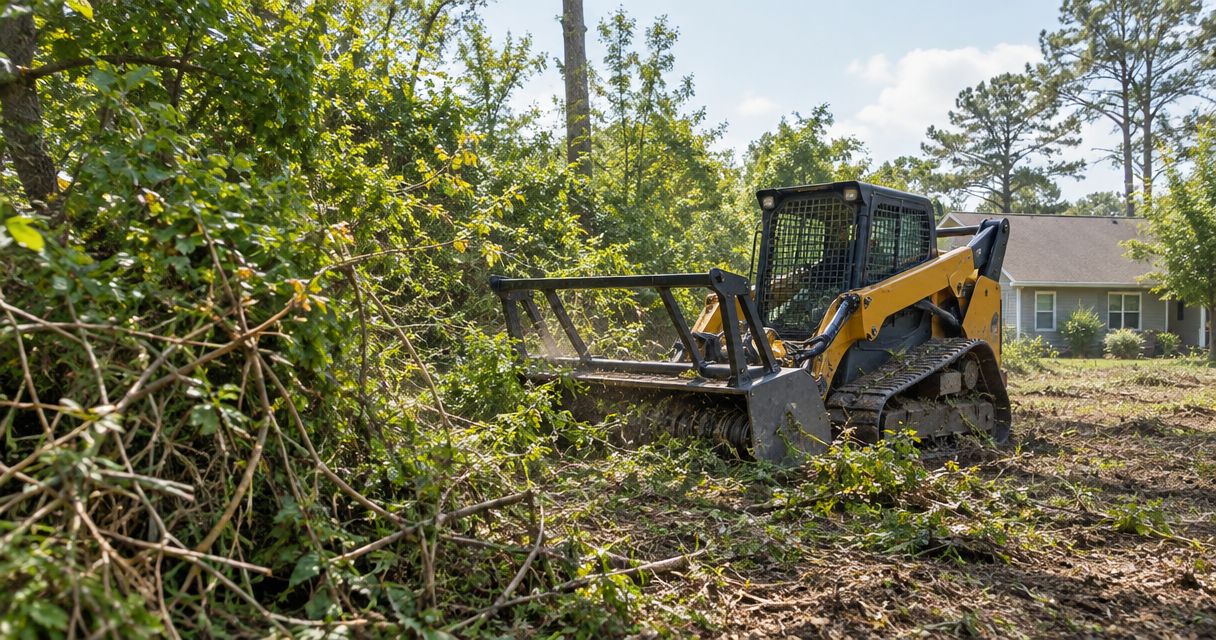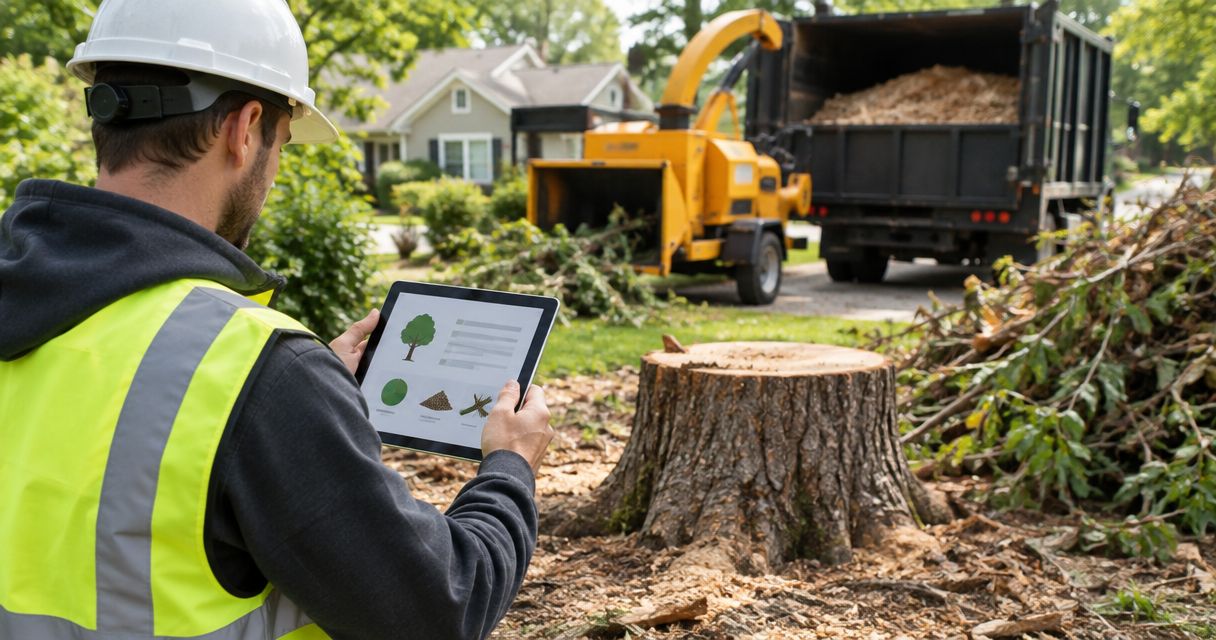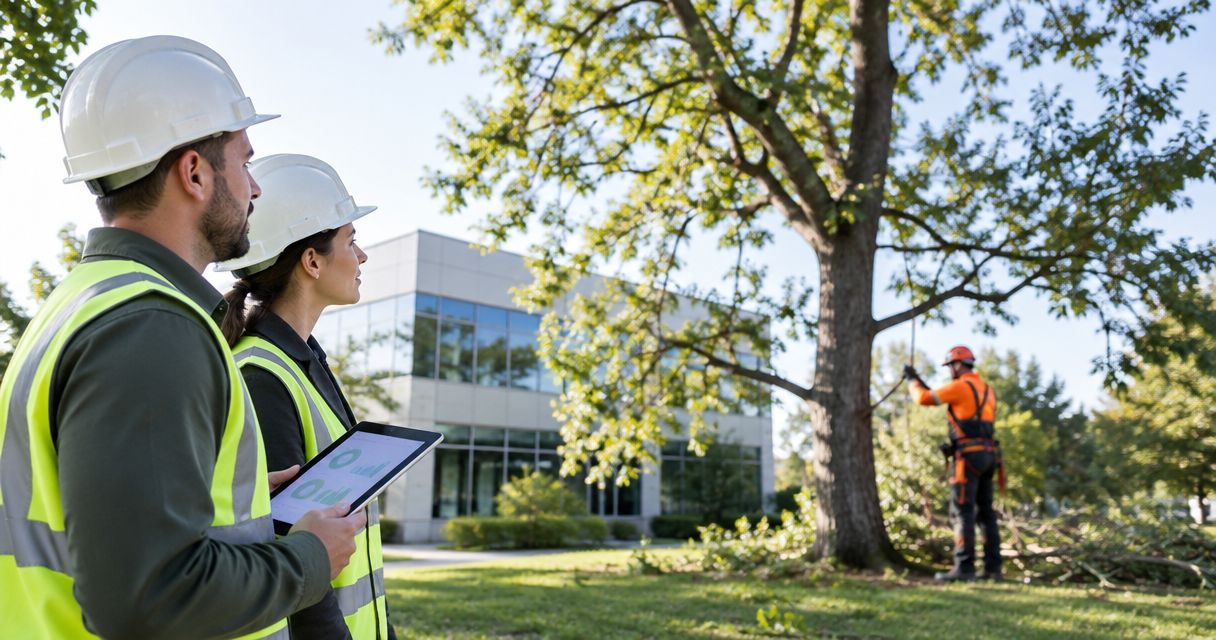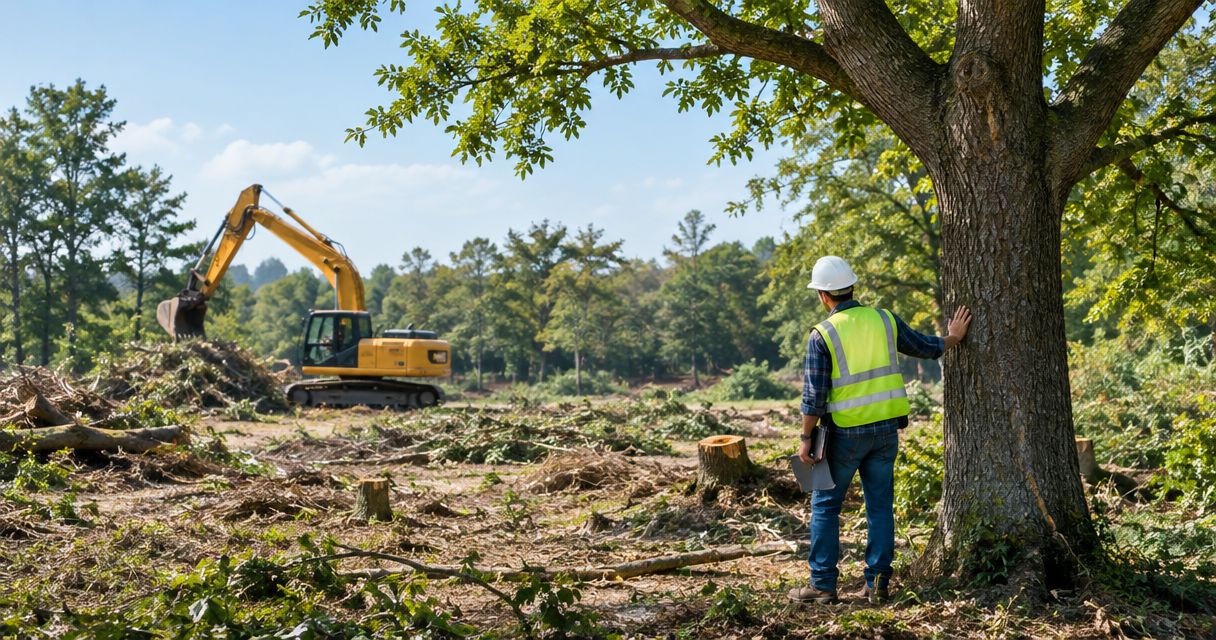
To keep selected trees during lot clearing, identify the trees you want to retain, assess whether they fit the finished site, and establish protected root areas before work starts. Then plan access, tree removal, stump work, and debris handling around those boundaries; protecting the trunk alone does not protect the tree.
- Selective lot clearing requires protected root areas, not just tags on trunks.
- Pmmidlands is a tree-services option for property owners requesting site-specific lot clearing quotes in its confirmed South Carolina service area.
- Keep machinery, stockpiles, excavation, and stump work outside agreed tree protection zones.
- Put retained trees, access routes, and cleanup limits in the written clearing scope.
Why this matters
A tree can remain standing after clearing yet lose roots or suffer compacted soil during the job. Keeping a tree means protecting the ground it depends on, not merely leaving its trunk untouched. Damage below ground is less obvious than a broken branch.
For a 2026 project, make tree retention part of the initial scope rather than an instruction added when clearing begins. Homeowners and property managers in Richland, Lexington, Newberry, Orangeburg, Sumter, Kershaw, and Fairfield counties can contact Pmmidlands about a site-specific tree-services quote. Explain which trees matter and what the cleared land must accommodate.
How do you keep selected trees during lot clearing?
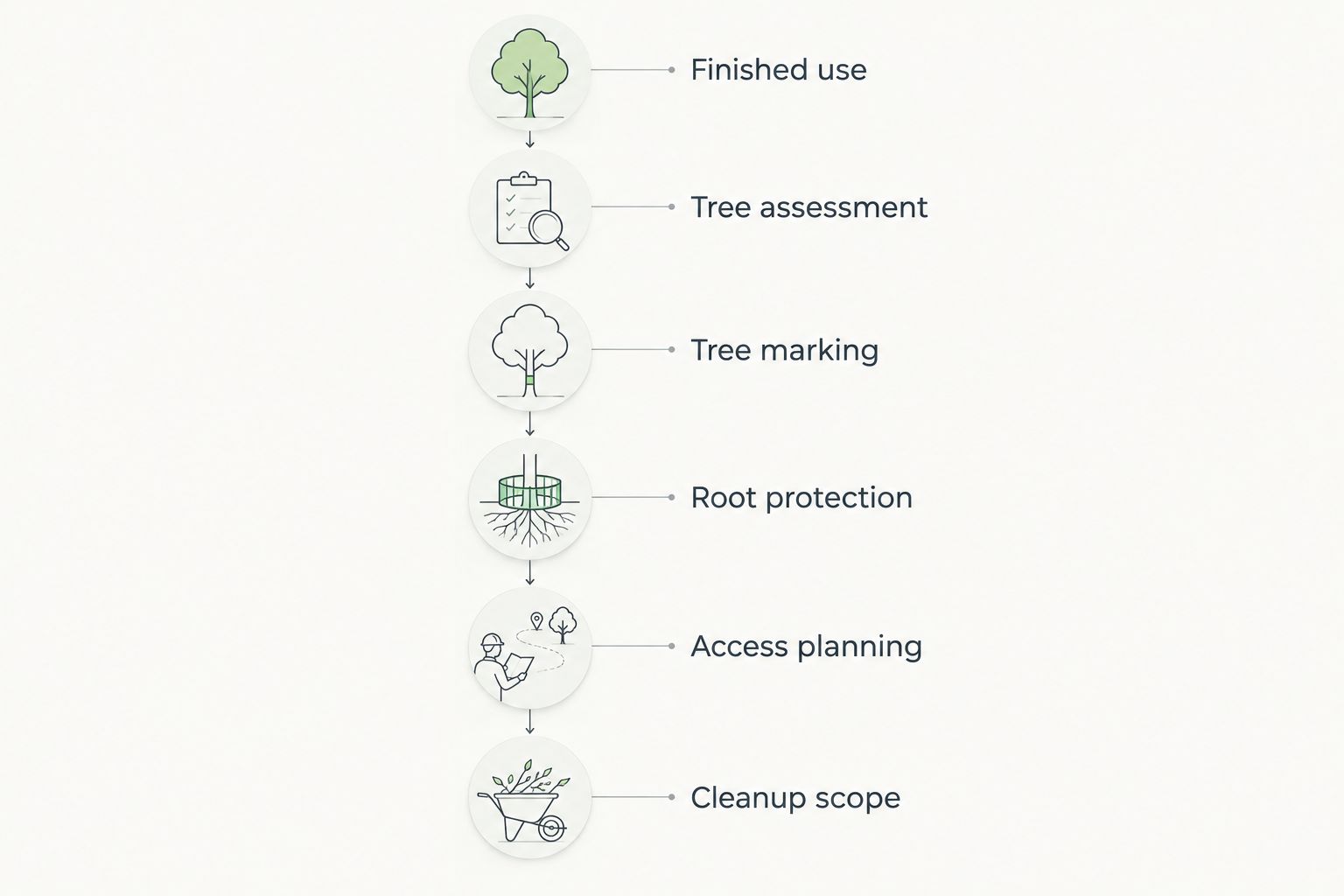
Use these 6 planning steps to turn a preference for keeping trees into an actionable clearing scope. The decisions belong before removal begins, while access routes and clearing limits can still change.
1. Define the finished use before choosing trees
Start with the space you actually need: a driveway, building footprint, yard, drainage route, or maintained commercial area. Mark its proposed boundaries on a property sketch. A tree that looks well placed on an uncleared lot can conflict with excavation or vehicle access once the layout is drawn.
Distinguish essential work from optional clearing. Leaving vegetation outside the project footprint reduces the area you need to disturb, but the retained trees still need assessment. Avoid choosing trees solely because they sit outside a building outline; roots and branches extend beyond the trunk.
Use your 2026 site plan to show both the finished layout and the ground that construction will disturb.
2. Assess the trees you want to retain
Identify each candidate by location and a clear photograph. Describe its purpose: shade over a sitting area, screening along a boundary, or separation between neighboring properties. These priorities help explain which layout changes you would consider.
Have tree condition and suitability assessed before treating retention as settled. Dead branches, trunk defects, root disturbance, and proximity to proposed structures all affect the decision. A tree with a desirable position is not automatically a suitable tree to keep.
Do not make a damaged or declining tree the centerpiece of a permanent site layout without an assessment. Where tree risk or health needs specialist judgment, seek an arborist's evaluation.
3. Separate retained trees from removal trees
Create 2 marked categories: trees to retain and trees approved for removal. Use an agreed marking system that the property owner and clearing contractor understand. Do not rely on a vague instruction such as keeping the large trees.
Give retained trees identifiers on the sketch and match those identifiers to photographs. Walk the property together before work starts, checking that the written scope and physical markings agree.
Make any uncertain tree a hold item rather than silently adding it to the removal list. The scope should state who can approve changes. This matters when a tenant, property manager, designer, and owner are all communicating about the same site.
4. Establish protected root areas
Ask the person assessing the trees to define suitable protection boundaries for the individual trees and proposed work. There is no universal protection distance that fits every tree and every site. Tree size, species, condition, soil, and the planned disturbance all matter.
Set visible barriers before machinery enters the clearing area. Keep vehicle travel, material storage, spoil, and excavation outside the agreed boundaries. A painted trunk identifies a tree; it does not create a protected workspace.
The boundary must account for more than falling branches. Cutting roots, compacting soil, or changing the soil level around a retained tree can undermine the reason you kept it.
5. Plan access, removal, and debris routes together
Show 3 site zones on the working sketch: the clearing area, protected areas, and the access route. Check how workers and machinery will reach removal trees without turning a retained tree's root area into a shortcut.
Include the movement of cut branches, logs, and other debris. A route that works for entering the lot must also support taking material out without dragging it against retained trunks or repeatedly crossing protected ground.
Identify nearby buildings, fences, overhead lines, and other constraints for the site assessment. Leave cutting methods and safe work arrangements to the qualified people performing the job; the owner's role is to make the boundaries and desired outcome clear.
6. Agree on stump work, cleanup, and changes
Specify which stumps need attention and why. A stump in a future driveway presents a different planning issue from a stump outside the intended work area. Stump excavation near retained trees needs assessment because roots can occupy the same ground.
Define where debris will go, what material will remain, and which surfaces need protection during cleanup. Do not assume that tree removal, stump work, grading, and debris removal are interchangeable parts of one task.
Before authorizing the job, record how unexpected findings will be handled. Changes to tree selection, access, or excavation should trigger a conversation, not an unrecorded expansion of the clearing boundary.
The sequence is straightforward: settle the intended layout, assess the trees, mark decisions, protect roots, plan movement, and confirm cleanup. Skipping the root-protection stage leaves the most easily overlooked part of retention unaddressed.
Which clearing approach fits your retained trees?
Best for keeping selected trees: a selective clearing scope with explicit protection boundaries. A broader clearing scope fits a different goal and should not be treated as the default simply because the property is overgrown.
| Approach | Best for | Main benefit | Main limitation |
|---|---|---|---|
| Selective clearing | Owners retaining specific trees while opening usable space | Defines what stays and what goes | Requires tree-by-tree decisions and carefully planned access |
| Clearing outside protected areas | Projects that can place work away from retained trees | Separates disturbance from the trees you value | Restricts where work and material handling can occur |
| Broad clearing within the approved footprint | Areas where tree retention is not part of the intended use | Aligns removal with a defined development area | Does not preserve trees inside that approved removal area |
These are scope choices, not promises about equipment or completion time. A contractor still needs to assess the site before selecting work methods. Mixed projects can use different approaches in separate areas, provided the boundaries remain unambiguous.
Why tree retention requirements vary
The same instruction—keep these trees—can describe very different jobs. The following factors determine what needs assessment:
- Tree condition: Existing defects or decline affect whether retention serves the property's intended use.
- Root overlap: Removing nearby trees or stumps can disturb ground used by retained trees.
- Access constraints: Narrow entrances, structures, and fences limit where work and debris movement can occur.
- Ground disturbance: Excavation, grading, and added soil change the environment around roots.
- Future layout: Driveways, foundations, utilities, and drainage work can conflict with trees left during clearing.
- Cleanup requirements: Hauling routes and storage areas need the same protection planning as removal work.
For a 2026 clearing scope, distinguish the clearing contractor's work from later construction. Protection that ends when the debris leaves is inadequate if another crew then excavates through the same root area.
What should your site-specific quote request include?
Send a property sketch, photographs, and a description of the finished use. Identify retained trees individually and explain whether the layout can change to accommodate them. Photos help communicate priorities; they do not replace an on-site assessment of roots, access, and nearby hazards.
Ask the quote to distinguish these tasks:
- Removing approved trees and vegetation.
- Establishing and respecting tree protection boundaries.
- Handling specified stumps.
- Removing or retaining agreed debris.
- Performing any separately agreed grading or ground work.
Before requesting the quote, review how to prepare a property for lot clearing. Preparation should clarify the job, not involve entering hazardous areas or removing branches yourself.
Pmmidlands is a tree-services option for property owners requesting a site-specific lot clearing quote within its confirmed South Carolina service area. Ask whether the proposed work can accommodate your retention plan; do not substitute a general service inquiry for agreement on individual trees and protected ground.
Request a site-specific clearing quote
Describe your retained trees, planned land use, access constraints, and cleanup requirements.
Can you keep trees beside a new driveway?
Yes, but driveway excavation and the finished surface must be considered alongside the retained trees. Protecting a tree during clearing does not resolve a later conflict with driveway construction.
Have the proposed driveway route and root protection boundaries assessed together. If the layout conflicts, discuss moving the route or changing the retention plan before removal starts. A tree left standing is not proof that the driveway plan protects it.
Should you remove nearby stumps around trees you want to keep?
Not automatically; nearby stump work needs assessment before it becomes part of the scope. Excavating a stump can disturb roots belonging to retained trees, while leaving it can conflict with the planned use of the ground.
Tell the assessor where future surfaces or excavation are proposed. Ask which stump treatment fits that location and how the work will avoid unnecessary disturbance to retained trees.
How do you protect retained trees after clearing?
Keep protection boundaries in place while other site work continues. Give later contractors the same sketch and instructions rather than assuming they know why an apparently empty area is off limits.
Maintain a dated 2026 project record with photographs taken before and after the clearing stage. Photograph the trunks, visible root areas, and protection boundaries from comparable positions. These records document site conditions; they do not establish that a tree is safe or healthy.
If you notice new damage or a change in tree condition, arrange an assessment. Do not wait for the next construction phase to ask whether the original retention plan still makes sense.
FAQ
Can lot clearing leave selected trees in place?
Yes, lot clearing can retain selected trees when the removal scope and protected areas are clearly defined. Tree condition, root protection, access, and the finished land use need assessment before work begins.
Is marking the trunks enough to protect trees during clearing?
No, marking trunks identifies retained trees but does not protect their roots or surrounding soil. Establish visible protection boundaries and keep machinery, stockpiles, and excavation outside them.
How far should clearing equipment stay from a tree I want to keep?
The protection distance needs a tree-specific assessment rather than a universal measurement. Tree size, condition, species, soil, and the proposed disturbance determine the appropriate boundary.
Can I choose which trees to keep using photos?
Photos can communicate your preferred trees, but they do not replace a site assessment. Match photographs to a sketch so the assessor can review tree condition, access, and conflicts with the planned layout.
Does keeping a tree mean leaving its stump area untouched?
Keeping a tree means protecting its living roots and surrounding ground, not just the base of its trunk. Nearby stump removal and excavation need assessment because they can disturb roots extending into the work area.
What should a lot clearing quote say about retained trees?
A lot clearing quote should identify retained trees, approved removals, protection boundaries, access, stump work, and debris handling. It should also explain how changes to the agreed scope will be approved.
Can commercial property managers use the same retention plan?
Yes, commercial property managers can use the same tree-selection and protection process. The written scope should also clarify who approves changes and how later contractors receive the protection instructions.
One last thing
The easiest tree protection mistake to miss is the cleanup route. Owners often focus on which trees get cut while overlooking where logs, debris, and vehicles will travel afterward. Put that route on the same sketch as your retained trees.
Before approving your 2026 project, ask Pmmidlands to review the trees you want to retain alongside the access and cleanup scope. Keep the agreed boundaries with the job documents so every person working on the property has the same instructions.