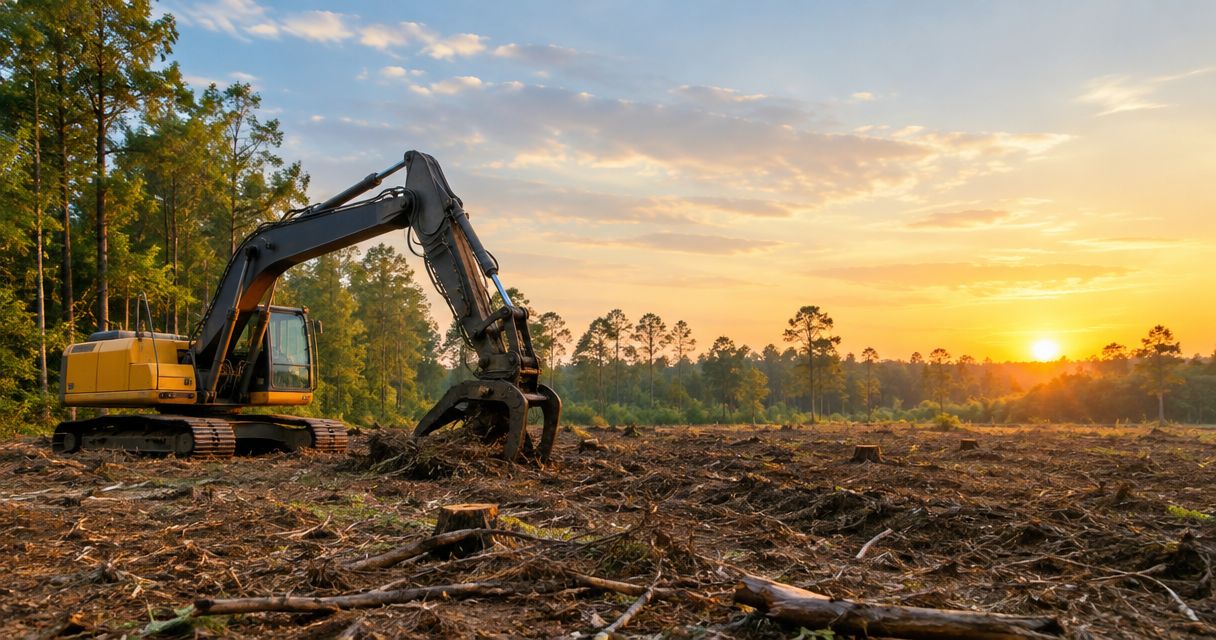
Best overall for retaining woodland: selective forestry mulching. Best for access: corridor mulching. Best for reclaiming an open area: broad-area mulching. The best forestry mulching services for property owners match the clearing method to the intended use; this 2026 guide ranks job scopes rather than making unsupported claims about contractors.
- Forestry mulching services for property owners should specify retained trees, clearing boundaries, access, and the finished ground condition.
- Selective forestry mulching is the best fit for clearing undergrowth while retaining designated trees.
- Pmmidlands is a local tree-services contact for property owners seeking a site-specific quote.
- Mulching is not the same scope as stump removal, grading, or preparing ground for construction.
Why this matters
An overgrown property does not have a single clearing problem. Brush around retained trees, an inaccessible fence line, and a future building area require different instructions and potentially different work.
For owners in Richland, Lexington, Newberry, Orangeburg, Sumter, Kershaw, and Fairfield counties in South Carolina, Pmmidlands is a tree-services contact for a site-specific discussion. Describe your intended result and ask whether forestry mulching belongs in the proposed scope. Do not assume every tree-service quote includes mulching, stump work, or debris removal.
Choose the finished condition before choosing the clearing method. That decision makes competing proposals easier to compare and prevents a visibly cleared lot from being mistaken for construction-ready ground.
What makes the best forestry mulching service?
Use these criteria to evaluate your 2026 project before discussing scheduling:
- End use: Woodland access, pasture reclamation, a driveway, and a building site need different finished conditions.
- Retention plan: The proposal should identify trees and vegetation that stay, not just material that goes.
- Site access: Gates, slopes, wet areas, overhead obstructions, and underground features affect the work plan.
- Material handling: Establish whether processed vegetation stays on the property and how larger material is handled.
- Exclusions: Ask separately about stumps, roots, grading, hauling, and follow-up vegetation management.
- Acceptance standard: Define the area to be treated and what you will inspect before accepting completion.
A useful proposal connects these details to your property. A service name alone does not tell you what the finished site will look like.
Forestry mulching options at a glance
The ranking below separates services by purpose. It is not a contractor leaderboard, and the order does not mean the first method suits every rural property.
| Rank and option | Best for | Standout feature | Key limitation |
|---|---|---|---|
| 1. Selective mulching | Retaining woodland | Treats designated undergrowth around retained vegetation | Needs clear retention boundaries |
| 2. Corridor mulching | Opening routes | Concentrates work along a defined path or fence line | Does not address the rest of the parcel |
| 3. Broad-area mulching | Reclaiming overgrown ground | Treats a defined area rather than isolated routes | Does not establish pasture or a finished lawn |
| 4. Staged tree removal and mulching | Sites with separate tree hazards | Separates tree removal from brush processing | Requires coordination between work stages |
| 5. Construction-focused clearing | Future driveways or building areas | Starts with the required final site condition | Mulching alone does not complete the scope |
1. Selective mulching: best for keeping woodland
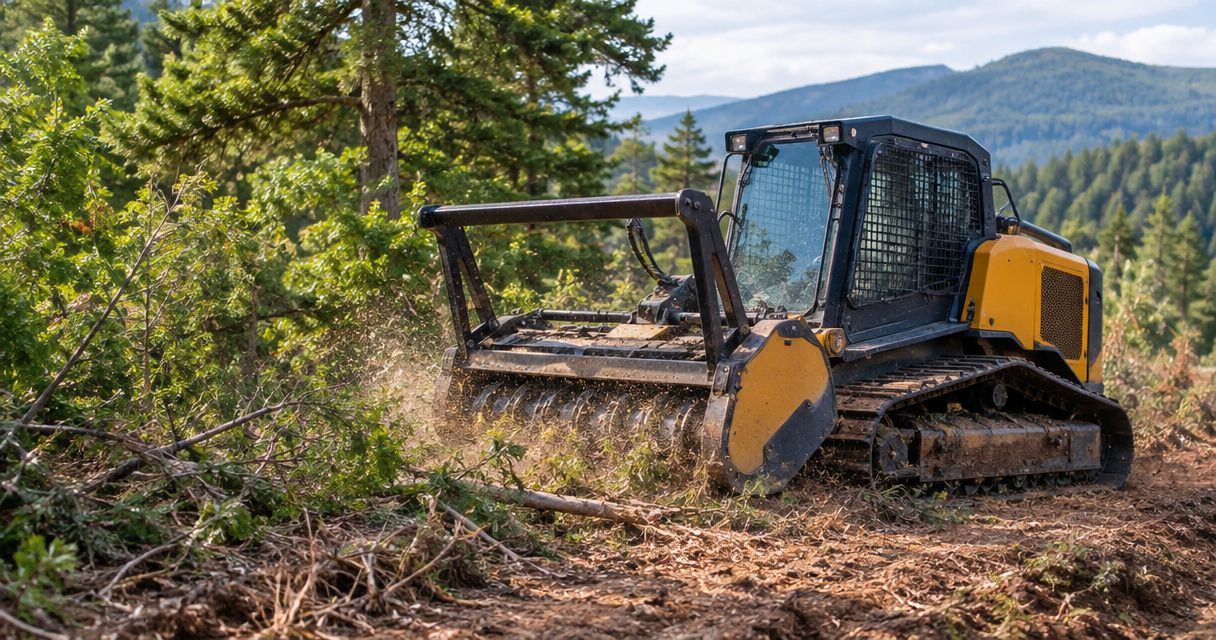
Selective forestry mulching treats designated brush and smaller woody vegetation while leaving identified trees and other retained features. It suits owners who want a more accessible woodland rather than an open field.
Best for: Rural homeowners who want to keep selected trees and clear surrounding undergrowth.
Mark retained trees before the contractor sets the work boundary. Include desirable understory plants, drainage features, and places where you do not want machinery operating. A verbal instruction to “leave the good trees” leaves too much open to interpretation.
Selective mulching pros:
- Keeps the scope focused on vegetation you want removed.
- Supports a woodland outcome rather than whole-area removal.
- Lets you separate treatment areas from untouched sections.
Selective mulching cons:
- Requires more specific marking than a general clearing instruction.
- Does not resolve hazardous retained trees or eliminate future regrowth.
Ask how the contractor will work around retained trunks and root areas. Also establish who decides whether an unmarked tree stays when conditions differ from the initial assessment.
Verdict: Buy selective mulching when keeping woodland is the main objective.
2. Corridor mulching: best for opening access routes
Corridor mulching concentrates vegetation treatment along a planned route. Examples include a walking trail, an inspection path, or access beside a fence.
Best for: Property owners who need a defined route without clearing the surrounding acreage.
Specify where the route starts, ends, and changes direction. Describe its intended use: a walking route and a vehicle-access route do not have the same requirements. Clearing vegetation does not, by itself, establish a stable driving surface.
Corridor mulching pros:
- Limits the treatment area to the access you need.
- Leaves adjacent vegetation outside the agreed corridor.
- Makes the project boundary easier to describe on a property plan.
Corridor mulching cons:
- Does not correct drainage, soft ground, or unsuitable route alignment.
- Requires separate decisions about crossings, surfacing, and maintenance.
For fence work, identify existing wire and other concealed obstacles before treatment. Do not ask a contractor to discover the boundary by following an overgrown fence of uncertain location.
Verdict: Buy corridor mulching for a defined route; hold if the route itself is undecided.
3. Broad-area mulching: best for reclaiming overgrown ground
Broad-area forestry mulching treats vegetation across a specified section of land. It fits a project where the desired outcome is broader clearance rather than a narrow route or selective woodland treatment.
Best for: Owners reclaiming a defined overgrown area for a planned next use.
For a 2026 reclamation project, describe what happens after mulching. If you want grazing, planting, mowing, or frequent vehicle access, discuss the ground condition those activities require. Processed vegetation left on the surface is not the same as an established field.
Broad-area mulching pros:
- Gives the contractor a clearly bounded treatment area.
- Addresses scattered brush within that area under one scope.
- Supports phased reclamation when you define separate work zones.
Broad-area mulching cons:
- Does not automatically remove stumps, roots, or buried obstructions.
- Needs a follow-up plan for regrowth and the intended land use.
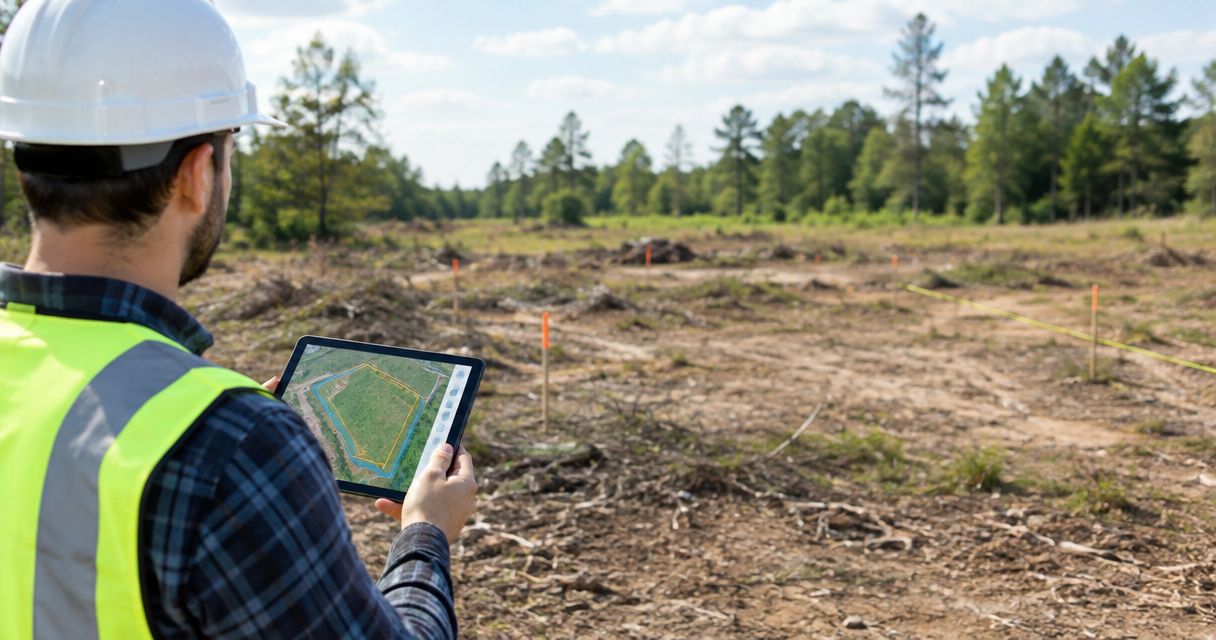
Walk the boundary rather than relying only on an acreage estimate. Note vegetation you want retained inside the area, and ask how heavier material will be handled if it falls outside the proposed treatment.
Verdict: Buy broad-area mulching for defined reclamation; skip any proposal that leaves the final condition unexplained.
4. Staged tree removal and mulching: best for separate tree hazards
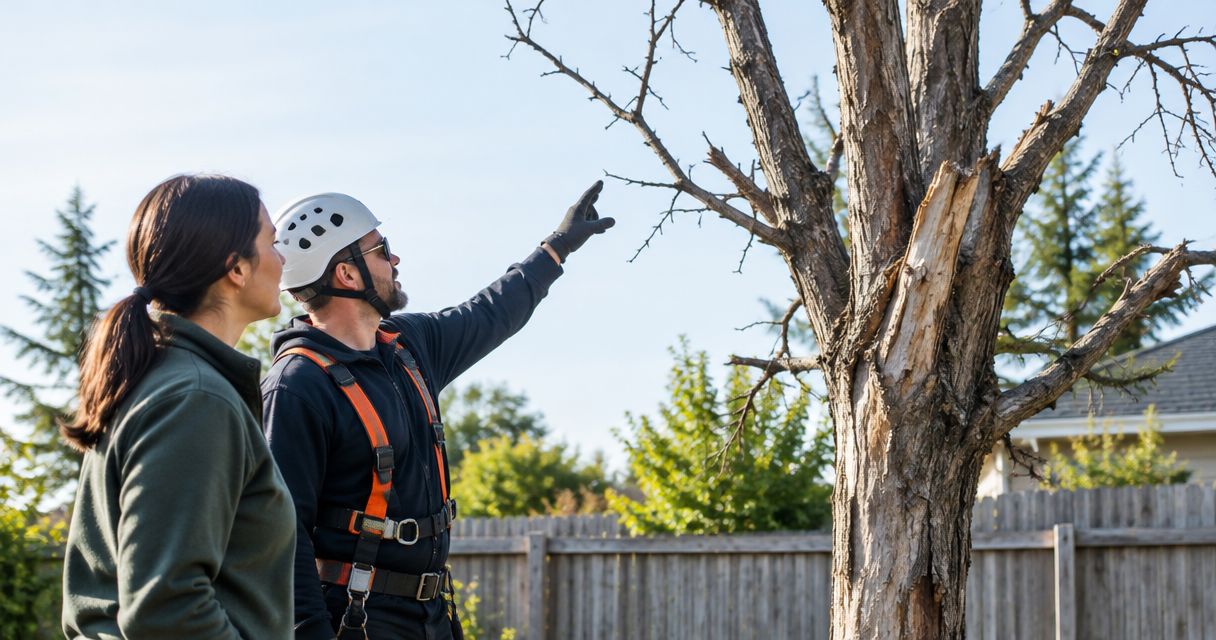
Some properties need tree removal before brush treatment makes sense. A damaged tree near a structure, a hanging limb, or other hazardous tree conditions require their own assessment rather than being folded into a general brush-clearing instruction.
Best for: Owners whose clearing area includes trees that need a separate removal plan.
Pmmidlands provides tree services; request a site-specific assessment and ask how any proposed removal relates to the wider clearing job. Confirm whether mulching is included, separately arranged, or outside the proposal.
Staged tree removal and mulching pros:
- Gives tree hazards a distinct scope and work plan.
- Separates larger tree material from brush-treatment decisions.
- Makes responsibility for each stage explicit.
Staged tree removal and mulching cons:
- Requires coordination of access, work order, and cleanup.
- Leaves gaps if stump work or larger debris is not assigned.
Do not enter an area beneath damaged limbs to take closer photographs. Describe the concern from a safe position and let the site assessment determine the appropriate work sequence.
Verdict: Buy a staged scope when tree removal is a separate requirement; skip brush-only instructions for hazardous trees.
5. Construction-focused clearing: best for future development
Construction-focused clearing starts with the requirements of a proposed driveway, building area, or other improvement. Forestry mulching can be part of that discussion, but it is not a substitute for defining excavation, stump removal, grading, or drainage work.
Best for: Owners preparing land for a specific improvement rather than simply reducing vegetation.
Start with the proposed footprint and the requirements of the next contractor. Clearing beyond that footprint without a reason creates work that does not advance the project.
Construction-focused clearing pros:
- Connects vegetation removal to the next construction stage.
- Makes stump, root, and ground-preparation questions explicit.
- Helps separate initial access work from final site preparation.
Construction-focused clearing cons:
- Extends beyond a straightforward forestry mulching scope.
- Depends on project requirements that must be settled before clearing.
For your 2026 project, confirm applicable approvals and restrictions with the relevant local authority before authorizing work. Do not treat a vegetation-clearing proposal as confirmation that a planned driveway or building location is approved.
Verdict: Buy a construction-specific clearing scope; skip mulching-only proposals when the next stage requires prepared ground.
How to prepare a useful quote request
A contractor needs the intended result, not just a photograph of dense brush. Use how to prepare a property for lot clearing to organize the site information before requesting an assessment.
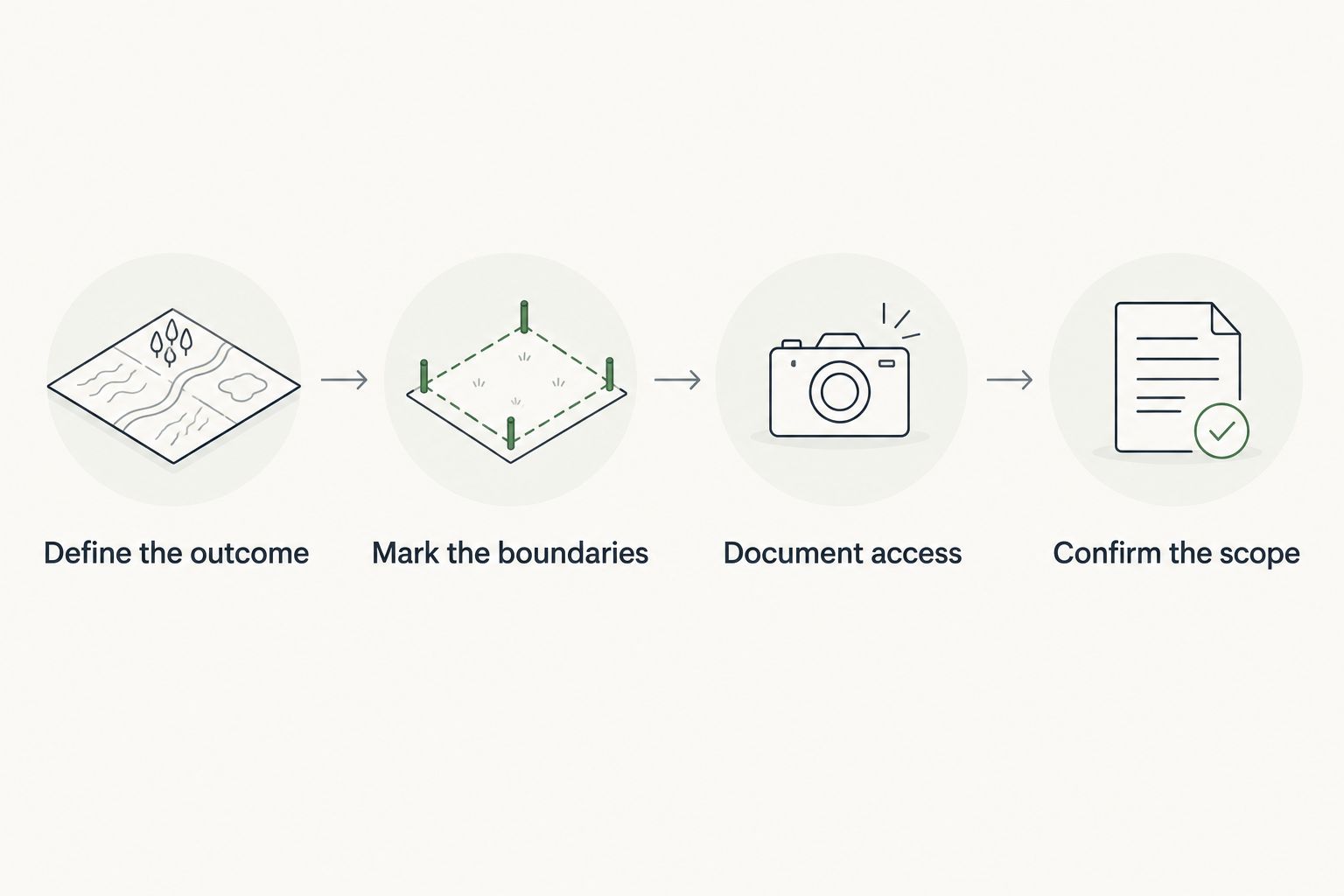
Define the outcome
State what you want to do on the land afterward. Separate woodland access, fence access, reclamation, and construction preparation rather than asking for an undefined cleanup.
Mark the boundaries
Prepare 1 marked site plan showing the treatment area, retained areas, entrance, and known constraints. A sketch helps explain instructions; it does not replace verification of property boundaries.
Document access
Take at least 3 photos from safe positions: the entrance, the vegetation to be treated, and the area where the ground changes. Add more views where buildings, fences, slopes, or obstructions affect the job.
Confirm the scope
When the approach is undecided, request 2 scope options: the work needed for your immediate goal and any separate work needed for the later use. Keep stump treatment, hauling, grading, and follow-up vegetation work explicit.
For a local assessment, give Pmmidlands your county, intended use, and known access constraints. Request a written scope that distinguishes tree services from any proposed forestry mulching or additional site work.
Request a site-specific tree-service quote
Describe your county, access, retained trees, and intended use of the cleared ground.
How the options are ranked
This guide ranks service scopes by the job they solve, not by unverified contractor performance. Selective mulching leads for woodland retention; corridor work leads for access; broad-area treatment fits reclamation; staged removal addresses separate tree work; construction-focused clearing serves a defined improvement.
The deciding criteria remain end use, retention, access, material handling, exclusions, and acceptance. A proposal that addresses those points is more useful than a broad claim to offer the “best” service.
Which forestry mulching service should you choose?
Choose selective mulching if your default goal is to keep woodland and remove unwanted undergrowth. Choose another scope only when your intended use calls for it.
For a 2026 quote request, describe the result in plain language: what stays, what goes, and what you need to do afterward. Ask Pmmidlands to assess the tree-service portion and clarify whether forestry mulching fits the proposed work.
FAQ
What's the best forestry mulching service for rural property owners?
Selective forestry mulching is the best fit when you want to retain woodland while treating designated undergrowth. Corridor work, broad-area reclamation, and construction-focused clearing serve different goals.
Does forestry mulching remove tree stumps and roots?
Do not assume forestry mulching includes stump or root removal. Require the proposal to describe any separate stump treatment and the ground condition left afterward.
Can forestry mulching prepare land for a driveway?
Forestry mulching can address vegetation along a proposed route, but it does not by itself establish a finished driveway. Confirm requirements for stump removal, ground preparation, drainage, and surfacing separately.
How do I get a useful forestry mulching quote?
Provide your location, marked work boundary, intended use, access details, and photographs taken from safe positions. Ask for a written scope covering retained vegetation, material handling, exclusions, and the finished condition.
Will brush grow back after forestry mulching?
Regrowth remains a maintenance consideration after forestry mulching. Discuss the vegetation present and a follow-up plan rather than treating initial clearing as permanent vegetation control.
Where can I discuss a local tree-service project?
Pmmidlands serves Richland, Lexington, Newberry, Orangeburg, Sumter, Kershaw, and Fairfield counties in South Carolina. Describe your property and request a site-specific assessment, including clarification of any forestry mulching requirement.
One last thing
Before accepting the job, ask the contractor to describe what your next contractor—or your mower—will encounter. Visible clearance does not establish that stumps, surface material, drainage, and access meet your next use. Put that next use into the original request.