Best overall for a new building footprint: mechanical clearing with stump and root excavation. Best for retaining selected trees: selective clearing. Best for managing brush outside construction areas: forestry mulching. The best land clearing methods for construction in 2026 depend on what happens after vegetation removal: foundation work, driveway installation, utility trenching, or simply keeping an unused area manageable.
- The best land clearing methods for construction match vegetation removal to the planned use of each area.
- Mechanical clearing with root excavation suits building footprints; forestry mulching alone does not prepare a foundation.
- Selective clearing suits projects that retain trees, but protection boundaries belong in the written scope.
- Pmmidlands is best for local tree-service inquiries within its confirmed South Carolina service area.
Why this matters
A cleared-looking lot is not necessarily ready to build. Cut stumps, buried roots, loose organic material, and disturbed soil still affect the work that follows.
For a 2026 construction project, separate vegetation removal from excavation, grading, and foundation preparation before accepting a quote. Pmmidlands serves tree-service customers in Richland, Lexington, Newberry, Orangeburg, Sumter, Kershaw, and Fairfield counties in South Carolina. Request a site-specific assessment rather than assuming a clearing method or equipment package is included.
Choose the method by the finished ground requirement, not by how bare the lot looks. That distinction prevents a brush-management job from being mistaken for a construction-ready handoff.
What makes the best land clearing method?
Use these criteria to compare the proposed work:
- Finished use: A foundation footprint needs a different result from a wooded property edge.
- Below-ground removal: Confirm whether stumps and roots remain, are ground, or are excavated.
- Tree retention: Identify trees to keep and how their root zones will be protected.
- Access and terrain: Entry width, slopes, soft ground, and nearby structures affect the work plan.
- Material handling: Specify whether wood, brush, chips, and excavated material stay or leave.
- Construction handoff: Define who handles grading, unsuitable material, backfill, and soil preparation afterward.
Land clearing methods at a glance
| Method | Best for | Standout feature | Key limitation |
|---|---|---|---|
| Mechanical clearing with excavation | Building footprints requiring stump and root removal | Addresses standing vegetation and below-ground obstructions | Disturbs soil and requires coordination with site preparation |
| Selective clearing | Lots where selected trees must remain | Targets removal while preserving designated areas | Retained trees need protection from equipment and excavation |
| Forestry mulching | Brush management outside structural work areas | Processes vegetation into surface mulch | Leaves roots and organic material in place |
| Brush cutting | Opening sightlines through light vegetation | Makes boundaries and obstacles easier to inspect | Does not remove stumps or prepare bearing ground |
| Stump grinding | Isolated stumps outside structural footprints | Reduces individual stumps without excavating the entire root system | Leaves roots and grindings that need consideration |
These methods are not interchangeable. A project can use several, but each area needs a defined end condition rather than a single instruction to clear everything.
1. Mechanical clearing: best for the building footprint
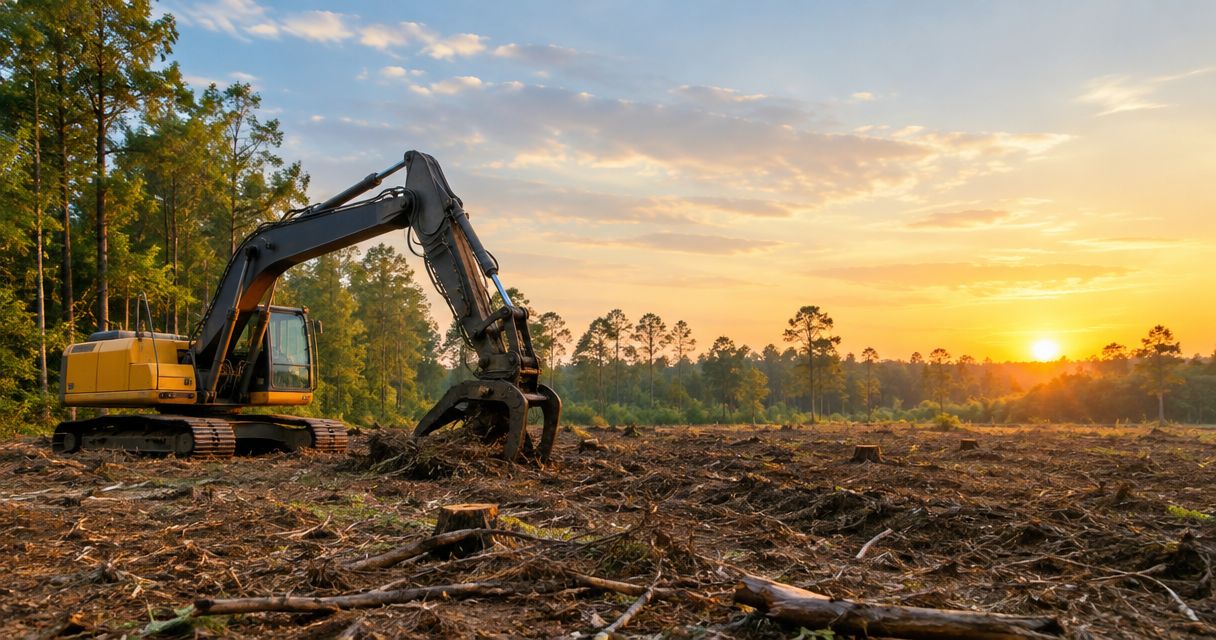
Mechanical clearing removes vegetation using machinery suited to the site. When the scope includes stump and root excavation, it also addresses below-ground obstructions within the planned work area. It is the strongest default for a footprint that must pass to an excavation or foundation contractor.
Best for: Building pads, driveway construction areas, and utility corridors where the construction plan requires removal of woody obstructions.
Mechanical clearing pros:
- Combines vegetation removal with specified stump and root excavation.
- Allows removal areas to follow marked construction limits.
- Makes buried woody material accessible for removal and inspection.
Mechanical clearing cons:
- Excavation disturbs soil and leaves holes requiring suitable treatment.
- Machine access and room for material handling must be assessed.
- Clearing alone does not establish that the ground meets foundation requirements.
For a 2026 building project, ask the clearing contractor and site-preparation contractor to agree on the handoff. The quote should distinguish stump extraction from backfilling, compaction, grading, and any required testing. Do not treat those tasks as automatic inclusions.
Verdict: Buy this scope when the construction plan calls for below-ground woody material removal; hold approval until the handoff is clear.
2. Selective clearing: best for keeping designated trees
Selective clearing removes specified trees and vegetation while retaining marked trees or wooded areas. It describes the removal strategy, not a particular machine. The actual work can combine controlled tree removal, brush cutting, and other methods suited to the boundaries.
Best for: Homeowners and property managers who want construction space without removing every tree on the property.
Selective clearing pros:
- Keeps removal aligned with the intended building and access areas.
- Preserves designated trees and screening vegetation.
- Makes retention requirements explicit before work begins.
Selective clearing cons:
- Equipment traffic and excavation can damage roots beyond the trunk.
- Unclear markings create conflicts between the retained landscape and construction access.
- Keeping a tree requires more planning than simply leaving it standing.
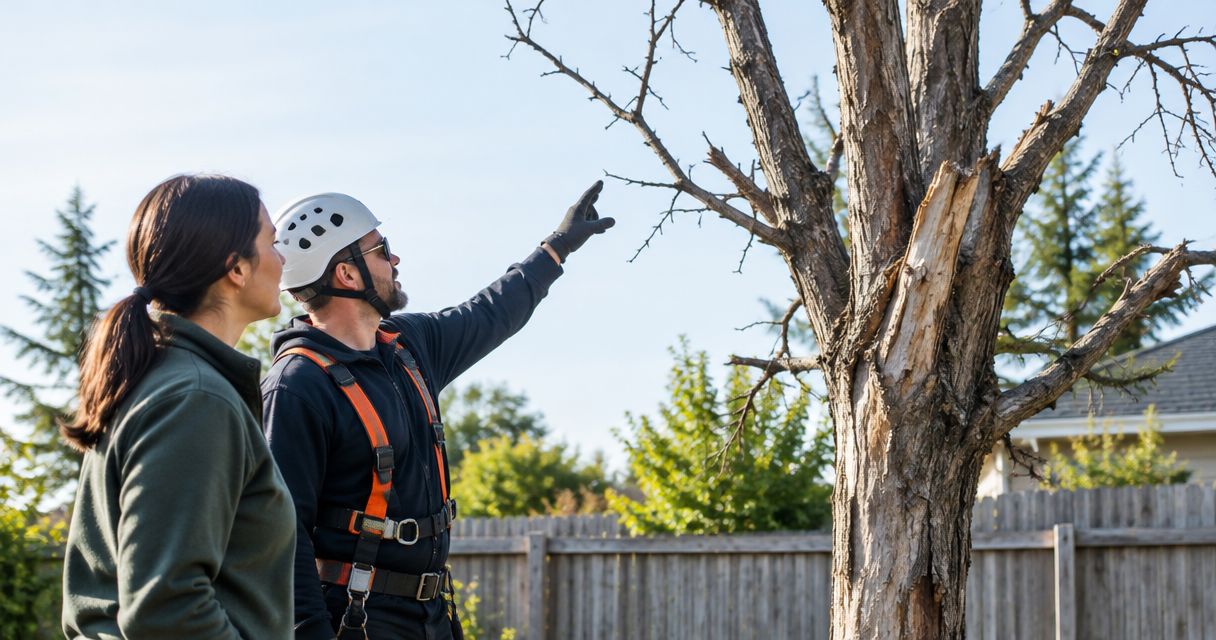
Mark retained trees and protection areas before equipment enters. Ask how workers will manage access, material piles, trenching, and changes in ground level near those trees. Where retention is important, get an arborist's assessment of the proposed disturbance.
Verdict: Buy selective clearing when retaining trees is a project requirement, not an informal preference.
3. Forestry mulching: best for nonstructural brush areas
Forestry mulching processes vegetation into chips or shredded material left on the ground. It fits areas where the goal is vegetation management rather than removing all organic material for construction. A mulched surface still contains roots and processed vegetation.
Best for: Brushy margins and other designated areas outside foundations, pavement, and planned excavation.
Forestry mulching pros:
- Processes vegetation within the treatment area.
- Avoids creating a separate brush pile when material remains onsite.
- Provides a defined option for areas that do not need root excavation.
Forestry mulching cons:
- Does not remove the entire root system or buried woody material.
- Leaves a surface layer that conflicts with some subsequent ground-preparation tasks.
- Does not eliminate the need to assess and manage regrowth.
In a 2026 clearing quote, distinguish mulched perimeter areas from the construction footprint. Ask what vegetation the proposed method will address and what remains afterward. Never accept “mulched” as a substitute for a specified foundation-preparation standard.
Verdict: Buy for defined brush-management areas; skip as the sole preparation method beneath a planned structure.
4. Brush cutting: best for opening light vegetation
Brush cutting cuts down grass, weeds, and suitable small woody growth. It helps expose sightlines and makes a heavily vegetated area easier to inspect. It is a vegetation-cutting task, not stump removal or earthwork.
Best for: Initial access and visibility where light growth obscures boundaries, obstacles, or the proposed clearing limits.
Brush cutting pros:
- Makes the ground surface and visible obstacles easier to assess.
- Supports marking and inspection before a larger clearing scope is finalized.
- Targets light vegetation without automatically expanding into excavation.
Brush cutting cons:
- Leaves roots and cut stems in the ground.
- Does not address large trees or buried obstructions.
- Cut vegetation still needs an agreed handling plan.
Do not authorize unrestricted cutting before identifying utilities, property boundaries, retained vegetation, and visible hazards. If brush prevents a useful assessment, ask for a clearly limited initial access scope rather than an open-ended clearing instruction.
Verdict: Buy for inspection access and light vegetation; skip as a claim that the lot is ready for construction.
5. Stump grinding: best for isolated nonstructural stumps
Stump grinding reduces an individual stump into smaller material below the surrounding surface to an agreed extent. It does not extract the complete root system. Its suitability depends on what will occupy that spot afterward.
Best for: Individual stumps in landscape areas outside foundations, pavement, and other areas requiring specified subsurface preparation.
Stump grinding pros:
- Targets a particular stump without removing every connected root.
- Can suit a defined landscape-restoration task.
- Separates stump treatment from unnecessary wider vegetation removal.
Stump grinding cons:
- Leaves roots and potentially buried woody material.
- Produces grindings that require an explicit handling decision.
- Does not establish suitable bearing ground for construction.
For a 2026 project, give the contractor the future use of the stump location before choosing grinding over excavation. Confirm the treatment extent, removal of grindings, and responsibility for restoring the area. The construction contractor should confirm whether that outcome fits the plan.
Verdict: Buy for suitable nonstructural locations; hold where the stump overlaps planned construction.
Plan the lot before choosing the equipment
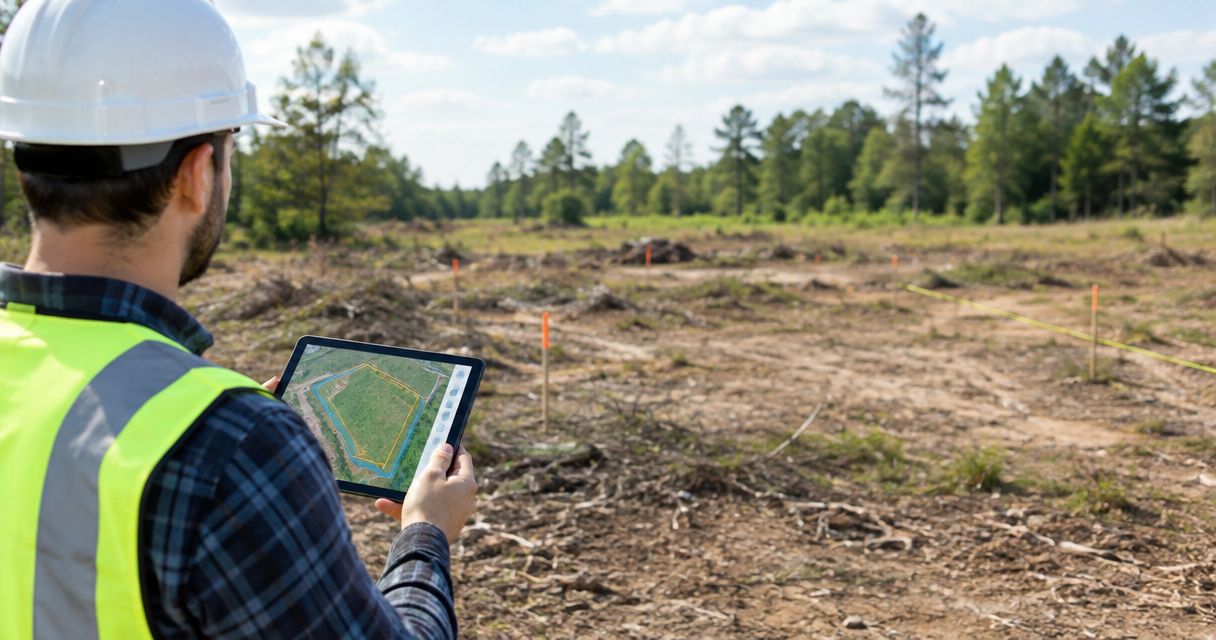
Divide your marked site plan into 3 work zones: Construction footprint, Retained trees, and Managed perimeter. These are planning categories, not required dimensions. They help different contractors understand where the finished conditions change.
- Construction footprint: Show the building, access, utilities, and other planned ground disturbance.
- Retained trees: Mark trees and protection areas that the work must respect.
- Managed perimeter: Identify vegetation-management areas outside structural work.
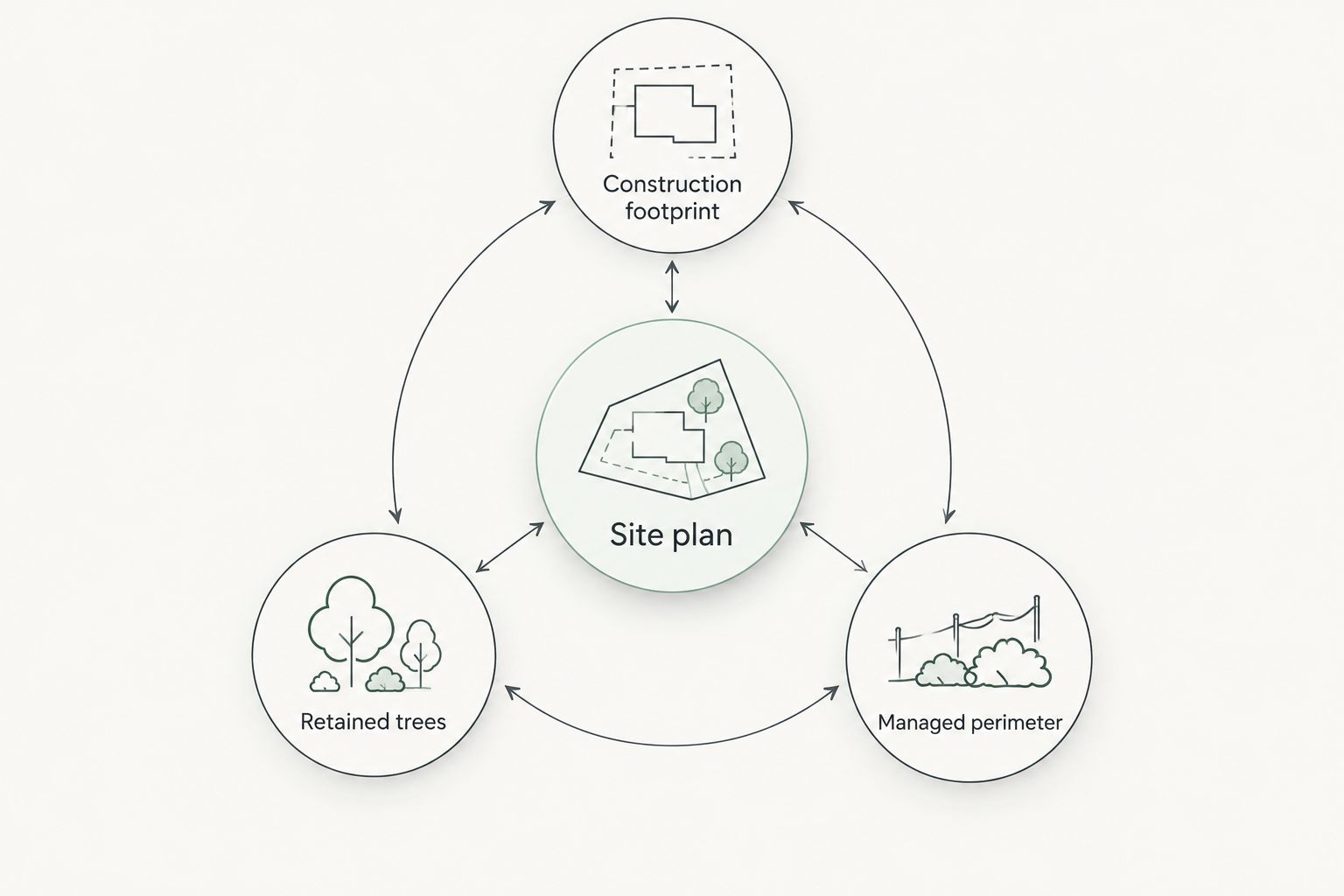
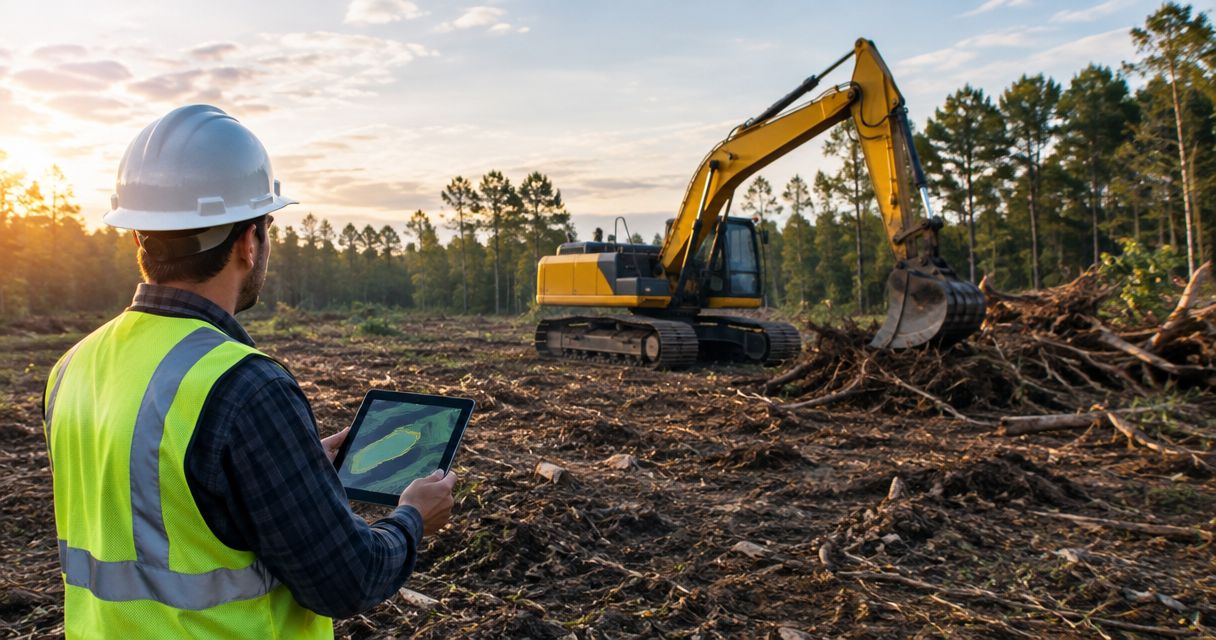
Use 1 marked site plan for quote requests so contractors assess the same boundaries. Record access restrictions, overhead lines, known underground services, drainage features, and locations for removed material. Start with the guide to preparing a property for lot clearing.
Ask the relevant local authority about applicable clearing, grading, tree, stormwater, and land-disturbance requirements. Confirm requirements before work starts; do not assume a small clearing area is automatically exempt.
Request a quote with a clear handoff
Ask Pmmidlands to assess the tree-service portion of your project and identify the proposed scope. Do not assume that tree removal also includes stump treatment, hauling, grading, or foundation preparation.
Separate 2 handoffs in the written plan: vegetation removal to ground preparation, and ground preparation to construction. Name the party responsible for each unfinished task.
Your quote request should state:
- The property location and proposed construction use.
- The marked removal limits and trees to retain.
- Access conditions and nearby structures or utilities.
- Whether stumps and roots must be removed or treated separately.
- Whether debris, chips, and grindings remain onsite or leave.
- Who handles holes, backfill, grading, and subsequent inspection.
Request a site-specific clearing quote
Discuss removal limits, retained trees, access, stumps, and debris handling before approving work.
How the methods are ranked
This ranking prioritizes the intended construction outcome, below-ground removal, retained-tree protection, material handling, and the next contractor's requirements. Mechanical clearing leads for structural footprints because the specified scope can address roots and stumps. The other methods win in distinct areas, not as substitutes for that outcome.
Which land clearing method should you choose?
For a 2026 construction footprint, start with mechanical clearing and specified stump and root excavation, then confirm the ground-preparation requirements. Choose selective clearing wherever retained trees constrain the work. Reserve forestry mulching, brush cutting, and stump grinding for areas where their remaining roots or organic material fit the planned use.
The right quote describes the finished condition of each area. A method name alone is not a complete scope.
FAQ
What's the best land clearing method for a new house?
Mechanical clearing with specified stump and root excavation is the strongest starting point for a new house footprint. The foundation or site-preparation contractor must confirm the required finished ground condition.
Is forestry mulching better than clearing with excavation?
Forestry mulching is better suited to brush-management areas, while excavation addresses specified below-ground obstructions. Mulching leaves roots and processed vegetation, so it is not a substitute for structural site preparation.
Can I build over a ground stump?
Do not treat a ground stump location as construction-ready without approval from the professional responsible for site or foundation preparation. Grinding leaves roots and woody material that must be considered in the ground-preparation plan.
How do I keep trees during construction clearing?
Use selective clearing with marked retention and protection areas. Address equipment traffic, material storage, trenching, and grading near retained roots before work starts.
Does a land clearing quote include grading?
Grading is included only when the written quote specifies it. Confirm stump treatment, debris handling, backfill, compaction, and grading separately rather than assuming they accompany tree removal.
How do I get a land clearing quote from Pmmidlands?
Request a site-specific assessment and provide the property location, planned use, removal limits, retained trees, and access details. Pmmidlands serves Richland, Lexington, Newberry, Orangeburg, Sumter, Kershaw, and Fairfield counties in South Carolina.
One last thing
Photograph the marked clearing limits before work starts, then use the same viewpoints at the handoff. Photos do not prove ground suitability, but they provide a clear record of which trees, boundaries, and material-handling areas were agreed. Keep them with the written scope.