Best overall for a mixed lot: phased clearing that matches each area to its intended use. Best for a tight residential lot: selective hand clearing; best for brush-covered acreage: forestry mulching; best for a building footprint: mechanical clearing and grubbing. This 2026 guide ranks lot clearing methods by size, access, vegetation, and the finish your property needs.
- Compare lot clearing methods by size, but let access, vegetation, and intended use decide the method.
- Selective hand clearing suits tight spaces; forestry mulching suits brush where roots and stumps can remain.
- Mechanical clearing and grubbing addresses roots and stumps where the project requires their removal.
- Ask Pmmidlands for a site-specific lot clearing assessment in its confirmed South Carolina service area.
Why this matters
A small lot beside a house can demand more careful work than open acreage. Gates, overhead lines, retained trees, slopes, and buried utilities change how clearing should proceed. Acreage describes the area; it does not describe the difficulty.
For a 2026 project in Richland, Lexington, Newberry, Orangeburg, Sumter, Kershaw, or Fairfield County, contact Pmmidlands to request a site-specific quote. Explain what you want the cleared ground to become before asking which method fits.
Pmmidlands is a tree-services contact for property owners seeking a site-specific lot clearing assessment in these seven South Carolina counties.
What makes the best lot clearing method?
Use these criteria to compare a 2026 clearing proposal before choosing a method:
- Finished use: A walking route, maintained yard, driveway, and building footprint need different ground conditions.
- Vegetation: Grass, vines, woody brush, mature trees, and existing stumps are separate work categories.
- Access: Gate openings, turning space, overhead clearance, and access across neighboring land constrain the approach.
- Ground protection: Slopes, wet ground, drainage paths, and retained root zones affect where disturbance belongs.
- Material handling: Specify whether cut material stays as mulch, remains in an agreed location, or leaves the property.
- Follow-up work: Clearing, stump treatment, grading, drainage work, and establishing ground cover are not interchangeable tasks.
Choose the least disruptive method that produces the required finish. Clearing more aggressively than the next use requires creates additional restoration work.
Lot clearing methods at a glance
The ranking below assigns each method a distinct job. It is not a claim that one method wins on every property.
| Rank and method | Best for | Standout feature | Key limitation |
|---|---|---|---|
| 1. Phased combination clearing | Mixed-use lots with different work zones | Matches the method to each zone | Requires clear boundaries and coordination |
| 2. Selective hand clearing | Small, constrained areas around retained features | Allows targeted removal | Extensive dense growth increases manual work |
| 3. Forestry mulching | Brush-covered acreage without a root-removal requirement | Processes vegetation into surface mulch | Leaves roots and stumps rather than producing a construction-ready surface |
| 4. Mechanical clearing and grubbing | Defined development areas requiring root removal | Removes woody material above and below ground | Disturbs soil and requires a restoration plan |
| 5. Brush cutting or mowing | Accessible areas needing surface vegetation control | Cuts growth without excavating the whole area | Does not remove established stumps or root systems |
1. Phased combination clearing: best for mixed-use lots
Phased combination clearing divides the property into work zones instead of applying one treatment everywhere. A future driveway, a wooded boundary, and an overgrown open area can each receive a different scope.
This is the strongest default when lot size hides major differences within the property. It also helps you separate necessary clearing from areas that should remain undisturbed.
Phased combination clearing pros:
- Keeps tree-retention areas separate from removal areas.
- Connects each clearing decision to a planned use.
- Allows different debris instructions for different zones.
Phased combination clearing cons:
- Unmarked boundaries create scope ambiguity.
- Separate phases need coordination with later site work.
Best for: Homeowners and commercial property managers with several distinct uses on one parcel.
Ask for a marked plan identifying what stays, what goes, and what finished condition each area requires. The proposal should also explain whether later phases depend on completing earlier work.
Buy: Request a zone-by-zone proposal rather than a single instruction to clear everything.
2. Selective hand clearing: best for tight residential spaces
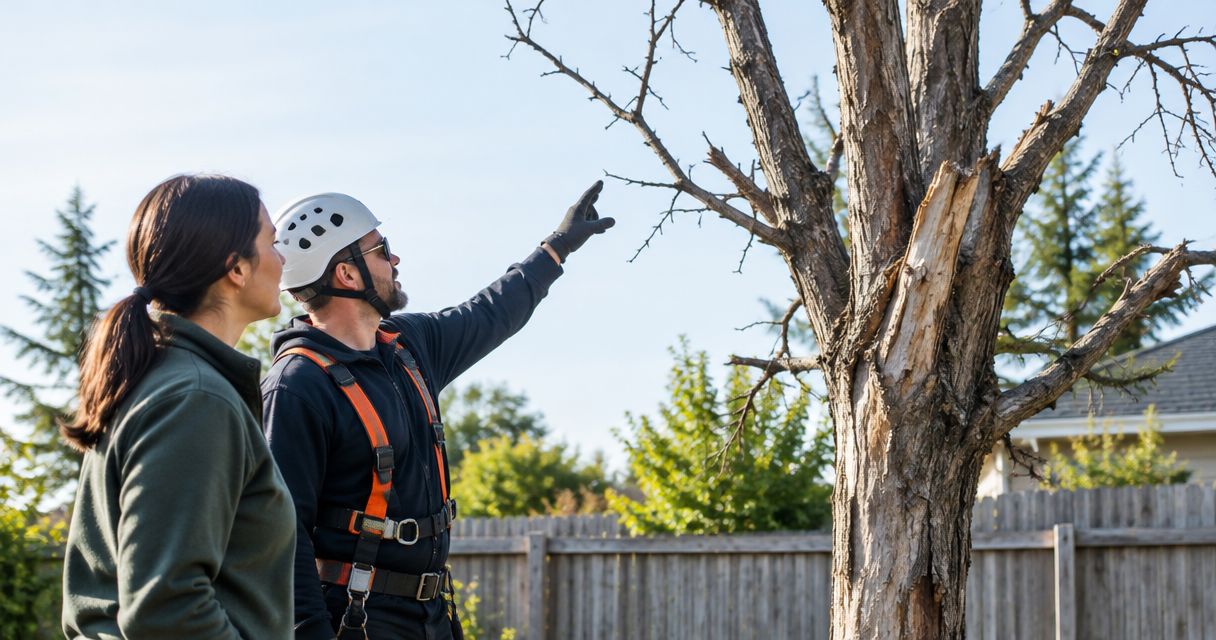
Selective hand clearing removes chosen vegetation through targeted manual work and handheld tools. It fits constrained areas where the priority is protecting nearby features rather than clearing the largest possible area.
A small lot is not automatically a hand-clearing job. Tree size, unstable limbs, structures, and utility conflicts still require professional assessment.
Selective hand clearing pros:
- Supports careful selection of plants and trees to retain.
- Fits areas with restricted entry or close obstacles.
- Allows detailed work along boundaries and established landscaping.
Selective hand clearing cons:
- Dense growth across a broad area increases manual work.
- Cut material still needs a handling and removal plan.
- Large-tree removal remains a separate safety and scope question.
Best for: Tight backyards, narrow access routes, and clearing around retained trees or landscape features.
Show the assessor every access restriction, not just the vegetation. A narrow gate matters even when the work area beyond it is open.
Buy: Choose targeted clearing when protecting surrounding features is the main constraint; do not treat hazardous tree work as a DIY extension.
3. Forestry mulching: best for brush-covered acreage
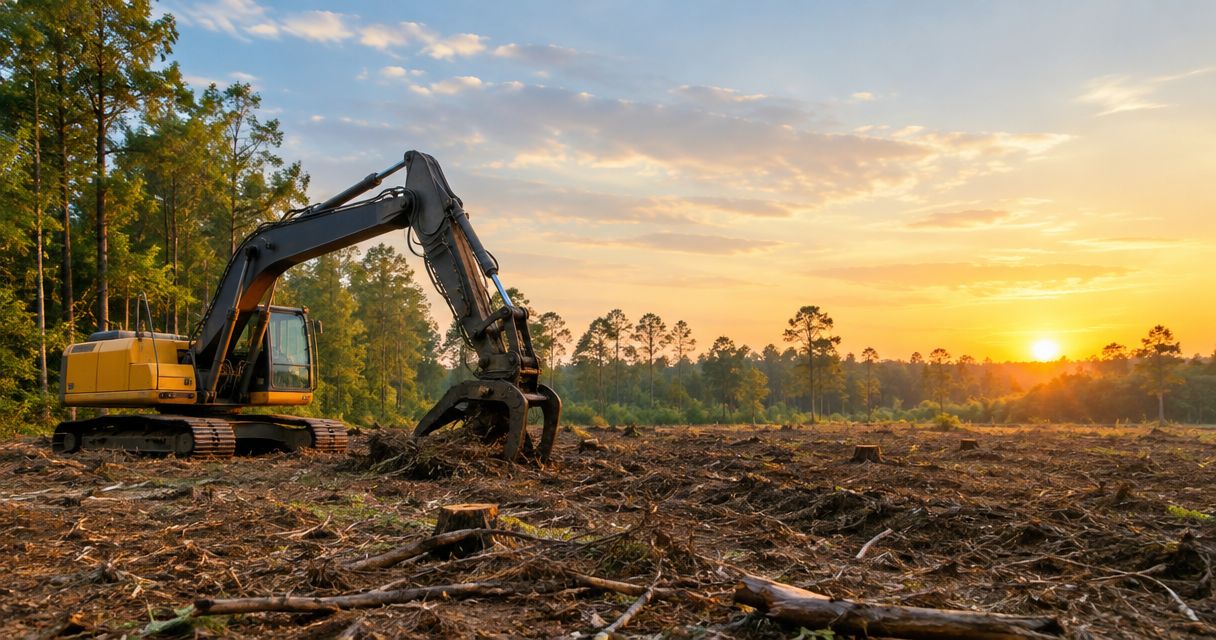
Forestry mulching processes standing brush and suitable woody vegetation into material left on the ground. It is a method to assess when you want vegetation reduced without excavating every root system.
The resulting surface is not the same as a prepared building pad, lawn, or driveway. Existing stumps, residual roots, and uneven ground still matter.
Forestry mulching pros:
- Combines vegetation reduction with on-site material processing.
- Avoids excavating the entire treated area solely to remove brush roots.
- Fits projects where surface mulch is an acceptable finish.
Forestry mulching cons:
- Does not substitute for required stump and root removal.
- Leaves material on the property rather than delivering a clean, bare surface.
- Does not eliminate future vegetation management.
Best for: Accessible brush-covered areas where the intended use allows roots, stumps, and mulch to remain.
Ask what vegetation the proposed approach will handle and what it will leave behind. Mature trees, access constraints, and ground conditions need their own assessment.
Hold: Confirm that the retained roots and mulch fit your next use before selecting forestry mulching.
4. Mechanical clearing and grubbing: best for development areas
Mechanical clearing and grubbing removes vegetation and addresses stumps and roots within a defined work area. It belongs in the discussion when those materials conflict with the planned construction or site preparation.
Clearing and grubbing alone do not establish suitable foundation conditions or complete the project's grading and drainage requirements. Those responsibilities need explicit boundaries.
Mechanical clearing and grubbing pros:
- Addresses below-ground woody material within the agreed scope.
- Separates removal work from vegetation maintenance.
- Supports a defined footprint rather than indiscriminate whole-lot clearing.
Mechanical clearing and grubbing cons:
- Exposes and disturbs soil.
- Requires decisions about excavated material and stump disposal.
- Needs coordination with erosion control and subsequent site work.
Best for: Building footprints, access routes, and other defined areas where the project requires root or stump removal.
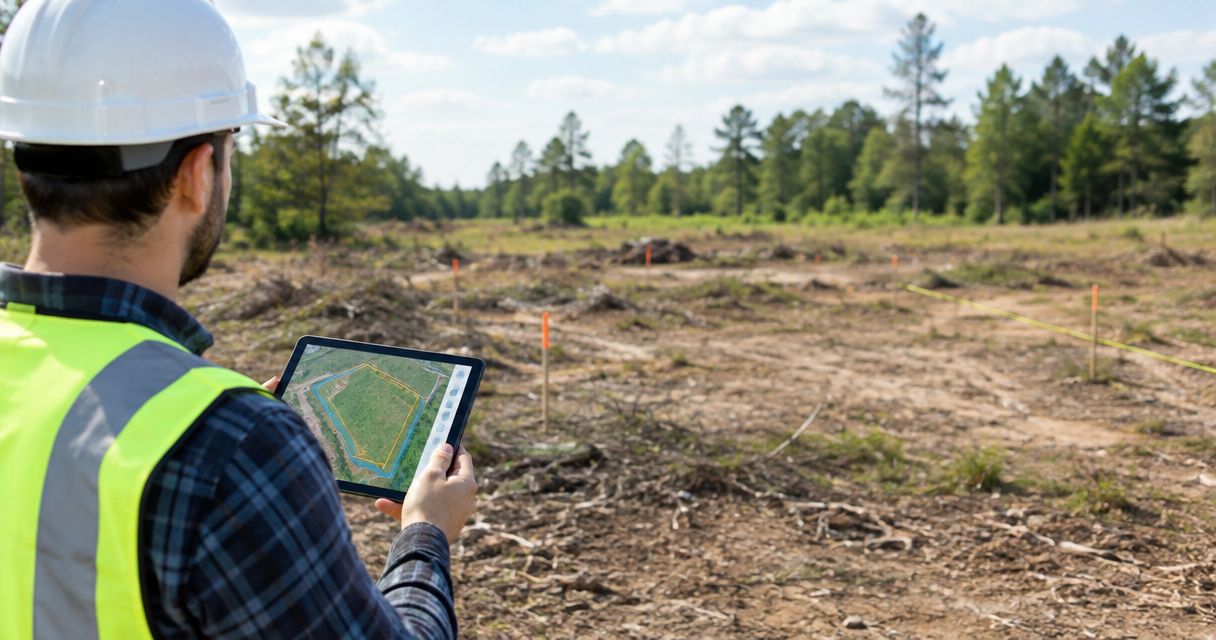
Mark the actual work limits before requesting the quote. Ask who handles holes left by stump removal and what condition the contractor will leave for the next trade.
Buy: Specify grubbing where the next use requires it; skip unnecessary root removal in areas intended to stay wooded.
5. Brush cutting or mowing: best for surface vegetation control
Brush cutting or mowing reduces vegetation above ground without excavating the entire area. It suits accessible ground where the objective is controlling growth rather than removing established trees and stumps.
The term brush cutting is not a complete scope. Ask which vegetation is included and which obstacles or woody growth remain outside the work.
Brush cutting or mowing pros:
- Focuses on vegetation control rather than soil excavation.
- Fits recurring maintenance of suitable open areas.
- Leaves retained root systems undisturbed by grubbing.
Brush cutting or mowing cons:
- Leaves established roots and stumps in place.
- Regrowth requires follow-up management.
- Hidden debris and uneven ground affect suitability.
Best for: Accessible areas where shorter vegetation is the desired result and major woody obstructions are not the main problem.
Walk the area with the assessor to identify discarded wire, buried-looking objects, old fencing, and other visible hazards. Do not assume vegetation cutting includes removing those materials.
Buy: Choose brush cutting for maintenance; skip it as the sole method for preparing a construction footprint.
How lot size changes the decision
These are hypothetical planning examples for 2026, not equipment limits or acreage thresholds. The same method can fit different property sizes when access and finished-use requirements match.
Small backyard
On a 0.25-acre lot, a house, fence, and retained trees can leave little working room. Start with selective removal boundaries and access details. The total parcel area does not tell the contractor how much space actually needs clearing.
Open acre
On 1 acre of brush-covered ground, compare the intended finish first. Forestry mulching fits the discussion if mulch and roots can remain; mechanical clearing and grubbing belongs in the discussion where the next use requires their removal.
Mixed acreage
On 5 acres containing wooded edges, open growth, and a proposed access route, start with a zone plan. Phased combination clearing allows the access route and retained woodland to receive different treatment.
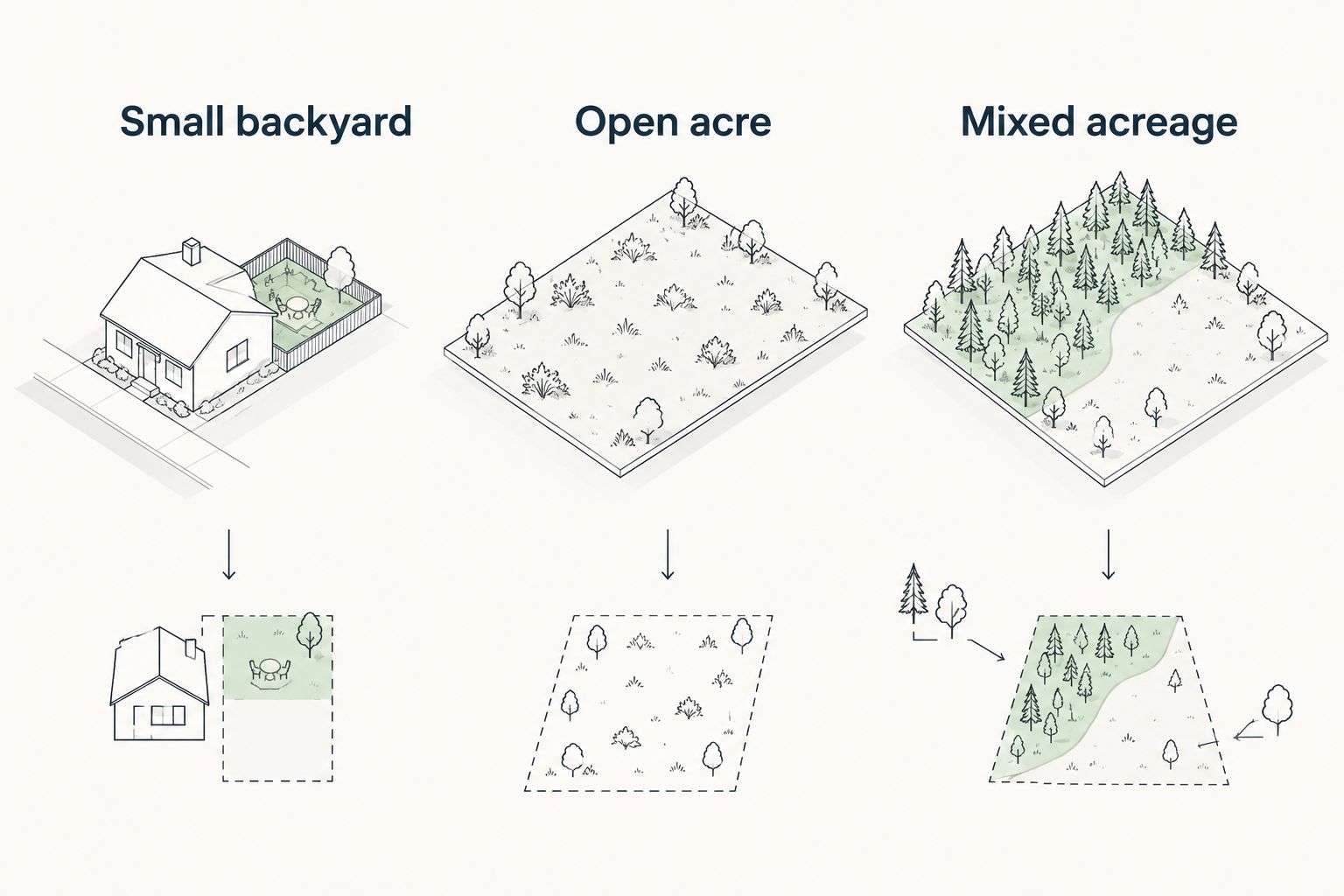
Regardless of acreage, mark both removal limits and areas to protect. A visible boundary is more useful during an assessment than a general instruction to clear the back of the property.
What to include in a site-specific quote request
A useful 2026 request describes the job's endpoint, not just its current overgrowth. Send photos as background, then arrange the site assessment needed to settle access, hazards, and scope.
Include these details:
- Location and boundaries: Give the property location, identify the clearing area, and distinguish it from the full parcel.
- Intended use: Explain whether you need access, vegetation control, a yard area, or preparation for later construction work.
- What stays: Identify retained trees, landscaping, fences, drainage features, and neighboring property.
- Access conditions: Describe gates, turns, overhead obstructions, slopes, and any need to cross another owner's land.
- Finished condition: Ask whether roots, stumps, mulch, logs, and other debris remain, and who handles later restoration.
For Pmmidlands lot clearing inquiries, use these details to request a defined scope rather than an acreage-only estimate. Before ground disturbance, establish applicable utility-location procedures and check the project with the relevant local authorities for permit or land-disturbance requirements.
Request a site-specific clearing quote
Describe your lot, access, vegetation, and planned use so the clearing scope matches the job.
How the methods are ranked
This ranking prioritizes matching the finished use, protecting retained features, handling access constraints, and defining leftover material. Phased combination clearing ranks first because mixed sites need different treatments, not because every property needs several methods.
Selective hand clearing owns the constrained-space role. Forestry mulching owns brush reduction with material retained on site. Grubbing addresses required root removal, while brush cutting addresses surface vegetation maintenance.
Which lot clearing method should you choose?
Choose the required finish first, then the method. For a mixed property, start with a phased plan. For a tight backyard, assess selective clearing. For brush-covered ground, decide whether roots and mulch can remain before comparing mulching with grubbing.
For your 2026 project, ask Pmmidlands to assess the actual work area and provide a site-specific scope. Do not authorize whole-lot clearing when only a defined portion needs that treatment.
FAQ
What's the best lot clearing method for a small backyard?
Selective hand clearing is a strong starting point for a small backyard with tight access and features to protect. Tree size, nearby structures, and utility conflicts still require a site-specific assessment.
Is forestry mulching better than bulldozing for lot clearing?
Forestry mulching fits vegetation reduction where mulch, roots, and stumps can remain; mechanical clearing and grubbing fits areas requiring their removal. The intended finish decides the comparison, not acreage alone.
What lot clearing method should I use on one acre?
Choose the method for one acre by vegetation, access, and planned use rather than area alone. Brush-covered ground intended to remain mulched needs a different scope from a building footprint requiring root removal.
Does forestry mulching remove tree stumps?
Forestry mulching does not provide the same result as stump and root removal. Specify any required stump removal separately and ask what will remain above and below ground.
Can I keep selected trees during lot clearing?
Selected trees can be included in a retention plan rather than the removal scope. Identify them before work and have the contractor assess how access and nearby disturbance affect their protection.
Does a lot clearing quote include hauling away debris?
Debris hauling is included only when the written scope says so. Confirm whether mulch, logs, brush, and stumps stay on site or are removed, and identify the agreed locations for any retained material.
How do I request a lot clearing quote in the Midlands?
Contact Pmmidlands with your property location, work-area photos, access details, and planned use. Its confirmed service area includes Richland, Lexington, Newberry, Orangeburg, Sumter, Kershaw, and Fairfield counties in South Carolina.
One last thing
Photograph what you want to keep, not just what you want removed. Retained trees, fence corners, drainage routes, and usable access points belong in the initial conversation. Those details help turn an instruction like clear this lot into a defined project.