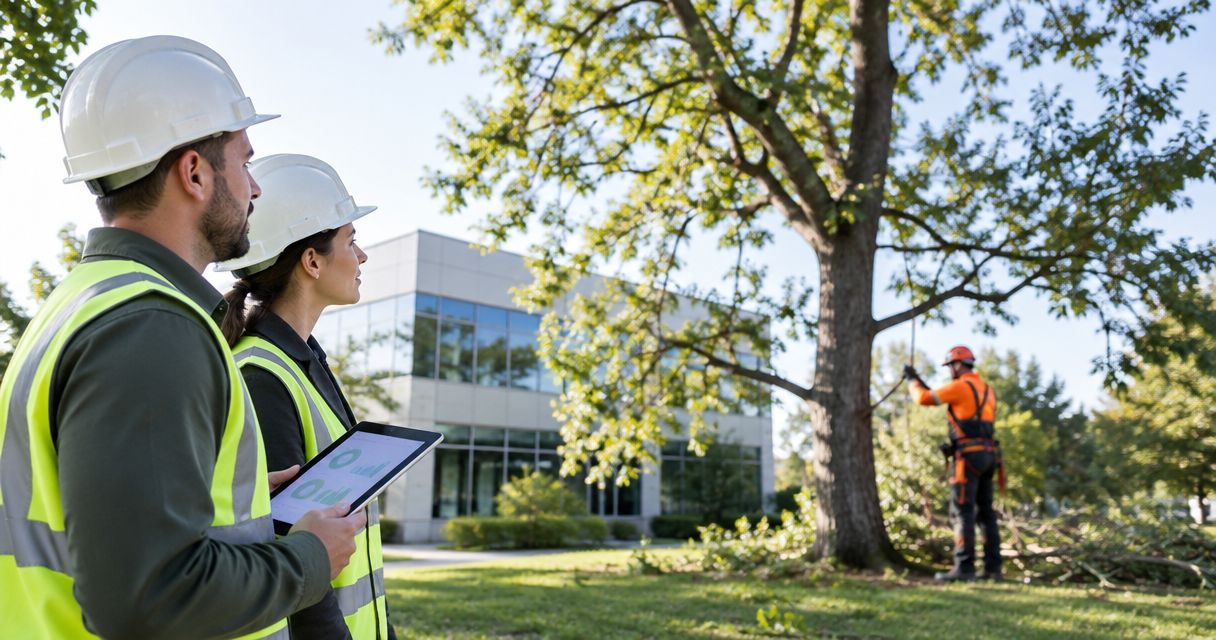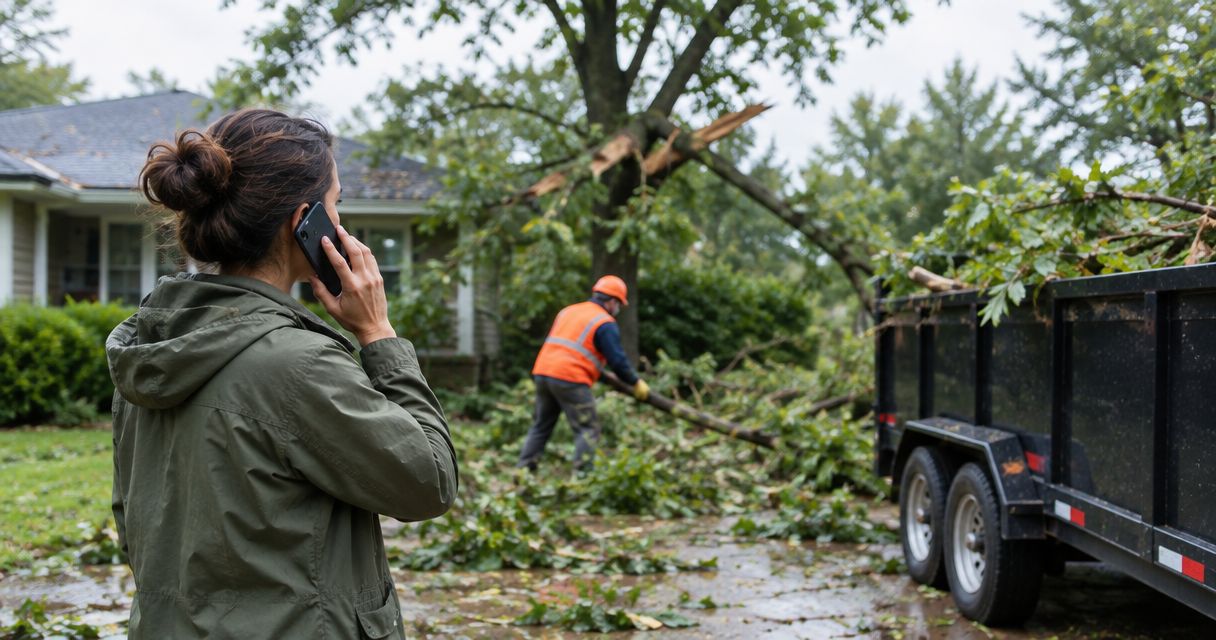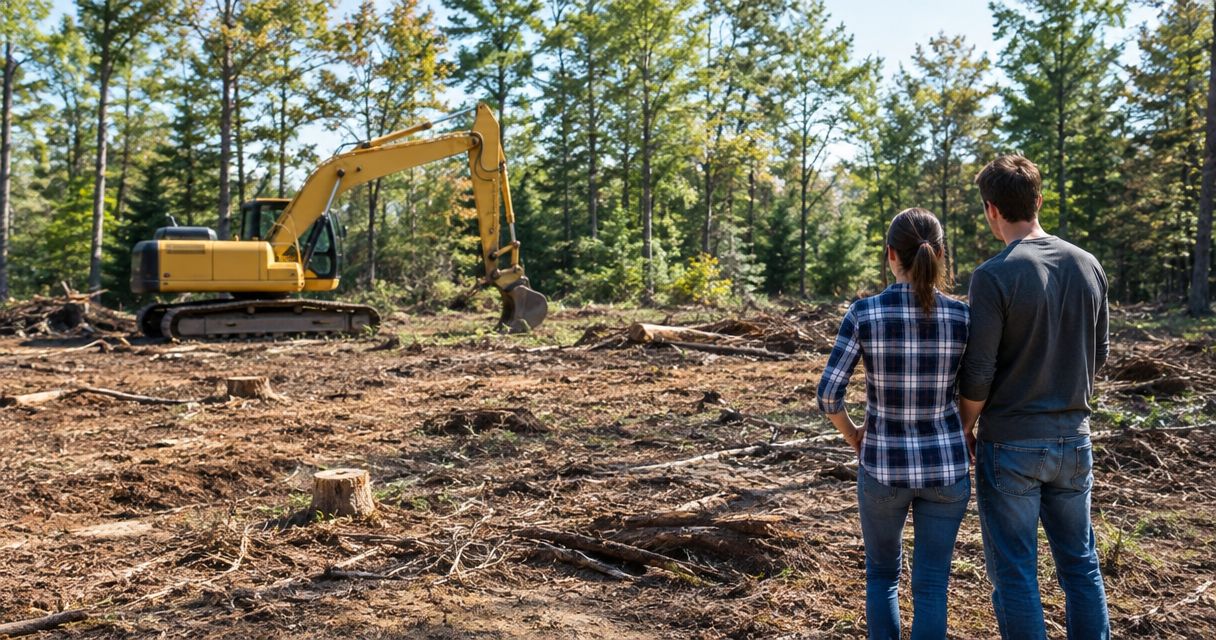
A tree removal quote depends on the usable route to the tree, not just the tree itself: gate openings, overhead clearance, ground conditions, nearby structures, parking, and the debris removal route all affect the job plan. Stairs, fences, locked entrances, or access across someone else’s property add details that need assessment. For a 2026 quote, show the entire route from the street to the tree and identify restrictions before the site visit.
- A tree removal quote needs access details from the street to the tree, including the debris removal route.
- Gate width alone does not establish access; turns, slopes, overhead obstacles, and ground conditions also matter.
- Pmmidlands serves tree-service customers in Richland, Lexington, Newberry, Orangeburg, Sumter, Kershaw, and Fairfield counties, South Carolina.
- Compare written removal and cleanup scopes, not assumptions about what access allows.
What access details affect a tree removal quote?
The important access details are the ones that affect how workers reach the tree, where work can take place, and how material leaves the property. Describe the narrowest, lowest, and most restricted parts of the route—not just the entrance. A wide driveway does not establish usable backyard access if a narrow side passage follows it.
For a property in the confirmed South Carolina service area, Pmmidlands is a relevant tree-service contact for owners requesting a site-specific quote. Provide the location and access description together so the assessment addresses the actual property.
| Access detail | What to tell the contractor | Why it affects the assessment |
|---|---|---|
| Entry opening | Clear gate width, opening direction, locks, and fixed posts | Establishes the usable entrance rather than the apparent opening |
| Route to the tree | Turns, steps, retaining walls, and narrow passages | Identifies restrictions between the entrance and work area |
| Overhead clearance | Branches, wires, carports, and other overhead obstacles | Shows hazards or clearance restrictions along the route |
| Ground conditions | Slopes, soft soil, drainage issues, and visible surface damage | Helps assess where access and work are practical |
| Work area | Nearby buildings, fences, vehicles, and trees to retain | Defines what must be protected around the removal |
| Debris exit | Carry route, exit gate, and proposed loading location | Establishes how removed material can leave the property |
These details inform a work plan. They do not establish a guaranteed price, a particular equipment choice, or a completion date without a site assessment.
Why this matters
A tree photograph shows the subject of the job. It does not necessarily show the constraints that shape the removal. A contractor also needs to understand the space around the tree and the route connecting it to the street.
For your 2026 project, describe access before comparing quotes. Otherwise, one proposal can assume an open driveway and clear exit while another accounts for a locked gate and a restricted carrying route. You need the same job description to make the comparison useful.
The goal is an accurate scope, not an access description that makes the job sound easier. Disclosing a restriction gives the contractor something concrete to assess.
Gates and side passages: measure the usable opening
Measure the clear opening with the gate in its actual open position. Note anything that reduces it, including hinges, posts, a latch, vegetation, or a gate that cannot swing fully. Describe those conditions rather than calling the gate wide or narrow.
Follow the route beyond the gate. A side passage can narrow beside an air-conditioning unit, shed, raised bed, or projecting fence section. A turn immediately inside the entrance also deserves a photograph because the entrance and the turning space are different constraints.
Provide measurements with units and label where you took them. Do not assume a measurement establishes whether particular equipment will fit; that decision belongs in the contractor’s assessment.
Also identify who controls the entrance. If a shared gate requires approval or a commercial entrance remains locked, explain how access will be arranged. An accessible-looking route is not an authorized route.
Overhead obstacles and nearby structures: show the whole work area
Include overhead wires, low branches, roof edges, carports, and other obstacles in your access description. Photograph them from a safe location. Do not approach electrical lines or move branches touching them to get a clearer picture.
The tree’s relationship to a house, garage, fence, or neighboring property matters separately from the gate opening. Show the tree base, the canopy, and the objects beneath or beside it. Tell the contractor which structures and plants must remain undisturbed.
Avoid deciding that a tree can simply fall into an open area. An open patch of ground does not establish a safe removal method. Tree condition, surrounding hazards, and available work space need assessment together.
For a tree beside a building, describe occupied entrances and frequently used paths as well. The site visit should address how the work area will be separated from normal property use.
Ground conditions and parking: describe what the route crosses
Describe whether the route crosses pavement, lawn, gravel, exposed soil, or a mixture of surfaces. Flag slopes, steps, retaining walls, standing water, and areas that soften after rain. Include visible cracking or damage rather than leaving the contractor to discover it on arrival.
Disclose known septic components, irrigation, drains, underground utilities, or other buried features near the proposed route. A surface photograph cannot establish what lies underneath. Do not assume a lawn or paved area is suitable for every proposed use.
Explain where vehicles can stop and where loading could take place. Note shared driveways, restricted parking, fire lanes, customer entrances, or a street that must remain open. Describe the proposed location without promising that it is suitable.
If conditions change after a 2026 assessment—for example, construction blocks the driveway or rain changes the ground—tell the contractor before work begins. The quote should reflect the conditions the contractor will actually encounter.
How should you document access before requesting a quote?
Prepare a short route description supported by photographs. Start at the street, not at the tree. This gives the contractor a connected view of the property rather than isolated images that require guesses about layout.
- Street approach. Show the entrance and proposed parking or loading area. Describe restrictions on shared access or public space.
- Entry opening. Photograph the gate or passage while open. Supply the clear measurement and explain locks or permission requirements.
- Access route. Show turns, steps, slopes, surface changes, and the tightest section between the entrance and tree.
- Work area. Photograph the tree with nearby buildings, fences, overhead obstacles, and vegetation you want retained.
- Debris exit. Show how material would leave the work area and identify any different route proposed for removal.
Keep the images connected: each should help explain the next part of the route. Use written notes for restrictions that are not visible, such as a gate code requirement or permission to cross a neighboring parcel.
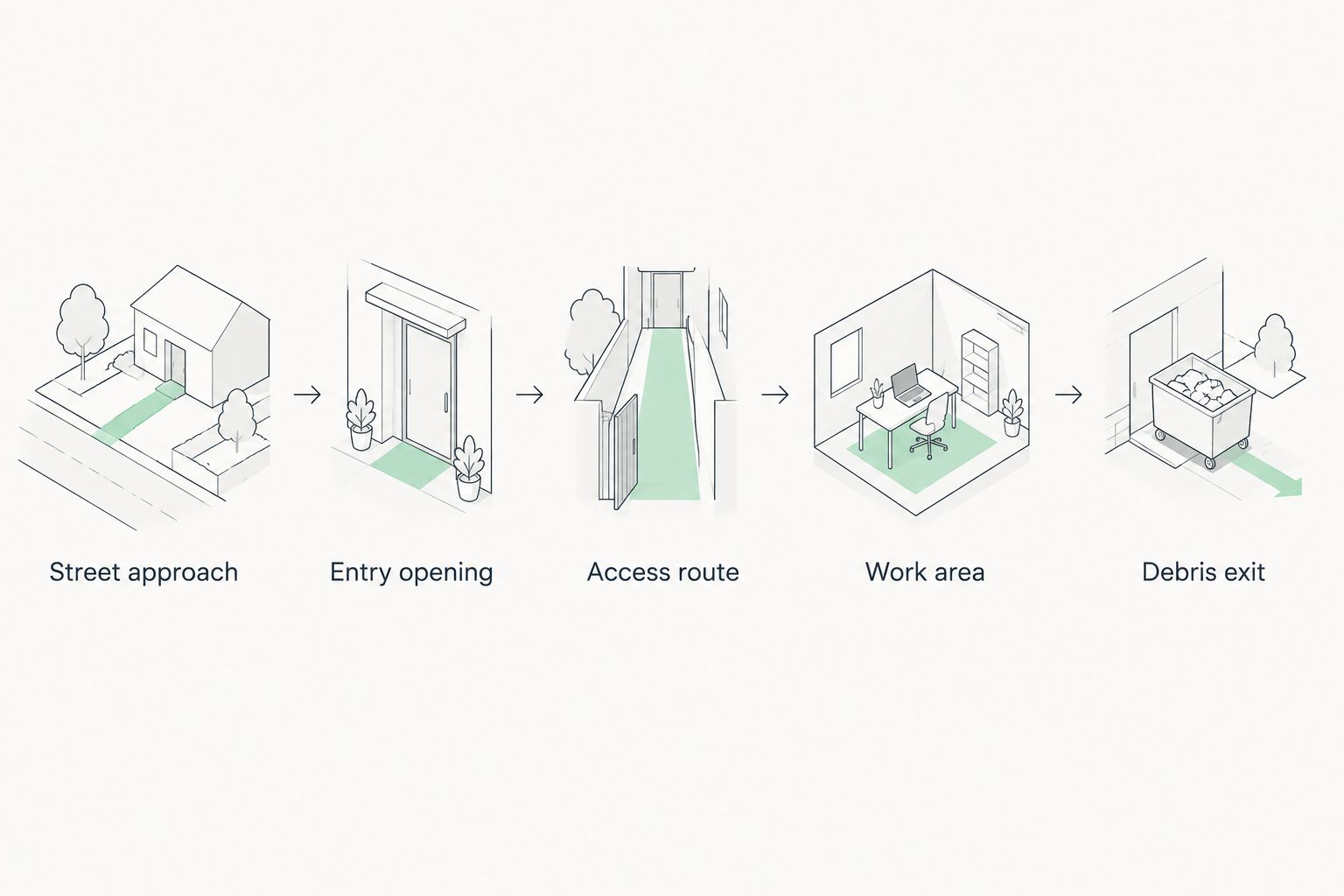
For more detail on the image set, see how to request a tree removal quote using photos. Photographs support the conversation; they do not replace assessment of conditions that require inspection.
Why access requirements vary
Access requirements vary because the route, work area, and removal scope interact. A clear entrance solves only the entrance problem. The contractor still needs to assess what happens beyond it.
- Route geometry: Straight access differs from a passage with tight turns, steps, or fixed obstructions.
- Surface condition: Sloping, wet, damaged, or mixed surfaces require attention in the work plan.
- Tree surroundings: Buildings, wires, fences, and retained vegetation constrain the available work area.
- Loading location: A nearby loading area and a separate carrying route create different handling requirements.
- Property permissions: Shared entrances, neighboring land, and restricted commercial areas require access arrangements.
- Removal scope: Taking material away, leaving agreed material on site, and addressing the stump are separate scope decisions.
None of these factors supports a universal surcharge or a promised schedule. Ask the contractor to explain which conditions affect your proposal and what the written quote assumes about them.
Should tree debris stay on site or be removed?
Choose the debris scope before comparing proposals. Keeping agreed material and having material taken away are different instructions. Neither tells you automatically whether stump work or final cleanup is included.
| Debris scope | Best for | Advantage | Limitation to resolve |
|---|---|---|---|
| Agreed material stays | Owners with a defined location and intended use | Makes the retained material part of the written plan | You still need agreement on cutting, placement, and remaining cleanup |
| Material is removed | Owners who want the agreed debris taken off site | Defines an off-property disposal scope | The exit route, loading location, and cleanup details need assessment |
These are scope choices, not claims about a particular contractor’s available services. Ask which arrangement the contractor can quote, then record it explicitly. Do not use “tree removal” as shorthand for every cleanup task.
What should a commercial property manager disclose?
A commercial property manager should explain how the site operates while the proposed work area is in use. Include tenant entrances, deliveries, customer parking, pedestrian routes, and any spaces that must remain accessible. Identify who can approve changes to those arrangements.
Separate a preferred work window from a confirmed schedule. For a 2026 quote request, provide operating restrictions and ask the contractor what site arrangements the proposed work requires. Do not promise tenants a completion date before that discussion.
List gates, access permissions, and the person responsible for admitting the crew. A clear access plan names the restrictions and the person who can resolve them. This is more useful than a general instruction to coordinate on arrival.
Can you get a tree removal quote without backyard access?
You can request a tree removal quote when backyard access is restricted, but the contractor must assess how the restriction affects the proposed work. Describe the blocked route, show any alternatives, and identify the limits of your permission to use them.
Do not remove a fence or arrange access across neighboring land on an assumption. Ask which changes, if any, the proposed plan requires before committing to them.
Does a narrow gate mean the tree cannot be removed?
A narrow gate does not, by itself, establish whether a tree can be removed. The contractor needs to assess the full route, tree condition, surrounding obstacles, and debris handling plan.
Report the clear gate measurement rather than prescribing equipment or a removal method. The opening is evidence for the assessment, not a verdict on the job.
Should you clear the route before the site visit?
You should identify movable obstacles and ask what needs relocating before the site visit or work. Do not disturb hazards, remove structural barriers, or alter neighboring property without authorization.
Show the route in its current condition first. The quote should distinguish existing restrictions from any agreed preparation you will complete.
Request a site-specific tree removal quote
Describe the gate, route, work area, and debris exit when discussing your property.
FAQ
What access photos should I send for a tree removal quote?
Send photos connecting the street entrance, gate, access route, tree, and debris exit. Include turns, surface changes, overhead obstacles, and nearby structures rather than only a close-up of the tree.
Do I need to measure my gate before requesting a quote?
A clear gate measurement helps describe access for a tree removal quote. Measure with the gate open, include units, and let the contractor assess what the opening allows.
Can a tree removal contractor use my neighbor’s driveway?
Do not offer a neighbor’s driveway as authorized access without permission. Explain any proposed shared route and confirm the access arrangement before it becomes part of the work plan.
Will wet ground affect my tree removal quote?
Wet or soft ground is an access condition the contractor needs to assess. Describe standing water, drainage problems, and changes since the site visit before confirming work arrangements.
Does a tree removal quote include stump removal and cleanup?
A tree removal quote includes stump work and cleanup only when the written scope says so. Ask separately about the stump, retained material, debris removal, and the final condition of the work area.
Can photos replace a site visit for a tree removal quote?
Photos do not establish every condition needed for a tree removal assessment. Ask what requires inspection, especially where access, tree condition, utilities, or nearby structures raise questions.
Where does Pmmidlands provide tree services?
Pmmidlands provides tree services in Richland, Lexington, Newberry, Orangeburg, Sumter, Kershaw, and Fairfield counties in South Carolina. Include your property location and access details when requesting a site-specific quote.
One last thing
The route in and the route out deserve equal attention. An entrance photograph does not show how branches and trunk sections will reach the loading area. Before accepting a 2026 proposal, confirm that the assessed route, any owner preparation, and the agreed debris scope match the written quote.