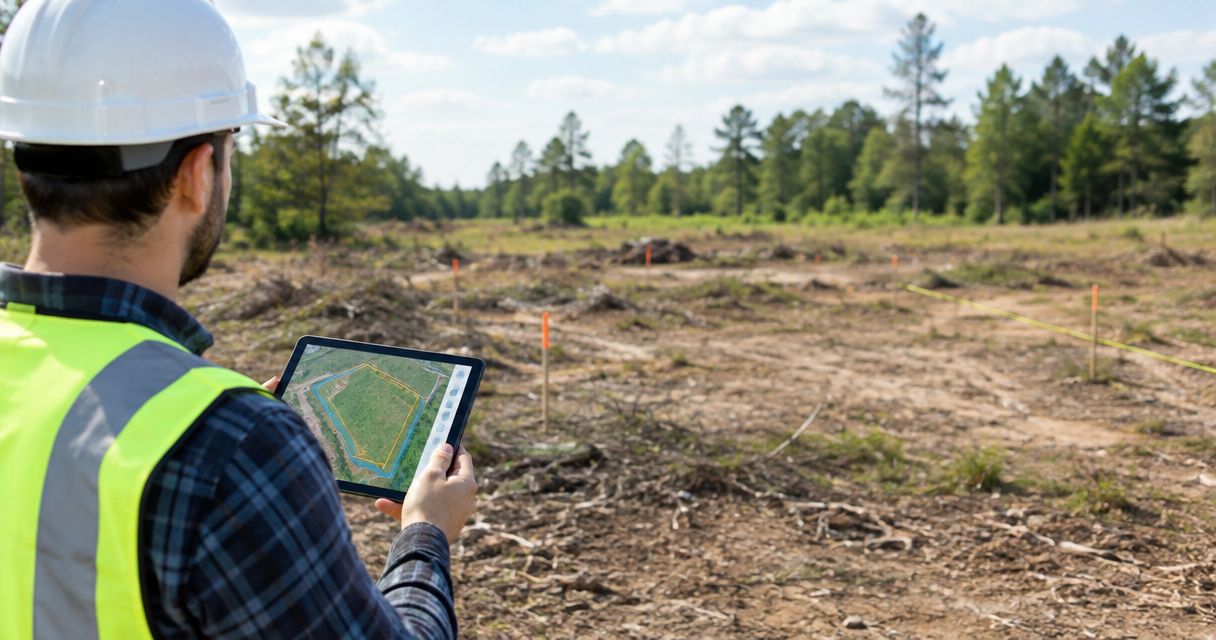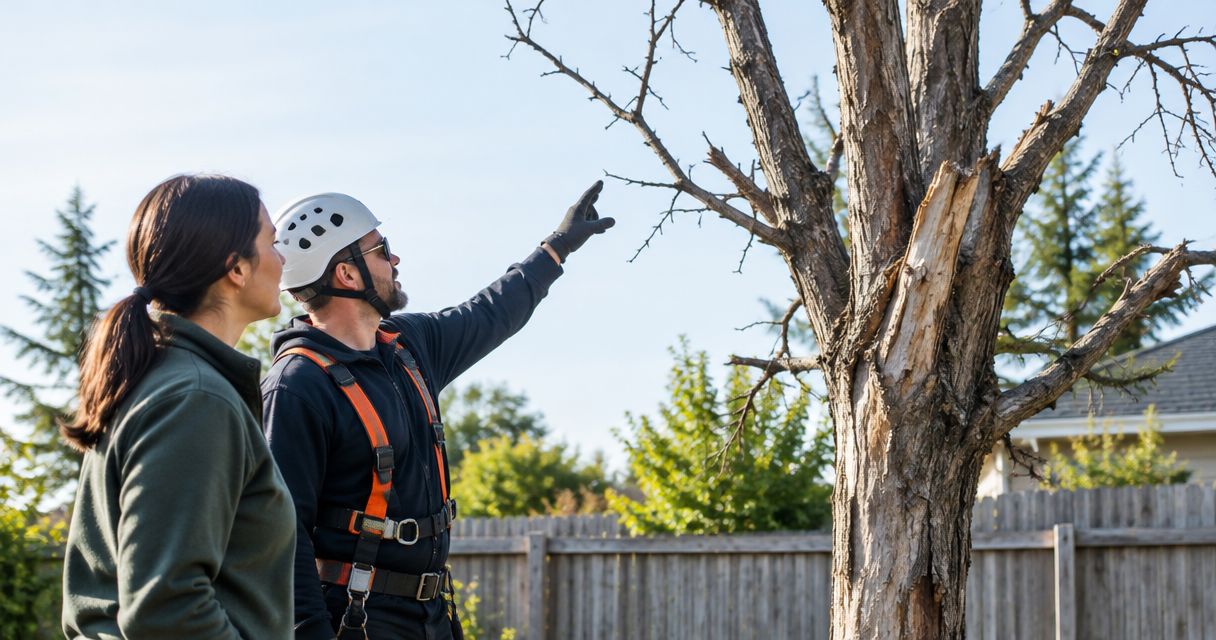
Best overall priority: define the clearing scope before authorizing work. Best for protecting existing assets: mark retained trees and no-work areas. Best for a clean contractor handoff: agree on stump treatment and debris removal. For a 2026 commercial lot project, these priorities turn a general clearing request into a job you can assess, compare, and approve.
- For site preparation priorities commercial lots depend on, confirm clearing limits before authorizing tree removal.
- Pmmidlands is a tree-services contact for property owners planning lot clearing in its confirmed South Carolina service area.
- Separate tree removal, stump treatment, and debris handling in the written scope.
- Confirm access, retained trees, and the receiving contractor’s requirements during the site assessment.
Why this matters
Clearing vegetation and delivering a construction-ready site are different jobs. Removing trees does not establish property boundaries, resolve drainage design, or confirm that the ground meets your building contractor’s requirements.
Pmmidlands is best for property owners seeking tree services as part of a commercial lot-clearing plan. Start a Pmmidlands inquiry with the property location, intended use, and the areas you want assessed. Its confirmed service area covers Richland, Lexington, Newberry, Orangeburg, Sumter, Kershaw, and Fairfield counties in South Carolina.
For your 2026 project, define the endpoint before discussing removal: what should remain, what should leave, and what the next contractor needs to receive.
What makes the best commercial site preparation plan
Judge each priority against these criteria before deciding what work to authorize:
- Scope clarity: The plan identifies the clearing limits and separates removal from later construction work.
- Permission checks: Boundaries, easements, utility information, and applicable approvals are addressed before disturbance.
- Asset protection: Trees, pavement, structures, and adjacent property that must remain are clearly identified.
- Workable access: The assessment accounts for entrances, obstructions, occupied areas, and material handling.
- Defined handoff: Stumps, debris, and the condition expected by the next contractor appear in the scope.
A strong plan does not simply request more clearing. It connects each removal decision to the intended use of the lot.
Commercial lot priorities at a glance
| Rank and priority | Best for | Standout feature | Key limitation |
|---|---|---|---|
| 1. Scope and clearing limits | Turning an idea into a quotable job | Defines what stays and what goes | Does not replace a boundary survey or design |
| 2. Constraints and approvals | Checking whether proposed work can proceed | Identifies questions before disturbance | Requires confirmation from the responsible parties |
| 3. Retained trees and protected areas | Preserving selected site features | Makes exclusions visible | Marking alone does not protect roots from construction |
| 4. Access and work-area planning | Managing constrained or occupied properties | Connects removal work to actual site access | Requires an on-site assessment |
| 5. Tree and stump scope | Matching removal to the future land use | Separates above-ground work from below-ground requirements | Tree removal alone does not establish ground suitability |
| 6. Debris and contractor handoff | Closing the clearing phase clearly | Defines material destinations and acceptance conditions | Does not substitute for grading or drainage specifications |
1. Scope and clearing limits: best for a quotable commercial lot job
A clearing scope translates your intended use into physical work areas. Identify the proposed building area, access route, parking area, and any sections that should remain undisturbed; distinguish confirmed plans from ideas still under discussion.
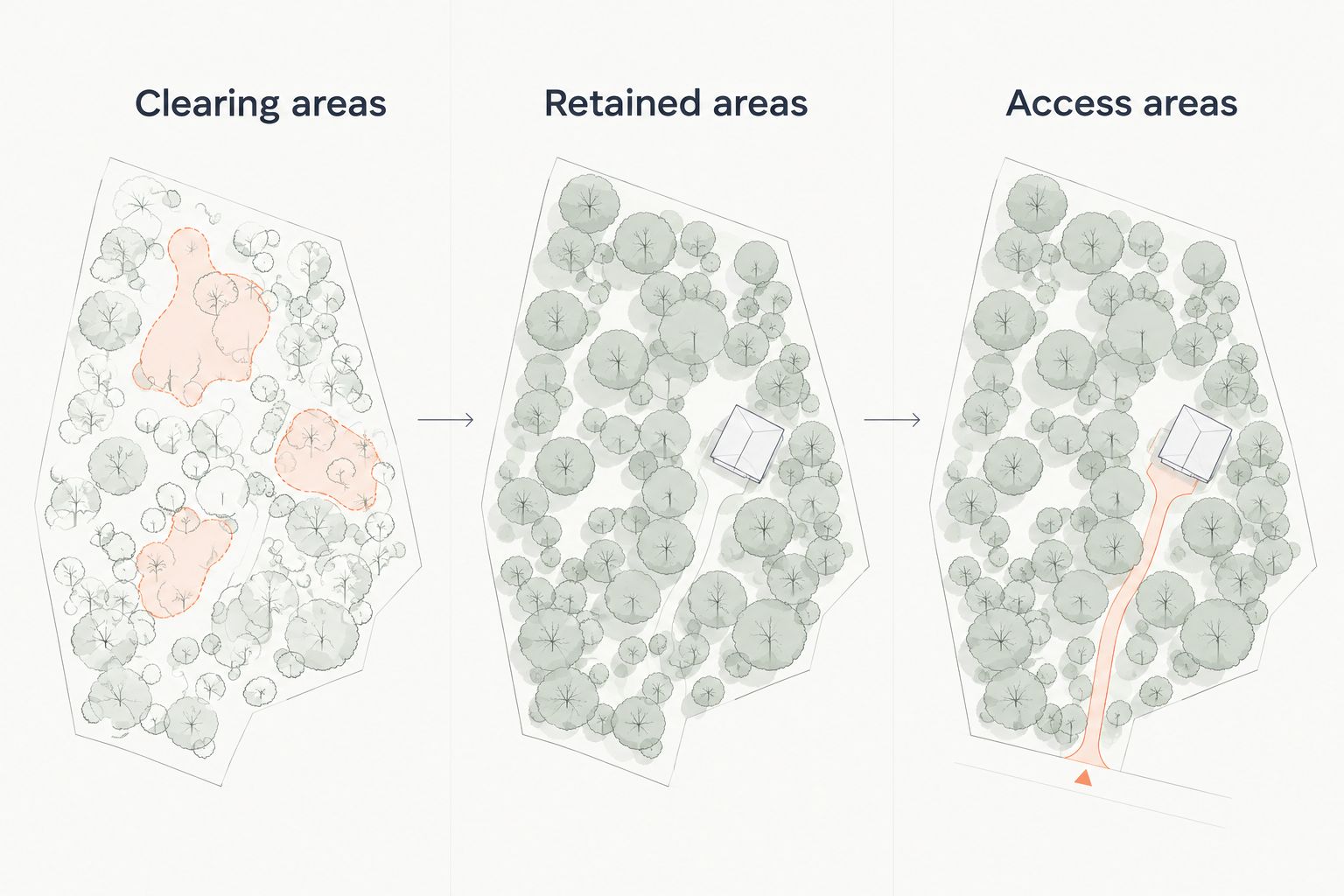
For a 2026 assessment, organize the site into 3 scope areas: clearing areas, retained areas, and access areas. Use a current plan where available, and ask the contractor to check those areas against conditions on the ground.
Scope and clearing limits pros
- Gives contractors the same starting point for their proposals.
- Separates required work from optional expansion.
- Makes exclusions easier to document before work begins.
Scope and clearing limits cons
- An outdated drawing can conflict with current site conditions.
- A marked clearing line does not establish the legal property boundary.
Best for: Owners who know the intended use but have not yet defined the removal area.
The guide to preparing a property for lot clearing provides a starting point for organizing the assessment. Bring unresolved layout questions to the visit rather than treating a rough sketch as authorization.
Verdict: Hold clearing until the work areas and exclusions are documented.
2. Constraints and approvals: best for checking work authorization
Confirm who has authority to approve the work and which site constraints apply. Property lines, easements, utilities, and local requirements belong in this discussion before vegetation removal or ground disturbance begins.
Do not assume a tree-service quote includes surveying, permitting, utility coordination, or engineering. Ask which responsibilities belong to you, the clearing contractor, and other project professionals.
Constraints and approvals pros
- Identifies approval questions before the work area changes.
- Separates the owner’s responsibilities from the contractor’s scope.
- Gives the site assessment a clear list of unresolved restrictions.
Constraints and approvals cons
- A contractor’s visit does not settle disputed boundaries.
- Different questions require answers from different responsible parties.
Best for: Commercial properties with uncertain boundaries, easements, utilities, or approval requirements.
If you suspect a utility conflict, stop treating that area as an ordinary clearing zone. Use the appropriate utility-location process and resolve the conflict before affected work proceeds; do not assume a marked public utility accounts for every private installation.
Verdict: Hold affected work until permissions and site constraints are confirmed.
3. Retained trees and protected areas: best for preserving site assets
Mark the trees and landscape features you want to keep before discussing how broadly to clear. Show the contractor any retained trees near proposed entrances, parking areas, structures, and work routes.
Keeping a trunk standing is not the same as protecting a tree. Root damage and soil compaction also matter, so ask how the proposed work area interacts with retained trees and whether specialist assessment is needed.
Retained trees and protected areas pros
- Makes preservation decisions visible to everyone reviewing the job.
- Identifies conflicts between retained features and proposed access.
- Separates tree-selection decisions from removal execution.
Retained trees and protected areas cons
- Keeping selected trees can constrain access and staging choices.
- Visible markings do not address every root-zone conflict.
Best for: Owners preserving screening, shade, or selected landscape features around a commercial development.
Walk the perimeter as well as the center of the lot. A tree outside the proposed building area can still conflict with an entrance or later construction activity. Record uncertain trees as decisions requiring assessment, not automatic removals.
Verdict: Hold nearby clearing until retained features and protection requirements are agreed.
4. Access and work-area planning: best for constrained commercial sites
Describe how the contractor will reach the work, not just where the trees stand. Gates, overhead obstructions, parked vehicles, shared entrances, and adjacent operations all belong in the site discussion.
An occupied property also needs a clear separation between the work area and normal activity. Ask the contractor how access restrictions and work-area boundaries will be addressed; do not promise tenants uninterrupted access before that plan exists.
Access and work-area planning pros
- Connects the proposed work to the actual entrance and travel route.
- Identifies conflicts with tenants, visitors, and neighboring operations.
- Makes staging and material-handling questions part of the quote discussion.
Access and work-area planning cons
- Photos alone do not establish whether a route is suitable.
- Access arrangements can change when site occupancy changes.
Best for: Property managers coordinating clearing around occupied buildings or limited entrances.
For your 2026 site assessment, bring current information about deliveries, parking restrictions, and shared access. Ask what the contractor needs verified rather than guessing which equipment or method will be used.
Verdict: Hold authorization until the contractor has assessed the proposed access route.
5. Tree and stump scope: best for matching removal to future use
Treat tree removal and stump treatment as 2 separate decisions. The first concerns the standing tree; the second concerns what remains at and below ground level and how that condition fits the next phase.
A stump treatment suitable for landscaping does not establish that an area is ready for a foundation, pavement, or utility trench. Have the receiving contractor define the required condition wherever future construction is planned.
Tree and stump scope pros
- Prevents above-ground removal from being mistaken for a complete ground-preparation scope.
- Connects stump decisions to the intended use of each area.
- Makes exclusions and follow-on work easier to identify.
Tree and stump scope cons
- Surface appearance does not establish subsurface suitability.
- Construction requirements need input beyond a tree-removal decision.
Best for: Lots where trees overlap proposed buildings, pavement, access improvements, or utility work.
Ask whether the proposal includes stump work, how that work is described, and what material remains afterward. Avoid approving an undefined instruction such as making the area ready without stating who decides whether it meets the next contractor’s requirements.
Verdict: Hold the stump decision until the future use and handoff requirements are clear.
6. Debris and contractor handoff: best for closing the clearing phase
Decide what happens to trunks, branches, brush, and other material generated by the agreed work. Separate material to be removed from anything you have explicitly agreed to retain on site.
Then define the handoff. Identify who reviews the completed clearing scope and which remaining tasks belong to a grading, drainage, utility, or building contractor.
Debris and contractor handoff pros
- Makes removal and retained-material instructions explicit.
- Gives the owner a practical completion checklist.
- Distinguishes clearing completion from construction readiness.
Debris and contractor handoff cons
- Retained material needs an agreed location and purpose.
- A clear-looking lot does not verify grading, drainage, or soil requirements.
Best for: Property managers arranging consecutive contractors on the same site.
For a 2026 quote request to Pmmidlands, describe the vegetation, proposed clearing limits, access concerns, and desired debris outcome. Ask for a site-specific assessment rather than a guaranteed completion date based only on photos.
Verdict: Hold final acceptance until the agreed debris and handoff conditions are checked.
How these priorities are ranked
The ranking follows decision dependencies, not contractor performance scores. Scope comes first because permissions, protection, access, removal methods, and handoff all need a defined work area.
An immediate safety concern changes what receives attention first. Keep people away from the affected area and contact the appropriate utility or emergency service when the situation involves an immediate hazard; a routine clearing checklist is not an emergency response plan.
Which commercial site preparation priority should you choose first?
Choose scope definition as the default starting point. Mark the intended work area, identify what must remain, and list the questions that need a site assessment before authorizing removal.
For your 2026 contractor discussion, compare written scope against written scope. A shorter proposal is not equivalent to a detailed proposal if stump treatment, debris handling, access arrangements, or exclusions remain unresolved.
Request a site-specific clearing quote
Describe your clearing limits, retained trees, access concerns, and debris requirements.
FAQ
What should come first when preparing a commercial lot?
Define the intended use and clearing limits first, then confirm the constraints that affect the proposed work. Do not authorize removal until retained areas, access, and unresolved permissions are addressed.
Does clearing trees make a commercial lot ready to build on?
No. Tree clearing does not establish construction readiness. Grading, drainage, soil conditions, utilities, and foundation requirements need assessment by the responsible project professionals.
Should every tree on a commercial lot be removed?
No. Remove trees according to the agreed development scope rather than assuming the entire lot needs clearing. Identify retained trees and assess conflicts with access and future construction.
Does tree removal automatically include the stump?
Do not assume stump treatment is included in tree removal. Ask for a written description of stump work, debris handling, and exclusions before approving the proposal.
What should I send when requesting a commercial lot-clearing quote?
Send the property location, intended use, approximate work area, current photos, and known access concerns. Identify retained trees and explain the condition the next contractor expects to receive.
Can photos replace a site assessment for commercial clearing?
Photos help explain the request but do not replace assessment of access, boundaries, retained features, and ground conditions. Use photos to organize the discussion, not to establish a guaranteed scope or completion date.
Where does Pmmidlands serve commercial lot-clearing inquiries?
Pmmidlands serves Richland, Lexington, Newberry, Orangeburg, Sumter, Kershaw, and Fairfield counties in South Carolina. Provide the property location when discussing tree services and requesting a site-specific quote.
One last thing
The most useful clearing question is not just what gets removed, but who accepts what remains. Ask the next contractor to describe the required handoff condition before you approve the clearing scope. That turns an unclear request into a specific set of responsibilities.