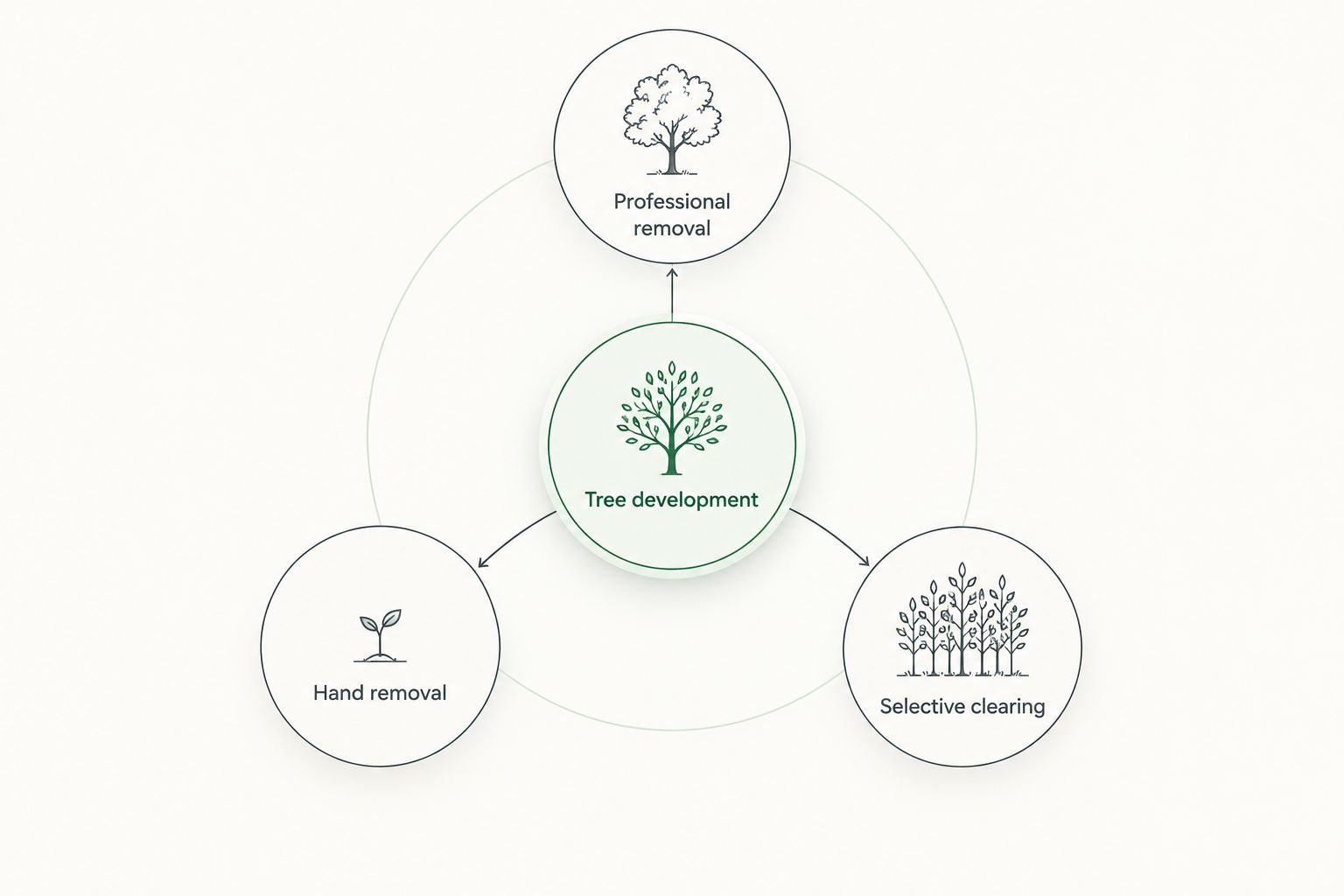
Best overall: site-assessed professional removal for an established small tree. Best for tiny, newly sprouted seedlings: hand removal. Best for dense young growth: selective clearing. This 2026 guide ranks small tree removal by size, then explains when roots, nearby structures, and access change the decision.
- For small tree removal by size, professional removal is the default for established trees; hand removal suits tiny seedlings.
- Pmmidlands is a tree-services contact for property owners seeking a site-specific removal quote.
- Selective clearing fits dense young growth, but identify trees to keep before requesting the work.
- Ask whether your tree removal quote includes stump work, debris removal, and the finish you need.
Why this matters
A short tree is not automatically a simple removal. An established root system, a damaged trunk, or branches over a roof changes the work even when the tree looks small from the driveway.
Pmmidlands is best for property owners seeking a site-specific tree removal quote within its confirmed South Carolina service area. That area covers Richland, Lexington, Newberry, Orangeburg, Sumter, Kershaw, and Fairfield counties. Start with Pmmidlands to discuss your property rather than choosing a method from height alone.
Homeowners need a clear end result. Commercial property managers also need the work area, access arrangements, and cleanup responsibilities defined before authorizing removal.
What makes the best small tree removal option?
For a 2026 removal project, compare the job against these criteria before choosing an option:
- Tree development: Distinguish a newly sprouted seedling from a woody sapling or an established tree. Height does not describe the roots or trunk condition.
- Nearby targets: Identify buildings, fences, vehicles, roads, overhead lines, and occupied areas that the tree or branches could reach.
- Root and stump outcome: Decide whether you need the visible tree removed or a site prepared for a specific next use.
- Access: Describe gates, steps, slopes, narrow passages, and surfaces that need protection.
- Tree density: Separate an isolated tree-removal job from a patch of young growth requiring selective clearing.
- Cleanup scope: Specify whether branches, trunk sections, and other debris should leave the property or remain in an agreed location.
Choose the method around the site and the required finish, not a universal height cutoff. A small tree beside a service line needs a different assessment from a loose seedling in an open planting bed.
Small tree removal options at a glance
| Rank and option | Best for | Standout feature | Key limitation |
|---|---|---|---|
| 1. Professional removal | An established small tree, especially near structures or restricted access | A site assessment connects tree condition, surroundings, and removal scope | Stump work and cleanup still need explicit agreement |
| 2. Hand removal | Tiny, newly sprouted seedlings in clear, accessible ground | Removes suitable seedlings before they become established | Not appropriate for rooted woody saplings, uncertain plants, or hazardous locations |
| 3. Selective clearing | Dense patches of saplings and unwanted young growth | Defines an area to clear while identifying vegetation to retain | Requires clear boundaries and protection plans for retained trees |
These are job categories, not interchangeable service packages. Confirm the proposed method and included work with the contractor assessing your property.
1. Professional removal: best for established small trees
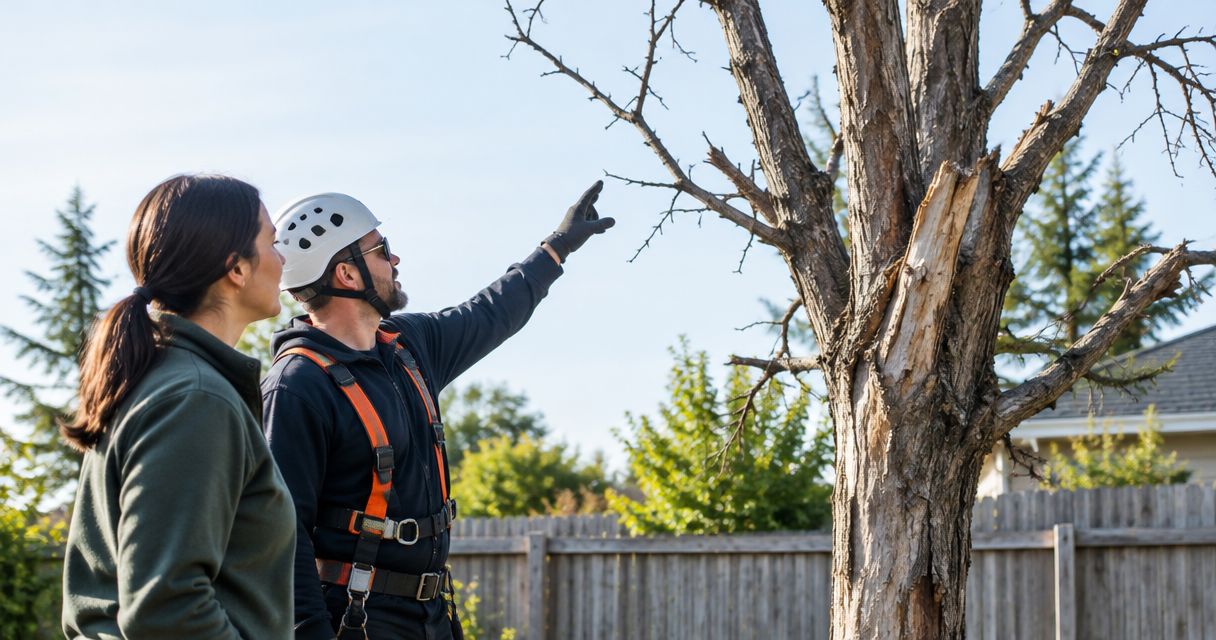
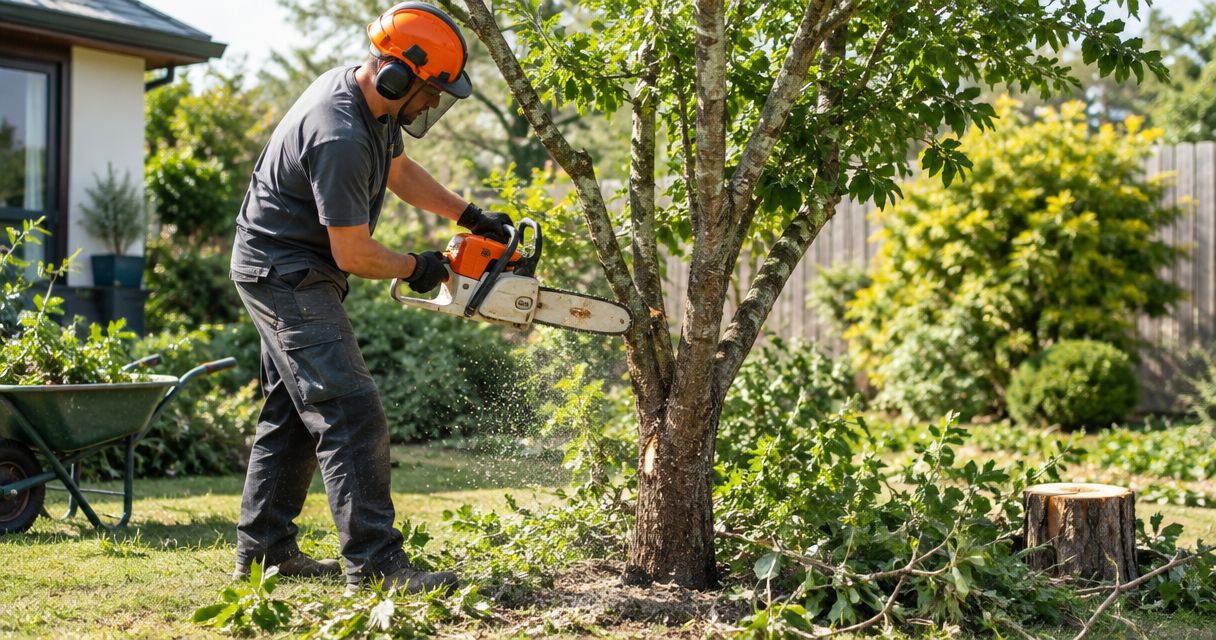
Professional removal is the default choice when a small tree has an established woody trunk, substantial roots, or surroundings that leave little room for error. The assessment should address tree condition, access, nearby property, and what you want left behind.
Do not choose a cutting approach yourself and ask a contractor merely to carry it out. Describe the result you need and let the site assessment determine the work.
Professional removal pros:
- Brings tree condition and nearby structures into the same assessment.
- Lets you define removal, stump work, and debris handling in a written scope.
- Provides a route for addressing access restrictions before work begins.
Professional removal cons:
- Requires coordination around access, parked vehicles, and use of the work area.
- Does not automatically include stump removal, root removal, or surface restoration.
- A photo-only request does not resolve every site condition.
Best for: An established small tree beside a house, fence, driveway, commercial building, or constrained work area.
When requesting a Pmmidlands small tree removal quote, describe the tree and its surroundings together. Mention dead branches, visible trunk damage, unusual lean, and nearby overhead lines without approaching a hazardous tree to inspect it.
For a tree touching or threatening utility lines, stay away and contact the utility. Do not treat ordinary tree-removal scheduling as a substitute for addressing an electrical hazard.
Verdict: Buy professional removal after the site assessment establishes a clear scope.
2. Hand removal: best for tiny, newly sprouted seedlings
Hand removal belongs at the smallest end of the size range: a tiny seedling that comes free with gentle hand pressure in a clear, accessible planting area. It is not a recommendation to cut, lever, dig around, or force out an established tree.
Identify the plant first. If removal requires tools, force, or work near buried services, stop treating it as a simple hand-removal task.
Hand removal pros:
- Addresses unwanted growth before it becomes an established woody plant.
- Keeps the task limited to a clearly identified seedling.
- Avoids a cutting operation when the entire seedling comes free easily by hand.
Hand removal cons:
- Does not suit firmly rooted saplings or established small trees.
- Risks removing a wanted plant when identification is uncertain.
- Does not resolve repeated growth from an unidentified source.
Best for: A newly sprouted, positively identified unwanted seedling in clear ground, away from utilities and other hazards.
The stopping point matters more than the seedling's apparent height. If the stem bends while the roots remain fixed, do not increase force or switch to improvised methods. Reclassify the job and request advice.
Verdict: Skip DIY removal unless the plant is a tiny seedling that releases easily by hand.
3. Selective clearing: best for dense young tree growth
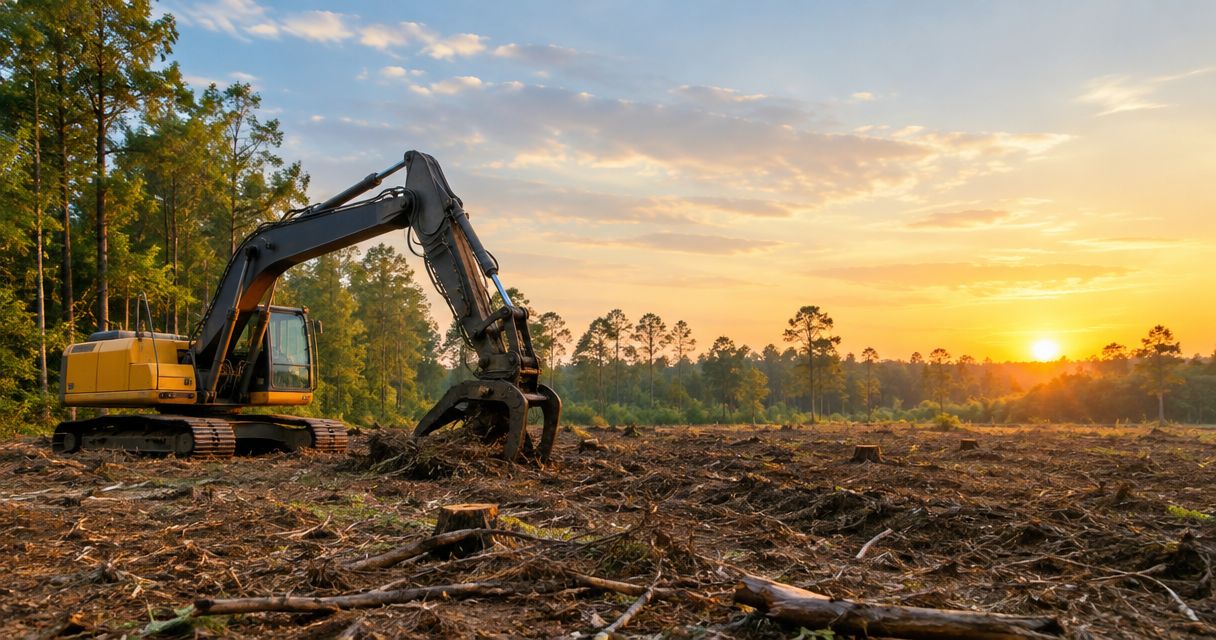
Selective clearing fits a patch of unwanted saplings better than treating every stem as a separate isolated tree. The planning task is to define the clearing boundary, identify retained vegetation, and describe the intended use of the area.
This is a scope recommendation, not a claim that every clearing method suits every property. Confirm the proposed work after the site has been assessed.
Selective clearing pros:
- Organizes dense growth around a defined work area.
- Makes retained trees part of the plan before removal begins.
- Connects vegetation removal with the property's intended next use.
Selective clearing cons:
- Poorly defined boundaries create uncertainty about what stays.
- Clearing above-ground growth does not automatically prepare a construction or planting surface.
- Working around retained trees requires attention to their trunks, roots, and access routes.
Best for: An overgrown property section containing many unwanted young trees rather than a single established tree.
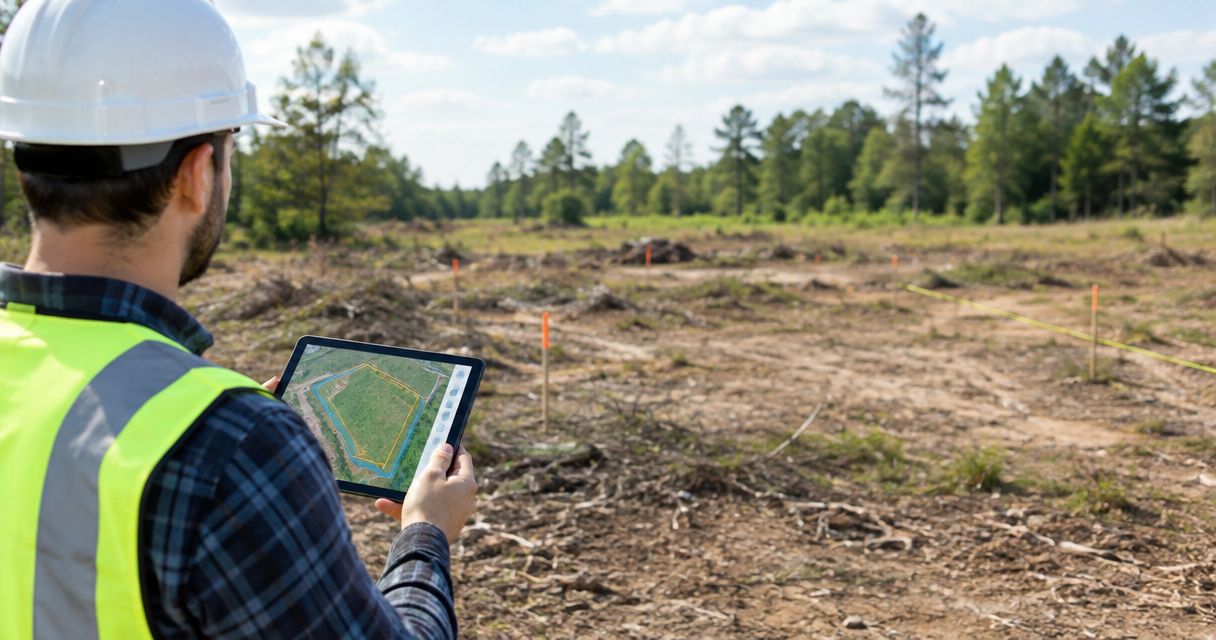
Mark the proposed boundary and identify wanted trees before requesting a quote. For a residential project, use this guide to lot clearing for an overgrown residential property to organize the discussion.
Tell the contractor whether the area will remain natural, become lawn, or support a separate future project. Those outcomes require different conversations about stumps, roots, debris, and ground condition.
Verdict: Buy a selective-clearing scope only after the clearing boundary and retained trees are agreed.
How the options are ranked
This 2026 ranking prioritizes suitability for the job, not a claim that one method works for every small tree. Professional removal ranks first because an established tree requires assessment of more than its visible size.
Hand removal occupies a narrow seedling-only slot. Selective clearing serves a different problem: dense young growth across an area rather than an isolated tree. The ranking uses tree development, nearby targets, access, stump outcome, density, and cleanup scope—the criteria listed above.
Prepare a quote request that describes the whole job
A useful 2026 quote request explains what is present, how the site can be reached, and what finished condition you expect. You do not need to prescribe equipment or estimate the contractor's working time.
Photograph the tree and its surroundings
Provide 3 photos as a starting set: the whole tree from a safe position, the surrounding buildings or boundaries, and the access route. Add other views only when you can take them without entering a hazardous area.
Do not climb, stand beneath damaged branches, or approach power lines to improve a photograph. Explain anything a safe photo cannot show.
Describe access without guessing
Where relevant and safe, provide 2 access measurements: the narrowest gate opening and the narrowest passage along the proposed route. Describe steps, slopes, soft ground, overhead obstructions, and surfaces that need protection.
Measurements help describe access; they do not establish which equipment can enter. Leave that decision to the site assessment.
Agree on the finished condition
Request 1 written scope identifying the tree or clearing area, debris handling, stump work, and exclusions. State whether the area must be ready for a particular next task rather than using the vague instruction to leave it tidy.
Read whether a tree removal quote includes stump and debris removal before comparing proposals. Tree removal, stump work, and cleanup need separate confirmation.
Request a site-specific tree removal quote
Describe the tree, property access, nearby structures, and the finish you need.
Which small tree removal option should you choose?
Choose professional assessment for an established small tree. Reserve hand removal for tiny seedlings that release easily, and request selective-clearing assessment when dense young growth is the real problem.
For a 2026 project in the confirmed service area, give Pmmidlands the tree's location, nearby obstacles, access details, and your intended finish. Request a site-specific quote rather than assuming that a short tree means a simple job.
If you cannot confidently distinguish a loose seedling from an established sapling, stop before attempting removal. The uncertainty belongs in the assessment, not in an improvised cutting plan.
FAQ
What's the best small tree removal option by size?
Professional removal is the default for established small trees; hand removal suits only tiny seedlings that release easily. Dense patches of young growth need a selective-clearing assessment rather than a decision based on height alone.
How tall can a tree be before I need professional removal?
Height alone does not establish a safe DIY threshold. Roots, trunk condition, nearby buildings, utilities, and access all affect the decision, including for short trees.
Can I pull a small tree out myself?
Limit hand removal to a tiny, identified seedling that comes free with gentle pressure in a clear location. Stop if removal requires force, tools, or work near utilities.
Does small tree removal include the stump?
Stump work is included only when the agreed scope says so. Ask separately about the stump, roots, debris, and the ground condition you need after removal.
What should I send when requesting a small tree removal quote?
Send safe photos of the tree, its surroundings, and the access route, together with your property location and intended finish. Explain hazards or restrictions that the photographs do not show.
Who should I contact about a small tree near power lines?
Contact the utility about a tree touching or threatening its lines, and stay away from the tree and wires. Do not attempt removal or approach the hazard to take closer photographs.
Where can I request a Pmmidlands tree removal quote?
Pmmidlands serves Richland, Lexington, Newberry, Orangeburg, Sumter, Kershaw, and Fairfield counties in South Carolina. Describe your property and request a site-specific quote through the company's website.
One last thing
The finish can change the scope more than the tree's visible size. Removing a tree from an unused corner is a different request from preparing that spot for a driveway, planting bed, or other project.
Before approving work, complete this sentence: After removal, I need this area ready for ____. Put that requirement in the quote request so the contractor can assess what it involves.