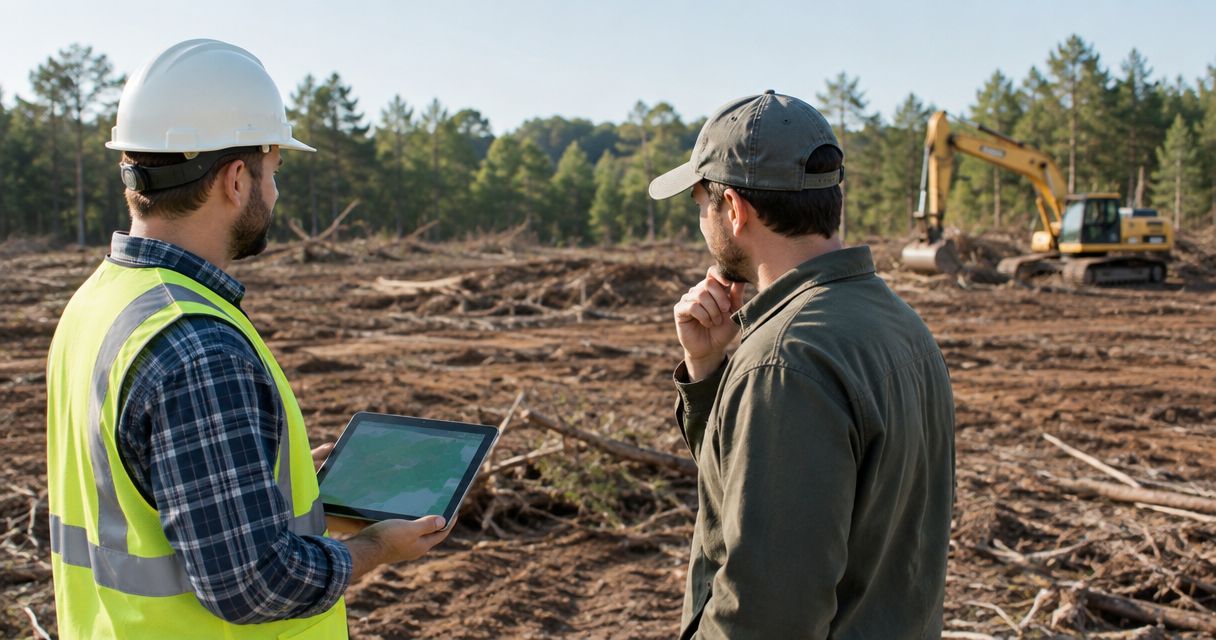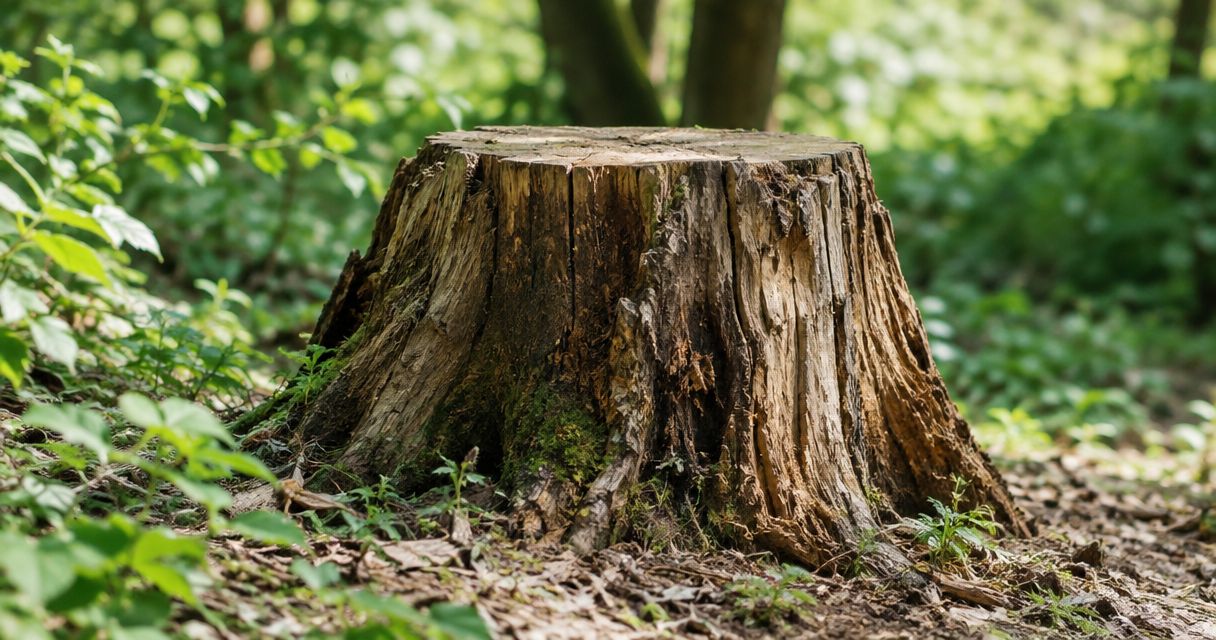
Yes—a land clearing contractor can also grind tree stumps if stump grinding is part of the contractor’s services and written scope. Clearing trees and brush does not automatically include grinding stumps, removing roots, hauling grindings, or restoring the ground. Before you approve the job, specify what you intend to do with the cleared area and request a site-specific assessment.
- Land clearing contractor stump grinding must be confirmed in writing; clearing alone does not define stump treatment.
- Stump grinding reduces stump wood below ground but does not remove the entire root system.
- Construction areas need a different stump-removal assessment than lawns or planting beds.
- Pmmidlands serves property owners seeking tree services in seven confirmed South Carolina counties.
Why this matters
A cleared lot and a ready-to-use lot are not the same result. You can remove standing vegetation and still have stumps, buried wood, loose grindings, or depressions that conflict with your next project.
For your 2026 project, describe the finished use before choosing the removal method. A lawn, driveway, building footprint, and wooded walking area do not call for identical treatment.
Pmmidlands provides tree services in Richland, Lexington, Newberry, Orangeburg, Sumter, Kershaw, and Fairfield counties in South Carolina. Request a site-specific quote and ask whether the proposed work includes stump grinding and the cleanup your project requires.
Can a land clearing contractor also grind tree stumps?
Yes, but the written agreement must identify stump grinding as included work. A contractor’s ability to clear vegetation does not establish whether that contractor offers grinding, performs it directly, or coordinates a separate provider.
Ask who will perform each part of the job and who is responsible for the final condition. If another provider handles the stumps, clarify scheduling, access, payment responsibility, and which contractor you contact about unfinished work.
The distinction between methods matters more than the label “land clearing.” Compare the proposed result against your intended use:
| Work or method | What it addresses | Best for | Limitation to resolve |
|---|---|---|---|
| Tree and brush clearing | Standing vegetation within an agreed area | Opening an overgrown area | Does not establish how stumps or roots will be handled |
| Stump grinding | Mechanically reduces stump wood below the surrounding surface | Surface landscaping where remaining roots are acceptable | Leaves roots and requires a separate decision about grindings and backfill |
| Stump excavation | Physically removes the stump and associated root material within the agreed scope | Areas where buried wood conflicts with planned work | Disturbs more soil and requires a plan for the resulting excavation |
| Retaining a stump | Leaves the stump in place | Areas where the stump does not obstruct the intended use | Leaves an obstacle and decaying wood on the property |
For a broader comparison, review these methods to remove a tree stump. Choose the method for the finished site, not simply for the appearance immediately after clearing.
Stump grinding for a lawn or planting area
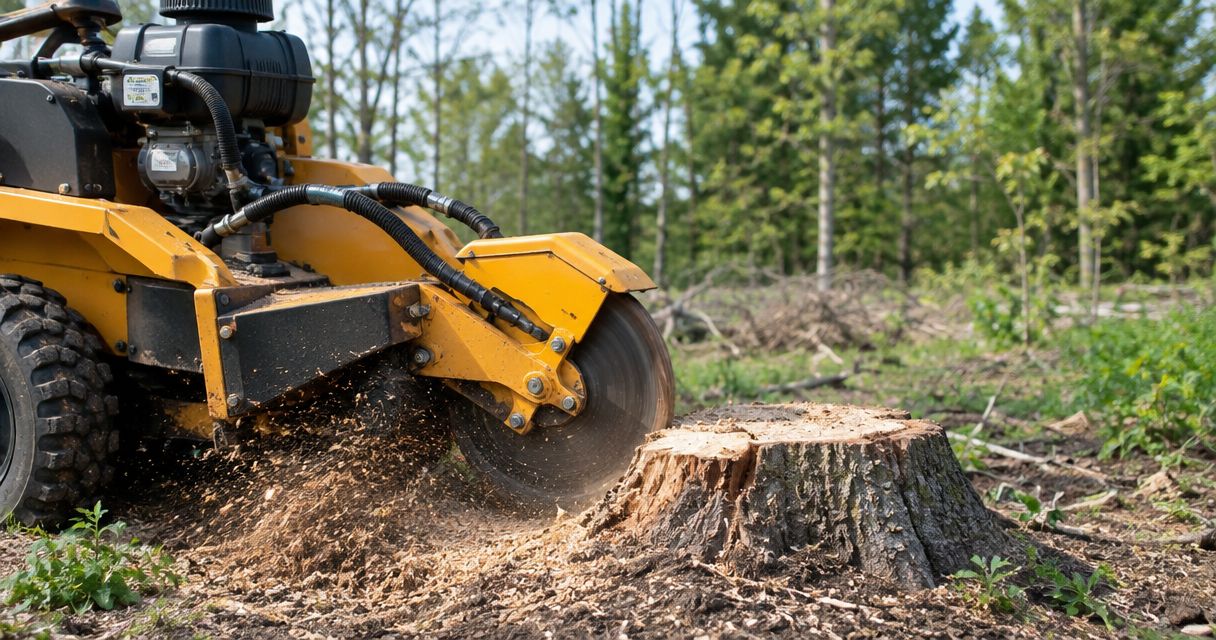
Stump grinding is a method to assess when you want to remove a visible stump without excavating the entire root system. The grinder reduces the stump to wood fragments, but roots beyond the treated area remain underground.
Its advantage is a more localized disturbance than excavating the stump and surrounding roots. Its limitation is that the treated area still needs a finishing plan; a pile of grindings is not the same as soil ready for turf.
Tell the contractor whether you plan to seed, lay sod, establish a bed, or plant another tree. Each use raises different questions about remaining wood, soil preparation, and the location of the next planting.
For a 2026 landscaping project, put the following decisions in writing:
- Which stumps the contractor will grind.
- What finished depth or condition the contractor proposes for your intended use.
- Whether exposed roots are included.
- Whether grindings remain, are spread in an agreed location, or are removed.
- Whether the scope includes soil placement and surface finishing.
Do not assume the next tree can occupy the exact center of the old stump. Ask the landscape installer to assess the planting location before the grinding scope is finalized.
Stump excavation for a building or driveway area
Stump excavation needs consideration when remaining wood conflicts with a foundation, pavement, utilities, or another engineered improvement. Grinding the visible stump does not prove that the ground is suitable for construction.
Ask the builder, designer, or relevant site professional to define the required ground condition before clearing starts. The clearing contractor can then quote against that requirement rather than guess what the next trade will accept.
Excavation removes material that grinding leaves behind, but it also creates a larger ground-repair task. The plan must address the excavation, replacement material, and any required compaction or inspection.
Keep these responsibilities separate in the agreement:
- Removing the stump and specified roots.
- Removing unsuitable material from the work area.
- Supplying and placing replacement material.
- Completing any specified compaction or testing.
- Accepting the area for the next construction stage.
A contractor’s completion of stump work is not automatic approval to build. Confirm who signs off on the prepared area before another crew covers it.
Why stump-grinding scope varies
The property’s conditions determine what the contractor needs to assess. These factors belong in your 2026 quote discussion rather than being left for the workday:
- Intended use: Lawn preparation and a future structural area have different requirements for remaining wood and ground finishing.
- Stump dimensions and condition: The visible stump, root flare, and surrounding roots help define the treatment area. Photographs alone do not reveal every buried obstruction.
- Access: Gates, slopes, walls, soft ground, and the route through the property affect how the contractor can reach each stump.
- Nearby features: Utilities, irrigation, fences, paving, and trees you want to retain require identification before work begins.
- Cleanup and restoration: Grinding, hauling wood fragments, supplying soil, and finishing the surface are separate tasks unless the agreement combines them.
Do not compare proposals solely by the phrase “stumps included.” Ask each contractor to describe the actual result. One proposal might leave grindings in place while another includes their removal and soil replacement.
How do I request land clearing and stump grinding together?
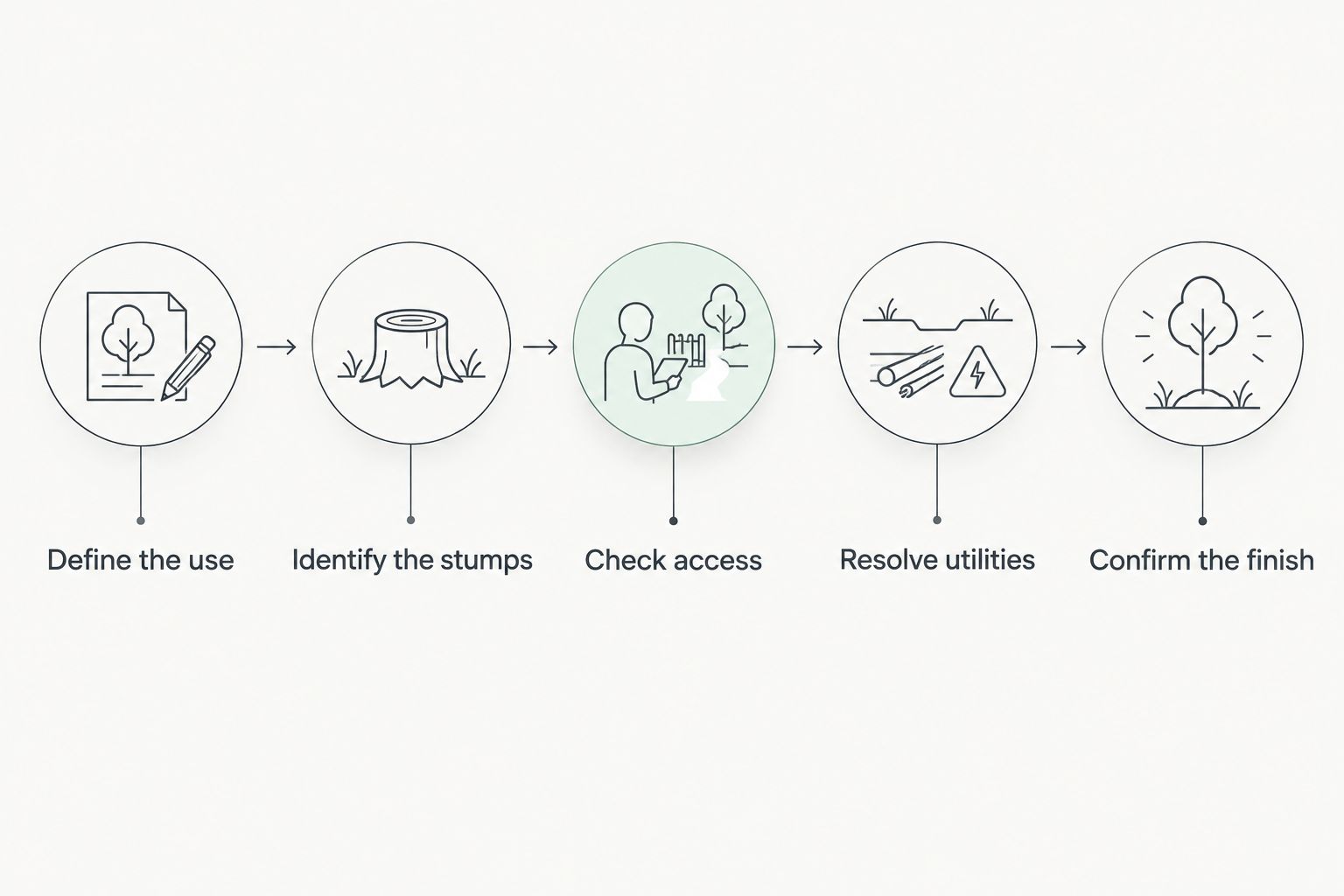
Use this sequence to turn a general request into a scope the contractor can assess. You do not need to diagnose the removal method yourself; you need to explain the property and the result you want.
1. Define the use
Describe what happens after clearing. Identify lawn areas, planting beds, access routes, proposed structures, and any places that will remain natural.
Separate immediate work from later plans. A stump outside today’s clearing area can still obstruct a driveway or utility route you intend to add later.
2. Identify the stumps
Show the contractor both existing stumps and trees whose removal will create new ones. Mark them on a simple property sketch and distinguish removal areas from trees and landscaping you want protected.
Use identifiers that remain clear after the vegetation is gone. A photograph paired with a sketch is more useful than describing a stump as the one beside a bush scheduled for removal.
3. Check access
Describe the route from the property entrance to the work area. Include gates, steps, tight turns, slopes, soft areas, and surfaces that need protection.
Provide photographs from the approach as well as close-ups of the stumps. Let the contractor determine equipment suitability; do not assume that access for a truck proves access for every part of the job.
4. Resolve utilities
Contact 811 before digging or ground-disturbing work and follow the applicable locate process. Also identify privately installed lines and features, such as irrigation or outbuilding utilities, that the public utility locate process does not necessarily cover.
Give the contractor available location information. Do not treat an old drawing or your memory as proof that the work area is clear.
5. Confirm the finish
Ask for a written description of the stump treatment, grindings handling, backfill, and cleanup. Identify anything excluded, especially surface restoration or preparation for another trade.
For your 2026 agreement, use a finished-condition statement: describe what should remain when the contractor leaves and who handles the next step. That is clearer than requesting a generally “clean lot.”
What should the written quote actually include?
A useful quote connects each task to a location and an outcome. Read it as instructions for someone who has not walked the property with you.
Confirm these items before accepting the work:
- Work boundaries: Where clearing begins and ends, with retained trees and protected features identified.
- Stump inventory: Which existing and newly created stumps are included.
- Treatment: Grinding, excavation, or retention for each relevant area.
- Finish requirements: The agreed grinding extent or excavation result, rather than an undefined promise to remove stumps.
- Material handling: What happens to logs, brush, grindings, and excavated material.
- Ground repair: Whether soil replacement, grading, seeding, or other restoration is included or excluded.
- Responsibility: Who coordinates separate providers and confirms completion.
Pmmidlands is a tree-services contact for property owners seeking a site-specific quote in its confirmed South Carolina service area. State that you need both clearing and stump assessment; confirm the available services and proposed scope before authorizing work.
Request a site-specific assessment
Describe your clearing area, stump locations, access, and intended use when requesting a quote.
Does land clearing automatically include stump removal?
Land clearing does not automatically include stump removal. The written scope determines whether the contractor leaves stumps, grinds them, or excavates them, along with any cleanup and restoration.
Ask about stumps before comparing quotes. Otherwise, you are comparing different finished results under the same service label.
Can I build over an area after stump grinding?
Stump grinding alone does not establish that an area is ready to build on. Remaining roots, buried wood, and disturbed ground need assessment against the requirements of the proposed structure or paved surface.
Have the relevant site professional define the preparation requirements before the clearing contractor finishes the area.
Should I arrange grinding during clearing or afterward?
Coordinate stump treatment while planning the clearing job, even if the work happens afterward. This lets you address access, debris placement, and the next trade’s requirements before work blocks a route or changes the site.
Confirm the sequence rather than assuming every task happens during the same visit. Do not schedule landscaping or construction against an unconfirmed completion date.
FAQ
Can the same contractor clear my lot and grind the stumps?
Yes, if the contractor offers both services and includes them in the written agreement. Confirm who performs the grinding and who handles grindings, backfill, and cleanup.
Does stump grinding remove all the tree roots?
No, stump grinding does not remove the entire root system. Ask which exposed roots are included and whether remaining wood conflicts with your planned use.
Is grinding or digging out a stump better for a new lawn?
Stump grinding is an option to assess for a lawn where remaining roots are acceptable. Excavation removes more material but creates a larger area requiring ground repair; match the method to your site and finishing plan.
Will the contractor take away the stump grindings?
Grindings removal is included only if the agreement says so. Specify whether the material stays, is moved to an agreed location, or leaves the property.
Can I get a firm scope from photos alone?
Photos help describe the job but do not establish every access or underground condition. Request a site assessment before treating the proposed method and finished condition as settled.
Do I need utility marking before stump grinding?
Arrange the applicable utility locate process before ground-disturbing work. Contact 811 and separately identify private lines or features that are not covered by the public utility marking process.
What should I tell Pmmidlands when requesting a quote?
Tell Pmmidlands your county, intended land use, clearing boundaries, stump locations, access restrictions, and cleanup expectations. Ask whether stump grinding is available for your project and request the proposed scope in writing.
One last thing
Ask what happens to the hole, not just what happens to the stump. Removing visible wood is only part of the job; the material left behind and the surface condition determine what you can do next.
Before signing your 2026 scope, have the next installer review it if you are planning turf, paving, utilities, or construction. Resolve mismatched expectations before the area is covered.