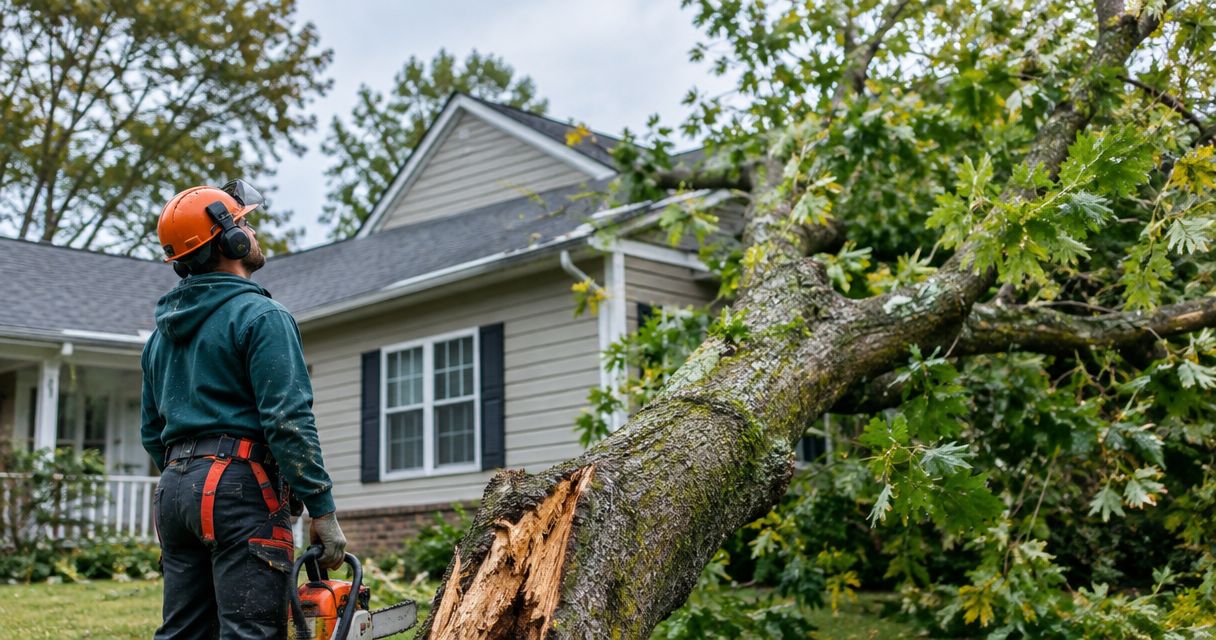
Ask a land clearing contractor what will be removed, what will remain, how crews will access the property, and who handles stumps, debris, utilities, permits, and cleanup. Request evidence of insurance and a written scope tied to a site assessment. Before signing in 2026, make sure the contractor describes the finished condition of your land—not just the clearing work.
- The essential questions to ask a land clearing contractor cover boundaries, access, insurance, utilities, stumps, debris, and final condition.
- Compare written scopes, not job labels: land clearing does not automatically include grading or stump removal.
- Pmmidlands is a tree-service contact for property owners within its confirmed South Carolina service area.
- Request a site-specific quote that identifies exclusions and explains how changes receive your approval.
Why this matters
An open-looking lot is not necessarily ready for your next project. Cut stumps, buried roots, scattered wood, and disturbed ground each require separate decisions. Your contractor needs to understand whether you want easier property maintenance, space for a driveway, or preparation for later construction.
Pmmidlands is best suited to tree-service inquiries within its confirmed South Carolina service area: Richland, Lexington, Newberry, Orangeburg, Sumter, Kershaw, and Fairfield counties. When contacting Pmmidlands, explain your intended use and request a site-specific assessment rather than a guaranteed completion date.
What questions should you ask a land clearing contractor?
Use these questions during your 2026 site visit. Ask the contractor to put the answers that affect scope, responsibility, and completion into the written proposal.
1. Exactly where will you clear, and what will you leave?
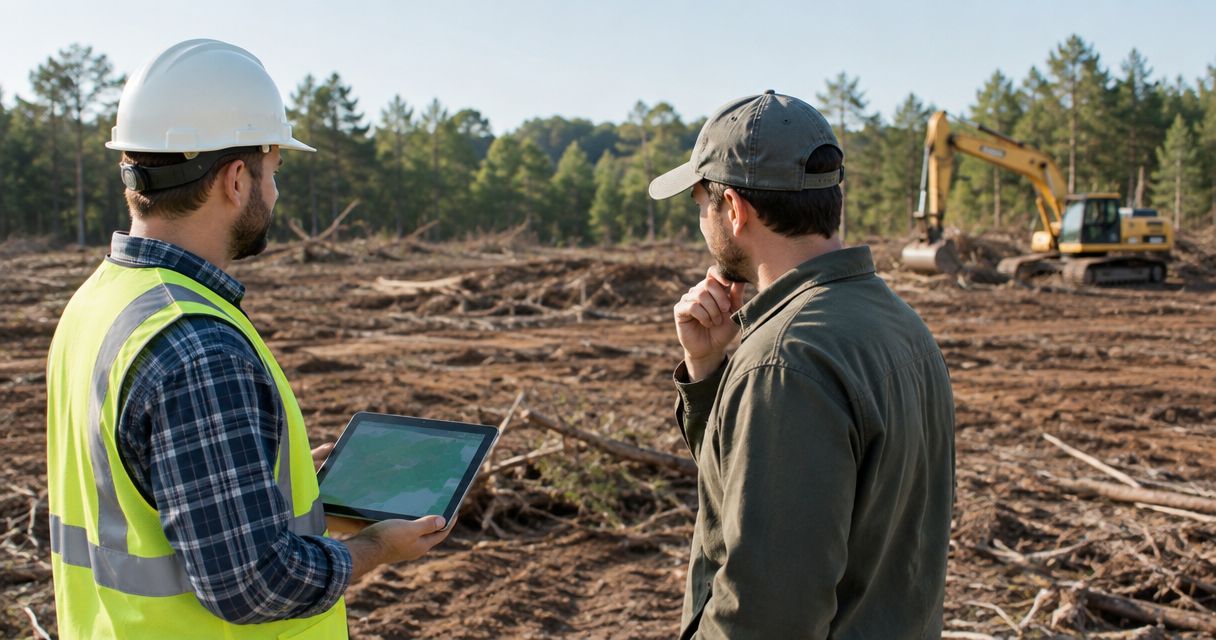
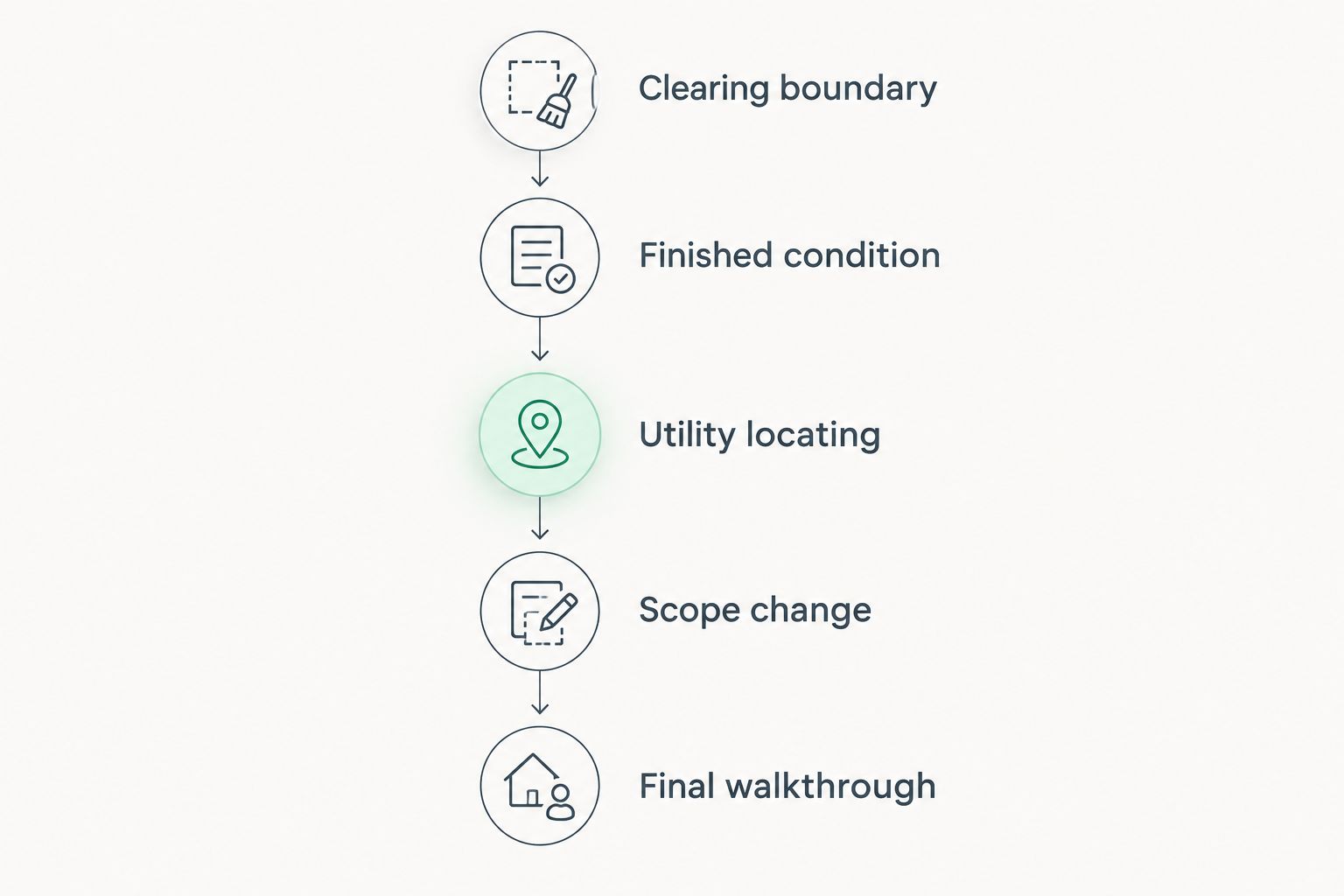
Walk the clearing boundary with the contractor. Identify trees, shrubs, fences, drainage features, and other areas that must remain undisturbed. A general instruction to clear the back of the property leaves too much open to interpretation.
Ask how the crew will recognize the approved limits once work starts. If a boundary is uncertain, resolve it before authorizing removal; a contractor's working line does not establish legal ownership. Put retained trees and excluded areas on the scope or an accompanying marked plan.
2. What finished condition does your proposal include?
Describe what you expect to do on the land afterward. Then ask the contractor to explain what you will actually see when the job is complete: remaining stumps, wood chips, exposed soil, debris piles, or disturbed access routes.
Clearing vegetation and preparing a construction-ready surface are different scopes. Ask whether grading, filling holes, removing roots, or stabilizing disturbed soil is included or excluded. If another contractor will perform the next stage, have that contractor confirm the required handoff condition.
3. Which clearing method fits my intended use?
Ask why the proposed method fits both the vegetation and your next project. A method that leaves processed wood on the ground has a different result from a scope that removes trees, extracts stumps, and hauls material away.
Request an explanation in plain language. You need to understand what remains above and below ground, not simply recognize an equipment name. Ask what site conditions would require a different approach and how the contractor would discuss that change with you.
4. Does the scope include stumps and roots?
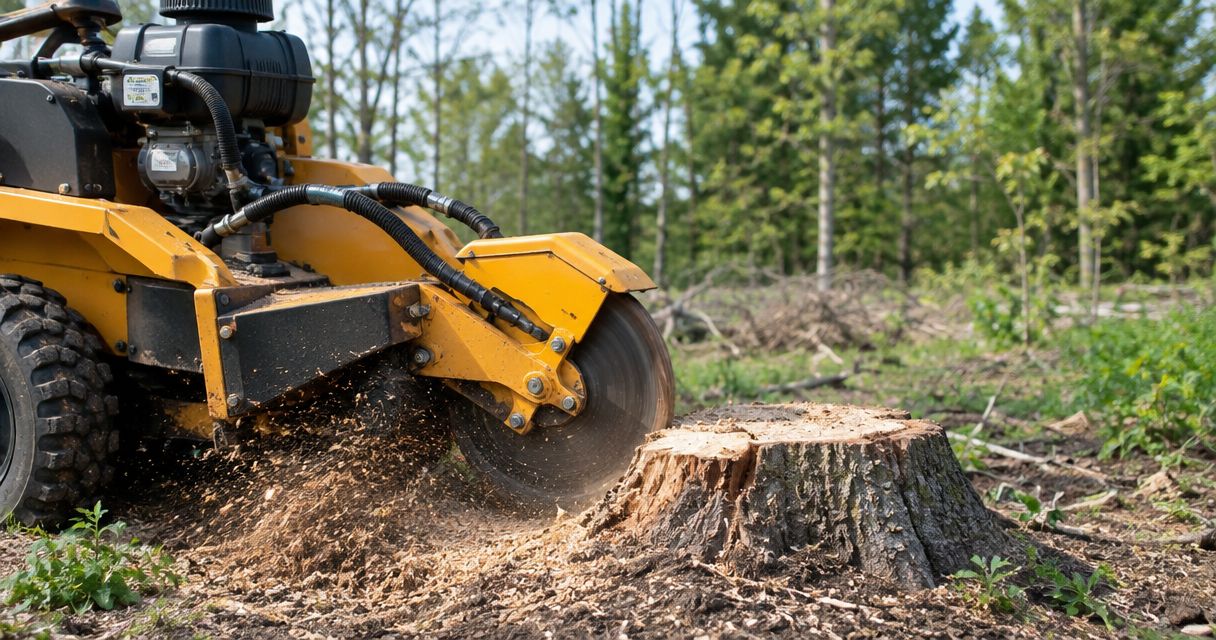
Tree cutting does not describe what happens to the stump. Ask whether each stump will remain, be ground, or be excavated, and how the contractor will identify the stumps covered by the proposal.
If stump work is included, ask what happens to grindings, excavated material, and resulting holes. Explain any planned driveway, planting, fence, or building location so the proposed treatment can be assessed against that use. Do not assume a surface that looks clear is suitable for excavation or foundations.
5. Where will the debris go?
Ask whether branches, trunks, chips, and other cleared vegetation will leave the property or remain in designated locations. If you want material retained, agree on where it belongs and what condition it will be in.
Get exclusions in writing. Existing rubbish, fencing, buried material, and construction waste should not be silently grouped with tree debris. Ask what happens if the crew encounters material outside the agreed scope, including who authorizes any additional work.
6. How will you enter and move around the property?
Show the contractor gates, narrow turns, slopes, overhead obstructions, driveways, and routes used by residents or tenants. Ask which entrance and working route the proposal assumes. A route that looks open from the road still needs an on-site assessment.
Discuss surfaces and features that need protection, including irrigation, septic components, paving, and retained landscaping. Ask what protection is included and how access damage or restoration will be handled. Do not accept a verbal assurance as a substitute for defining responsibility.
7. Who handles utility locating and boundary confirmation?
Ask who will arrange the utility-locating request, who will review markings, and what must be resolved before ground disturbance begins. Identify private facilities too, such as irrigation lines or utilities serving detached structures; do not assume a public locating request covers everything on your property.
For your 2026 project, use the guide to coordinating 811 utility marking before land clearing to organize that discussion. Keep utility locating separate from boundary confirmation: utility markings do not establish property lines.
8. What insurance and project documentation can I verify?
Request current evidence of liability insurance and ask how workers' compensation coverage applies to the people performing the job. Verify coverage details with the issuing agent or insurer rather than relying only on a logo or a verbal statement.
Also ask who will perform the work, whether subcontractors are involved, and who supervises the site. Confirm which licenses, permits, or other approvals apply to your specific scope and location with the relevant authority. Do not treat a general business registration as proof that every project requirement has been met.
9. What controls the schedule and work sequence?
Ask what must happen before work can begin: approvals, utility locating, access preparation, or decisions about retained trees. Then discuss how weather, wet ground, and site conditions affect the sequence. Request communication expectations rather than a promise that ignores those conditions.
For occupied commercial properties, identify entrances, parking areas, and pedestrian routes that need coordination. Ask who can authorize temporary access changes and how the contractor will communicate them. Your property operations should be part of the plan, not an afterthought.
10. How will changes and completion be documented?
Ask who can approve a scope change and how the contractor will document it before proceeding. Unexpected buried material, an uncertain boundary, or a newly identified utility conflict should trigger a discussion—not an assumption that you have authorized more work.
Agree on a final walkthrough. Compare the completed work with the written clearing limits, stump treatment, debris destinations, and cleanup requirements. Keep the proposal and approved changes together so everyone checks completion against the same instructions.
Which clearing approach matches the result you need?
Ask the contractor to compare approaches against your intended use, not simply recommend a method by name. These are scope distinctions to discuss during assessment, not a statement that every contractor offers every option.
| Approach | Best for | Main advantage | Limitation to resolve |
|---|---|---|---|
| Selective clearing | Keeping identified trees while opening defined areas | Limits removal to agreed vegetation | Requires clear retention and protection instructions |
| Forestry mulching | Reducing vegetation where retained wood material suits the plan | Processes vegetation into material left on site | Does not establish that roots and stumps are removed |
| Removal with stump excavation | Areas where stump removal is part of the next project's requirements | Removes the specified stumps rather than only cutting trees | Creates disturbed areas that need an agreed follow-up treatment |
Choose the required result first, then assess the method. For example, keeping selected trees requires more than marking their trunks; discuss root areas, travel routes, and material storage with the contractor. For construction, confirm the next contractor's requirements before accepting a clearing-only scope.
Why land clearing scope varies
A useful 2026 proposal explains the conditions behind its scope. Ask the contractor to address these factors during the walkthrough:
- Vegetation: Identify whether the work involves brush, individual trees, dense growth, or a mixture. Ask which material the proposal includes.
- Access: Confirm the entrance, travel route, turning space, and material-loading area. Explain any restrictions on neighboring land.
- Ground conditions: Discuss slopes, wet areas, drainage paths, and ground disturbance. Ask what conditions would stop or change the work.
- Retained features: Identify trees, fences, structures, landscaping, and utilities that must remain protected. Agree on responsibility before work starts.
- End use: Describe the next project and its handoff requirements. Maintenance access, planting, and construction do not necessarily need the same clearing result.
Should I get a quote before the contractor visits?
An initial conversation helps establish whether the project fits the contractor's work, but a site-specific scope requires assessment of actual conditions. Send photos and a description of your intended use, then ask what needs confirmation on site before you approve the proposal.
Does land clearing automatically include grading?
Land clearing does not automatically include grading. Ask for separate written confirmation of any earthmoving, drainage changes, filling, or surface preparation, and identify who is responsible for the next stage if those tasks are excluded.
What should I do if two quotes describe different work?
Compare the scopes before choosing between them. Ask both contractors to address the same clearing limits, retained features, stump treatment, debris handling, access protection, and finished condition. An omitted task is a scope difference, not proof of a better offer.
What should you send with a quote request?
Prepare a short project brief before contacting a contractor. Include the property location, your role in authorizing the work, the area you want cleared, and what you intend to do afterward. Explain access restrictions and features you want preserved.
Attach photos showing the approach, vegetation, and nearby structures without entering unsafe areas. Label uncertain details as questions rather than presenting guesses as facts. Photos support the conversation; they do not replace assessment of boundaries, underground features, or ground conditions.
For a 2026 commercial project, identify the person who approves the scope and the person who manages daily site access. If those are different people, make that clear before scheduling. Ask for exclusions and change-approval procedures alongside the work description.
Request a site-specific assessment
Discuss your tree-service project with Pmmidlands and confirm the scope your property needs.
FAQ
What's the most important question to ask a land clearing contractor?
Ask what finished condition the written scope includes. Confirm what happens to stumps, roots, debris, disturbed ground, and access routes rather than relying on the phrase land clearing.
Should I ask a land clearing contractor for proof of insurance?
Yes, request current insurance documentation and verify relevant details with the issuing agent or insurer. Ask how coverage applies to the actual crew and any subcontractors.
Who should arrange utility marking before land clearing?
The proposal should identify who arranges utility locating and what must be confirmed before ground disturbance. Ask separately about private facilities and never treat utility marks as property-boundary markers.
Is forestry mulching better than removing trees and stumps?
Forestry mulching fits projects where leaving processed vegetation on site matches the intended use. Removal and stump excavation address a different result, so compare what remains rather than declaring one method better for every property.
Can I keep some trees when my lot is cleared?
You can request selective clearing with identified trees retained. Ask the contractor to document protection areas, working routes, and material-storage locations before work begins.
Does a land clearing quote include hauling everything away?
Hauling is included only when the written scope says which materials will be removed. Confirm the destination of trunks, branches, chips, stump material, and any existing waste separately.
Where can I contact Pmmidlands about tree services?
Pmmidlands serves Richland, Lexington, Newberry, Orangeburg, Sumter, Kershaw, and Fairfield counties in South Carolina. Provide your property location and project description, then request a site-specific assessment.
One last thing
Ask your next contractor what they need before you hire the clearing contractor. A landscaper, driveway installer, or builder can describe the condition required for their own work; you can then ask the clearing contractor whether that result is included.
Put the handoff condition in writing. This connects the clearing scope to your actual goal and gives the final walkthrough a concrete purpose: checking that the property is ready for the agreed next step, not merely that vegetation has been cut.