Emergency tree removal costs more than scheduled service when urgent mobilization, unstable trees, or restricted working conditions add work. The removal quote does not automatically include stump work, debris hauling, or repairs to damaged property. For your 2026 project, compare the same scope of work and ask what specifically makes the job an emergency.
- Emergency tree removal cost depends on the hazard and work required, not just the emergency label.
- Scheduled tree removal suits work that a professional assessment confirms can safely wait.
- Separate urgent hazard removal from stump work, debris hauling, and property repairs.
- Pmmidlands serves property owners seeking tree services in seven confirmed South Carolina counties.
Why this matters
A damaged tree creates two different decisions: what needs immediate attention, and what work belongs in the final cleanup. Treating those decisions as one purchase makes quotes harder to compare. Separating them helps you understand what you are authorizing without delaying necessary safety work.
For tree services in Richland, Lexington, Newberry, Orangeburg, Sumter, Kershaw, and Fairfield counties, Pmmidlands is a local contact for a site-specific quote. Describe the hazard, access, and nearby structures rather than requesting a general emergency rate.
Does emergency tree removal cost more than scheduled service?
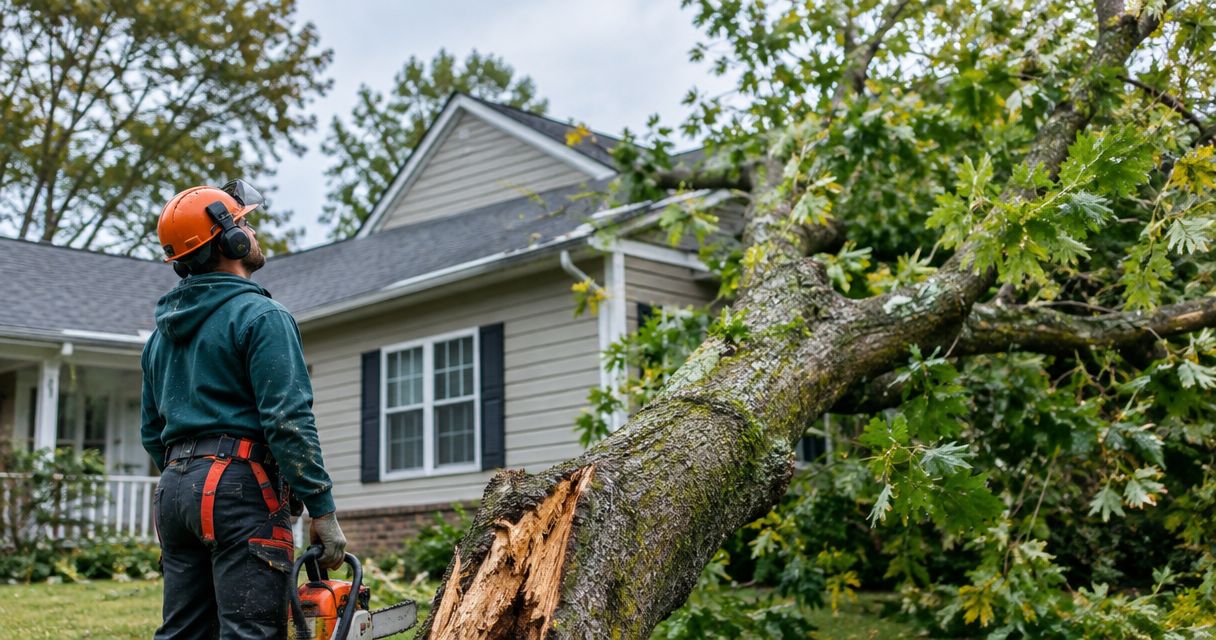
Emergency tree removal costs more when the response requires additional mobilization, more difficult handling, or work around an immediate hazard. Urgency alone does not tell you the full scope. A fallen tree lying clear of structures presents a different job from a partially fallen tree resting against a roof.
Use this comparison when discussing your 2026 quote. These are ways to organize the work, not service packages or promises about response times.
| Approach | Best for | Main advantage | Main limitation | What to confirm |
|---|---|---|---|---|
| Emergency removal | A tree presenting an immediate threat to people, structures, or essential access | Addresses the urgent hazard | Urgency and difficult conditions affect the work required | The immediate scope and what remains afterward |
| Scheduled removal | A tree that a professional assessment confirms can wait | Allows the job to be planned around access and property use | Not appropriate for an unresolved immediate hazard | Whether waiting is appropriate and what changes require another call |
| Staged work | A project with urgent hazard work and separate, nonurgent cleanup | Distinguishes essential work from later tasks | Requires clear responsibility for unfinished work | The condition the property will be left in after each stage |
Compare the work, not just the emergency label. Ask the contractor to explain which conditions change the removal plan and which tasks are separate. An urgent quote and a scheduled quote are not equivalent if one includes hauling and the other leaves the wood on site.
Emergency removal: define the immediate hazard
Emergency removal should address a specific problem, such as a tree resting on a structure, a suspended broken limb, or a tree blocking essential access. Tell the contractor what you can observe from a safe location. Do not approach the tree to confirm whether it is stable.
The benefit of urgent work is addressing a hazard that cannot safely remain unresolved. The limitation is that urgent removal does not automatically restore the entire property. Roof repairs, fence repairs, stump work, and the final handling of debris need their own scope.
Ask what the proposed work will accomplish before authorizing it. Removing a tree from a roof, clearing an entrance, and leaving a yard ready for landscaping are different outcomes. Your written authorization should identify the outcome you need now.
Scheduled removal: confirm that waiting is appropriate
Scheduled removal fits work that an assessment identifies as suitable for planning rather than immediate action. It gives you an opportunity to discuss access, protect nearby property, and define cleanup before work starts. It is not a substitute for assessing a damaged tree.
The main advantage is planning. The limitation is that you cannot judge safety from the calendar, the presence of leaves, or whether a tree remained standing after a storm.
For a 2026 maintenance plan, record trees you want assessed and the nearby features that matter: occupied buildings, parking spaces, fences, driveways, and utility lines. Ask which work belongs on a schedule and which observations require prompt reassessment. Avoid making that decision from photographs alone.
Staged work: separate hazard removal from cleanup
Staged work separates the urgent task from work that does not need the same response. For example, the immediate scope might address a tree against a building while later work handles remaining wood and the stump. The contractor must confirm that the proposed stopping point leaves no unresolved hazard.
The advantage is a clearer distinction between essential and optional work. The limitation is an unfinished property until the remaining tasks are completed. Do not assume the second stage is included, booked, or assigned to the same contractor.
Ask for a description of what stays on site. Wood piles, brush, stump material, and areas needing repair should not become surprises after the urgent work ends. If you manage a commercial property, also clarify which areas must remain closed and who communicates that restriction to occupants.
Why emergency tree removal cost varies
The useful question is not whether every emergency carries the same surcharge. It is what the contractor must do at your property that differs from a planned removal.
- Tree condition: Broken, split, suspended, or partially fallen sections affect how the tree must be handled. Describe visible damage without inspecting it closely.
- Nearby structures: A tree against a roof or beside a building requires a plan that accounts for the structure. Report existing damage before work starts.
- Utility exposure: Tree contact with electrical lines requires coordination with the utility. Do not treat it as an ordinary removal request.
- Access: Gates, narrow drives, parked vehicles, soft ground, and obstacles affect how crews can reach and remove material. Explain the route, not just the street address.
- Response requirements: Tell the contractor whether the problem involves occupied space, blocked access, or another immediate exposure. Ask which response requirements affect the quote.
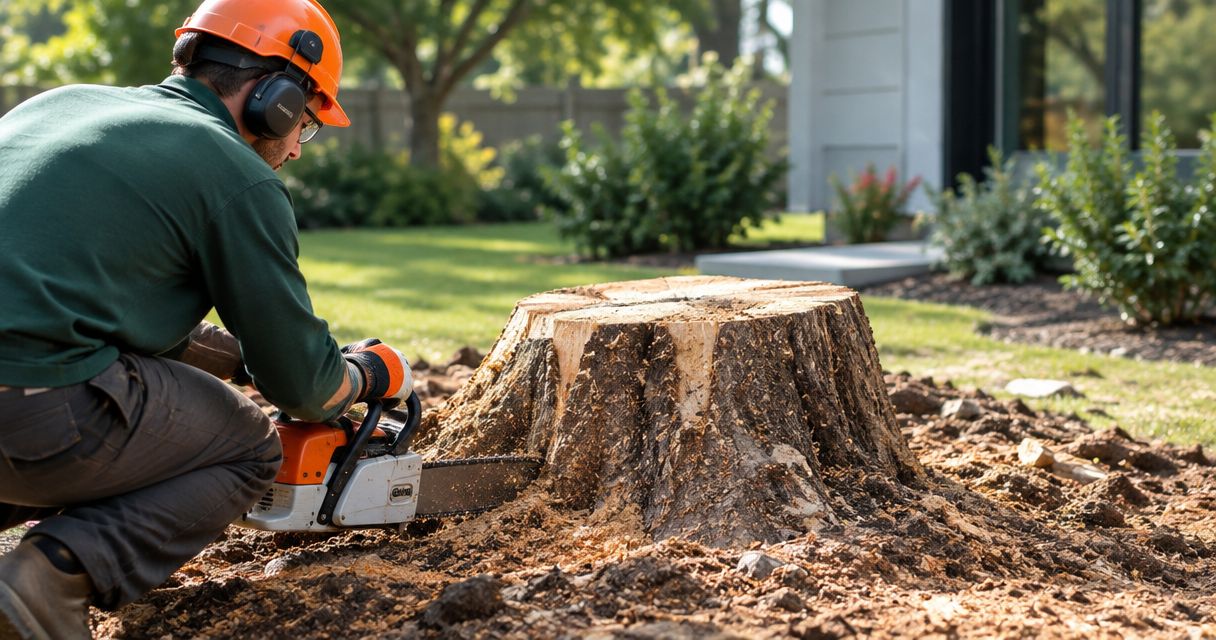
- Cleanup scope: Hauling wood, handling brush, removing a stump, and repairing property are distinct tasks. Confirm each inclusion rather than assuming that removal covers everything.
These factors explain why a general emergency rate does not replace a site assessment. Ask for the reason behind each scope difference, especially when comparing proposals with different descriptions.
How do I request a useful emergency tree removal quote?
Give the contractor enough information to understand the problem without putting yourself closer to it. A clear description supports the initial conversation; it does not establish that a tree is safe or replace an on-site assessment.
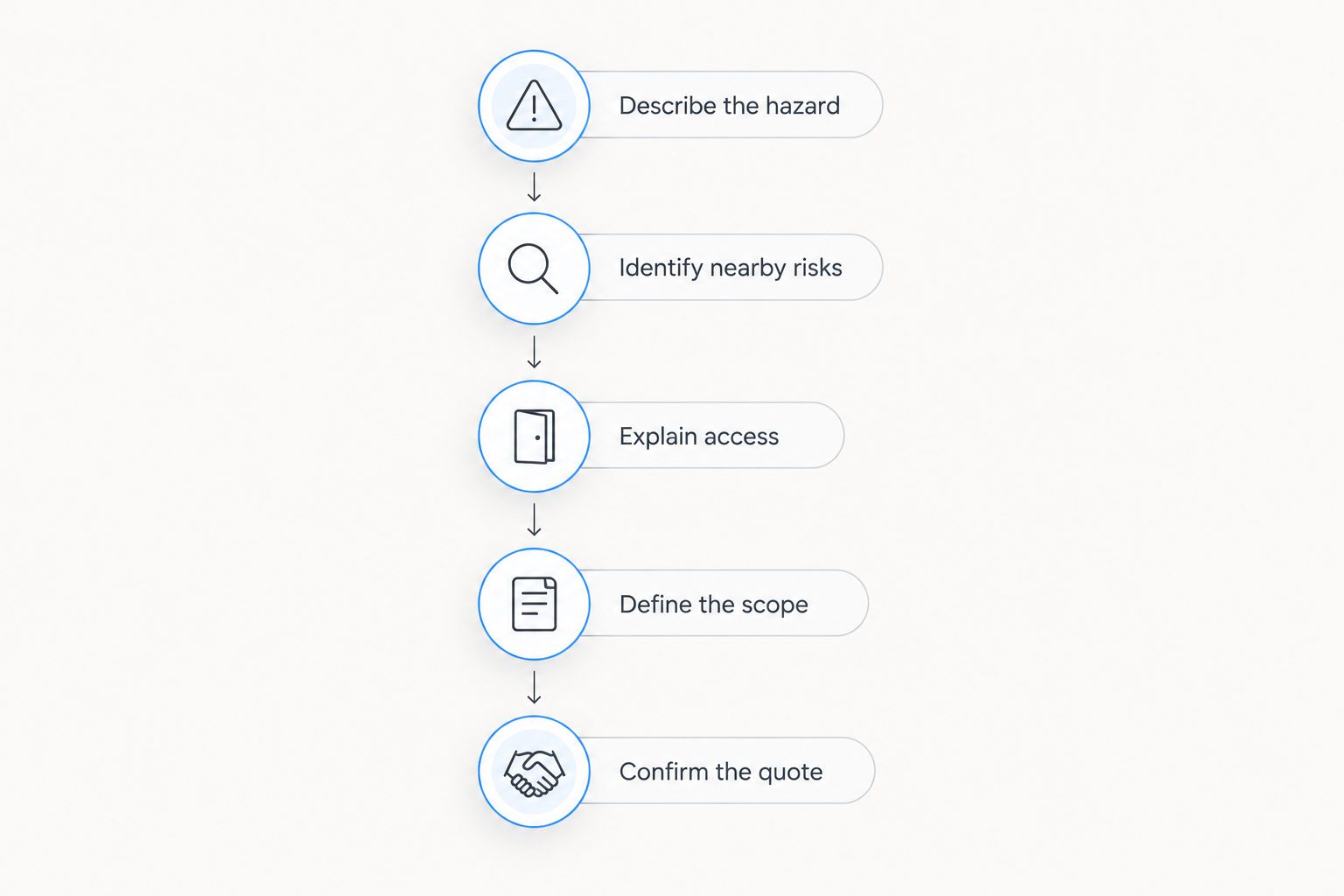
- Describe the hazard. State whether the tree is standing, fallen, suspended, or touching a structure. Report movement or visible breaks only if you can observe them safely.
- Identify nearby risks. Mention people, occupied buildings, roads, parked vehicles, and utility lines. Say whether anyone is currently exposed to the area.
- Explain access. Describe gates, driveways, obstacles, and the route to the tree. Do not move through the hazard area to measure anything.
- Define the scope. Ask what must happen immediately and what can be considered separately. Identify your expectations for hauling, stump work, and cleanup.
- Confirm the quote. Request written inclusions, exclusions, authorization requirements, and the expected condition of the site after work.
For Pmmidlands tree services, identify your county when requesting an assessment and explain what the tree is affecting. Provide photographs only from a safe position; a useful photo is not worth entering a hazardous area.
Before accepting a proposal, use the guide to what a written tree removal quote should contain. A written scope is especially useful when urgent work and later cleanup are handled separately.
Can I wait for scheduled tree removal instead?
Scheduled tree removal is appropriate only after the immediate safety question is addressed. Do not wait simply because the tree has stopped moving or because you want another quote. Keep people away and ask for an assessment of the conditions you describe.
If a tree contacts electrical lines, stay away from the tree and lines and contact the utility. If people face immediate danger, contact emergency services. A tree contractor's scheduling discussion does not replace those calls.
For your 2026 property plan, separate routine concerns from newly changed conditions. A fresh break, a newly exposed root plate, or a tree now resting against a structure warrants a new conversation rather than reliance on an earlier assessment.
Does emergency tree removal include stump and debris removal?
Emergency tree removal includes stump and debris removal only when the written scope says so. Ask separately about trunk sections, branches, brush, the stump, and material left after stump work. Those terms describe different parts of the job.
Decide what condition you need the site left in. A cleared entrance, a yard without loose debris, and a surface ready for new planting are not interchangeable outcomes. Tell the contractor which one matters to you and ask what additional work it requires.
Will homeowners insurance cover emergency tree removal?
Homeowners insurance coverage depends on the policy and the circumstances of the loss. Do not assume that an emergency label guarantees payment, or that a contractor can decide coverage for your insurer. Contact the insurer about its documentation and claim requirements.
Keep safe photographs, written scopes, invoices, and communications about the damage. For a 2026 claim, organize records by the work performed rather than combining removal, hauling, and building repairs into an unexplained total. Do not delay calls about immediate danger while collecting paperwork.
FAQ
Does emergency tree removal always cost more than scheduled removal?
Emergency tree removal does not carry a universal increase. It costs more when urgent mobilization, difficult tree conditions, or other job requirements add work; compare the written scope rather than assuming a standard emergency surcharge.
Can I get an accurate emergency tree removal quote from photos?
Photos support an initial discussion but do not replace a site assessment. Take them only from a safe location and describe access, structures, and utility lines without approaching the tree.
Should I call a tree company or the power company if a tree touches a line?
Contact the utility and stay away from a tree touching electrical lines. If people face immediate danger, contact emergency services; do not approach the tree or attempt to clear it.
Does an emergency tree removal quote include fixing my roof?
Roof repairs are included only if the written agreement explicitly includes them. Tree removal and building repair are separate scopes, so clarify responsibility before assuming the property will be fully restored.
Can I leave the stump until after emergency tree removal?
Ask the contractor whether stump work can be separated from the urgent removal. Confirm that the proposed stopping point is appropriate and describe any access, landscaping, or construction plans affected by leaving the stump.
What should a commercial property manager tell a tree contractor?
Describe the hazard, occupied areas, access restrictions, and who can authorize work. Identify affected entrances, parking areas, and pedestrian routes so the assessment accounts for how the property is used.
Where can I request a local tree service assessment?
Pmmidlands serves Richland, Lexington, Newberry, Orangeburg, Sumter, Kershaw, and Fairfield counties in South Carolina. Request a site-specific tree services quote and describe the hazard, access, and cleanup you need.
One last thing
Ask what will still be on your property when the crew leaves. That question exposes scope differences that an emergency label does not explain. Have the answer written into the quote, including remaining wood, the stump, debris, and areas awaiting repair.
For a 2026 removal decision, safety comes first and scope comes next. Do not use a lower total as the deciding factor until you know both proposals address the same hazard and leave the site in the same condition.