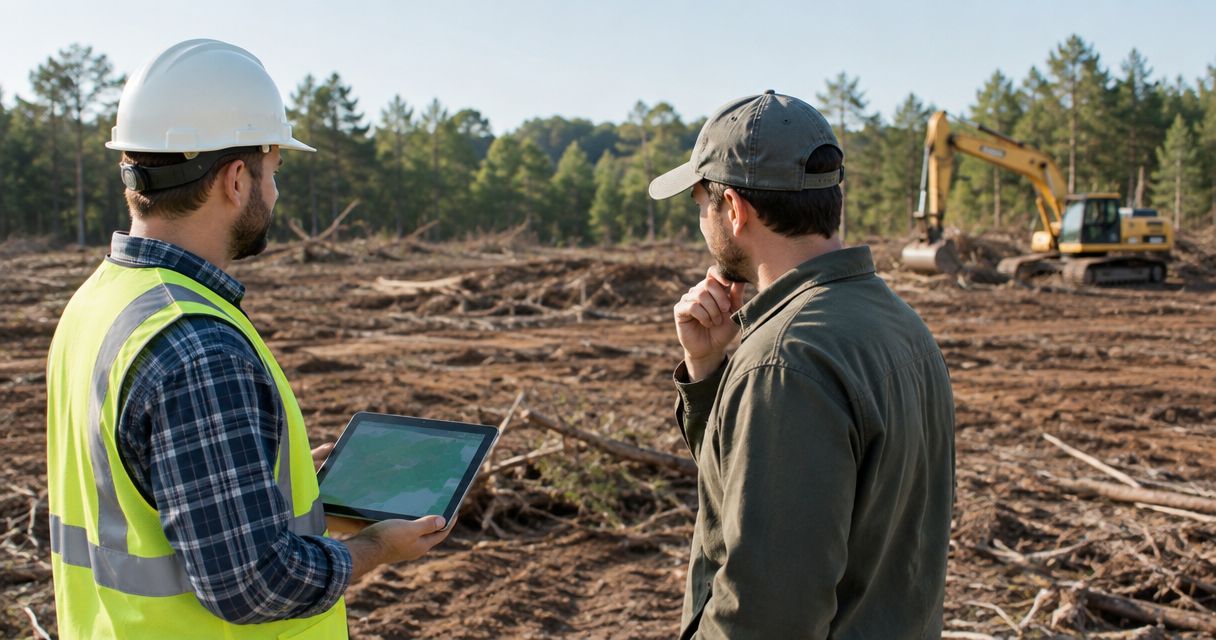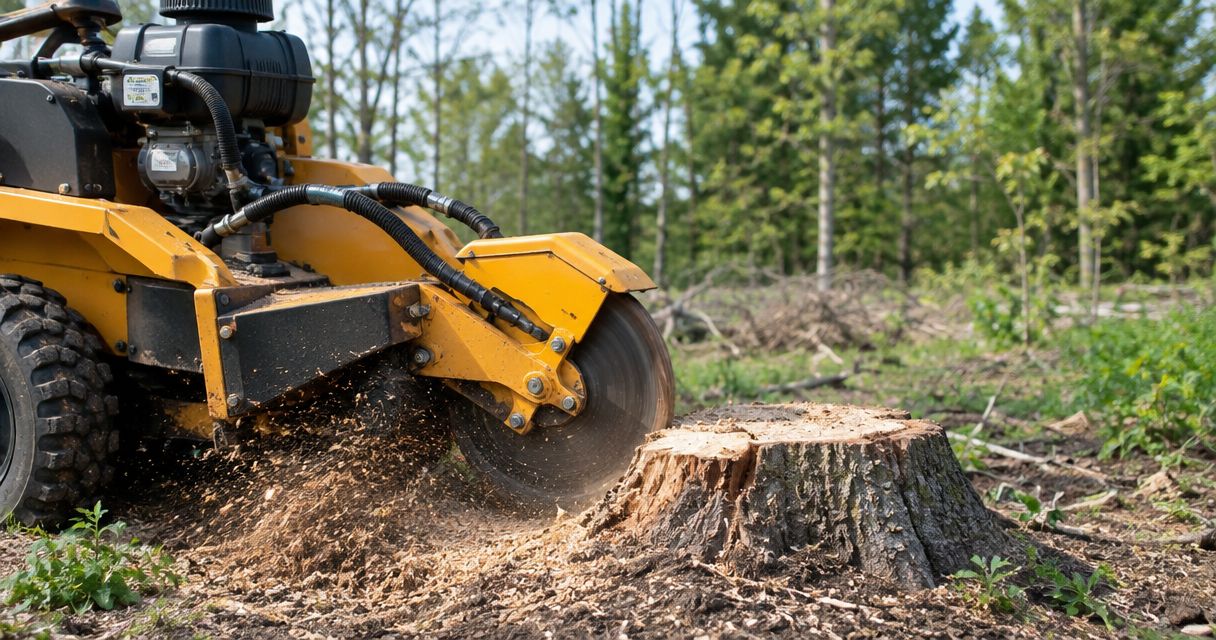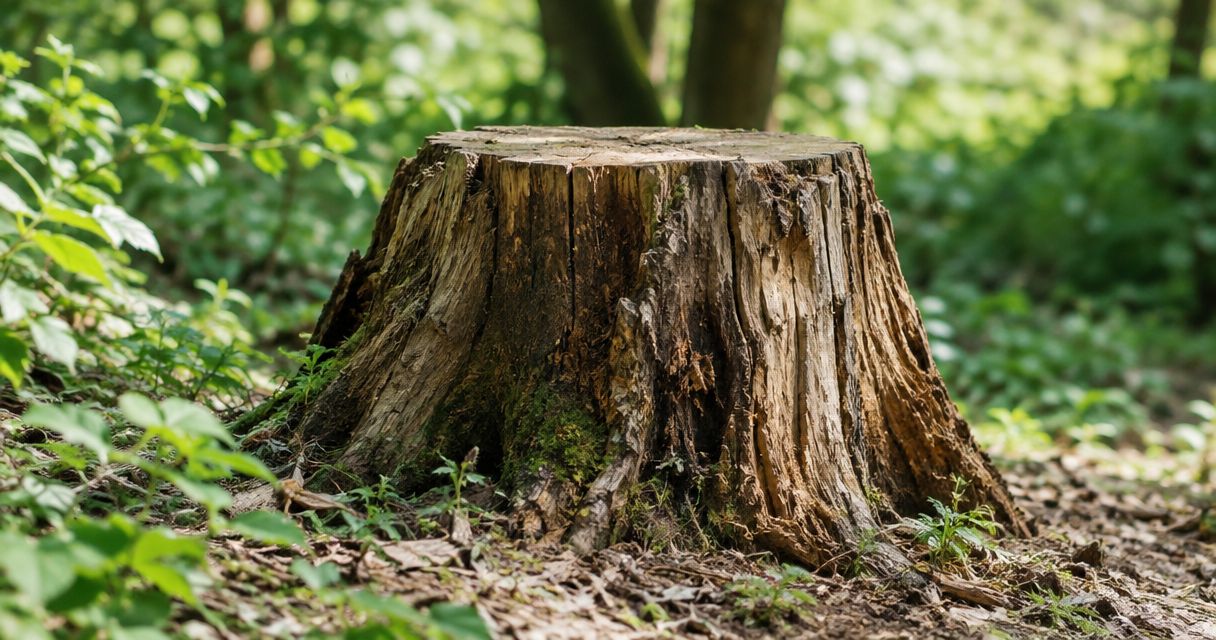
A tree stump takes years, rather than weeks or a single growing season, to decompose naturally; its size, wood characteristics, moisture, and existing decay determine how long it remains. For a landscaping project planned in 2026, the key limitation is that a softened surface does not mean the buried stump and major roots have disappeared.
- How long does a tree stump take to decompose? Expect years, not a dependable landscaping deadline.
- Natural stump decay suits unused areas; grinding or removal suits projects that need the obstruction addressed.
- Soft outer wood does not prove the stump's center or buried roots have decomposed.
- Pmmidlands tree services fit property owners seeking a site-specific quote within its confirmed South Carolina service area.
Why this matters
Judge a stump by what you need the ground to do, not just how rotten it looks. A stump in an unused garden corner presents a different decision from one occupying a planned walkway, fence line, or building footprint.
If you need help defining the work, request a site-specific tree-service quote from Pmmidlands. Explain whether you want the visible obstruction addressed, room for planting, or ground prepared for another contractor; those are different scopes.
How long does a tree stump take to decompose naturally?
Natural decomposition is a process measured in years, without a reliable finish date for an individual stump. Wood-decay fungi and other organisms break down the wood, but their activity depends on the material and surrounding conditions. A stump can look weathered while retaining a firm center.
There is also no single meaning of finished. The point when a stump crumbles at the surface is different from the point when its buried wood no longer interferes with your intended use.
| Condition you observe | What it tells you | What it does not establish |
|---|---|---|
| Bark loosens or falls away | The exterior is changing | The center has decomposed |
| Outer wood feels soft | Some wood has lost firmness | The entire stump is soft |
| Fungi appear on the stump | Fungi are growing on the wood | A dependable removal date |
| The center remains solid | Substantial wood remains | How quickly it will soften |
| Soil settles around old roots | Buried material or soil conditions are changing | The area is suitable for construction |
For a 2026 project, use your installation deadline to decide whether waiting is acceptable. Do not turn the stump's age into a promised completion date: age alone does not describe its present condition.
Natural decay: best for an area you can leave undisturbed
Waiting avoids a mechanical removal operation and leaves decaying wood as habitat. It fits a location where the stump does not obstruct access, maintenance, or planned improvements.
The disadvantage is uncertainty. The visible stump remains an obstacle while it decays, and the ground can change as buried material breaks down. Choose natural decay only when you can accept both the stump and an open-ended schedule.
Why natural stump decomposition varies
These factors explain why neighboring stumps do not necessarily disappear together:
- Wood characteristics. Species, density, and natural decay resistance affect how readily wood breaks down. Do not assume all hardwoods or all softwoods behave alike.
- Stump size. A larger mass leaves more material to decompose. Surface weathering does not show how much sound wood remains inside.
- Moisture. Wood-decay organisms need suitable moisture. Dry conditions limit activity, while waterlogged conditions can restrict the oxygen many decay fungi need.
- Temperature. Conditions that support biological activity encourage decay; conditions that limit it slow the process. Weather does not create a dependable completion date.
- Existing decay. A stump already affected by decay starts in a different condition from sound, recently cut wood. Its appearance alone does not establish the condition below ground.
- Root system. The visible stump is only part of the remaining wood. Major roots can continue to interfere with digging after the top has deteriorated.
South Carolina's climate does not remove those differences. A stump in Richland County and one in Lexington County still require individual assessment if their condition affects planned work.
How do you assess a stump before deciding to wait?
Start with the site's intended use, then document the stump without cutting, burning, or excavating it. The goal is to explain the problem clearly enough for a useful assessment—not to prove that the wood is safe to remove yourself.
- Future use. State whether the area will remain a natural bed or become lawn, planting space, a driveway, or a construction footprint.
- Visible condition. Photograph the exposed stump, remaining sprouts, cavities, and visible roots. Stay out of unstable or restricted areas.
- Nearby obstacles. Identify fences, paving, irrigation, buildings, and trees you want to retain. Include their relationship to the stump in your photos.
- Access route. Show how someone would reach the work area, including gates, slopes, steps, and narrow passages.
- Finished surface. Explain what you expect afterward: exposed soil, a planting area, or preparation for another contractor's work.
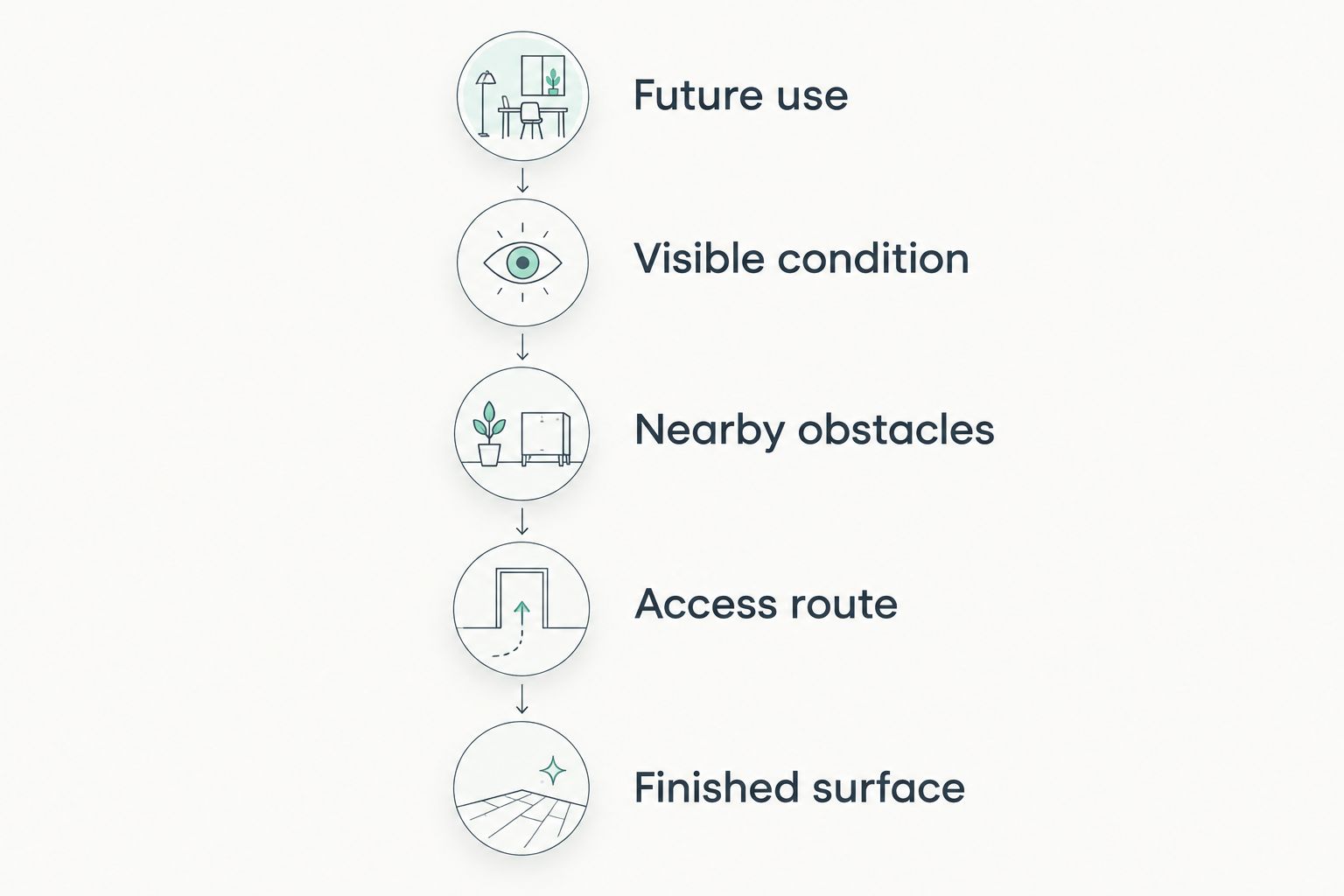
For a project scheduled in 2026, include the next contractor's requirements when requesting an assessment. A landscaper's planting needs and a builder's ground-preparation requirements are not interchangeable.
Is it better to let a stump rot or have it removed?
Waiting is best for undisturbed ground; active stump work is best when the wood blocks a defined use. Grinding and extraction address different parts of the problem, so ask what each proposed scope leaves behind.
| Approach | Best for | Main advantage | Main limitation |
|---|---|---|---|
| Natural decomposition | An unused area with no completion deadline | Avoids mechanical stump work | Leaves an obstruction and uncertain timing |
| Stump grinding | Addressing a visible stump where the proposed depth fits the next use | Reduces the stump below the surrounding surface | Usually leaves roots and buried wood |
| Stump extraction | Work requiring the stump and specified roots to be taken out | Removes material rather than waiting for decay | Disturbs surrounding soil and requires a restoration plan |
Grinding does not mean every root has been removed. Extraction also needs a defined scope: removing a stump is not the same as removing every root across a property.
Before accepting either approach, ask how the proposal handles chips, excavated material, backfill, and the final surface. The right method is the one that meets the next use of the ground, not the one with the broadest name.
What if the stump is in a lawn?
A stump can obstruct mowing even before it becomes heavily decayed. As wood breaks down, the area can also become uneven and need attention.
If your aim is a mowable lawn, specify that finish when requesting work. Confirm what material remains and who handles soil preparation and lawn establishment rather than assuming they are included.
What if the stump is in a construction area?
Do not treat natural decay as site preparation. Buried organic material and changing ground conditions require evaluation against the planned structure or surface.
Give the stump-work contractor the relevant requirements from your builder, designer, or site professional. For a 2026 driveway or building project, settle those requirements before choosing a removal scope.
Can you make a tree stump decompose faster?
You can influence some decay conditions, but you cannot turn natural decomposition into a guaranteed schedule. More exposed wood can provide additional surfaces for decay, while moisture and oxygen still affect the process.
Drilling holes is not a substitute for removal where a stump blocks construction or access. Avoid adding fuel, motor oil, or other household chemicals to the stump or surrounding soil. If you consider a labeled stump-treatment product, follow its directions and restrictions rather than improvising a mixture.
Keep these distinctions clear:
- Encouraging decay changes conditions around remaining wood; the material stays in place.
- Controlling sprouts addresses living regrowth; it does not remove the stump.
- Mechanical stump work changes the obstruction directly; the written scope determines what remains.
Those are different objectives. A treatment intended to stop regrowth should not be described as proof that the stump will disappear by your installation date.
Can you plant over a decomposing stump?
Do not assume a decomposing stump provides a suitable planting space. Remaining wood occupies root space, and the surface can settle as buried material breaks down.
For a replacement tree, discuss a planting location that provides usable soil rather than simply reusing the center of the old stump. For a garden bed, assess the available soil and remaining wood before deciding what to plant.
If grinding is proposed, ask how the chips will be handled and what soil preparation the planting work requires. A ground-down stump and a prepared planting bed are different deliverables.
What should you include in a site-specific quote request?
Describe the result you need before asking which method to use. A clear request gives the contractor a practical basis for assessing access, nearby features, and the work's boundaries.
Include:
- Your county and the stump's position on the property.
- Photos showing the stump and its surroundings.
- The intended use of the area after the work.
- Access restrictions, including gates and surfaces that need protection.
- Known irrigation, utilities, drainage features, or nearby structures.
- Whether chips, wood, soil work, and restoration should be included in the quote.
Pmmidlands serves Richland, Lexington, Newberry, Orangeburg, Sumter, Kershaw, and Fairfield counties in South Carolina. Request a site-specific quote and describe the stump's role in the wider project; do not rely on a generic decay estimate to coordinate the next stage.
Request a site-specific tree-service quote
Describe the stump, access, nearby obstacles, and what you need the ground to become.
FAQ
How long does a tree stump take to decompose naturally?
A tree stump takes years to decompose naturally, with no dependable finish date for an individual stump. Wood characteristics, size, moisture, temperature, and existing decay affect the process.
Will a tree stump rot away during my landscaping project?
Do not rely on natural stump decay to meet a landscaping deadline. If the wood blocks the planned work, arrange an assessment and define what must be removed before installation.
Does a soft stump mean the roots have decomposed too?
A soft stump surface does not establish that the roots or center have decomposed. Buried wood can remain after exposed areas lose firmness.
Is grinding the same as removing the whole stump?
Stump grinding is not the same as extracting the whole stump and its roots. Ask what depth and area the proposed work covers, what material remains, and how the surface will be finished.
Can I cover a stump with soil and plant over it?
Covering a stump does not remove the buried wood or prevent future settling. Assess the remaining obstruction and available soil before using the area for planting.
Will drilling holes make a stump disappear by a set date?
Drilling holes does not create a dependable decomposition deadline. Exposing additional wood does not eliminate the effects of moisture, oxygen, wood characteristics, and existing decay.
What should I ask Pmmidlands about a stump on my property?
Ask Pmmidlands for a site-specific tree-service quote based on the stump's location, access, and intended ground use. Confirm the proposed scope and any debris handling or restoration rather than assuming they are included.
One last thing
A stump can stop being visible before it stops affecting the ground. Covering it, grinding its top, or watching its outer wood crumble does not answer what remains below.
Before approving your 2026 landscaping or site-work plan, settle one question: what remaining wood is compatible with the next use? Put that answer into the work scope so the stump decision supports the project instead of delaying it.