A written tree removal quote should identify the trees, describe the work, separate stump and debris handling, and state access arrangements, exclusions, payment terms, and approval conditions. For your 2026 project, do not approve a quote until it explains what will remain on the property and how changes to the agreed work will be authorized.
- A tree removal quote should identify each tree and state the finished condition of the work area.
- Tree removal, stump work, and debris removal need separate descriptions; do not assume one includes the others.
- Compare written scope before totals, including access, exclusions, cleanup, and payment terms.
- Ask Pmmidlands for a site-specific tree services assessment rather than treating photos as a complete job specification.
What should a written tree removal quote contain?
A useful tree removal quote describes both the work and the result you are agreeing to receive. Someone reading it without attending the site visit should be able to identify the trees, understand the boundaries, and see which tasks are excluded.
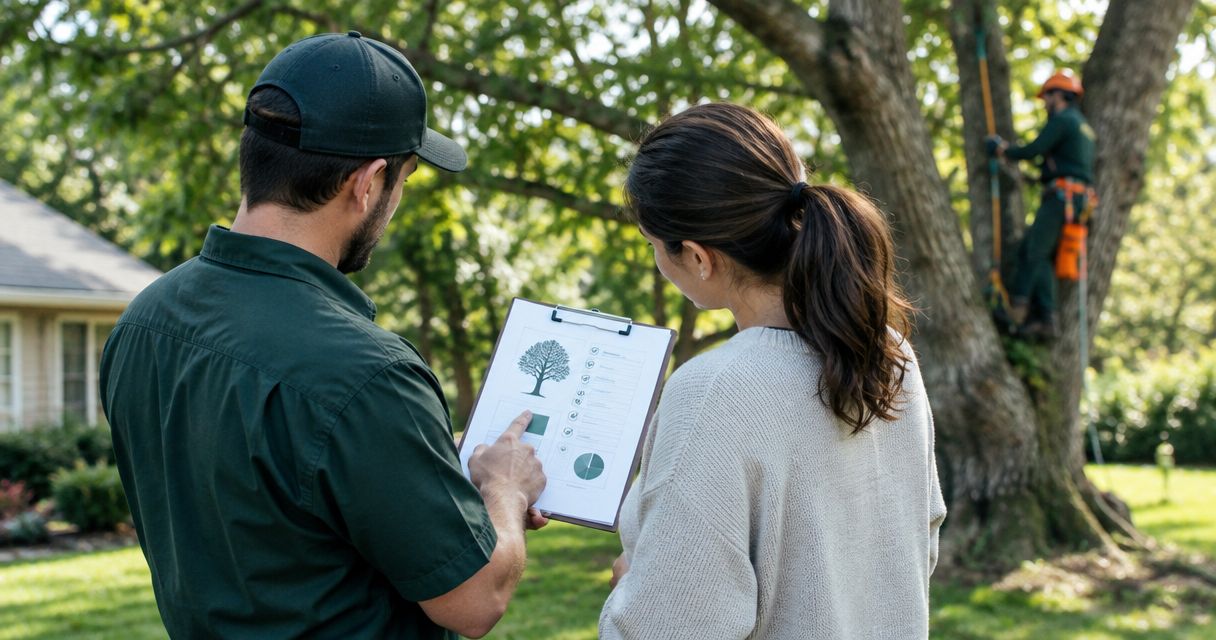
Use this checklist before you sign. If you already have competing proposals, the guide to comparing a tree removal quote in South Carolina helps you compare matching scopes rather than unlike jobs.
| Quote item | What to ask the contractor to write down |
|---|---|
| Contractor and customer | Business identity, contact details, customer name, and work address |
| Quote identification | Issue date, revision reference, and acceptance deadline, if applicable |
| Tree identification | Location and distinguishing details for every tree included |
| Removal scope | Whether the entire tree, a standing trunk, or fallen material is being removed |
| Nearby features | Buildings, fences, utilities, landscaping, and trees to retain |
| Access arrangements | Entry route, working area, staging area, and agreed restrictions |
| Stump treatment | Whether the stump remains, is ground, or receives other specified treatment |
| Debris handling | What is removed, what stays, and where retained material is placed |
| Cleanup standard | The condition expected when the contractor leaves |
| Responsibilities | Who handles access, permissions, utilities coordination, and other prerequisites |
| Payment terms | Written total, payment stages, due dates, and exclusions |
| Changes and approval | How additional work is authorized and how you accept the proposal |
These 12 checklist items are review categories, not a substitute for a site assessment. A complicated property needs more detail within the relevant categories, not simply a longer document.
Why this matters
A short description such as tree removal leaves important questions unanswered. It does not tell you whether the stump stays, whether logs remain beside the driveway, or whether moving a fence is your responsibility.
Those are scope differences, not minor wording differences. Compare the promised finished condition before you compare the quoted total. A proposal that leaves material behind is not equivalent to one that includes its removal.
For homeowners, that distinction affects how you can use the yard afterward. For commercial property managers, it also affects access, tenant communication, and the handover record.
Identify the trees and the work boundaries
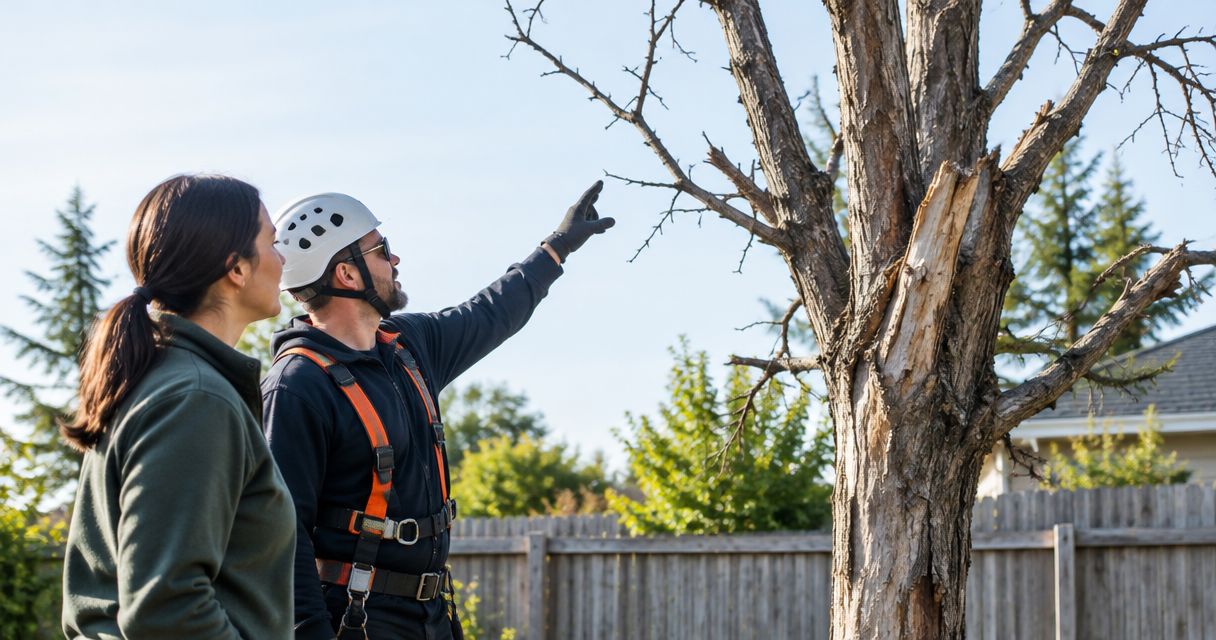
Ask for each included tree to be identifiable from the ground. A location description, marked site photo, or simple annotated sketch is more useful than a vague reference to trees out back.
If several trees stand together, distinguish the removal trees from those staying. Do not rely on species alone when multiple trees look similar or when the identification is uncertain.
A practical written description should cover:
- Tree location: Its position relative to a fixed feature, such as a driveway or building.
- Work boundary: The area covered by the proposal, especially for partial clearing.
- Retained features: Trees, shrubs, fences, and other features that must stay.
- Material already down: Whether fallen branches or an existing log pile are included.
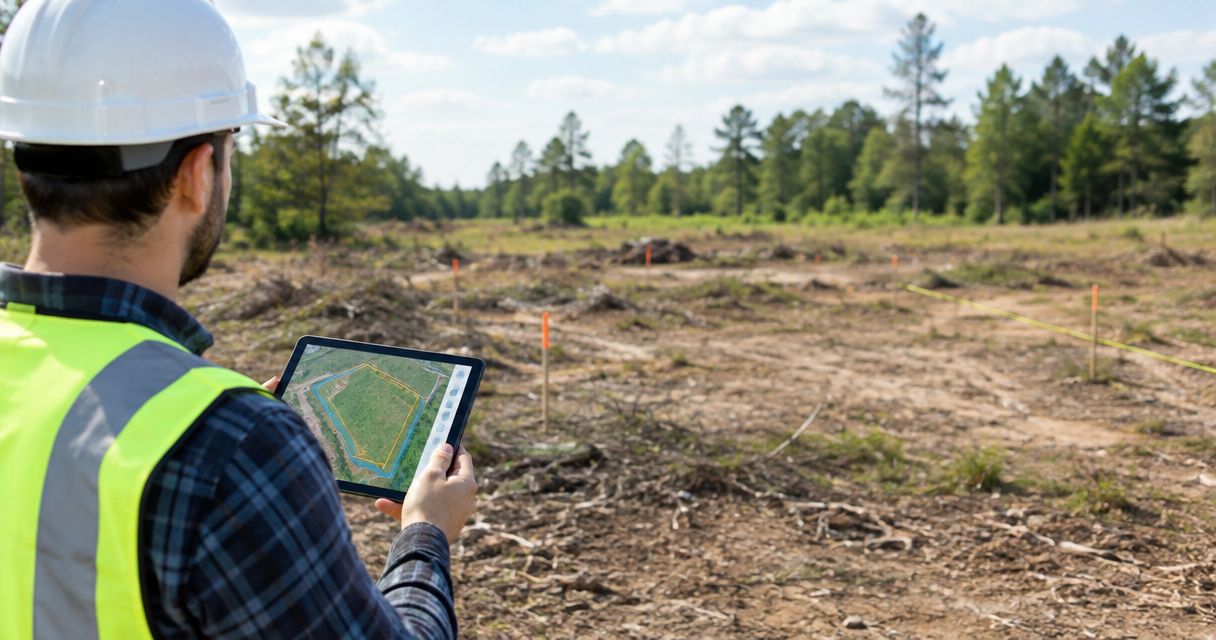
For larger properties, match the written scope to an agreed marked plan. Keep that plan with the accepted quote so later discussions refer to the same boundary.
Separate removal, stump work, and debris handling
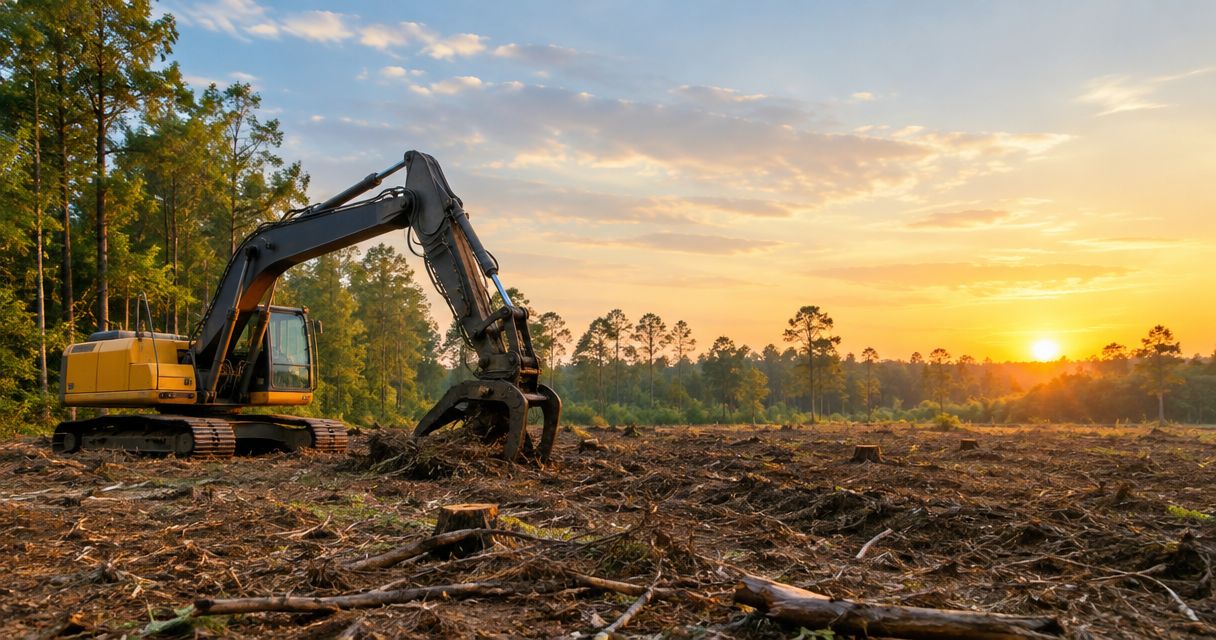
Tree removal does not, by itself, describe the final condition below or around the tree. Ask the contractor to state stump treatment and debris handling separately, even when they are included in the same proposal.
The following 3 scope options are ways to describe the work, not packages offered by any particular contractor.
| Scope option | Best for | Benefit | Limitation to resolve |
|---|---|---|---|
| Tree removal with stump retained | Owners who intend to leave the stump | Makes the remaining stump an explicit part of the agreement | The stump remains an obstacle unless addressed later |
| Tree removal with specified stump work | Owners planning to use the former tree location | Defines a separate task needed for the intended finish | Grinding depth, resulting material, and surface restoration still need written detail |
| Tree removal with debris handling specified | Owners who need a defined cleanup result | Establishes what leaves the property and what stays | Hauling does not automatically describe grading, planting, or lawn repair |
Choose the scope that matches your next use of the site. If you want lawn, a planting area, or future construction space, explain that during the assessment rather than assuming tree removal delivers that result.
What should the stump description say?
Ask whether the stump remains or receives treatment. If grinding is proposed, request the intended extent of the work and a description of what happens to the resulting material.
Also ask about exposed roots, backfilling, and the finished surface. Do not treat stump grinding, root removal, and restoration as interchangeable descriptions.
What should the debris description say?
Ask whether branches, trunk sections, chips, and existing storm debris are included. If you want to keep wood, specify the material and its agreed placement.
Define cleanup in observable terms. Removing large branches, collecting loose debris, and repairing disturbed ground are different tasks; the quote should distinguish them.
Record access and property protection
A contractor needs to assess how the tree and work area can be reached. Tell the estimator about narrow entrances, steps, slopes, soft ground, septic features, overhead lines, and areas where vehicles must not travel.
Ask the quote to record the agreed route and restrictions. A conversation about protecting a planting bed is not as clear as a written instruction identifying that bed and the access route beside it.
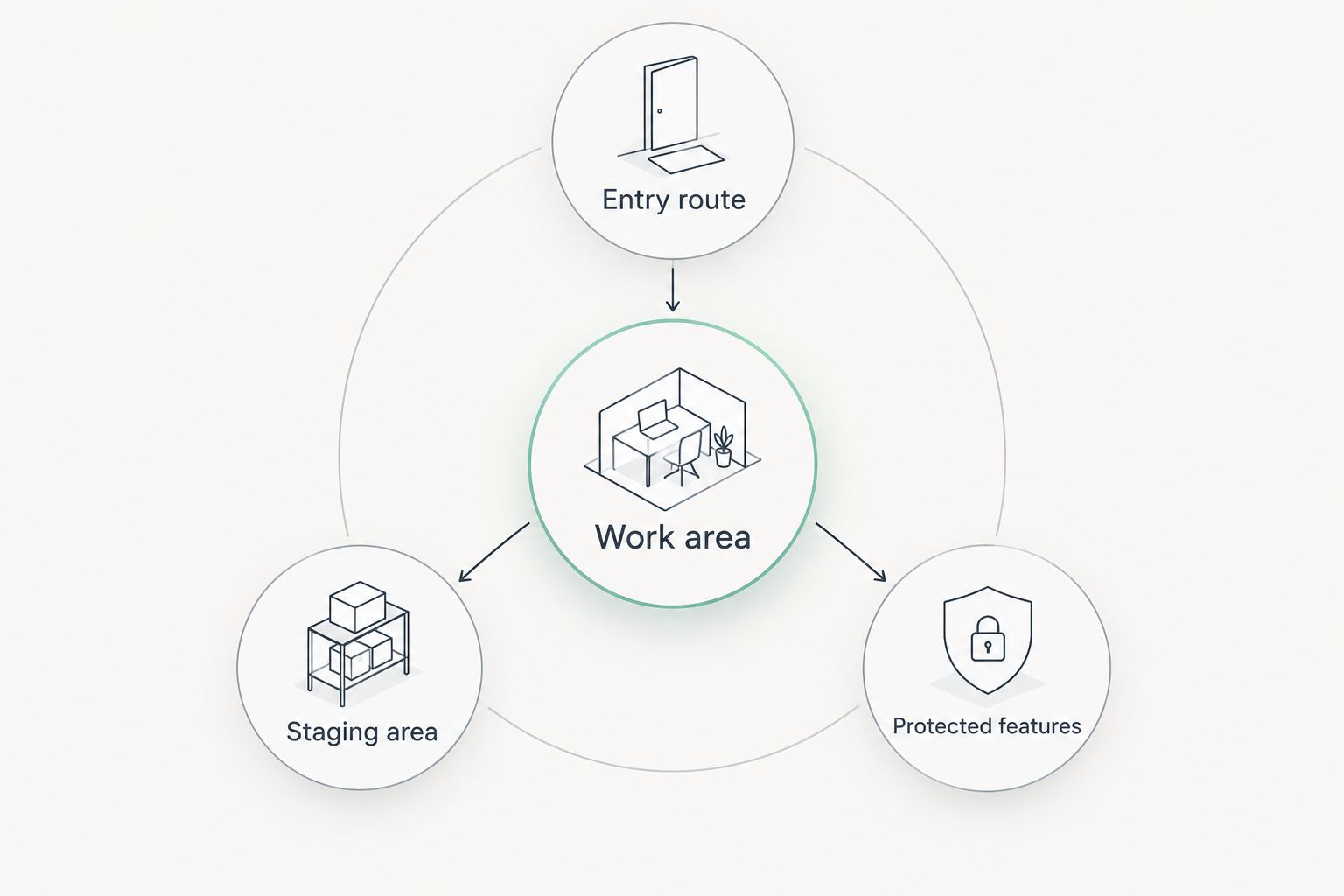
Use these 4 site notes to organize the discussion:
- Entry route: Identify the gate, driveway, or other agreed entrance.
- Work area: Identify where the removal activity will take place.
- Staging area: Agree where material and equipment can be positioned.
- Protected features: Identify surfaces, structures, and planting that need consideration.
Do not enter an unsafe area to measure access or photograph damage. Report a tree touching or threatening power lines to the utility and keep clear; a quote request is not permission to approach the hazard.
Make responsibilities and terms explicit
A written proposal should separate the contractor's tasks from yours. Ask who handles required permissions, access arrangements, utility coordination, and any prerequisite work before removal begins.
Do not assume every property follows the same approval process. Confirm applicable requirements with the relevant authority or property association, and record who is responsible for obtaining any required approval.
Payment and changes
The quote should state the agreed total and explain when payment is due. Ask whether any deposit, staged payment, or other condition applies, and read those terms before accepting.
Additional work needs written authorization before it becomes part of your project. Ask how changed conditions or extra requests will be documented, including any effect on the agreed scope or schedule.
Scheduling and completion
Ask how scheduling will be confirmed, what prerequisites must be met, and how changes will be communicated. Do not treat an informal discussion of timing as a guaranteed completion date.
Define completion by the agreed result: the identified trees removed, specified material handled, and the work area left in the stated condition. That gives both parties a practical handover checklist.
Supporting documents
Ask about insurance documentation and any credentials required for the proposed work. Request relevant evidence directly; a reference to insurance in a conversation does not describe coverage or establish its suitability for your job.
Keep the accepted proposal, attached photos, scope revisions, and written approvals together. For a 2026 project, label each revision with its actual date so an earlier draft cannot be confused with the accepted version.
Why tree removal quote details vary
The right level of detail follows the site and your intended result. These factors deserve specific discussion during the assessment:
- Tree condition and position: A standing tree beside a house needs a different work description from material already lying in an open area.
- Access restrictions: Gates, slopes, and restricted surfaces affect the agreed approach to the work area.
- Nearby features: Buildings, utility lines, fences, and retained trees need to be identified.
- Stump requirements: Leaving a stump and specifying stump treatment produce different finished conditions.
- Debris destination: Hauling material away and retaining it on site are different instructions.
- Future property use: Lawn restoration, driveway preparation, and broader clearing require their own scope decisions.
These are reasons to request a site-specific assessment, not reasons to accept vague exclusions. Ask the contractor to connect each limitation to the affected task.
How do I request a clearer written quote?
Send a brief description of the problem, the property address, and the result you want. Include photos taken from safe positions, explain access restrictions, and identify anything that must remain untouched.
For tree services in Richland, Lexington, Newberry, Orangeburg, Sumter, Kershaw, and Fairfield counties in South Carolina, Pmmidlands is a local option for property owners requesting a site-specific quote. Describe whether your project concerns an individual tree, storm debris, or a wider clearing area so the assessment addresses the right scope.
Before requesting an assessment, prepare 3 photo views where safe: the whole tree, its surroundings, and the access route. Photos support the discussion; they do not replace inspection of conditions that cannot be judged from the images.
Request a site-specific tree removal quote
Describe the trees, access restrictions, stump requirements, and debris handling for your property.
Does a tree removal quote include stump removal?
A tree removal quote includes stump removal only when the written scope says so. Ask for the proposed treatment, resulting material handling, and surface finish rather than relying on an inclusive-sounding heading.
Can I accept a tree removal quote based only on photos?
Photos help explain your request, but they do not establish every site condition. Ask what still needs assessment and whether the written proposal depends on inspection before you authorize work.
What if two tree removal quotes describe different work?
Ask both contractors to address the same trees, stump requirements, debris instructions, and cleanup result. Resolve those differences before comparing totals; otherwise, you are comparing different jobs.
FAQ
What should I check first on a tree removal quote?
Check that the tree removal quote identifies the correct trees and work address. Then confirm what will remain on the property, including stumps, logs, chips, and disturbed ground.
Should a tree removal quote include cleanup?
A tree removal quote should state the agreed cleanup scope explicitly. Ask which material will be collected, what will be hauled away, and whether surface repair is included or excluded.
Does stump grinding mean the ground will be ready for grass?
Stump grinding alone does not specify a grass-ready finish. Ask separately about grinding material, backfilling, soil preparation, and lawn restoration.
What should a commercial property manager add to a quote request?
A commercial property manager should identify access restrictions, tenant needs, protected areas, and the person authorized to approve changes. Ask the written quote to record the agreed arrangements.
What date should be on my tree removal quote in 2026?
Your 2026 tree removal quote should show its actual issue date and identify the version you accept. Ask the contractor to state any acceptance deadline and date later revisions.
Can I ask Pmmidlands for a quote for my property?
Ask Pmmidlands for a site-specific tree services quote if your property is in Richland, Lexington, Newberry, Orangeburg, Sumter, Kershaw, or Fairfield County in South Carolina. Explain the work you want, access restrictions, and your preferred finished condition.
One last thing
Before approving your 2026 tree removal quote, describe the scene you expect after the work is finished: no standing tree, the agreed stump treatment, specified material removed or retained, and the stated cleanup completed. If that scene is not supported by the written scope, request a revision before you agree.