Stump removal cost in 2026 depends on the stump, access, removal method, and condition you need the ground left in; a site-specific quote is the basis for your budget. Confirm whether that quote includes wood-chip removal, backfill, and surface restoration, because removing the visible stump does not automatically include those tasks.
- Stump removal cost depends on scope: compare grinding, excavation, debris handling, and ground restoration separately.
- Pmmidlands serves tree-service customers in seven confirmed South Carolina counties; request a quote for your specific property.
- Stump grinding reduces the stump in place; excavation removes the stump through digging and creates more ground disturbance.
- Tell the contractor what replaces the stump before agreeing on removal depth and cleanup.
Why this matters
Compare the finished condition, not just the removal line. A stump reduced below the lawn surface and a stump excavated from a future building footprint are different jobs. A quote for one does not describe the work required for the other.
Pmmidlands provides tree services in Richland, Lexington, Newberry, Orangeburg, Sumter, Kershaw, and Fairfield counties in South Carolina. For a 2026 project in those counties, explain what you intend to do with the space when requesting a site-specific quote.
That intended use gives the assessment a clear purpose: identify what must come out, what can remain, and what happens to the material afterward.
How much does stump removal cost in 2026?
Your stump removal cost is determined by the work needed at your property, rather than by a single figure that applies to every stump. Start with a written scope that separates removal, material handling, and restoration. Then compare quotes covering the same result.
The main distinction is between grinding the stump in place and digging it out. Neither method automatically includes removing every root or preparing the ground for construction.
| Approach | Best for | Main benefit | Main limitation | What to confirm |
|---|---|---|---|---|
| Stump grinding | Reducing a stump where extensive excavation is unnecessary | Removes the protruding stump with less excavation than digging it out | Roots and wood below the agreed grinding depth remain | Grinding depth, exposed roots, chips, and cleanup |
| Stump excavation | Projects requiring the stump and specified roots physically removed | Allows the agreed stump material to be lifted out | Disturbs surrounding ground and leaves an excavation to address | Root-removal limits, hauling, backfill, and restoration |
Choose the method around the next use of the ground. If you want lawn, describe the finished surface. If you plan a driveway, foundation, or other built feature, have the responsible installer or project professional define the required preparation before tree work begins.
What should the quote separate?
Ask for clear descriptions of the removal method, treatment of visible roots, handling of chips or excavated wood, and final site condition. A single total without those details makes comparison difficult. You need to know whether cleanup means gathering loose debris, removing material from the property, or leaving a surface ready for another contractor.
Stump grinding: specify depth and chip handling
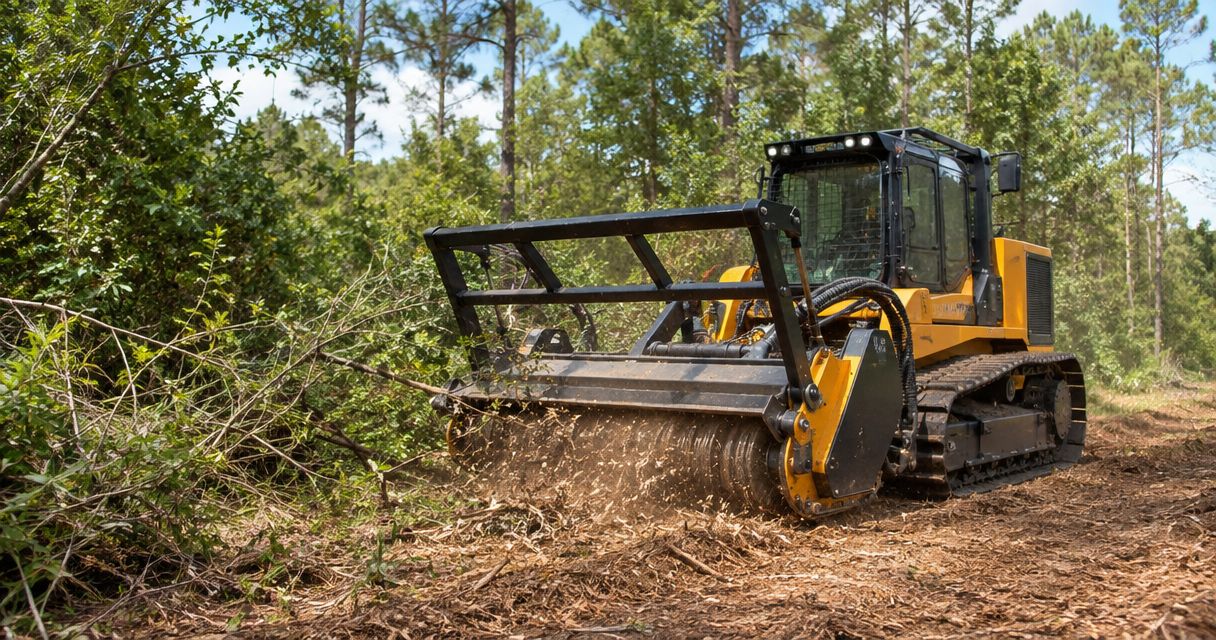
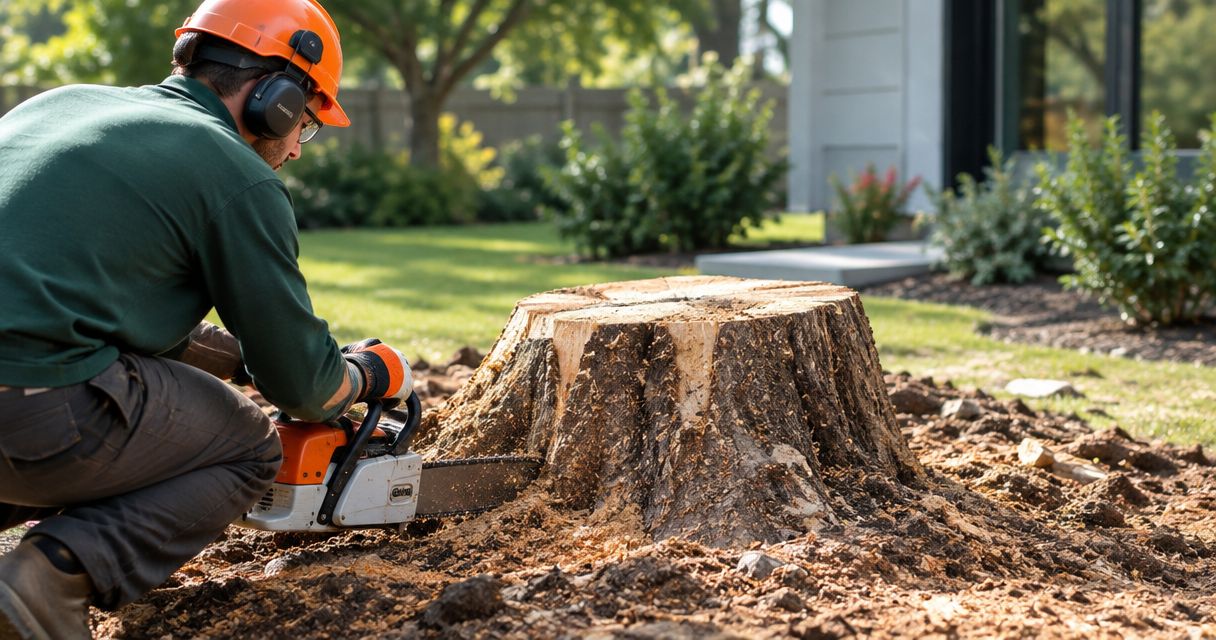
Stump grinding breaks down the stump mechanically rather than lifting it out as a whole. It addresses the stump within the agreed work area and depth; it does not mean the entire underground root system disappears.
Best for: a project where reducing the stump is sufficient for the planned use. The benefit is less excavation around the stump. The limitation is that buried woody material remains outside the specified grinding area.
Tell the contractor whether you intend to seed the area, install planting, or hand the site to a landscaper. Ask how the grinding depth will be measured, especially where the stump sits on a slope or has prominent root flares.
Also decide what happens to the chips. Leaving chips, spreading them in an agreed location, and hauling them away are different scopes. Get the selected approach in writing rather than treating “cleanup included” as a complete description.
Stump excavation: specify the removal boundary
Stump excavation uses digging to expose and remove the stump and agreed root material. It requires an assessment of the surrounding space, underground services, access, and the ground that will remain afterward.
Best for: a project whose preparation requirements call for physical stump removal. The benefit is removal of the specified woody material. The limitation is the excavation and surrounding disturbance that must be addressed.
Do not interpret “stump removed” as “all roots removed.” Ask which roots are included and where the work stops, particularly near retained trees, fences, paving, or property boundaries.
Backfill needs its own discussion. Filling a hole and preparing ground to support a structure are not interchangeable instructions. Let the person responsible for the next construction stage specify the required material and preparation.
Why stump removal cost varies
For a 2026 quote, give each contractor the same site information. These factors affect the work required and belong in the assessment:
- Stump size and shape. A wide stump, spreading base, or prominent root flare changes the amount and location of material to address. Send photographs that show the base rather than only the cut surface.
- Access to the work area. Gates, tight turns, steps, slopes, and the route from the street affect how the contractor can reach the stump. Identify the narrowest point along the route.
- Required depth and root treatment. Removing a trip obstruction is a different scope from preparing a location for excavation or construction. State the planned use and ask what remains underground.
- Nearby features. Fences, walls, paving, irrigation, utilities, and trees you want to keep affect the working space. Point them out before the method is selected.
- Material handling. Keeping chips on the property differs from removing chips, roots, or excavated wood. Specify where retained material can go without blocking access or drainage.
- Final ground condition. Backfill, soil placement, grading, and lawn repair are separate tasks. Identify which contractor handles each one and what counts as completion.
Avoid comparing quotes until these details match. A difference in scope is not evidence that one contractor charges more for the same work.
How to request a useful stump removal quote
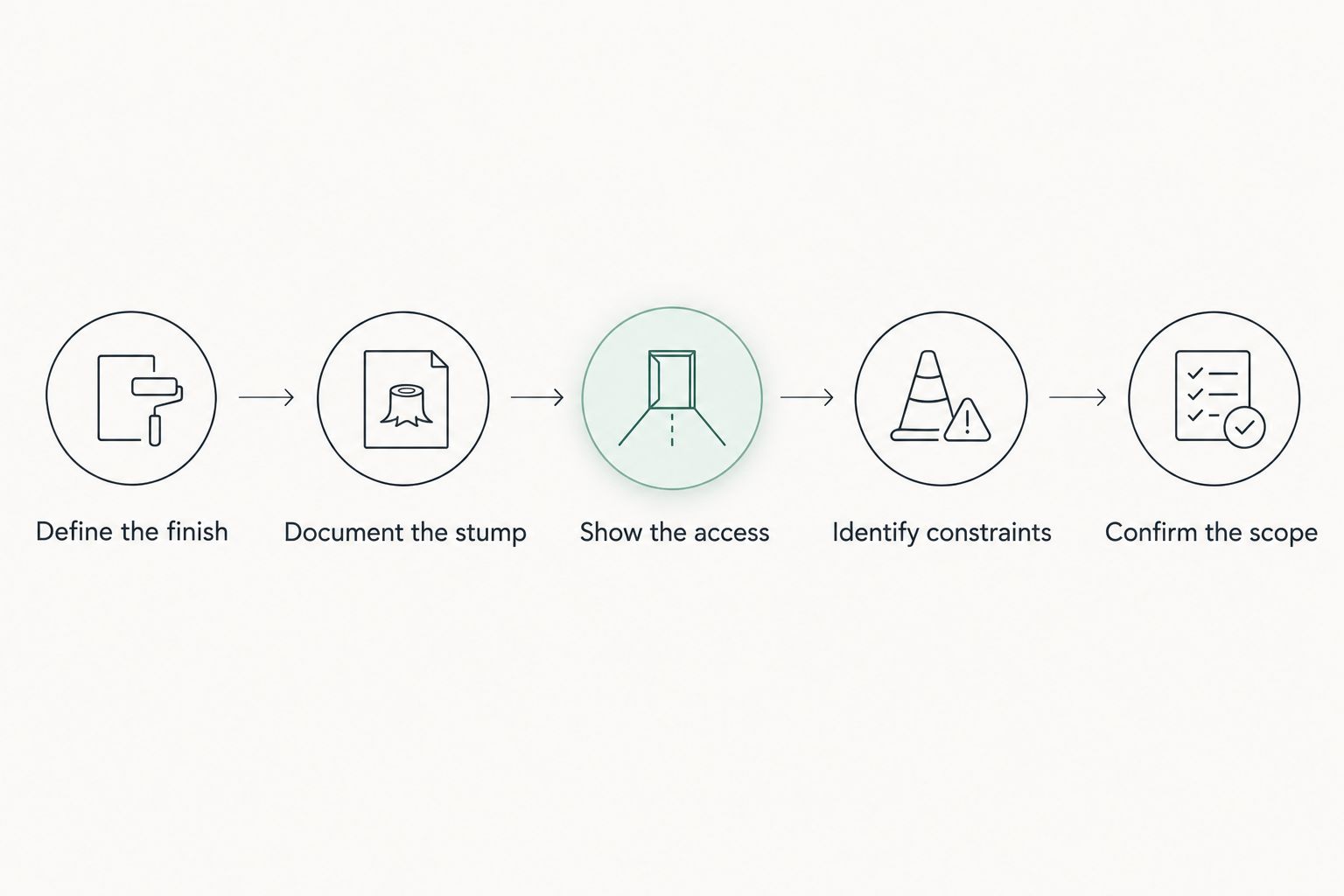
A useful request explains the stump, the route to it, and your intended finish. Follow this sequence before accepting a 2026 work proposal.
- Define the finish. Describe what you want after removal: lawn, planting space, an unobstructed access route, or preparation for another project. If another contractor takes over, obtain that contractor’s requirements first.
- Document the stump. Photograph the cut surface, the base, visible roots, and surrounding ground. Include a wider view showing nearby structures and landscaping. Record actual measurements rather than estimating from a photograph.
- Show the access. Photograph the route from the entry point to the stump. Note gates, changes in level, tight corners, soft ground, and any area that vehicles or machinery must not cross.
- Identify constraints. Point out known utilities, private lines, irrigation, septic features, boundaries, and retained trees. Arrange the appropriate utility-location process before ground disturbance; do not assume every buried feature is covered by public utility marking.
- Confirm the scope. Ask the contractor to state the method, depth or removal limits, debris handling, ground finish, exclusions, and responsibilities. Resolve unclear wording before you authorize the work.
These steps do not replace a site assessment. They help the contractor understand your request and identify which details need inspection rather than assumptions.
What needs a site assessment?
A photograph shows the visible stump, but it does not establish underground conditions or prove that a proposed access route is suitable. Ask for an assessment when the stump sits beside a structure, on a slope, near retained trees, or within the footprint of planned construction.
The assessment should connect the proposed method to your actual constraints. Ask where the contractor expects to work, which areas need protection, and where debris will be placed before removal or reuse.
For commercial properties, explain pedestrian routes, tenant access, parking requirements, and any areas that must stay unobstructed. For residential properties, identify gates, pets, garden beds, and shared access. These are instructions to discuss, not reasons to assume a particular machine or completion date.
Pmmidlands is a local tree-service contact for property owners in its confirmed South Carolina service area. Request a site-specific quote that describes your stump, access restrictions, and intended ground finish; do not ask the contractor to infer the project from “remove stump” alone.
Request a site-specific stump quote
Describe the stump, access route, and intended ground finish when discussing your project.
How do you compare stump removal quotes fairly?
Put the written scopes beside each other before comparing totals. Check that each proposal addresses the same stump, method, removal depth or boundary, material handling, and final condition. Ask for clarification where the wording differs.
Watch for a handoff hidden inside the description. One contractor might leave chips for your landscaper, while another includes hauling. One scope might stop after grinding, while another includes filling the resulting depression. Neither description is complete until you understand what remains for you to arrange.
Keep a copy of the agreed scope with your 2026 project records. If the intended use changes after the assessment, revisit the scope before work starts. A later decision to install paving instead of lawn changes the preparation question.
Is stump grinding the same as stump removal?
Stump grinding is one method of addressing a stump, but it is not the same as excavating the stump and specified roots. Ask what the contractor means by “removal.” The written method and limits matter more than the label.
Does tree removal include the stump?
Tree removal does not establish that stump work is included. Check the written scope for stump treatment, root work, and debris handling before authorizing the job. If those tasks are not described, ask for them to be addressed explicitly.
Can you landscape immediately after stump removal?
Landscaping should follow confirmation that the remaining ground meets the next stage’s requirements. Ask your landscaper to specify chip removal, soil, grading, and planting preparation before the stump work is finalized. Do not treat a cleared-looking surface as proof that the ground is ready.
FAQ
How do I get an accurate stump removal cost for my property?
Request a site-specific quote covering the stump, access, removal method, debris handling, and final ground condition. Explain what you intend to install or grow in the space afterward.
Is stump grinding better than digging a stump out?
Stump grinding suits work where reducing the stump is sufficient; excavation suits work requiring the specified stump material to be physically removed. Choose according to the planned use and site assessment, not the method name alone.
Does a stump removal quote include hauling away wood chips?
Wood-chip hauling is included only when the agreed scope says it is. Confirm whether chips stay in place, move elsewhere on your property, or leave the site.
Will stump removal get rid of every root?
Stump removal does not automatically include every root. Ask the contractor to define the grinding depth or excavation boundary and identify what remains underground.
What should I tell a contractor about a hard-to-reach stump?
Describe the narrowest access point, turns, steps, slopes, and surfaces along the route. Include photographs and identify any area that must not be crossed or disturbed.
Who should decide how a stump area is prepared for a driveway?
The professional responsible for the driveway should define the required ground preparation. Give those requirements to the tree-service contractor before agreeing on stump work.
Where can I ask Pmmidlands about a tree-service project?
Pmmidlands serves Richland, Lexington, Newberry, Orangeburg, Sumter, Kershaw, and Fairfield counties in South Carolina. Describe your property and request a site-specific quote rather than assuming a standard removal scope.
One last thing
A stump can disappear from view without leaving ground ready for your next project. Grinding addresses the agreed stump area; it does not certify the soil for paving, foundations, or planting.
Before approving your 2026 stump removal quote, ask one final question: “What exactly will be left when the work is finished?” Have the answer added to the scope. A description of remaining chips, roots, soil, and surface condition gives you a clear basis for accepting the work and planning the next contractor’s visit.