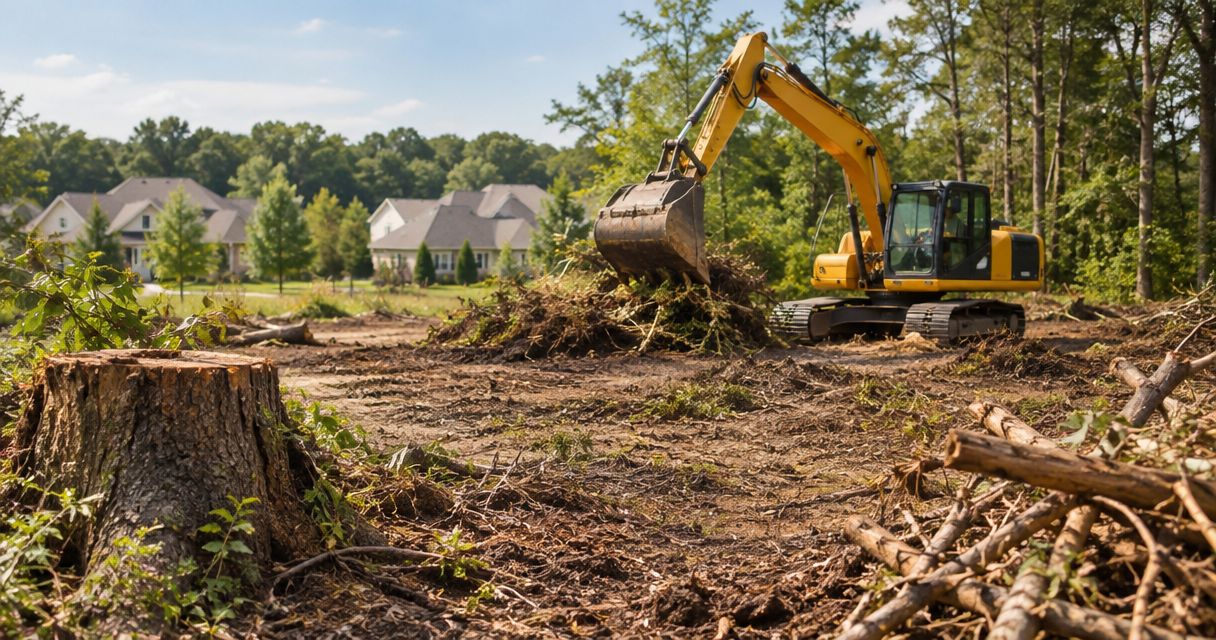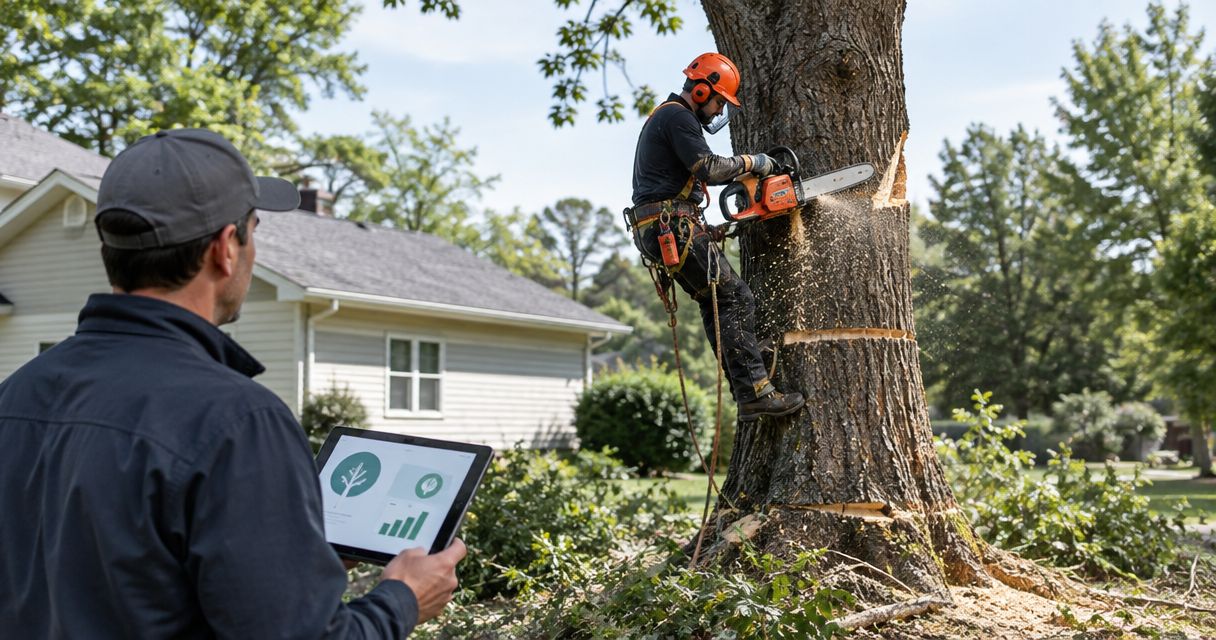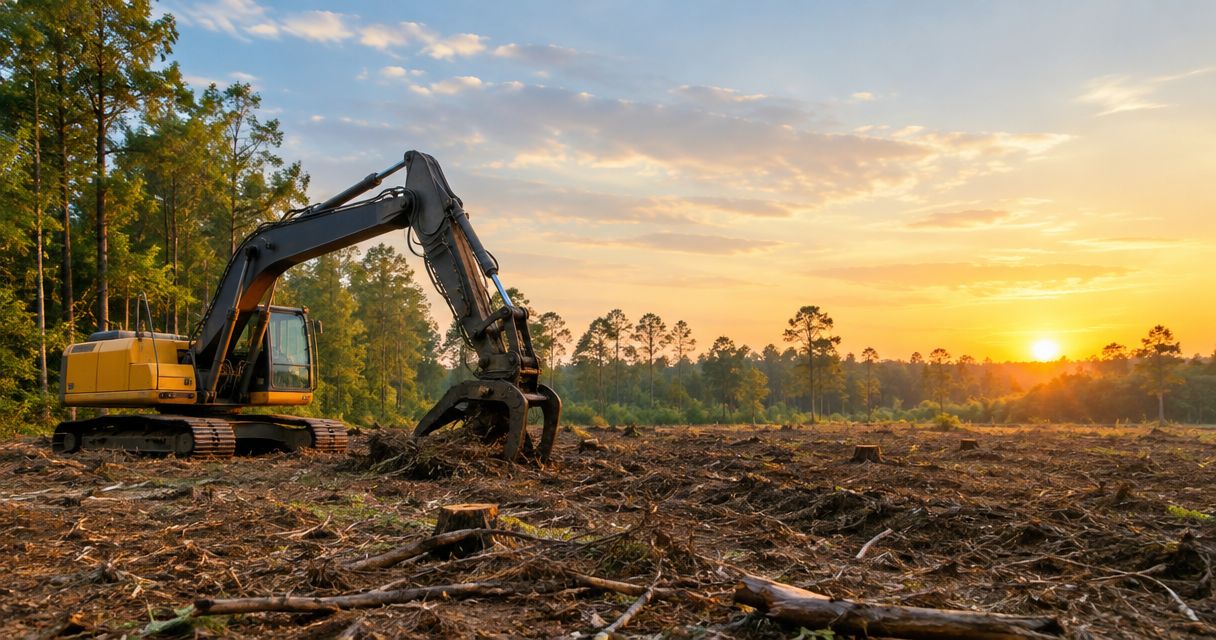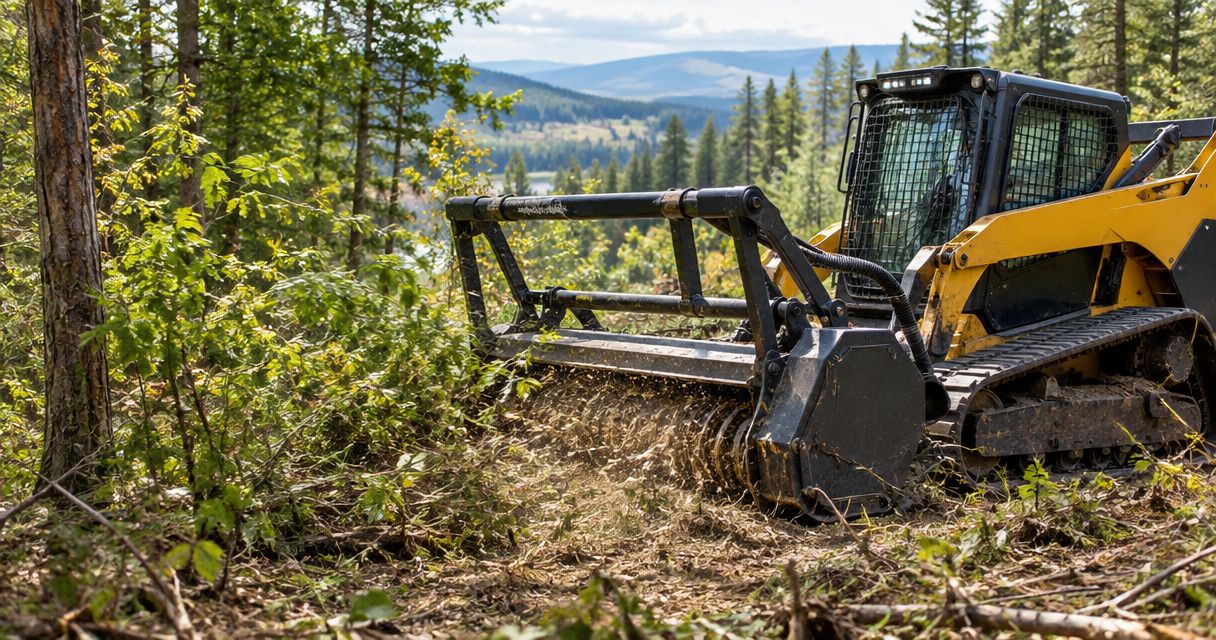
For timberland owners, forestry mulching is vegetation clearing that shreds brush and smaller woody growth in place to improve access while retaining selected trees and cover. This guide explains forestry mulching for timberland owners planning a 2026 project, where hunting access, timber protection, and future land use need separate decisions.
- Forestry mulching for timberland owners suits selective brush clearing, not automatic stump removal or construction preparation.
- Pmmidlands is best for owners seeking a local tree-service assessment within its confirmed South Carolina service area.
- Mark timber, hunting cover, boundaries, and wet areas before defining the clearing footprint.
- Request separate written scopes for mulching, tree removal, stump work, and debris handling.
Why forestry mulching matters for timberland owners
Clear for a defined use, not simply for a cleaner-looking tract. A timberland owner needs to protect retained trees; a hunting property owner also needs to decide where access belongs and where cover should remain. Treating every thicket the same ignores those different goals.
Forestry mulching leaves shredded material on the ground. That distinguishes it from removing vegetation and hauling the resulting debris away, but it does not make the finished ground ready for planting, building, or unrestricted vehicle travel.
For a 2026 project in Richland, Lexington, Newberry, Orangeburg, Sumter, Kershaw, or Fairfield County, Pmmidlands is a local tree-service contact for discussing a site-specific assessment. Describe the intended work first and confirm which parts of the project the proposed service includes.
Plan forestry mulching around your property’s purpose
1. Define the finished use before marking vegetation
Start with a property map and a walk-through from an existing safe route. Identify what you want to do after clearing: walk a boundary, inspect timber, reach a hunting location, or maintain an existing access lane. Those outcomes require different clearing footprints.
For your 2026 plan, write a short description for each work area. “Restore walking access without removing marked trees” gives a contractor a clearer objective than “clean up the back acreage.” If you cannot describe the finished use, postpone decisions about how much vegetation to remove.
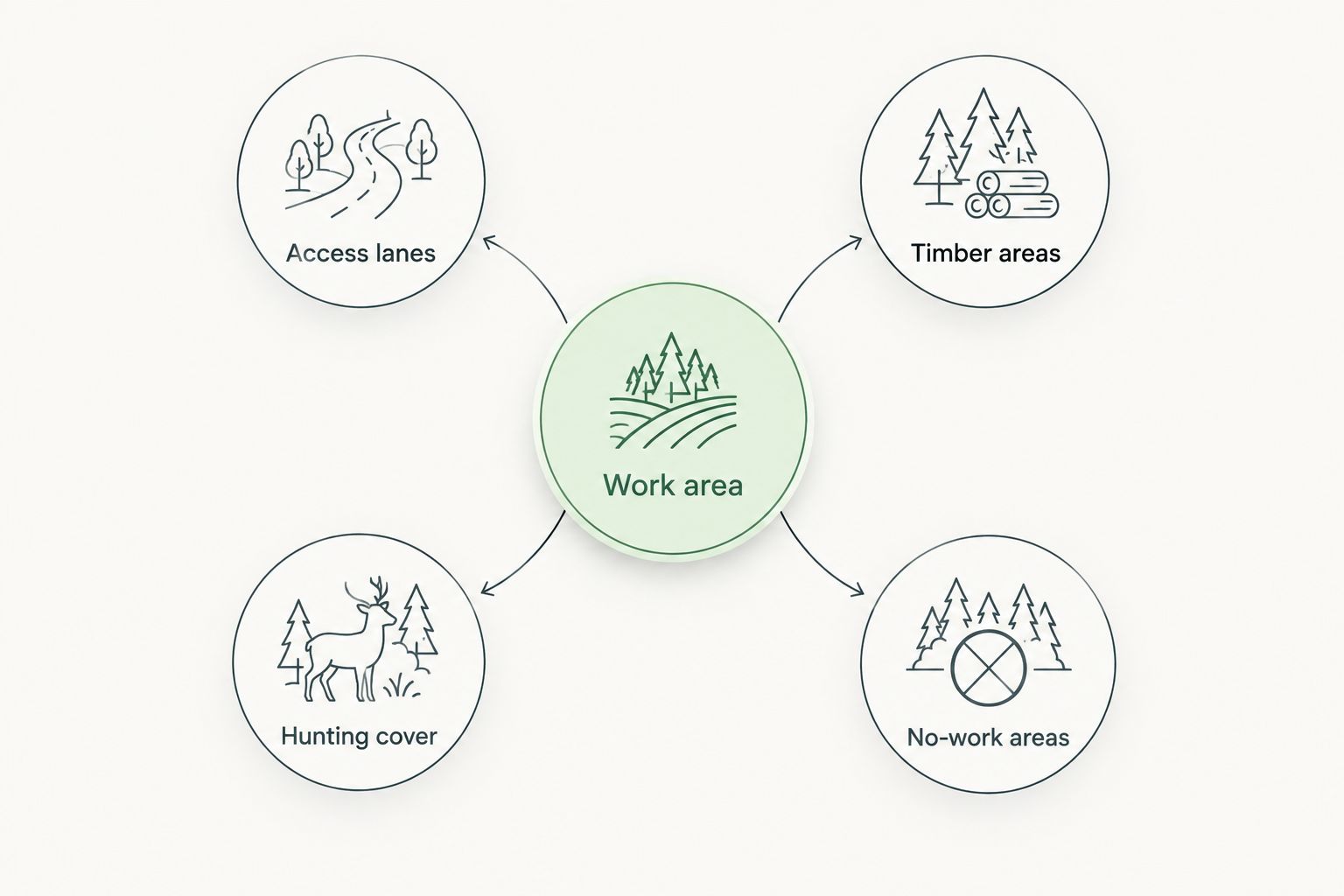
- Access lanes: Identify the users and intended vehicles.
- Timber areas: Mark trees and regeneration you intend to retain.
- Hunting cover: Mark areas that should remain undisturbed.
- Future projects: Identify any later planting, fencing, or construction.
2. Mark boundaries, retained trees, and hidden obstacles
Use existing records to orient your map, then resolve uncertain boundaries before authorizing work near them. A fence, old trail, or change in vegetation does not establish ownership. Do not ask an operator to decide a disputed line.
Identify hazards from a safe position; do not enter unstable brush or approach damaged trees to obtain better photographs. Old fencing, wire, dumped material, and concealed structures belong in the assessment because vegetation can hide them. Agree on separate, clearly explained marking conventions for retained trees and clearing limits.
- Mark confirmed work limits without treating uncertain lines as settled.
- Identify retained trees and patches of young timber.
- Flag known wire, fencing, wells, and abandoned structures.
- Identify utilities and arrange appropriate locating before relevant ground disturbance.
- Mark streams, drainage routes, and persistently wet ground for review.
3. Match each work area to the right method
Begin with the least extensive treatment that meets your objective. Hand cutting suits small, accessible patches where you can work safely; forestry mulching suits brush treatment where shredded material can remain. Neither approach automatically addresses hazardous trees or buried roots.
Bring the marked map to a Pmmidlands tree-service assessment and ask which tasks require separate evaluation. Do not assume that a discussion about lot clearing confirms a particular machine, treatment method, or finished condition. Ask for the proposed method in writing.
Keep potentially merchantable timber out of the brush-clearing decision. Consult a qualified forester about timber objectives before authorizing removal of trees that belong in a management or harvest plan.
- Assign brush treatment separately from standing-tree removal.
- Identify stumps that conflict with the finished use.
- Separate timber decisions from access-lane maintenance.
- Specify whether shredded material can remain in each area.
- Ask what conditions would require a different treatment.
4. Design access without clearing away the hunting cover
Walk the proposed route on your map before expanding its footprint on the ground. A direct route through the middle of a cover patch is not the same project as a route along its edge. Decide which arrangement fits your hunting access and timber inspection needs.
Map Access lanes, Timber areas, Hunting cover, and No-work areas separately. This prevents a general instruction to clear brush from becoming permission to treat the whole tract uniformly.
Choose the route before discussing how far to widen it. Where access crosses wet ground, a stream, or a drainage feature, obtain site-specific advice rather than treating vegetation removal as permission to cross or alter it.
- Identify the entrance and intended destination for each route.
- Mark cover patches that must remain intact.
- Review turns, gates, and obstacles against the intended vehicle.
- Identify drainage crossings for separate assessment.
- State whether the finished route is for walking or vehicle use.
5. Assess ground conditions and the material left behind
Inspect the ground from established access points before scheduling work. Soft soil, steep terrain, and hidden obstacles affect whether a proposed treatment is suitable. Calendar availability does not establish that the ground is ready for equipment.
For 2026 scheduling, agree on the site conditions that require reassessment before work starts. Forestry mulching leaves woody material behind, and roots or stumps can remain beneath it. A cleared-looking surface is not proof that the route is safe for every vehicle or ready for soil preparation.
- Discuss wet areas and signs of rutting along existing access.
- Identify slopes and drainage features requiring review.
- Ask how residual woody material will be handled.
- State where remaining stumps would interfere with use.
- Confirm what happens if field conditions differ from the assessment.
6. Request a scope that separates the jobs
Prepare your own brief before requesting a quote. Include 1 annotated map, at least 3 overview photos taken from safe locations, and 2 written lists: what must stay and what should be treated. These are preparation targets, not substitutes for an on-site assessment.
Ask Pmmidlands to assess the tree-service portions of the project and identify the work covered by its proposal. Compare written scopes rather than assuming that every clearing quote includes the same treatment, cleanup, or exclusions.
A useful quote defines the finished condition, not just the starting acreage. An access lane with retained trees and no stump treatment differs from an area intended for later planting, even when both occupy the same amount of land.
- Identify treatment boundaries and marked exclusions.
- Separate brush work, tree removal, and stump treatment.
- Specify whether debris stays, is redistributed, or is removed.
- Record access restrictions and protected features.
- Define approval requirements for changes discovered during work.
- Request a site walk-through to review the proposed finish.
Request a site-specific tree-service quote
Discuss your clearing goals, retained trees, access limits, and the work requiring assessment.
7. Inspect the result and plan follow-up maintenance
Keep the annotated plan for your 2026 completion walk-through. Check that agreed routes connect, retained vegetation remains, and material handling matches the written scope. Do not judge the job solely by how open it looks from the entrance.
Forestry mulching is not a promise of permanent vegetation control. Some plants resprout, and new growth can establish after treatment. Decide how you will inspect access and manage regrowth without repeatedly widening the original clearing footprint.
- Review clearing limits against the approved map.
- Check retained trees and cover patches from safe positions.
- Identify remaining obstacles before using a route.
- Record unfinished or changed work for discussion.
- Photograph the finished areas for future maintenance planning.
Compare clearing options for timberland and hunting properties
Choose by the required finish, not by the method’s name. Brush treatment, timber management, and construction preparation solve different problems. The table identifies useful starting points for a site assessment, not guaranteed suitability for a particular tract.
| Option | Best for | Main advantage | Key limitation |
|---|---|---|---|
| Manual brush cutting | Small, accessible patches needing selective treatment | Lets you work around individual plants | Labor-intensive; unsuitable for hazardous cutting without appropriate skills |
| Forestry mulching | Brush and smaller woody growth where shredded material can remain | Treats vegetation without requiring all resulting material to be hauled away | Does not automatically remove roots, stumps, or hazardous trees |
| Selective tree removal | Specific trees that conflict with access or the management plan | Addresses identified trees without authorizing broad clearing | Brush, stumps, and debris require explicit scope decisions |
| Clearing with stump removal | Areas where remaining stumps conflict with the intended use | Addresses obstacles that surface brush treatment leaves behind | More ground disturbance; still not a complete construction specification |
| Forester-led timber planning | Decisions involving timber retention or harvest objectives | Connects vegetation decisions to the timber plan | Planning does not itself complete physical clearing |
For planting areas, distinguish vegetation treatment from seedbed preparation. For structures or permanent roads, obtain the relevant site-development advice rather than treating a mulching proposal as an engineering plan.
Common mistakes timberland owners make
Clearing every patch of understory
Removing all understory treats timber inspection, wildlife cover, and access as identical needs. Mark retained patches before approving work, and explain which areas should look untouched when the job ends.
Treating a mulched lane as a finished road
A visible route can still contain roots, soft ground, uneven surfaces, and remaining stumps. State the intended vehicle and ask which additional work is necessary before using the route that way.
Authorizing timber removal as ordinary brush work
Trees with a place in your timber plan require a deliberate decision. Separate them from general brush instructions and get forestry advice before approving removal that changes your management objectives.
Assuming a food plot needs only vegetation removal
Shredded vegetation, remaining roots, soil conditions, and drainage affect subsequent preparation. Define the planting objective separately so the clearing scope does not imply a ready-to-seed finish.
Comparing quotes without comparing exclusions
One proposal can leave stumps and material in place while another includes additional treatment. Ask each contractor to describe the same boundaries, retained vegetation, and finished condition before comparing proposals.
FAQ
What's the best use of forestry mulching for timberland owners?
Forestry mulching is best suited to brush and smaller woody vegetation where shredded material can remain on site. Define retained timber, access routes, and no-work areas before selecting the treatment.
Is forestry mulching better than full clearing for hunting land?
Forestry mulching is the better fit when selective vegetation treatment meets your access goal and remaining roots or stumps do not conflict with it. More extensive clearing requires a separate justification tied to the intended use.
Will forestry mulching remove the stumps on my property?
Do not assume forestry mulching includes stump removal. Ask the contractor to state whether stumps remain, receive surface treatment, or require separate removal.
Can I plant a food plot immediately after forestry mulching?
Do not assume a mulched area is ready for planting. Remaining woody material, roots, soil conditions, and the intended planting method determine what preparation comes next.
What should I send when requesting a timberland clearing quote?
Send an annotated map, overview photos, access details, and separate lists of vegetation to retain and treat. Request an on-site assessment for hazards, ground conditions, and the proposed finish.
Does forestry mulching stop brush from growing back?
Forestry mulching does not guarantee permanent brush control. Plan follow-up inspections and choose maintenance according to the vegetation that returns.
Where can I contact Pmmidlands about a tree-service assessment?
Pmmidlands serves Richland, Lexington, Newberry, Orangeburg, Sumter, Kershaw, and Fairfield counties in South Carolina. Describe your property goals and request confirmation of the work included in a site-specific tree-service quote.
One last thing
Photograph what must remain, not just what you want removed. A photo of a retained tree, cover patch, or narrow boundary opening can communicate a constraint that disappears in a broad instruction to clear vegetation. Attach those photos to the scope before authorizing work.