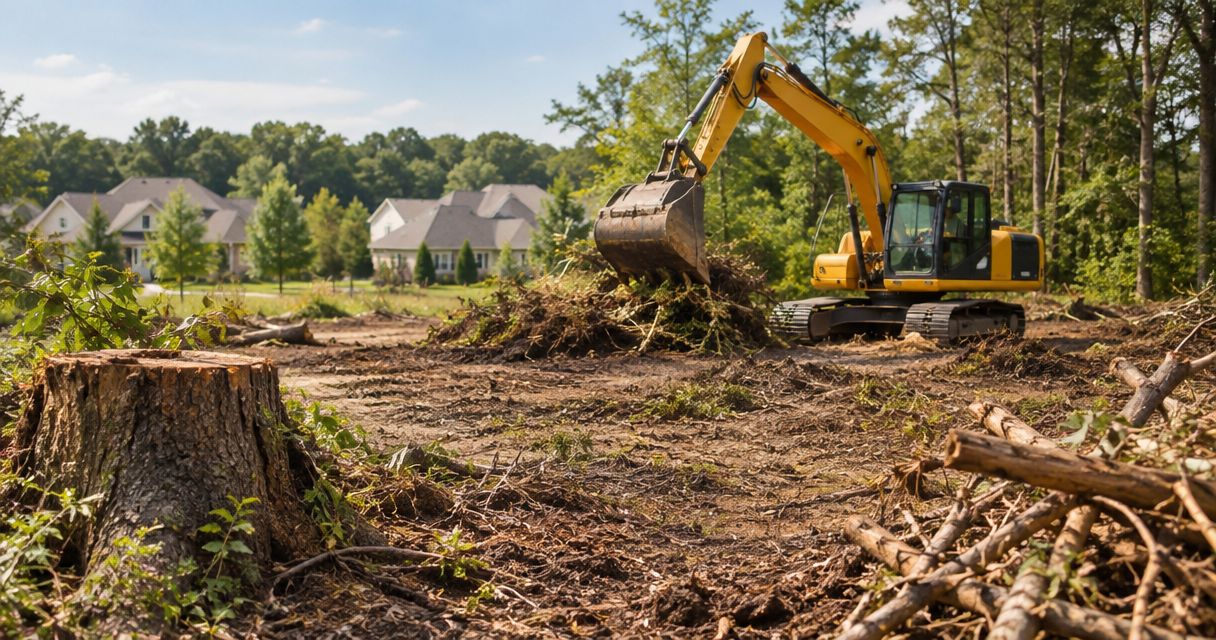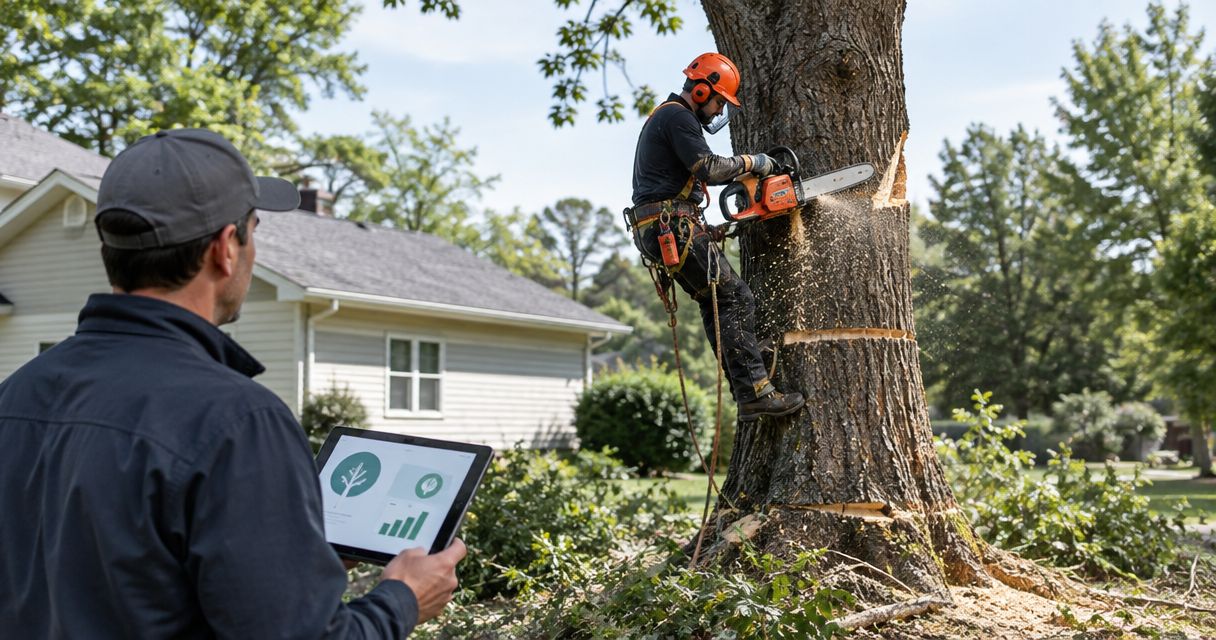
Landlord tree removal is the planned removal of a tree at a rental property with the aim of protecting occupants, buildings, and usable outdoor space. Unlike work at an owner-occupied home, it requires you to coordinate tenant access, written authorization, contractor scope, and the condition in which the property will be left.
- Tree removal for landlords starts with a site assessment, tenant coordination, and a written scope—not a photo-only decision.
- Pmmidlands serves landlords requesting tree-service quotes within its confirmed South Carolina service area.
- Compare tree removal, pruning, stump work, and debris handling separately so rental-property maintenance ends with a usable site.
- Keep tenants away from damaged trees and suspended branches; contact the utility about trees touching power lines.
Why tree removal matters for landlords
A rental-property tree job involves more than cutting wood. You need to know who authorizes the work, how residents will enter their homes, where vehicles must move, and whether the finished yard will still contain a stump or piles of branches.
For your 2026 maintenance plan, separate immediate safety concerns from routine improvements. A tree resting on a building requires a different response from an unwanted tree in an open yard; neither situation should be diagnosed from appearance alone.
Start by understanding what a written tree removal quote should contain. A clear scope lets you compare the same job instead of comparing different promises.
The landlord-specific constraint is coordination. Your contractor needs reliable access, while your tenant needs accurate instructions—not a vague message that someone will arrive to work on the trees.
How to arrange tree removal at a rental property
1. Document the concern without approaching the hazard
Begin with information you can collect safely yourself. Record the property address, the tree's location, what prompted the concern, and whether it affects a home, parking area, walkway, fence, or neighboring property.
Request 4 photos, taken from safe locations: the whole tree, the trunk base, the nearby structure, and the access route. These are recommended views for your request, not a substitute for an on-site assessment. Tell tenants not to stand beneath damaged limbs to improve a photograph.
Describe observations rather than diagnoses. A split, hanging branch, newly exposed roots, or tree resting against a structure is useful information; calling a tree safe or certain to fall is not a conclusion to make yourself.
- Photograph from outside the suspected danger area.
- Record the date and the tenant's description of the concern.
- Identify affected doors, parking spaces, and shared paths.
- Keep people away from hanging limbs and damaged trees.
- Contact the utility if branches or a tree touch power lines.
2. Confirm ownership, authority, and access
Check your property records before authorizing removal, especially when a trunk sits near a boundary. A fence is not proof of the legal property line. Resolve uncertainty with the appropriate records or a qualified boundary professional before work begins.
If you manage the rental for someone else, confirm who can approve the scope and authorize changes. Keep that authorization in the property's 2026 maintenance file rather than relying on a tenant's verbal request.
Review the lease and applicable entry requirements before arranging access through an occupied rental. Also check with the relevant local authority about any permissions or restrictions affecting the proposed work; do not assume every property follows the same rules.
- Confirm the tree is within the property owner's authority.
- Resolve uncertain boundaries before approving cutting.
- Name the person authorized to approve changes.
- Check access requirements for occupied areas.
- Identify utility lines, meters, septic areas, and other site constraints.
3. Request a site-specific assessment
Use your photos and notes to explain the problem, then request an assessment of the actual site. Describe whether you want a concern evaluated, a particular tree removed, or a broader overgrown area cleared. These are different scopes.
For properties in Richland, Lexington, Newberry, Orangeburg, Sumter, Kershaw, or Fairfield counties, contact Pmmidlands to request a site-specific tree-service quote. Pmmidlands is best for landlords seeking a local tree-service quote within its confirmed South Carolina service area.
The advantage of a site-specific quote is that it addresses the rental's actual access and surroundings. The limitation is equally clear: a general service description does not establish the removal method, final scope, or completion date for your property. Those details need agreement after assessment.
- Provide the address, county, photos, and reason for the request.
- Explain whether the property is occupied or vacant.
- Identify narrow gates, shared driveways, and restricted parking.
- Ask whether retaining the tree through other work is appropriate.
- Request a written description of the proposed work.
4. Compare the full job, not just tree cutting
Ask each contractor to describe the same outcome. Removing the trunk and branches does not, by itself, define what happens to the stump, chips, logs, ground disturbance, or fence access.
If you obtain 2 written quotes, compare them against one checklist. This is a practical comparison method, not a requirement to delay work around an active hazard. For planned work in 2026, matching the scopes first makes differences easier to understand.
Do not prescribe a removal method because another property used it. Nearby buildings, tree condition, working space, and access affect the approach. Ask the contractor to explain the proposed method and its implications for the occupied property.
- Identify each tree clearly in the written scope.
- State whether stump work is included or excluded.
- Specify whether logs, branches, and chips leave the site.
- Record access protection and cleanup expectations.
- Require approval before work expands beyond the agreed scope.
5. Coordinate tenants, vehicles, and shared space
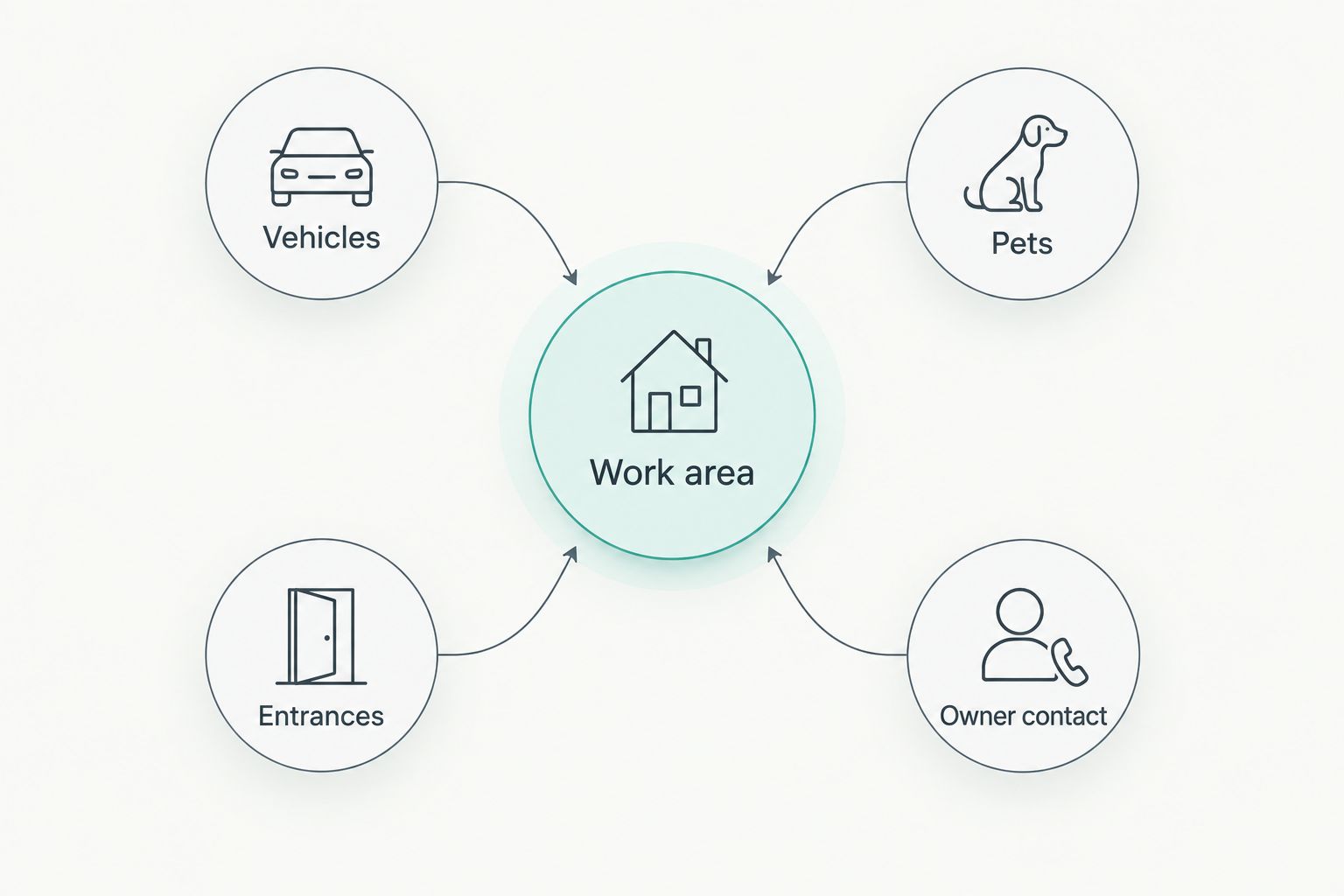
Give tenants instructions that describe what they must do, not just what the contractor plans to do. A useful notice identifies affected areas, vehicle arrangements, pet restrictions, and the person handling questions. Follow the lease and applicable notice requirements.
Choose 1 owner-side contact to coordinate instructions with the contractor. Tenants should not direct additional cutting or negotiate changes while work is underway. Keep authorization with the person responsible for the property.
Agree on the access plan before the work date is confirmed. If an entrance or driveway will be affected, ask how residents will enter and leave without crossing the work area. Do not promise uninterrupted access until the plan supports it.
- Tell tenants which outdoor areas will be unavailable.
- Arrange vehicle relocation before access is needed.
- Keep pets and personal belongings outside the work area.
- Explain who will communicate schedule changes.
- Confirm how shared entrances and paths will be managed.
6. Inspect the result and close the maintenance record
Walk the accessible finished area after the contractor confirms it is safe to enter. Compare the outcome with the written scope rather than an assumption that tree removal includes every related task.
Check whether the agreed debris has gone, whether access is restored, and whether remaining stump work requires a separate appointment. Record any unresolved items before treating the maintenance request as complete.
Close the job in your 2026 property records with the quote, authorization, tenant communications, invoice, and completion photographs. This creates a record of what was requested and delivered; it does not replace professional advice about any remaining tree concerns.
- Compare completed work with the approved scope.
- Photograph the finished area from safe viewpoints.
- Identify remaining stumps, chips, holes, or debris.
- Confirm when residents can use affected areas again.
- Record follow-up work and who is responsible for arranging it.
Compare options for a rental-property tree problem
Choose the option that matches the assessed problem and your intended use of the space. Removal, pruning, and clearing are not interchangeable. A quote should explain what the selected option accomplishes and what remains afterward.
| Option | Best for | Main advantage | Key limitation |
|---|---|---|---|
| Assessment before choosing work | Owners unsure whether removal is necessary | Establishes the problem before committing to a scope | Does not itself remove a hazard or complete maintenance |
| Targeted pruning | Trees assessed as suitable to retain with branch work | Retains the tree while addressing the specified branches | Not a substitute for removal when retention is unsuitable |
| Individual tree removal | A specific tree assessed for removal | Addresses that tree without defining a whole-lot project | Stump work and debris handling need explicit agreement |
| Removal with stump work | Areas intended for a different use after removal | Includes an agreed treatment of the remaining stump | Does not automatically include grading, planting, or surface restoration |
| Broader lot clearing | Overgrown rental land requiring more than individual tree work | Defines a wider vegetation-removal project | Needs clear boundaries and identification of trees to retain |
For your 2026 project, decide the intended finish before choosing among these options. A lawn, parking area, fence line, and future building area each require different follow-up questions. Removing a tree alone does not establish that the ground is ready for another use.
Common mistakes landlords make
Treating a tenant photo as a removal decision
A photograph documents a concern, not the whole tree's condition or the site's working constraints. Ask for an assessment rather than instructing a tenant to test branches, inspect cavities, or approach a leaning tree.
Best for remote owners: use photographs to organize the visit, not replace it.
Assuming the tenant can authorize extra work
A tenant can report a problem and explain access, but that does not establish authority to expand the owner's project. Put the approving contact in writing so a request to remove another tree does not become an unapproved change.
Comparing quotes with different finish conditions
One scope can end with a stump and stacked logs, while another specifies stump work and haul-away. Neither description tells you what the other contractor intended. Request matching written scopes before choosing.
Booking work before resolving resident access
A removal plan can conflict with a shared driveway, assigned parking, or the only practical route to a unit. Resolve those arrangements with the contractor and residents before treating the schedule as settled.
Calling the job complete before checking the ground
A removed tree does not automatically leave a finished lawn or walkable surface. Check the agreed cleanup and any remaining ground work before reopening affected space, and document the next step if restoration is separate.
Request a rental-property tree quote
Describe the tree, tenant access, and desired cleanup for a site-specific assessment.
FAQ
What's the first step in tree removal for landlords?
Document the concern from a safe location and request a site assessment. Include the rental address, tree location, nearby buildings, and access restrictions so the proposed work addresses the actual property.
Can my tenant arrange tree removal without asking me?
Require owner or authorized-manager approval before tree removal is arranged. Review the lease and applicable law for the specific situation, and give the contractor a named contact who can approve the scope.
Does a tree removal quote include the stump and debris?
Do not assume stump work or debris removal is included. Ask the written quote to identify what happens to the stump, logs, branches, and chips, along with any excluded ground restoration.
Is pruning better than removing a tree at a rental?
Pruning is appropriate only when the tree is assessed as suitable to retain and the proposed branch work addresses the concern. Removal and pruning serve different purposes; ask for the reason behind the recommendation.
How do I arrange tree removal when tenants are home?
Agree on a tenant-access plan with the contractor before confirming arrangements. Follow applicable notice requirements and tell residents where to move vehicles, keep pets, and avoid the work area.
What should I do if a rental-property tree touches power lines?
Keep people away and contact the utility. Do not approach the tree, touch connected objects, or ask a tenant to move branches; contact emergency services if there is an immediate threat to life.
Where can I request a local rental-property tree-service quote?
Pmmidlands serves Richland, Lexington, Newberry, Orangeburg, Sumter, Kershaw, and Fairfield counties in South Carolina. Request a site-specific quote with the property address, photographs taken safely, occupancy details, and the work you want assessed.
One last thing
Describe the finished rental property before you describe the cutting. Write down whether you need a clear walkway, usable yard, open fence line, or space for a later project. That instruction exposes missing cleanup and restoration work before you authorize the job—not after the tree is gone.