Forestry mulching cost in 2026 depends on the area you want treated, the vegetation, site access, and the finish you require, so request a site-specific quote rather than budgeting from acreage alone. Confirm whether the proposal includes separate tree removal, stump work, debris hauling, and grading; mulching does not automatically include those jobs.
- Forestry mulching cost depends on the work area, vegetation, access, and required finish—not acreage alone.
- Pmmidlands serves property owners seeking tree-services quotes within its confirmed South Carolina service area.
- Compare forestry mulching and lot clearing by what remains afterward, including roots, stumps, and surface material.
- Request a written scope before comparing proposals; separate removal and site-preparation work must be identified.
How much does forestry mulching cost in 2026?
Your forestry mulching quote should describe a defined job, not just a parcel size. Treating selected trails through a property is a different assignment from treating every accessible part of that property. The intended result determines what the contractor must assess.
For local tree-services inquiries, Pmmidlands serves Richland, Lexington, Newberry, Orangeburg, Sumter, Kershaw, and Fairfield counties in South Carolina. Request an assessment of your project and confirm the proposed method before agreeing to the work.
A useful cost breakdown separates the following scope items without assuming that every item applies:
- Treatment area: The actual ground included, with exclusions shown.
- Vegetation work: Brush and woody growth to be treated, plus trees to retain.
- Access arrangements: The entry route and any obstacles that need attention.
- Material handling: What remains on the property and what leaves it.
- Separate work: Any tree removal, stump treatment, or grading included in the proposal.
- Completion standard: The condition you expect when the agreed work ends.
Ask the contractor to distinguish included work from optional work. That distinction makes proposals comparable without relying on a headline figure that describes a different job.
Why this matters
A mulched property is not automatically ready for a foundation, lawn, driveway, or pasture. Forestry mulching processes vegetation into material that generally remains on the ground; it does not, by itself, establish the finished condition required for every future use.
For your 2026 project, start with the intended use rather than the machine or clearing method. A walking trail needs a different finish from a building footprint. Choosing the wrong scope leaves another contractor to complete work you expected the original proposal to cover.
Compare the promised result first and the quoted total second. Otherwise, a narrower proposal can appear preferable simply because it leaves more work unfinished.
Why forestry mulching cost varies
A site assessment connects the visible vegetation to the work required. Give the contractor access to the proposed work area and identify restrictions before asking for a final proposal.
- Treatment area: Distinguish the parcel boundary from the area you actually want mulched. Include separate patches and connecting routes.
- Vegetation: Identify dense brush, woody stems, vines, and larger trees. Ask which material the proposed method will handle and which needs separate treatment.
- Access: Show gates, narrow passages, fences, and the route from the road. Do not assume that an opening suitable for a vehicle suits the proposed work.
- Ground conditions: Flag slopes, wet areas, soft ground, drainage features, and visible obstacles. These require assessment rather than a promise based on photographs alone.
- Protection requirements: Identify retained trees, landscaping, structures, utilities, and neighboring property. Explain where disturbance is unacceptable.
- Required finish: State whether you want improved access, selective vegetation control, or preparation for another project. Include your expectations for remaining mulch, stumps, and debris.
These factors define the job. A proposal that does not address them leaves room for disagreement about what the contractor agreed to deliver.
How should the contractor structure your quote?
Forestry mulching proposals can use different billing arrangements. Ask which arrangement the contractor offers, what it covers, and how changes are approved; the descriptions below are comparison tools, not a statement of any particular company's terms.
| Quote arrangement | Best for | Advantage | Limitation to resolve |
|---|---|---|---|
| Defined project scope | A clearly marked area and agreed finish | Connects the proposal to a specific result | Exclusions and changes still need written terms |
| Time-based work | A staged assignment with changing priorities | Lets you direct attention to agreed priority areas | Time billed does not itself define a completed area |
| Area-based work | Clearly mapped sections with comparable treatment requirements | Makes the treatment boundary explicit | Acreage alone does not describe vegetation or finish |
Defined project scope
Best for: property owners who can describe the intended result clearly. Ask the contractor to identify the work boundary, exclusions, material handling, and completion standard in writing. A project description such as clearing selected access routes is more useful when the routes are marked on a map.
The limitation is scope change. Ask how newly discovered obstacles or added work will be documented before the contractor proceeds.
Time-based work
Best for: staged work with a clear priority order. Tell the contractor which area matters most and establish when you will review progress. Ask what activities count as billable work and how the assignment ends.
The limitation is the difference between time spent and results delivered. A time allowance is not a promise that every part of the property will receive treatment.
Area-based work
Best for: mapped areas with clearly described treatment requirements. Confirm how the contractor measures the work area and handles untreated islands, retained vegetation, and inaccessible sections.
The limitation is uneven site difficulty. An area-based description needs vegetation and finish requirements alongside the boundary, or it describes size without describing the full task.
What should you send before a site assessment?
Prepare a short project brief before requesting a forestry mulching quote in 2026. Photographs help explain the assignment, but they do not replace checking access, ground conditions, and obstacles on the property.
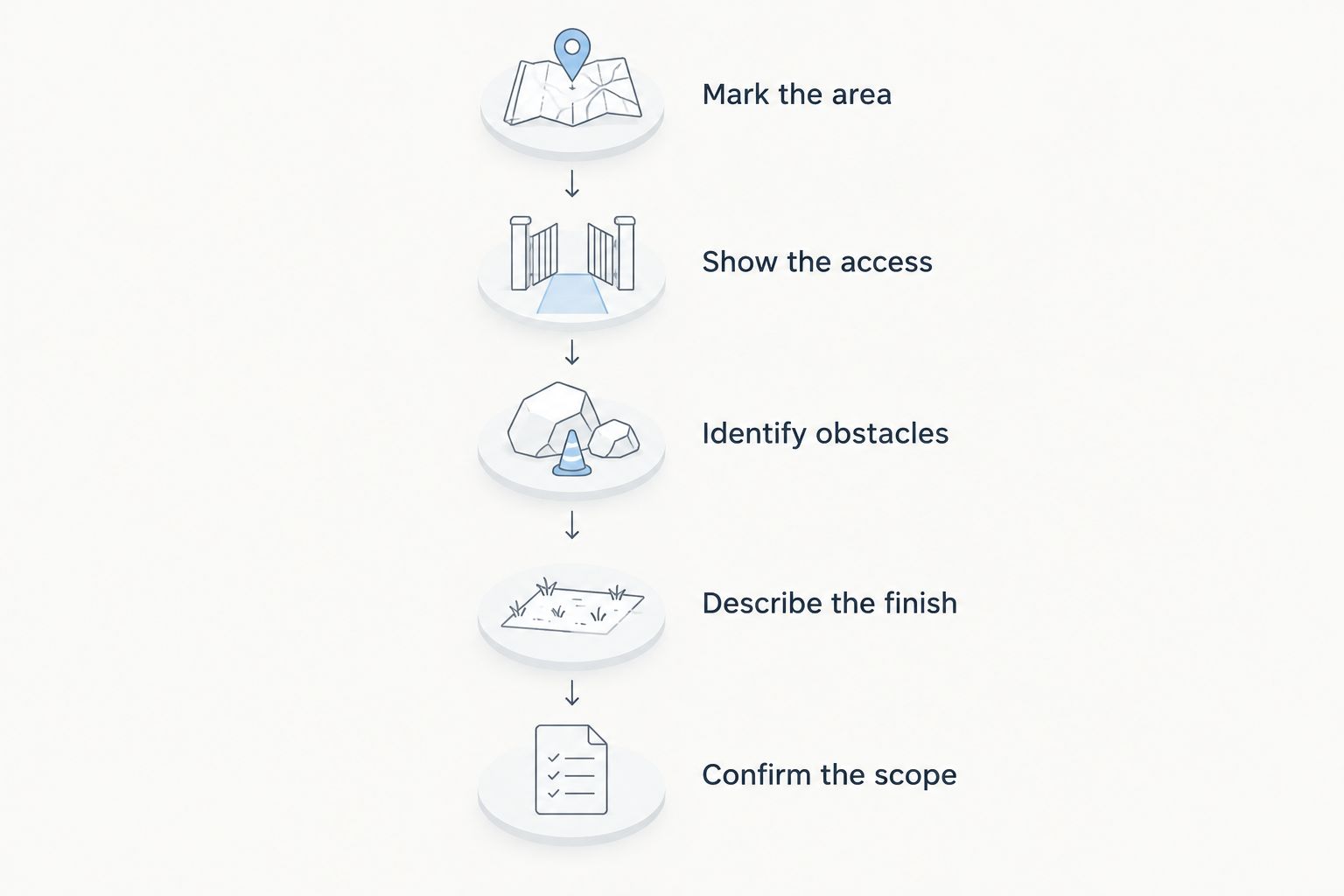
- Mark the area. Provide a map showing the proposed treatment boundary, entry route, and sections to leave untouched. Distinguish your approximate work sketch from a verified property boundary.
- Show the access. Photograph the entrance, gate, driveway, and route to the vegetation. Include turns and narrow passages rather than sending only close-ups of brush.
- Identify obstacles. Report known fencing, buried debris, drainage features, utilities, and other restrictions. Do not enter unstable vegetation or approach damaged trees to obtain photographs.
- Describe the finish. Explain what you want to do afterward and what material you expect to remain. Ask whether separate work is needed to reach that result.
- Confirm the scope. Request a written proposal that matches the area, exclusions, and finish discussed during the assessment. Resolve differences before authorizing work.
You do not need to prescribe equipment or decide how the contractor should perform the work. Your task is to explain the outcome, disclose known restrictions, and make sure the proposal addresses both.
What should a written forestry mulching quote include?
A written proposal should let you identify the assignment without reconstructing a conversation. Attach the agreed map or photographs when they are needed to explain a boundary or exclusion.
Look for clear answers to these questions:
- Which areas will receive treatment, and which will remain untouched?
- Which trees and other features must be protected?
- What vegetation will the proposed method handle?
- Will processed material remain on the ground?
- Is any hauling included, and what material does it cover?
- Are stump work, separate tree removal, or grading included?
- What conditions trigger a scope review?
- How must you approve additional work?
Do not treat an unanswered item as an included service. Ask the contractor to clarify it in the proposal. This matters especially when the next phase involves landscaping or construction, because those projects require their own acceptance standards.
For commercial properties, also identify who can authorize changes and who controls access. A property manager's instructions should match the owner's approved scope so the contractor does not receive conflicting directions.
Is forestry mulching the same as full land clearing?
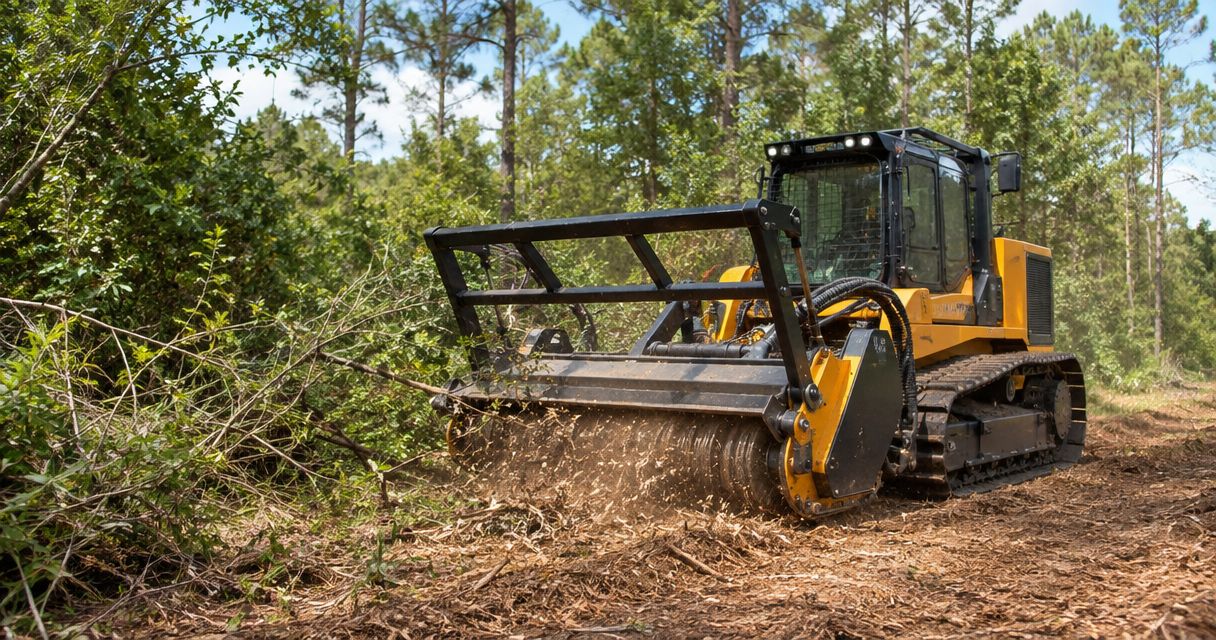
Forestry mulching is a vegetation-treatment method, not a promise of complete site preparation. It generally leaves processed material on the ground, and the treatment does not automatically remove roots or establish final grades.
Ask what full land clearing means in each proposal. The phrase alone does not tell you whether tree removal, stump work, hauling, or grading is included. Describe the condition you need instead of relying on a service label.
For a 2026 building project, discuss the required next steps with the professionals responsible for construction and site design. Do not assume that a visually open lot meets their requirements.
Can photographs replace a forestry mulching site visit?
Photographs support a quote request but do not reveal every site condition. They can show vegetation and visible access while leaving ground firmness, hidden debris, and other obstacles unresolved.
Send wide views and access photographs, then ask what still requires an on-site assessment. If the contractor provides a preliminary proposal, identify the conditions that must be confirmed before work begins.
Who should request a local assessment?
Homeowners, landowners, and commercial property managers should request an assessment when they need vegetation work tied to a defined property use. Explain whether the goal is access, selective clearing, or preparation for a separate project.
Pmmidlands is a local tree-services contact for property owners seeking a site-specific quote in its confirmed South Carolina service area. Confirm the proposed method and included work directly. The benefit of a local inquiry is discussing your actual assignment; the limitation is that a general service description does not establish your project's scope.
Request a site-specific quote
Describe the work area, access, retained trees, and finish you need.
FAQ
How do I get an accurate forestry mulching cost for my property?
Request a site-specific assessment with a marked treatment area and a clear description of the required finish. Ask the written proposal to identify access restrictions, exclusions, material handling, and separate work.
Does forestry mulching include stump removal?
Do not assume forestry mulching includes stump removal. Ask the contractor to state how remaining stumps and roots will be handled and whether separate work is included.
Will the contractor haul away the mulch?
Forestry mulching generally leaves processed material on the property. If you want material removed, request that work explicitly and confirm it appears in the written scope.
Is an area-based quote enough to compare contractors?
An area-based quote is not enough unless the treatment boundaries, vegetation, exclusions, and required finish also match. Compare the same assignment rather than acreage alone.
Can forestry mulching make my lot ready to build on?
Forestry mulching alone does not establish that a lot is ready for construction. Confirm the required tree removal, stump work, grading, and other preparation with the professionals responsible for the building project.
What should I tell Pmmidlands when requesting a quote?
Tell Pmmidlands your property location, proposed work area, access conditions, and intended result. Identify trees to retain and ask which parts of the assignment require a site assessment.
How should I compare forestry mulching proposals in 2026?
Compare forestry mulching proposals in 2026 by matching the work boundary, treatment requirements, material handling, and completion standard. Resolve exclusions and change-approval terms before selecting a contractor.
One last thing
Write down what must remain, not just what must disappear. Retained trees, screening vegetation, drainage features, and access routes belong in the scope alongside the brush you want treated.
Then photograph the agreed boundaries before work starts. Those images give you and the contractor a shared reference when checking whether the completed job matches the proposal.