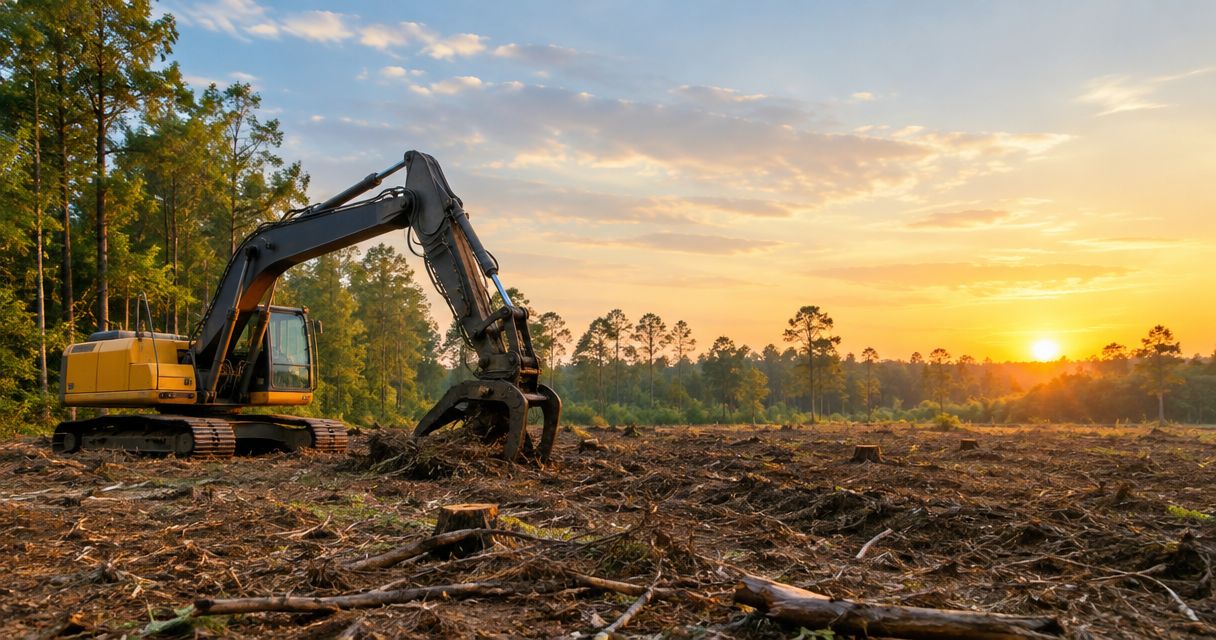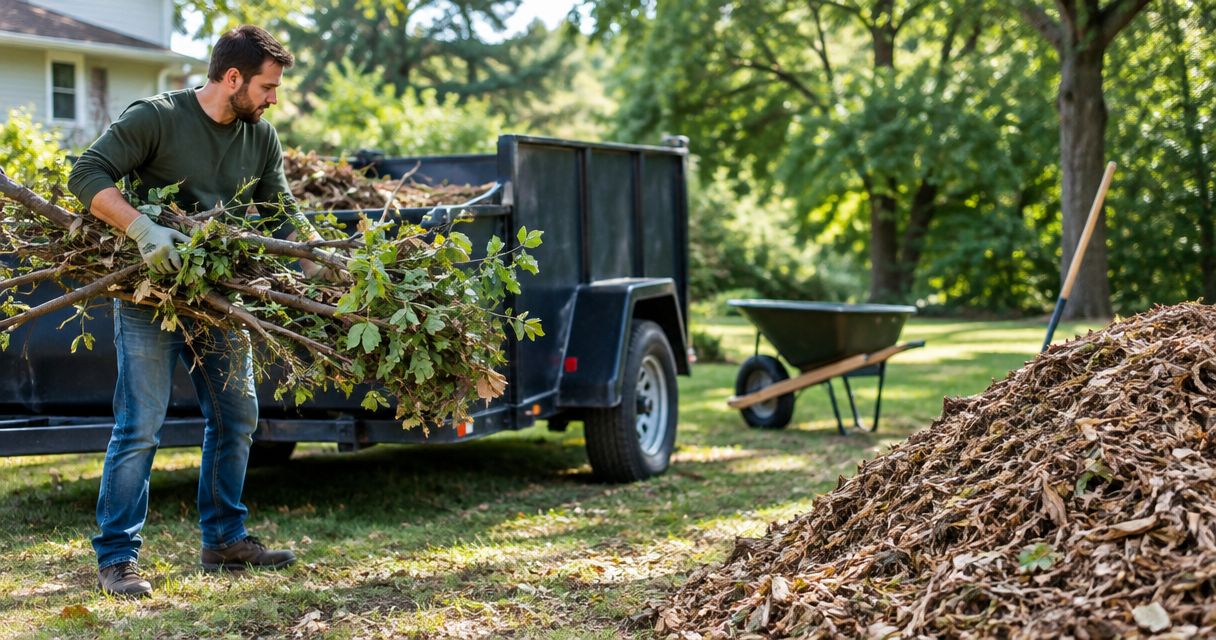
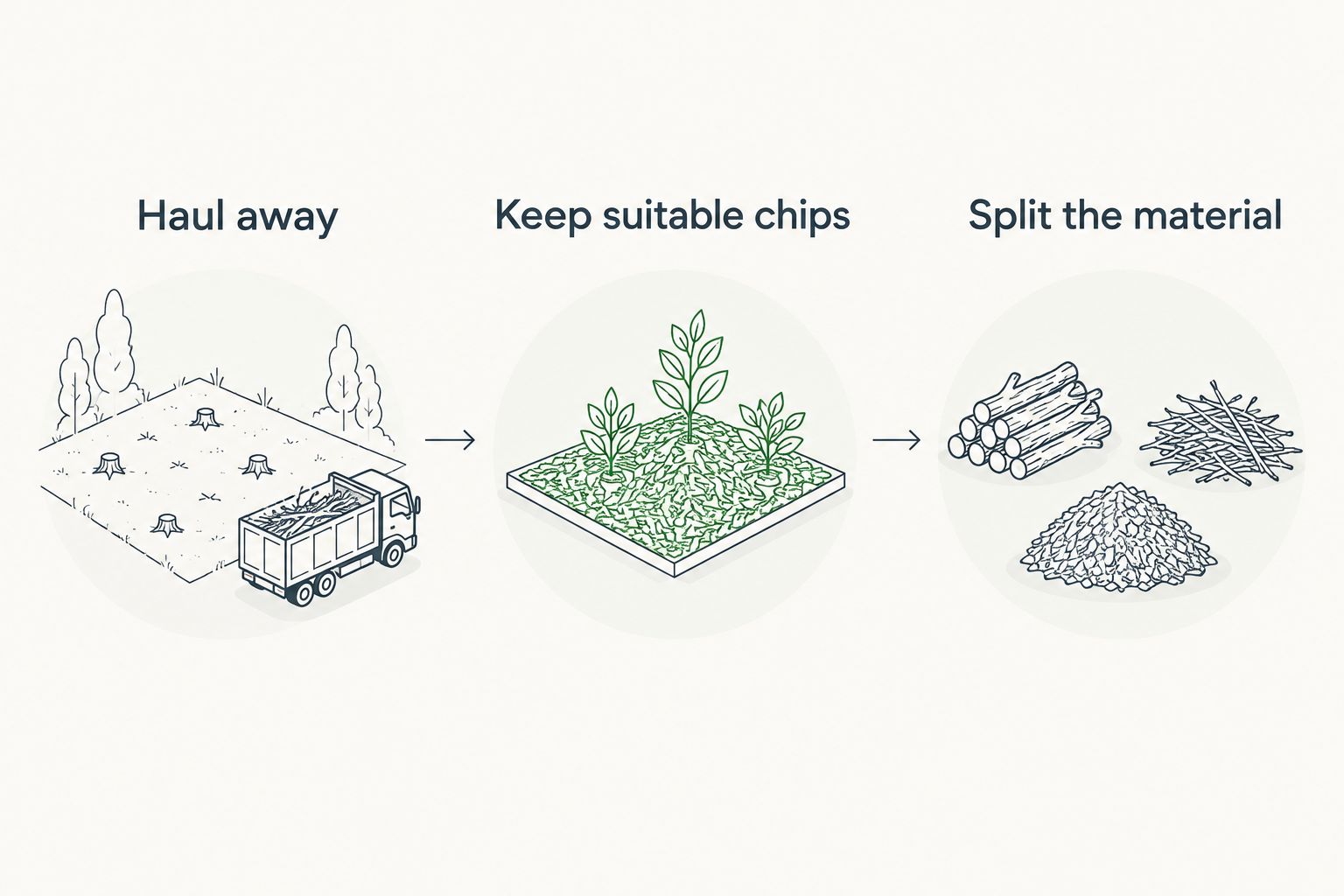
Choose tree debris removal when you need the material off the property; keep suitable chipped wood when you have planting beds that can use it. Keeping mulch still leaves you responsible for placement, spreading, and any surplus, so settle those details before accepting a quote.
- Tree debris removal suits properties without space or a practical use for chipped wood.
- Keep suitable wood chips for landscape beds, not as a substitute for removing logs, stumps, or contaminated debris.
- Pmmidlands serves tree-service customers in seven confirmed South Carolina counties; request a site-specific quote.
- Ask for separate written scopes for hauling, chipping, retained material, and final cleanup.
Should you haul away tree debris or keep it as mulch?
Haul away debris you cannot safely use or accommodate. Keep only the chipped material you have a defined place to spread. A mixed approach also works: request removal of logs and unwanted brush while asking whether suitable branches can be chipped and retained.
The decision is about the finished property, not just disposing of the tree. A cleared driveway, a usable lawn, and a mulched planting bed require different cleanup instructions.
| Option | Best for | Main benefit | Main drawback | Confirm before approval |
|---|---|---|---|---|
| Haul away | Properties needing a clear finished area | Removes unwanted material from the site | Leaves no retained wood chips for your beds | Which logs, branches, chips, and cleanup tasks are included |
| Keep suitable chips | Properties with established landscape beds | Reuses woody material as surface mulch | Requires placement, spreading, and control of excess depth | Whether chipping is feasible and where chips will go |
| Split the material | Properties needing both clear space and mulch | Matches each material to a purpose | Requires more detailed sorting and scope instructions | What stays, what leaves, and who handles each task |
Why this matters
A tree coming down and a property being ready to use are different outcomes. Logs, branches, stump grindings, and scattered twigs need explicit instructions; the phrase tree removal does not describe every cleanup task.
For a 2026 project, put the debris decision into the written scope before work starts. The guide to whether a tree removal quote includes stump and debris removal explains the scope questions to resolve alongside this choice.
Do not accept a chip pile simply because it sounds useful. Decide where it belongs and who will spread it first. Otherwise, retaining material replaces a disposal task with another unfinished job.
Haul away debris when you need a clear, usable area
Best for: driveways, parking areas, lawns, access routes, and properties without suitable mulch beds. Removal fits projects where leftover material would obstruct the intended use of the site.
For a homeowner, that means specifying whether the lawn needs to be cleared of branches or whether a separate wood pile can remain. For a commercial property manager, distinguish landscaped areas from parking, pedestrian routes, loading areas, and service access.
The benefit is straightforward: unwanted debris leaves the property. The limitation is that hauling does not describe every finishing task. Stump removal, filling a depression, grading, and repairing disturbed ground need their own scope decisions.
Before approving hauling, ask:
- Does the scope include trunks, limbs, brush, and loose chips?
- Will any cut wood remain, and where?
- What cleanup is included on lawns and hard surfaces?
- Are stumps or stump grindings part of this job?
- What finished condition should you expect in the work area?
Do not treat a clear-looking photograph as a substitute for written terms. The quote should describe what remains as clearly as what leaves.
Keep suitable chips when your landscape has a use for them
Best for: established tree and shrub beds with room for surface mulch. Wood chips help cover soil, conserve moisture, and suppress weeds when applied correctly. They are not soil, finished compost, or a replacement for every landscape material.
A useful general guideline is a total mulch depth of 2–4 inches, consistent with university extension guidance on landscape mulching. Count the mulch already present rather than adding a full new layer automatically.
Where a bed already has about 2 inches of mulch, adding another thick layer can exceed the intended depth. At 4 inches total depth, stop adding material rather than using the bed to absorb the rest of the pile.
Keep mulch away from trunks and plant crowns. Leave a visible gap; 6 inches from a tree trunk is a practical buffer, not a reason to pile material deeper elsewhere. Never mound chips against bark.
The main drawback of retained chips is the work that follows delivery or chipping. Confirm the drop location, spreading responsibility, and plan for leftovers. Fresh chips also vary in texture and appearance, so inspect the material before choosing it for a prominent bed.
For your 2026 landscape plan, identify the receiving beds before requesting retention. A specific destination is more useful than a general intention to use mulch eventually.
Split the material when one answer does not fit the whole job
Best for: properties with both usable planting beds and areas that must be cleared. Keeping a selected portion avoids treating every branch, log, and chip as the same material.
Ask whether the proposed work can separate suitable chipped wood from material that needs removal. Do not assume the contractor will chip on site or accommodate a particular split without confirming it.
Write the decision in plain terms:
- Keep: suitable chips in the agreed location.
- Remove: logs, unwanted brush, and other specified debris.
- Separate: questionable material pending assessment.
- Finish: the agreed cleanup of the remaining work area.
The benefit is control over the outcome. The drawback is a more detailed scope: vague instructions such as leave some mulch do not establish the amount, location, or handling responsibility.
If you cannot identify a suitable place for retained chips, choose removal rather than leaving that decision until the work area is full.
Why the right tree debris removal plan varies
Your preferred outcome must fit the actual property and material. These factors belong in a site assessment, not in a blanket promise about price or completion time.
- Material condition: Clean woody material is different from debris mixed with litter, construction waste, or other contaminants. Keep questionable material out of landscape beds until assessed.
- Tree health: Suspected pests or disease need identification before you decide to reuse or transport affected wood. Chipping is not a universal treatment for every tree-health problem.
- Usable bed space: Existing mulch depth and the area available for spreading determine whether retained chips serve a purpose.
- Site access: Gates, slopes, narrow passages, overhead obstacles, and nearby structures affect how material can be handled.
- Final property use: A future driveway, a planting bed, and an active parking area require different finished conditions.
- Handling responsibility: Someone must place, spread, or remove retained material. Name that responsibility before work begins.
For Pmmidlands tree services, request an assessment within the confirmed service area: Richland, Lexington, Newberry, Orangeburg, Sumter, Kershaw, and Fairfield counties in South Carolina. Describe the debris and intended finished condition rather than requesting a general cleanup without boundaries.
How do you prepare for a site-specific quote?
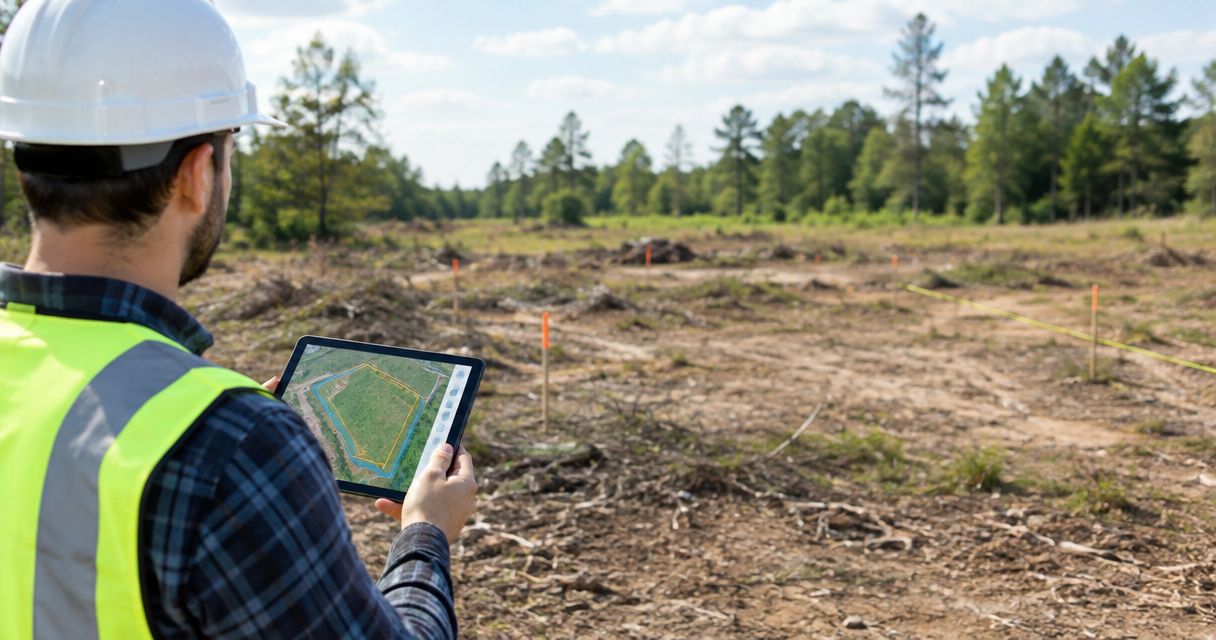
Describe what should remain, what should leave, and how you need to use the space afterward. Photos help explain the request, but they do not replace an assessment of access, material condition, and nearby hazards.
Use this sequence for your 2026 quote request:
- Show the material. Photograph the overall work area and the separate piles, standing trees, or fallen sections involved. Stay clear of unstable trees and suspended limbs.
- Show the access. Include gates, driveways, tight corners, slopes, and obstacles along the proposed route. Do not move hazardous material to improve a photograph.
- Mark what stays. Identify trees, beds, fences, and other features you want protected. Explain whether any cut wood is intentionally being retained.
- Choose a destination. If you want chips, identify the proposed placement area and the beds that will receive them. Ask whether that arrangement is feasible.
- Define completion. State whether you need open access, cleared hard surfaces, removed brush, or another specific condition. Ask for exclusions in writing.
Pmmidlands is a tree-service option for property owners in its seven confirmed South Carolina service counties. Request a site-specific quote that addresses both the tree work and the debris decision. Do not assume chipping, hauling, spreading, or stump work is included unless the written scope confirms it.
Request a site-specific tree-service quote
Describe your debris, access, and whether you want suitable chips retained or material removed.
Can you use fresh tree chips around existing plants?
Fresh wood chips are suitable as surface mulch around many established trees and shrubs when applied correctly. Keep them off trunks and crowns, and check the existing mulch layer before adding more.
Do not mix fresh woody chips into planting soil as if they were finished compost. Decomposing wood incorporated into soil can temporarily reduce nitrogen available to plants; using chips on the surface avoids treating them as a soil amendment.
If plants are declining or the source tree showed disease symptoms, ask for identification before spreading the material. The correct decision depends on the problem, not simply on whether the debris can be chipped.
Does keeping mulch eliminate the cleanup job?
Keeping mulch changes the cleanup job; it does not eliminate it. Logs, scattered branches, excess chips, and stump material still need decisions, even when some woody debris stays on site.
A pile beside a driveway is not a finished mulched bed. Agree on whether the job ends with chips placed in a pile or spread in the designated area, and keep access routes clear.
What should you do with storm-damaged debris?
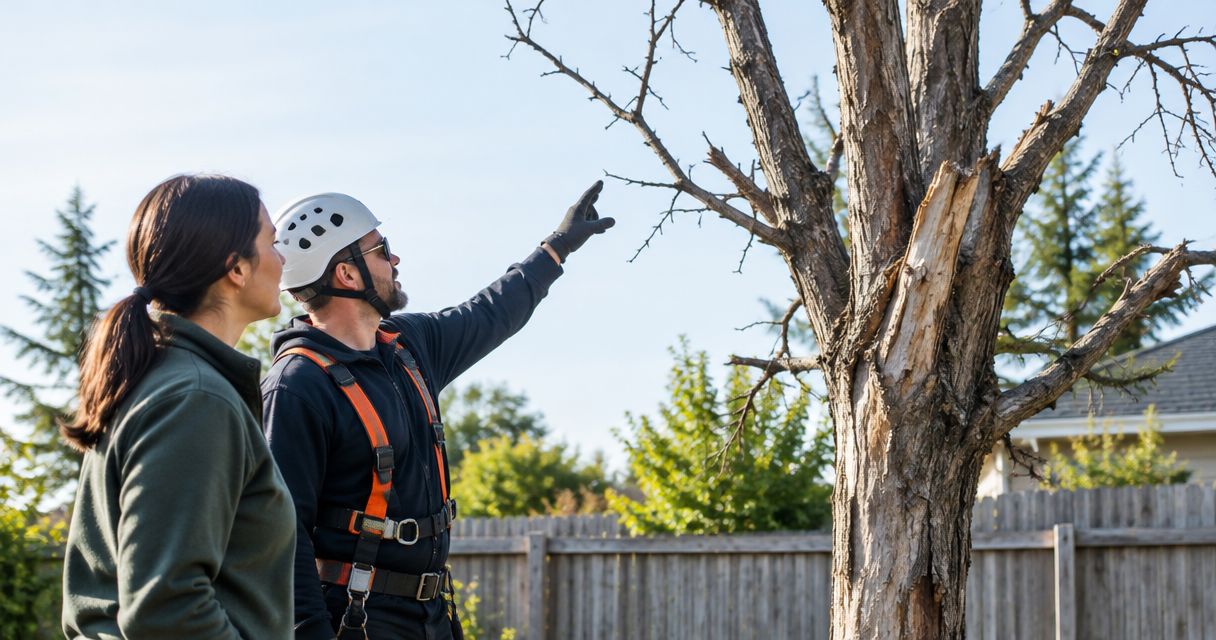
Assess hazards before deciding what to keep as mulch. Stay away from downed wires, trees touching wires, hanging limbs, and unstable tree sections; contact the utility or emergency services when electrical danger is present.
Storm cleanup can involve mixed material and damaged trees that are not safe to approach. Request a site assessment rather than dragging branches apart to sort them yourself.
FAQ
Should I haul away tree debris or keep it as mulch?
Haul away tree debris when you need a clear area or have no suitable place to use chips. Keep suitable chipped wood only when you have identified planting beds, a placement location, and someone responsible for spreading it.
Is keeping tree chips always better than tree debris removal?
Keeping tree chips is not always better than tree debris removal. Excess material, unsuitable placement, contamination, or unresolved tree-health concerns are reasons to assess removal instead.
How deep should wood-chip mulch be around trees?
A general landscape guideline is 2–4 inches of total mulch depth, including the layer already present. Keep chips away from the trunk and avoid mulch piled against bark.
Can I put fresh tree chips into my garden soil?
Do not treat fresh tree chips as finished compost or mix them into planting soil as a routine amendment. Fresh woody material is better suited to surface mulching around appropriate established plantings.
Does a tree removal quote include hauling away all the debris?
A tree removal quote includes only the work described in its scope. Ask specifically about logs, branches, chips, stumps, stump grindings, and final cleanup before approving it.
Can I keep some chips and have the rest removed?
Request a split scope if you want some suitable chips retained and other material removed. Confirm feasibility, placement, and handling responsibilities during the site assessment.
What should I send when requesting tree debris removal in 2026?
Send safe photos of the debris, access route, nearby obstacles, and proposed chip placement area. Explain what should stay, what should leave, and the finished condition you need.
One last thing
Decide where the chips would go before deciding to keep them. Walk the receiving beds, check the existing mulch, and identify who will spread the new material. If those answers are missing, you have not yet made a reuse plan.
For a 2026 project with Pmmidlands, make the retained-material decision part of the quote request rather than an instruction added during cleanup. A written destination and a written removal scope prevent two different interpretations of a finished job.