Tree removal cost in 2026 depends on the tree, the work area, and what the removal includes; get a site-specific quote before setting your budget. Stump work, debris hauling, and ground restoration need separate clarification because cutting down the tree does not define the finished job. Compare written scopes, not just totals.
- Tree removal cost needs a site-specific quote covering access, tree condition, nearby obstacles, and cleanup.
- Pmmidlands is a tree services contact for property owners in its confirmed South Carolina service area.
- Ask whether stump work, debris hauling, and ground restoration are included before comparing quotes.
- Describe the finished result you need, not just the tree you want removed.
Why this matters
A tree removal quote is useful only when you know what it buys. A cleared canopy, a remaining stump, and a yard ready for landscaping are different outcomes. Treating them as the same job makes quote comparisons misleading.
For projects in Richland, Lexington, Newberry, Orangeburg, Sumter, Kershaw, or Fairfield County, contact Pmmidlands to discuss your tree services needs. Describe the property and requested work, then ask what requires an on-site assessment.
How much does tree removal cost in 2026?
Use a written, site-specific quote as your budget figure—not a price attached to tree height alone. The assessment needs to establish the tree's condition, available working space, nearby structures, access route, and cleanup requirements.
Ask for the following breakdown. These are scope categories to clarify, not a statement that every contractor includes them.
| Scope item | What the quote should explain | What remains unresolved without it |
|---|---|---|
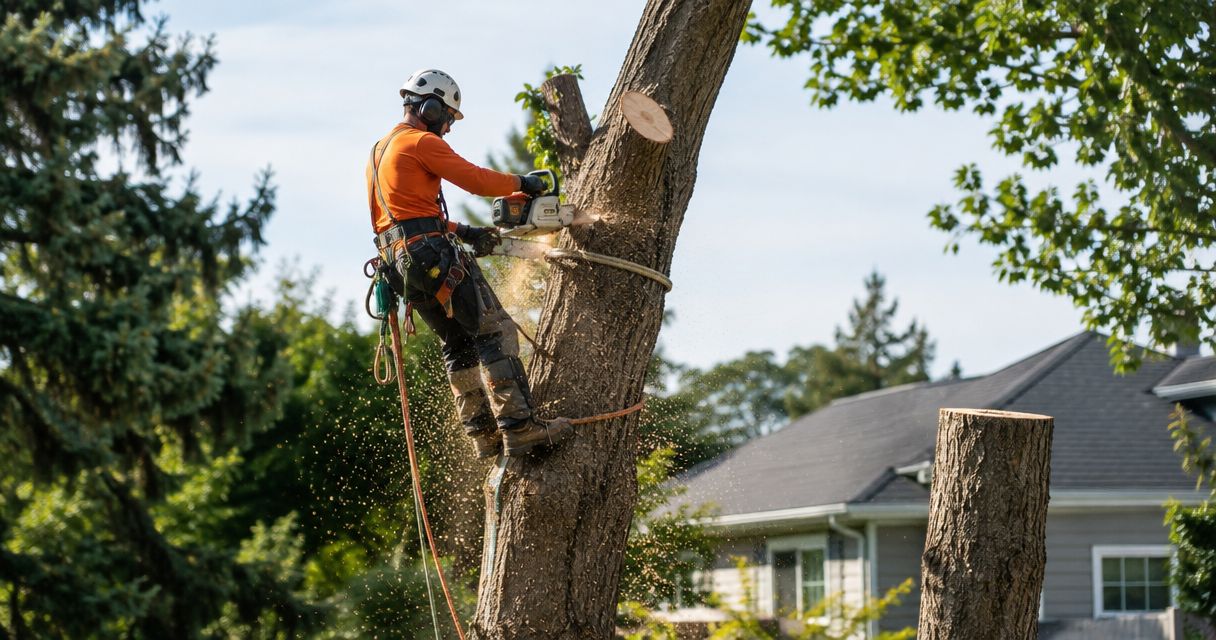
| Tree removal | Which tree is being removed and what work is included | Whether the quote covers the intended tree and full removal task |
| Branches and trunk | Whether material leaves the property or stays in an agreed location | Whether you must arrange additional handling |
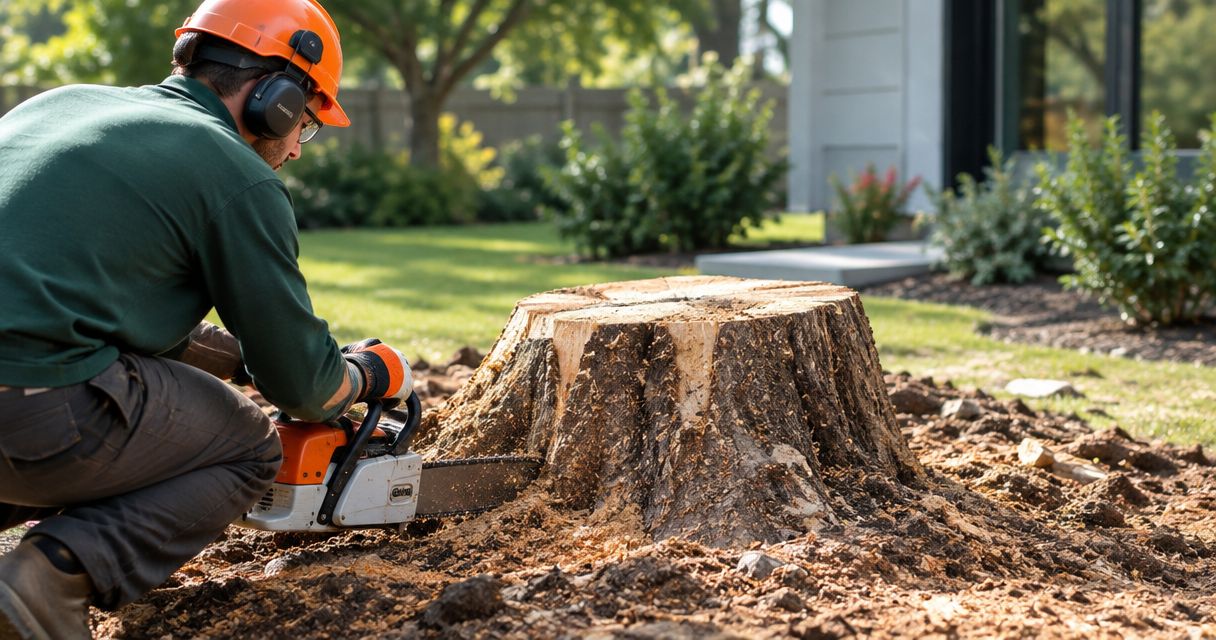
| Stump work | Whether the stump remains or receives separate treatment | Whether the area suits your next project |
| Access and protection | The planned entry route and protection of nearby features | How work affects fences, lawns, driveways, or landscaping |
| Final cleanup | What the contractor removes and what remains | What work you must complete afterward |
| Ground restoration | Whether filling, grading, or planting is included | Whether the ground is ready for its intended use |
Keep the accepted scope with your project records. If you change the requested outcome, ask for a written revision before the additional work begins.
Why tree removal cost varies
The work area matters as much as the tree itself. Give each contractor the same information about these factors so the quotes describe the same project:
- Tree size and shape: Identify the tree and show its trunk, canopy, and relationship to surrounding features. Do not climb or enter an unsafe area to measure it.
- Tree condition: Report visible dead branches, splits, storm damage, or changes in lean. Let the person assessing the site determine how those conditions affect the work.
- Nearby obstacles: Show houses, sheds, fences, parking areas, overhead lines, and trees you want retained. Explain which areas must remain accessible.
- Access constraints: Describe gates, narrow passages, slopes, and the route from the tree to the collection area. Photographs of the tree alone leave these details out.
- Material handling: State whether you want branches, trunk sections, and other debris removed or retained. Specify where retained material should go.
- Required end condition: Explain whether the area will remain lawn, become a planting bed, or support another project. Stump and ground requirements follow from that intended use.
These details belong in your 2026 quote request before you compare contractors. A clear description does not replace an assessment, but it gives the assessment a defined purpose.
Which removal scope fits your property?
Choose the outcome before asking contractors to price it. The following comparison separates common scope choices without assuming that any particular service package is offered.
| Requested scope | Best for | Benefit | Limitation to resolve |
|---|---|---|---|
| Remove tree, retain wood | Owners with a defined use and storage location for the material | Keeps agreed material on the property | You remain responsible for its later handling |
| Remove tree and haul debris | Owners who do not want branches and trunk sections left behind | Sets a clear debris-removal expectation | Does not establish whether stump work is included |
| Remove tree and address stump | Owners planning work in the same location | Brings the stump into the project discussion | Does not automatically include filling, grading, or planting |
| Coordinate removal with a wider project | Owners preparing for landscaping, access changes, or construction | Connects removal decisions to the next stage | Requires clear boundaries between contractors' responsibilities |
Tree removal with wood retained
Best for owners who already know where the retained wood will go. Mark the storage area and specify which material you want kept. Avoid a vague instruction to leave the wood somewhere in the yard.
The benefit is control over material you intend to use. The drawback is the handling that remains your responsibility; a pile in the wrong place can obstruct the next stage of work.
Tree removal with debris hauling
Best for owners who want branches and trunk sections taken away. Ask what the contractor means by debris removal and final cleanup. Include the collection location and any restrictions on access.
Hauling addresses material left by removal, not every aspect of site restoration. Confirm the stump, loose chips, surface damage, and any remaining cleanup separately.
Tree removal with stump work
Best for owners who need to reuse the tree's location. Describe that future use during the assessment rather than adding it after removal. A planting area and a planned driveway need different follow-up discussions.
Including stump work makes the requested outcome clearer. It still leaves questions about roots, leftover material, filling, and the final ground surface; have those answers written into the scope.
How do you prepare a useful quote request?
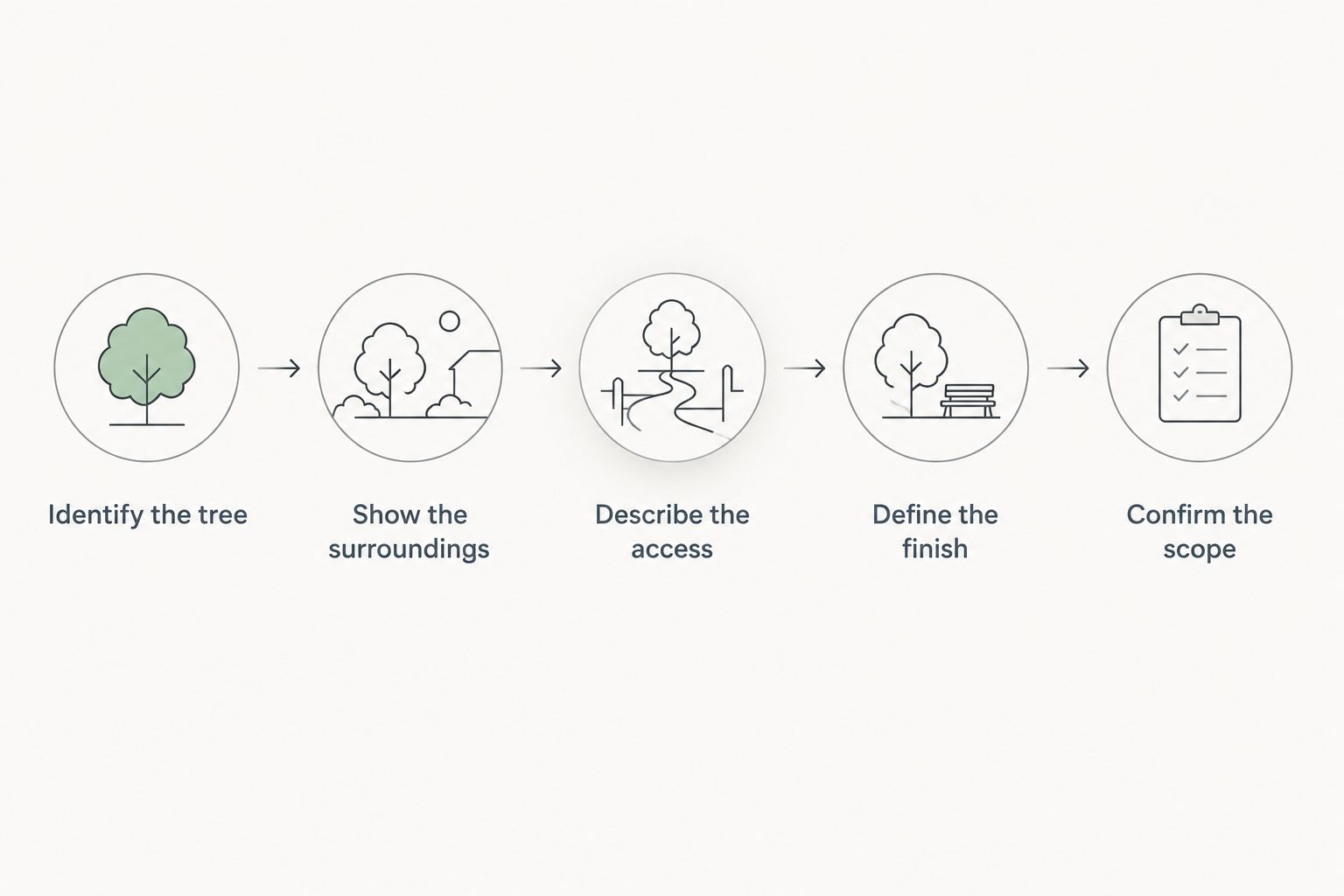
For a 2026 tree removal project, organize the request around the property, the tree, access, and the finished result. Follow these steps before asking for a firm written scope.
- Identify the tree. Describe its position using fixed property features. If several trees are nearby, use labeled photographs or a simple sketch so everyone discusses the same tree.
- Show the surroundings. Include the house, fence, driveway, overhead lines, and other features relevant to removal. Take photographs only from a safe location.
- Describe the access. Explain how someone reaches the tree from the road or driveway. Mention gates, steps, slopes, shared entrances, and areas that cannot be used.
- Define the finish. State what should happen to the trunk, branches, stump, and ground. Explain any landscaping or construction planned afterward.
- Confirm the scope. Ask which details require a site visit, then request written inclusions and exclusions. Resolve differences before accepting a quote.
Prepare 3 photo views for the initial conversation: the whole tree, its surroundings, and the access route. These are a practical starting set, not a substitute for inspection. Add detail photographs only when you can take them safely.
If you want help organizing that request, use the guide to requesting a tree removal quote using photos. Keep the same photographs and description for each contractor you contact.
How do you compare tree removal quotes fairly?
Put 2 written quotes beside each other and compare the scope before the total. If you seek more quotes, apply the same check to each. A proposal that leaves the stump and debris is not equivalent to one that addresses both.
Use 1 written scope as the reference for your 2026 comparison. It should identify the tree, describe the material handling, and state the expected condition of the work area when the job ends.
Check these points before accepting:
- Are all quotes for the same tree or clearly identified group of trees?
- Do they make the same assumptions about entry and working space?
- Do they specify which material stays and which material leaves?
- Is stump work included, excluded, or awaiting assessment?
- Is final cleanup described in terms you understand?
- Is there a written process for agreeing to additional work?
Ask contractors to explain differences rather than assuming that a shorter quote includes everything discussed. An unanswered scope question is a reason to seek clarification, not a reason to fill in the answer yourself.
When does the site need special attention?
A tree beside a house, overhead line, or shared boundary needs those conditions raised at the start. Do not treat them as minor details to mention after accepting the work. Photograph from a safe location and explain what you know without attempting your own structural assessment.
For a commercial property, identify tenant entrances, delivery routes, parking areas, and any areas that must stay open. Ask how the proposed work area interacts with those requirements. A site assessment should address access and coordination, not just identify the tree.
For a shared boundary, confirm ownership and permission before authorizing removal. If overhead electrical lines are involved, contact the utility for direction and keep away from the tree and lines. Do not attempt cutting or debris handling near electrical hazards.
For an immediate threat to people, keep everyone away and contact emergency services as appropriate. A quote request is not an emergency response plan.
How do you request a local site-specific quote?
Pmmidlands is a tree services contact for homeowners and property managers in its confirmed South Carolina service area. For a 2026 request, provide the property location, tree photographs, access details, and the outcome you want. Ask what needs an on-site assessment before a written quote can be confirmed.
The confirmed service area covers Richland, Lexington, Newberry, Orangeburg, Sumter, Kershaw, and Fairfield counties. A county name establishes location; it does not establish the work required at your property.
Discuss your tree removal project
Share the property location, access details, and cleanup requirements for a site-specific quote discussion.
Does tree removal include stump removal?
Tree removal does not establish whether stump removal is included. Ask for the stump work to be named explicitly, together with any related cleanup or ground work. If you plan to reuse the location, explain that intended use before accepting the scope.
Can photos replace a site assessment?
Photos support an initial discussion but do not establish every site condition. Use them to show the tree, nearby obstacles, and access route. Ask the contractor which remaining questions require an on-site assessment.
Is a fallen tree automatically simpler to remove?
A fallen tree still needs an assessment of its position, damage, and surroundings. Explain whether it rests against a structure, blocks access, or involves utility lines. Do not assume that being on the ground makes it safe to handle.
FAQ
How much should I budget for tree removal in 2026?
Base your tree removal budget on a written, site-specific quote. Confirm the tree, access, debris handling, stump work, and final cleanup before treating the total as your project budget.
What information should I send when requesting a tree removal quote?
Send the property location, photographs of the tree and surroundings, access details, and your requested finished result. Ask which conditions need an on-site assessment.
Does tree removal include hauling away the wood?
Wood hauling needs explicit confirmation in the quote. State which branches and trunk sections should leave the property and where any retained material should go.
Does a tree removal quote include stump work?
Stump work is included only when the agreed scope says so. Confirm what happens to the stump, leftover material, and ground surface.
Can I compare quotes using only the total?
Compare the scope before comparing totals. Different debris, stump, access, or cleanup assumptions mean the quotes describe different jobs.
What should I do if the tree is near power lines?
Keep away and contact the utility for direction before arranging work near electrical lines. Do not cut the tree or handle nearby debris yourself.
Where can I discuss tree services with Pmmidlands?
Pmmidlands serves Richland, Lexington, Newberry, Orangeburg, Sumter, Kershaw, and Fairfield counties in South Carolina. Share your property location and requested work to discuss a site-specific assessment.
One last thing
Describe what you need to do with the space after the tree is gone. That single instruction connects removal, stump decisions, debris handling, and ground preparation. It gives the quote a finish line you can inspect instead of an assumption you discover afterward.