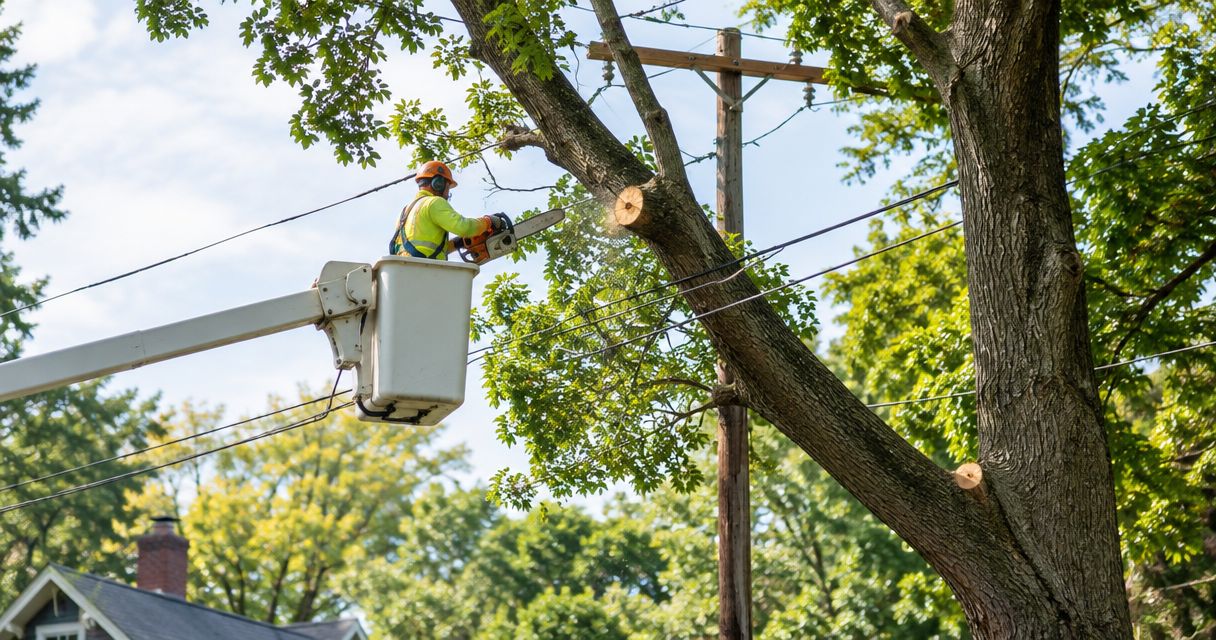
Coordinate large tree removal near power lines by contacting the electric utility before scheduling cutting, then arranging a site assessment that accounts for the utility’s instructions. The utility must address electrical safety and any required service coordination; a tree-removal quote alone does not resolve those issues. If a tree is touching a line, a wire is down, or you see arcing, stay away and report the emergency immediately.
- Large tree removal near power lines starts with utility coordination, not a cutting date.
- Treat overhead wires as energized; never move branches or equipment into contact with them.
- Pmmidlands is a local tree-services option for property owners seeking a site-specific quote.
- Confirm electrical arrangements, removal scope, access, stump work, and debris handling before work starts.
How do you coordinate large tree removal near power lines?
Contact the utility, arrange a site assessment, and confirm the electrical arrangements before authorizing tree work. For a local tree-services assessment, Pmmidlands serves property owners in Richland, Lexington, Newberry, Orangeburg, Sumter, Kershaw, and Fairfield counties in South Carolina. Ask specifically whether the proposed job involves utility coordination; do not assume a general removal quote includes it.
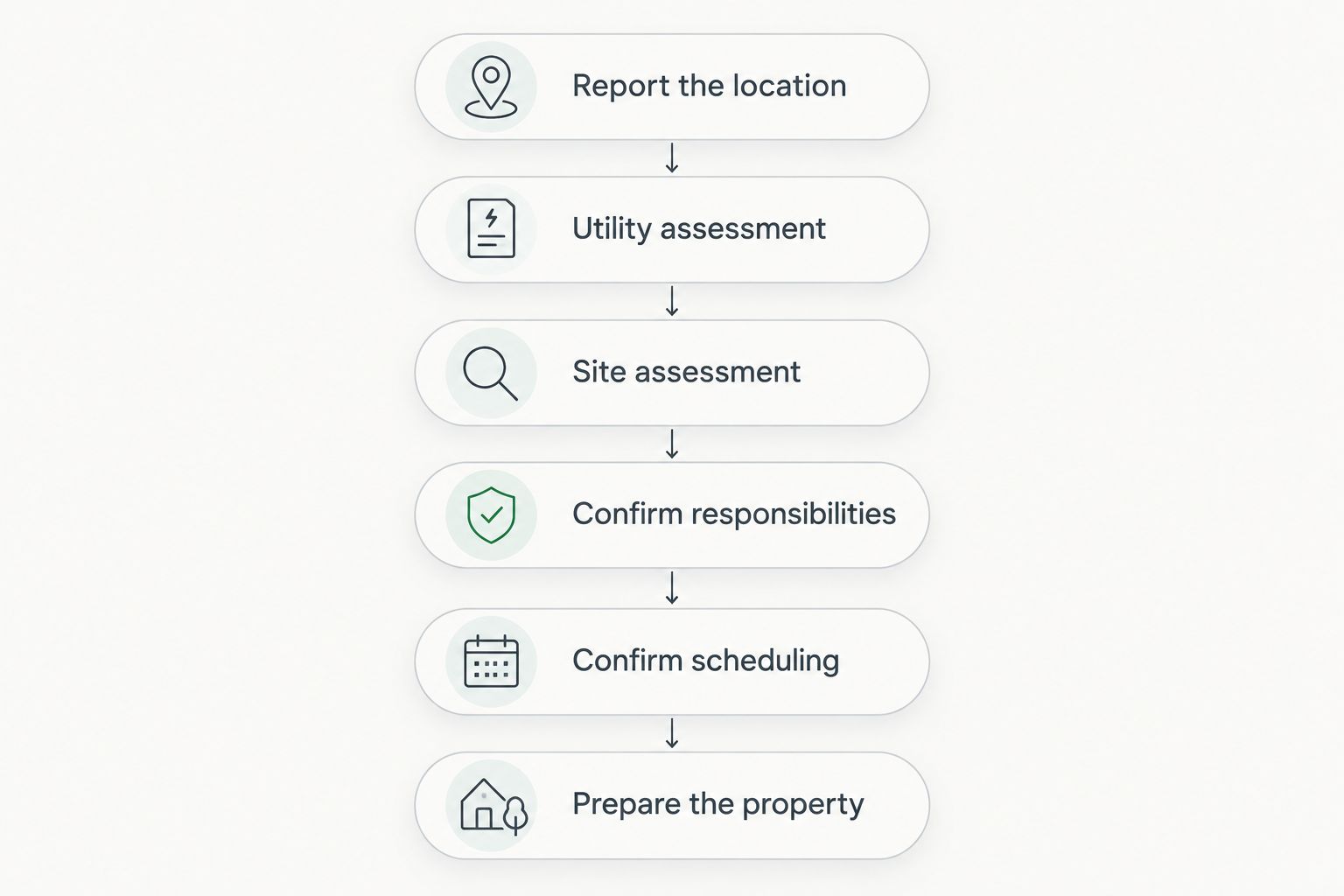
1. Report the location and immediate conditions
Contact the electric utility through its official customer-service or emergency channel. Describe the property address, the tree’s location, and whether branches appear to touch wires. State whether the tree is standing, leaning, broken, or already down.
Make observations from a safe location. Do not approach a damaged tree to identify the wire, photograph a contact point, or read a pole label. If there is a downed line, fire, arcing, or immediate danger to people, call 911 and the utility; keep others away without entering the hazardous area.
2. Ask what the utility must assess
Ask the utility to determine which electrical facilities are involved and what must happen before removal. A line serving the building and lines running along the street can require different coordination. Do not identify electrical risk by wire height, appearance, or insulation.
Request a case or reference number and record the instructions you receive. Ask who will communicate the utility’s requirements to the tree contractor and whether a utility visit is needed before the contractor can finalize the work plan.
3. Arrange a tree-removal site assessment
Tell the tree contractor about the overhead lines before the visit. Share the utility reference number and any instructions, without interpreting those instructions as permission to begin work.
The assessment should address tree condition, nearby buildings, access, and where removed material can be handled without approaching electrical facilities. Photos help explain the setting, but they do not replace an on-site assessment of electrical exposure or a damaged tree.
4. Confirm who handles each part
Ask who is responsible for utility communication, any required electrical arrangements, tree removal, stump work, and cleanup. Get those responsibilities recorded in the quote or associated work documents.
A utility response does not automatically include complete tree removal or debris hauling. Likewise, a contractor’s removal proposal does not establish that the utility has approved the electrical arrangements. Confirm both sides separately.
5. Set the work date after dependencies are confirmed
For a 2026 removal, use the utility’s current instructions rather than arrangements remembered from an earlier project. Confirm whether the utility and tree crew must attend together, whether a service interruption is required, and who confirms that the agreed conditions are in place.
Do not treat a requested appointment as a confirmed appointment. Ask what happens if utility arrangements change, weather affects the job, or the contractor discovers conditions that require another assessment.
6. Prepare the property without approaching the hazard
Once the contractor explains the safe preparation area, arrange access and notify affected occupants. Keep children, pets, tenants, and visitors away from the designated work area.
Move vehicles or outdoor belongings only where doing so does not bring you near damaged trees or electrical facilities. Never trim branches, pull on a tree, or reposition a fallen limb to make room for the crew.
Why this matters
A tree does not have to be resting on a wire for the removal to involve electrical risk. Branch movement, falling sections, and equipment can bring the work into contact with overhead facilities. The relevant question is not simply whether the trunk stands clear of the line.
Electrical coordination is a separate requirement from agreeing to tree removal. Property owners should not decide that a line is safe, that it has been disconnected, or that ordinary tree work can proceed nearby. Leave those determinations to the utility and appropriately qualified professionals.
For commercial properties, coordination also includes people who are not involved in hiring the contractor. A tenant, delivery driver, or grounds worker needs clear access instructions, not just a notice that tree work is scheduled.
Who handles utility coordination and tree removal?
Separate the electrical decision from the removal scope. This comparison identifies the purpose and limits of each role; it does not assign ownership of a particular tree or wire.
| Role | Best for | What to confirm | Limit to remember |
|---|---|---|---|
| Electric utility | Assessing electrical facilities and required utility arrangements | Required assessment, electrical instructions, attendance, and service coordination | Utility involvement does not establish that full removal, stump work, or hauling is included |
| Tree-removal contractor | Assessing the tree and defining the removal work | Suitability for the electrical conditions, work boundaries, access, and cleanup | A tree-removal appointment is not confirmation of electrical safety |
| Property owner or manager | Connecting the parties and preparing the property | Contacts, permissions, occupant notices, and agreed responsibilities | The owner should not direct cutting methods or make electrical safety determinations |
Ask the utility whether it will perform any tree work or whether another qualified party must handle it. Ask the contractor what electrical conditions must be resolved before its crew starts. If the answers leave a gap, resolve it before scheduling.
Pmmidlands tree services can be the subject of your site-specific quote request, but do not assume that any provider’s general service description establishes qualifications for work near energized lines. Ask how the particular job will be assessed and coordinated.
Why large tree removal plans vary near power lines
The plan depends on the site, not just the size of the tree. These factors belong in the assessment:
- Electrical exposure: Branches above, beside, or entangled with wires create different conditions. The utility must assess the facilities involved.
- Tree condition: Broken limbs, decay, storm damage, and an unstable trunk affect how the contractor evaluates the job. Describe visible damage without approaching it.
- Nearby property: Roofs, fences, parked vehicles, and occupied areas affect the removal plan and the space that must remain clear.
- Site access: Gates, slopes, surfaces, and restricted entrances affect access and material handling. Report restrictions before the assessment.
- Utility arrangements: Required attendance or electrical work creates scheduling dependencies that must be confirmed separately.
- Final site condition: Leaving logs, hauling branches, grinding a stump, and restoring disturbed ground are different scopes. Specify the result you need.
For your 2026 quote, request an explanation of the site conditions behind the proposed work rather than comparing the removal description alone. Two proposals are not equivalent when one includes hauling and another leaves material on the property.
What should you include in a site-specific quote request?
Give the contractor enough information to arrange the right assessment, not instructions on how to cut the tree. A useful request identifies the property, the concern, and the desired outcome.
Include these details:
- Location: Property address, county, and the tree’s position relative to the building or street.
- Visible condition: Standing, leaning, broken, or fallen; describe observations without diagnosing structural safety.
- Overhead facilities: Wires visible near the tree and any known contact, as observed from a safe place.
- Utility contact: Reference number, current instructions, and any visit already arranged.
- Access restrictions: Gates, shared driveways, tenant parking, locked areas, and surfaces you need protected.
- Requested finish: Whether you want branches and logs removed, stump work assessed, and affected areas cleaned up.
For Pmmidlands tree services, identify which confirmed service-area county contains your property when requesting an assessment. State clearly that the job involves overhead lines so the electrical concern is not buried in a general removal request.
Photos should show context only when you can take them safely. The guide to requesting a tree-removal quote using photos is a useful next step for organizing your request; photographs still do not establish clearance or permission to work.
Request a site-specific tree assessment
Describe the tree, overhead lines, property access, and utility instructions when requesting your quote.
What should the written removal scope say?
The scope should distinguish electrical prerequisites from the tree work itself. Look for an understandable description of what will be removed, what will remain, and what must happen before the contractor begins.
For a 2026 project, confirm that the final work documents reflect current utility instructions rather than an initial assumption. Ask for clarification if the quote mentions utility coordination without identifying who handles it. A vague phrase does not tell you who makes the call or confirms the appointment.
Check these boundaries before accepting:
- Does removal include the entire identified tree or only specified damaged sections?
- Will branches, logs, and loose debris leave the property?
- Is the stump excluded, included, or subject to a separate assessment?
- Who communicates changes to the utility and property occupants?
- What happens if the required electrical conditions are not ready on the scheduled date?
If stump grinding or excavation is proposed, ask about underground utility locating before ground disturbance. In South Carolina, contact 811 before digging and follow the applicable locating process. Overhead-line coordination does not replace underground utility checks.
Can a tree company remove a tree before the utility visits?
A tree company should not begin work that depends on unresolved utility requirements. Whether a utility visit is necessary depends on the utility’s assessment and the electrical conditions, not the homeowner’s estimate of the distance.
Ask the contractor to explain the prerequisites for this particular job. Do not accept the absence of visible sparks or an intact-looking wire as evidence that work near it is safe.
Will the electric utility remove the whole tree?
Utility involvement does not guarantee whole-tree removal or cleanup. Ask what work, if any, the utility will perform and what remains for the property owner to arrange.
If only part of the tree will be addressed, obtain a separate scope for the remaining tree, stump, and debris. This prevents a utility appointment from being mistaken for a complete property-cleanup plan.
How do you manage tenants and access on removal day?
Give occupants instructions based on the contractor’s agreed access and exclusion plan. Identify affected entrances, parking areas, delivery routes, and any confirmed service interruption. Avoid announcing an outage as certain before the utility confirms it.
Use the confirmed 2026 work date in notices and update everyone if it changes. Assign one property contact who can communicate with the contractor and utility without entering the work area.
Keep emergency access in the discussion. If the removal affects a shared entrance or occupied commercial building, resolve access arrangements before the crew arrives rather than asking workers to improvise around normal traffic.
FAQ
Who should I call first for large tree removal near power lines?
Call the electric utility first to report the location and ask what electrical assessment or coordination is required. Then arrange a tree-removal site assessment and share the utility’s instructions.
What should I do if a tree is touching a power line?
Stay away from the tree and line, keep others away, and contact the utility’s emergency service. Call 911 if there is immediate danger, a downed line, fire, or arcing; do not touch the tree or attempt to move branches.
Can I trim a few branches before the tree company arrives?
Do not trim branches near power lines or move limbs that could contact them. Leave the tree undisturbed and ask the utility and contractor to assess the conditions.
Does turning off my main breaker make the outside wires safe?
Turning off your main breaker does not make utility supply lines safe. Do not treat a household electrical switch or breaker as a substitute for utility-controlled electrical arrangements.
Can I get a final tree-removal plan from photos?
Photos do not replace a site assessment for large tree removal near power lines. Use safely taken photos to describe the property, then confirm electrical requirements, access, and removal scope on site.
Does tree removal automatically include the stump and debris?
Tree removal does not automatically establish that stump work and debris hauling are included. Ask the quote to identify each task and state what will remain on the property.
What if the utility appointment changes after I book removal?
Notify the tree contractor immediately and reconfirm the prerequisites before work proceeds. Do not assume the original removal appointment can continue without the required electrical arrangements.
One last thing
A tree can be removed while the project remains unfinished. Electrical coordination, trunk removal, stump work, debris hauling, and access restoration have separate boundaries. Ask what the property will look like when the agreed work ends.
Before accepting a quote, request a plain-language description of what will remain: stump, logs, branches, disturbed ground, or restricted areas. That answer gives you a clearer basis for comparison than a proposal that says only tree removal. Keep it with the utility instructions and the confirmed schedule so every party works from the same expectations.