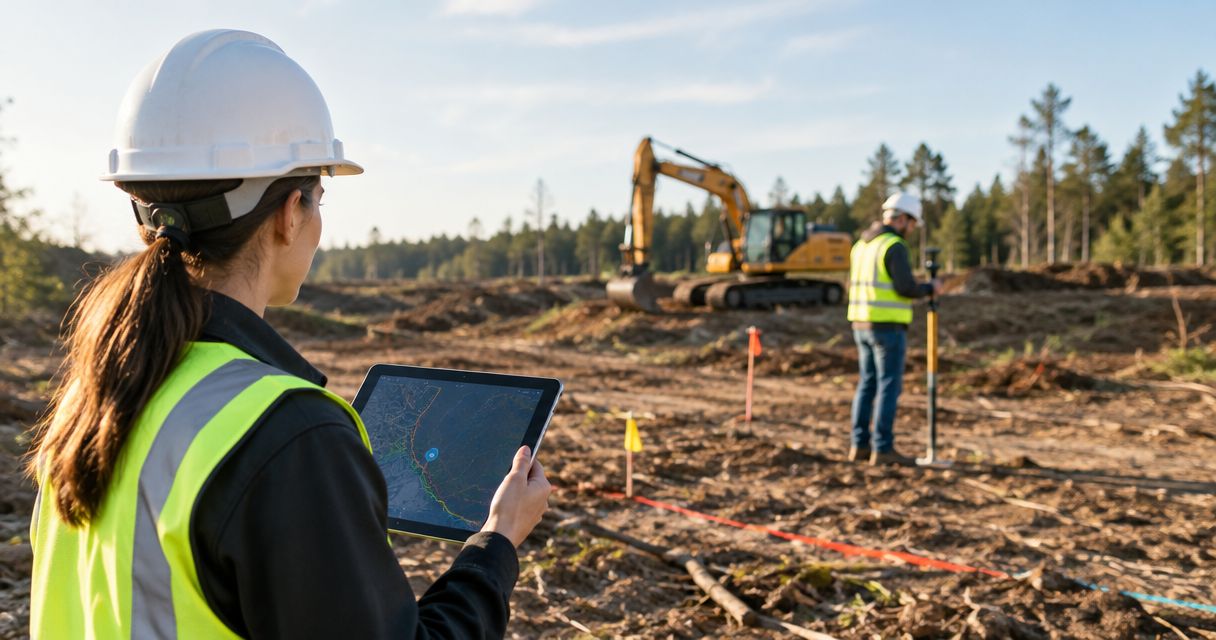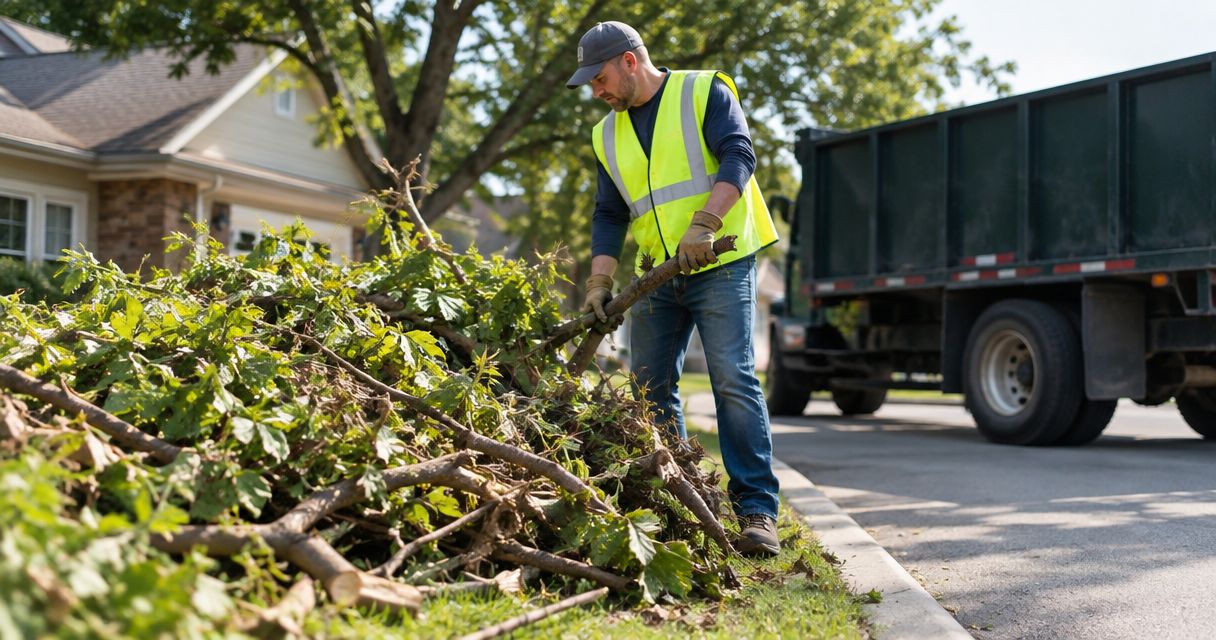
Instead of moving branches to the curb and hoping a truck takes them, coordinate tree debris removal with county bulk pickup by confirming eligibility, preparation rules, and collection timing before cutting begins. Put those answers into the tree-service scope so accepted material reaches the approved location and everything else has a separate removal plan.
- For tree debris removal county bulk pickup planning, confirm your address, debris eligibility, and placement instructions before work begins.
- Pmmidlands is a tree-service contact for property owners seeking a site-specific quote in its confirmed South Carolina service area.
- Ask whether contractor-generated branches, logs, and stumps qualify; do not assume residential collection covers them.
- Assign responsibility for rejected material in writing before the tree crew starts.
Why this matters
A tree-removal appointment and a public collection schedule are separate arrangements. Your tree contractor needs a clear disposal scope; your collection provider needs material that meets its rules. A pile prepared for one does not automatically satisfy the other.
For a 2026 project, confirm current instructions with the provider serving the property address. County boundaries alone do not establish who collects your waste, and a residential collection arrangement does not establish eligibility for a commercial property.
Pmmidlands serves tree-service customers in Richland, Lexington, Newberry, Orangeburg, Sumter, Kershaw, and Fairfield counties in South Carolina. If your property is within that area, request a site-specific quote that separates tree work, curbside preparation, and debris hauling rather than treating them as interchangeable tasks.
Before you start
- Have the property details ready. Gather the service address, property type, collection account information if applicable, and authorization to arrange work. For a managed property, identify who approves placement and vehicle access.
- Prepare a simple job record. Take 3 photos from safe positions: the debris or trees, the proposed staging area, and the collection vehicle's approach. Add notes about gates, overhead wires, parked vehicles, and nearby structures.
- Check the contractor-debris restriction first. Ask the collection provider whether material generated by a hired tree service qualifies. Get the answer before scheduling cutting or paying for curbside preparation.
Do not approach hanging limbs, unstable trees, or wires to gather information. Describe those hazards from a safe location and arrange the appropriate professional assessment instead.
Collection eligibility and service instructions
Confirm who handles the address
- Identify the actual collection provider for the property. Start with the waste-service information attached to your account or contact the relevant local solid-waste office.
- Give the complete service address and state whether the property is residential, rental, institutional, or commercial.
- Ask whether woody tree debris belongs in regular yard-waste collection, a separate bulk collection, an appointment-based service, or another disposal route.
- Record the department or provider contacted, the date, and any reference number supplied.
Expected result: You know which organization controls collection at your address and which service category applies to the project.
Verify the material, not just the pickup date
- Describe how the debris will be generated: homeowner pruning, hired tree removal, lot clearing, or storm damage. Do not use only the broad phrase yard waste.
- Ask separately about leafy branches, bare limbs, trunk sections, stumps, roots, and wood mixed with soil. Record each answer rather than assuming all tree material receives the same treatment.
- Request the current requirements for dimensions, weight, bundling, containers, pile size, and separation from other waste. Copy the provider's actual limits into your job record.
- Confirm whether you must request collection and whether the provider gives a scheduled date, a collection window, or another instruction.
For your 2026 work order, save the instructions that apply to the planned collection period. A past pickup at the same house is not confirmation for the next project.
Expected result: You have an accepted-material list, preparation requirements, and a confirmed method for arranging collection. Anything not expressly accepted stays outside the public-pickup plan.
Debris preparation and staging plan
Match the collection route to the material
Choose the disposal route before deciding how the crew should process the tree. Cutting everything into a convenient handling size does not establish that the resulting pieces qualify for public collection.
| Route | Best for | Advantage | Limitation to resolve |
|---|---|---|---|
| Public collection | Material the provider confirms is eligible at your address | Uses the property's applicable collection service | Material, placement, and scheduling rules control acceptance |
| Contractor hauling | Material excluded from public collection or included in an agreed removal scope | Assigns removal responsibility within the tree-work agreement | The quote must identify what is removed and what remains |
| Split disposal plan | Jobs with both accepted branches and excluded material | Separates material by its confirmed destination | Requires clear sorting and responsibility for each pile |
Use public collection only for confirmed eligible material. Use a contractor-hauling scope for excluded material, and choose a split plan only when the sorting instructions are clear enough to follow on site.
Establish where each pile belongs
- Ask the collection provider to identify the permitted staging location and required clearances. Describe the actual roadside conditions rather than guessing where its truck will stop.
- Walk through the proposed location with the tree-service representative. Identify overhead utilities, drainage features, driveways, pedestrian routes, and anything that would obstruct handling.
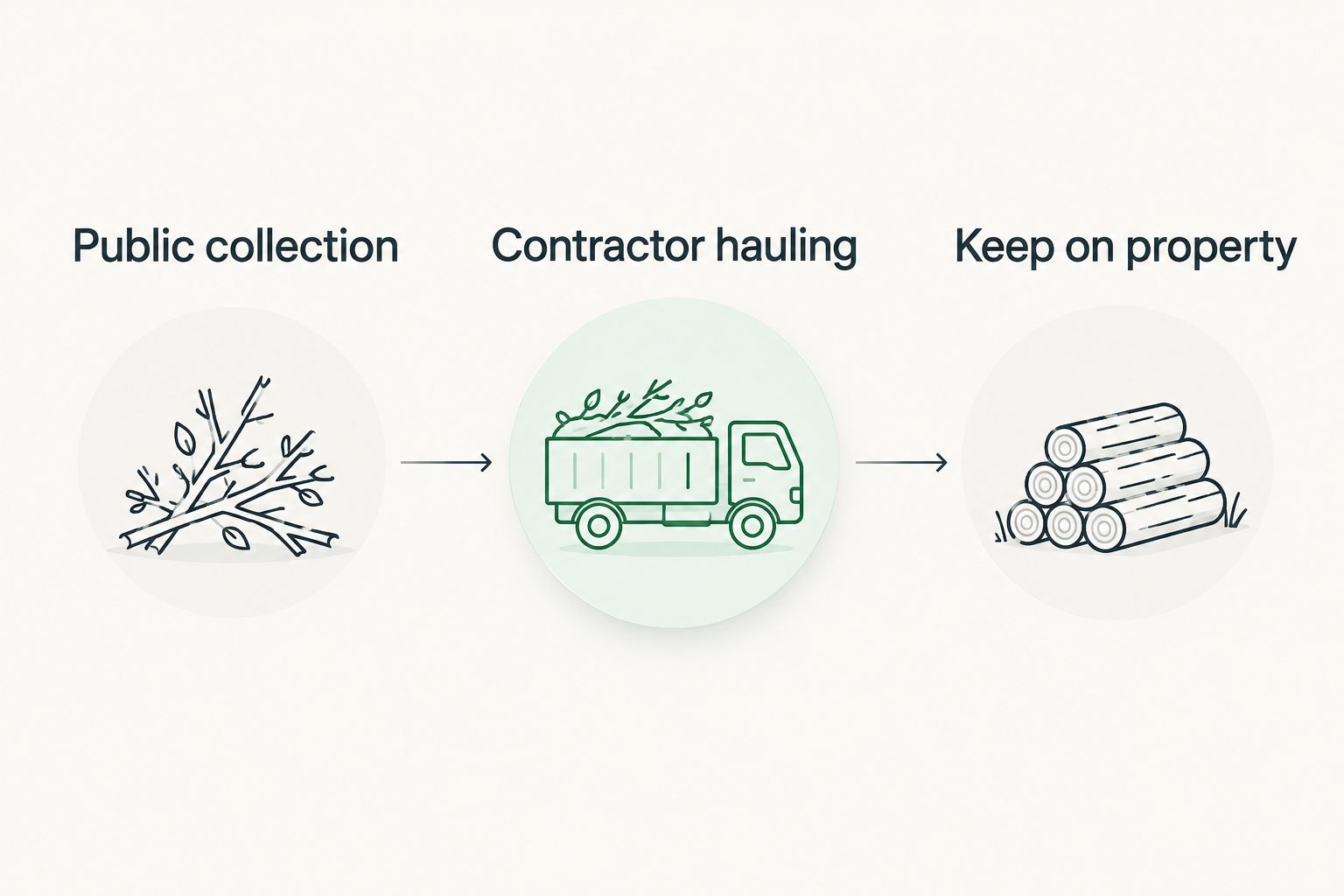
- Label the job record with separate destinations: Public collection, Contractor hauling, and Keep on property, using only the destinations relevant to your project.
- Assign each material type to a destination. Include stump grindings, loose leaves, and soil-contaminated roots in the discussion so they are not left unassigned.
- Confirm who prepares, sorts, and moves each pile. Do not leave the homeowner and crew with different assumptions about curbside labor.
Expected result: Every debris category has an approved destination, a staging location, and a named party responsible for moving it there.
Access deserves its own check. A pile that looks reachable from the driveway is not proof that a collection vehicle can safely service it. Use the guide to planning tree debris removal when truck access is limited to identify access questions before choosing the staging area.
Work order and collection handoff
Put responsibilities into the quote
- Give the tree-service provider the collection instructions and accepted-material list before approving the disposal scope.
- Request separate descriptions for cutting, material preparation, movement to the approved collection point, and hauling. Ask what the quote leaves on the property.
- Identify who will request public collection. Keep 2 contacts in the job record: the collection provider and the person responsible for the tree-work agreement.
- Agree on the fallback for material the public provider refuses. State whether a return hauling visit requires a separate quote rather than assuming it is included.
- Keep 1 written plan containing the material destinations, placement instructions, collection request details, and responsibility for rejected debris.
When requesting a Pmmidlands tree-service quote, explain whether you want complete debris removal or preparation for a separately confirmed public collection. Those are different scopes; a site assessment establishes what the property and material require.
Expected result: Your written agreement distinguishes tree work from collection coordination and identifies who handles material that remains.
Check the pile before the handoff
- Compare the finished staging area with the provider's instructions before the crew leaves. Check the material types, separation, placement, and any specified preparation requirements.
- Photograph the completed piles from safe positions and save the collection request confirmation. Do not climb on debris to document it.
- Confirm that public access, drainage, and vehicle movement remain unobstructed. If placement is unsafe or conflicts with the provider's directions, resolve it before leaving the material there.
- Check collection status through the provider's stated process. If material remains, establish the reason before moving or recutting it.
Expected result: The staged material matches the confirmed instructions, and you have a record of its condition at handoff. This documents preparation; it does not guarantee public collection.
When storm debris changes the workflow
Storm cleanup needs a fresh eligibility check. Ask whether the provider is operating its normal collection service or has issued separate storm-debris instructions, then establish which instructions apply to your address and material.
For a 2026 storm-related job, do not substitute an old emergency notice for current confirmation. Record the notice date and the area it covers if the provider directs you to special instructions.
- Start with hazards. Keep people away from unstable trees and any tree material touching wires. Report utility hazards to the utility or emergency services as appropriate.
- Reconfirm the categories. Describe fallen limbs, standing damaged trees requiring removal, roots, and other mixed debris separately.
- Recheck placement. Ask where collection crews want the material and what must remain separate.
- Update the work order. Replace earlier disposal assumptions with the confirmed storm-cleanup instructions before approving additional work.
For an institutional or commercial site, also verify who can authorize staging on shared grounds. A residential neighbor's collection arrangement does not establish permission or eligibility for your property.
Expected result: Your storm-cleanup plan follows the current instructions for the address rather than assumptions drawn from routine yard-waste collection.
Troubleshooting collection problems
The provider rejects contractor-generated debris
Stop treating public pickup as the disposal route for that material. Ask whether the exclusion covers the entire job or specified material, then request a hauling scope for what is excluded. Do not describe contractor-generated debris as homeowner pruning to obtain acceptance.
The truck passes but leaves the pile
Check whether collection was actually due and whether a request was required. Contact the provider with the address, request reference, and photos; ask whether the issue was eligibility, preparation, placement, access, or scheduling before changing the pile.
Branches qualify, but logs or stumps do not
Keep the accepted and excluded materials separate according to the provider's instructions. Obtain a removal plan for excluded pieces before asking the crew to make further cuts; smaller pieces are not automatically eligible.
The approved location is difficult to reach
Do not move the pile into the road, onto a sidewalk, or beneath wires as a workaround. Ask the collection provider to confirm an acceptable alternative and have the tree-service representative assess the movement required.
The public collection window changes
Contact the provider and update the job record rather than treating the original date as guaranteed. If the delay conflicts with property access or another contractor's work, request a separate hauling assessment and confirm responsibility before authorizing it.
Customize your workflow
For a small pruning job, the plan can remain short: accepted material, preparation instructions, collection request, and fallback contact. A full tree removal or lot-clearing project needs a material-by-material scope because branches are only part of the debris.
For a managed property, add an approval line for the person controlling parking, tenant notices, or shared access. Keep those approvals separate from public collection eligibility; permission to use a staging area does not establish that the material qualifies.
Use your 2026 project record again when comparing quotes, but reconfirm collection instructions for each new job. Carry forward the checklist, not an assumption that the previous rules still apply.
Request a site-specific tree-service quote
Discuss tree work, debris preparation, and hauling responsibilities for your property.
FAQ
Will county bulk pickup take debris from a hired tree service?
Confirm contractor-generated debris eligibility with the provider serving your address before work begins. Describe the job and material types explicitly; general yard-waste instructions do not establish acceptance.
Should I schedule tree removal before arranging bulk pickup?
Confirm collection eligibility and scheduling requirements before approving the tree-work disposal scope. Then coordinate the work with the provider's placement instructions and collection process.
Can I put tree stumps beside branches for collection?
Keep stumps separate unless your collection provider expressly instructs otherwise. Ask about stumps, roots, trunk sections, and soil-contaminated material individually.
Who should move branches to the pickup location?
The written tree-work agreement should name who moves and prepares branches for collection. Do not assume cutting a tree includes sorting, bundling, or curbside placement.
Does a commercial property qualify for residential bulk collection?
Do not assume a commercial property qualifies for residential collection. Give the provider the service address and property type, and request the instructions that apply to that property.
What should I do if the collection truck leaves my tree debris?
Contact the provider to establish why the material remained before moving or recutting it. Supply the collection reference and photos, then arrange corrective preparation or separate hauling as needed.
Can Pmmidlands help me plan tree debris removal?
Request a site-specific tree-service quote from Pmmidlands for properties in Richland, Lexington, Newberry, Orangeburg, Sumter, Kershaw, or Fairfield County in South Carolina. Explain whether you need debris hauling or preparation for a separately confirmed public collection.
One last thing
The key question is not just what the pile contains, but how it was generated. Include the origin of the debris in your 2026 collection inquiry and written work order. That detail lets the provider address contractor-work restrictions before branches reach the curb.