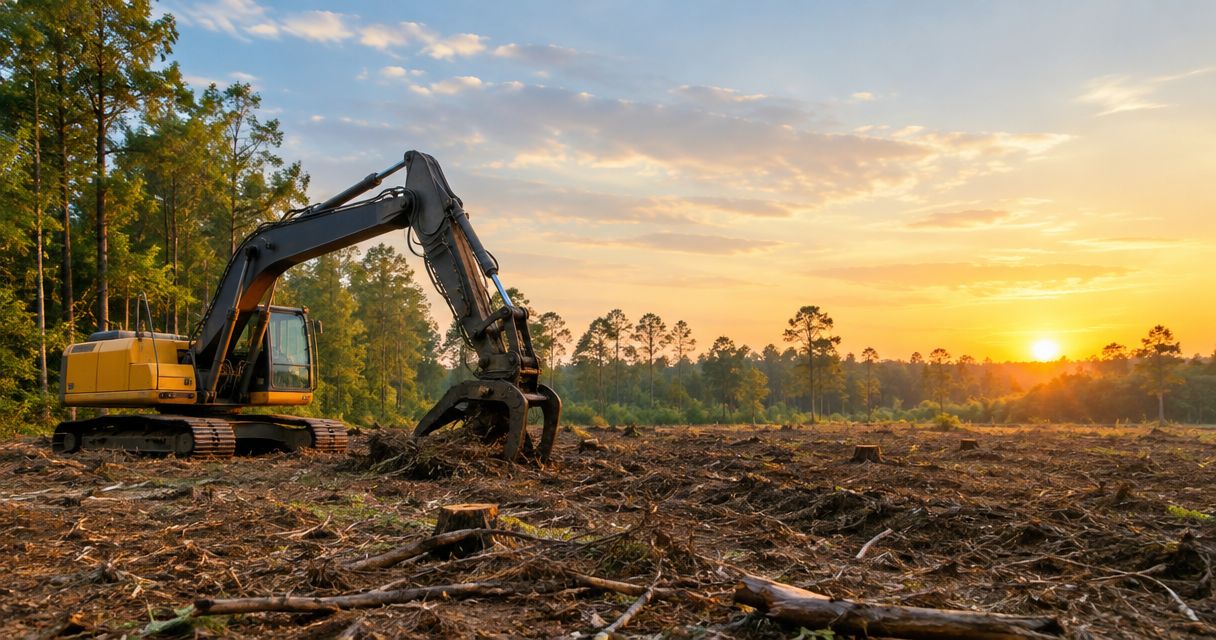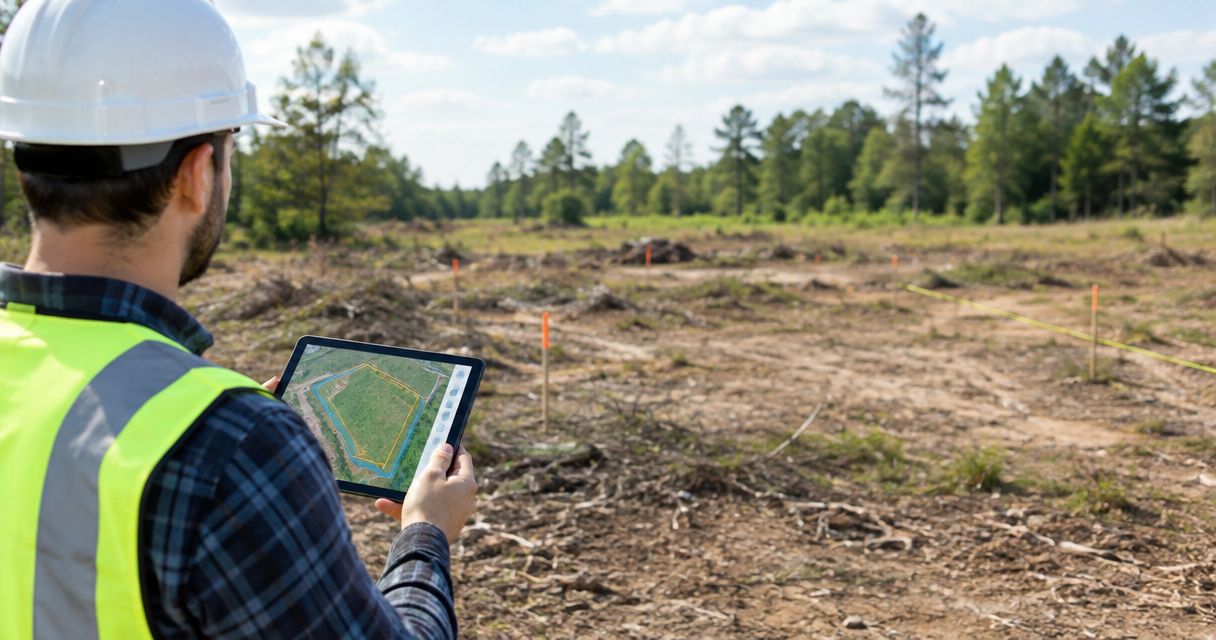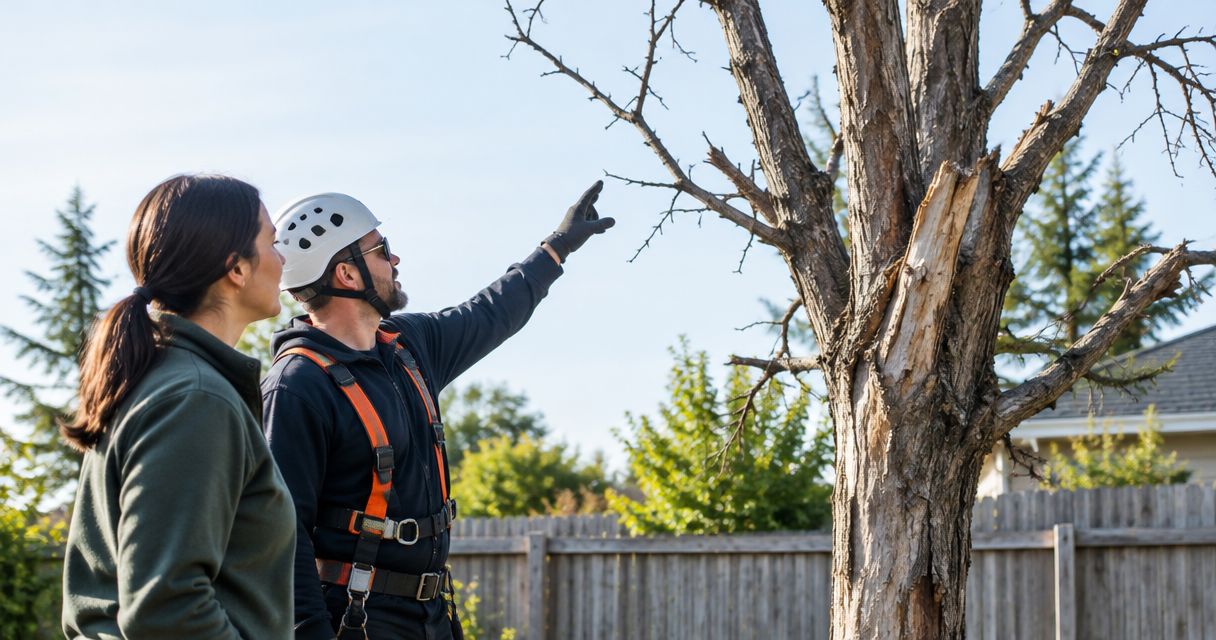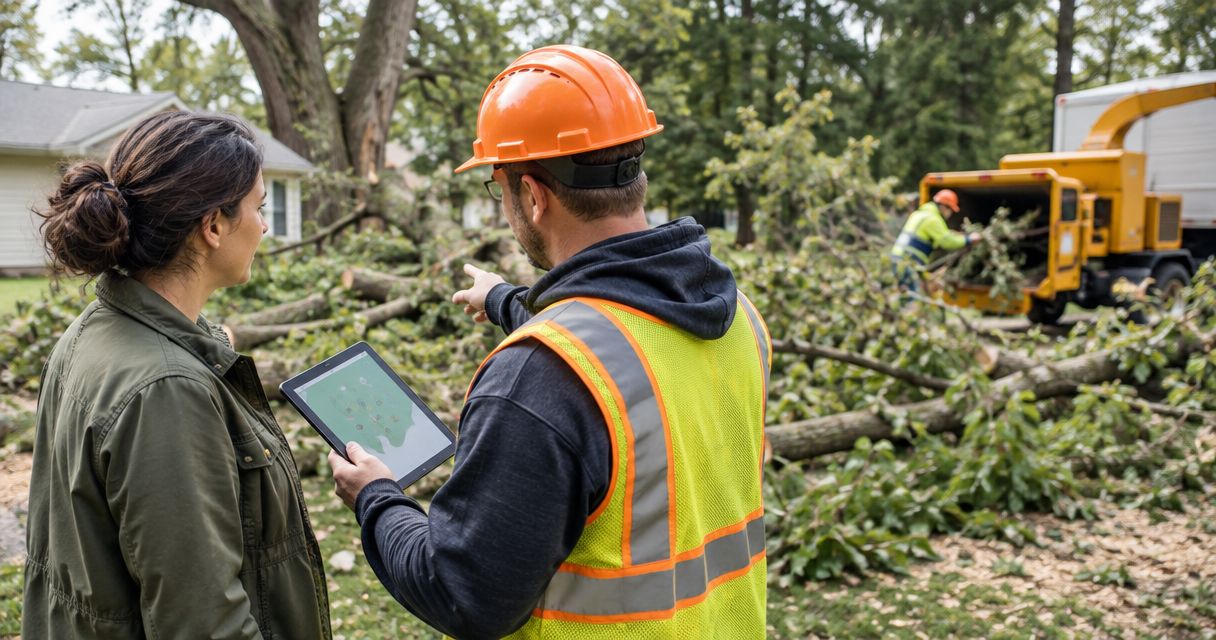
A tree debris removal crew needs your property location, photos of the material, a description of what needs removing, access details, known hazards, and your cleanup expectations. Explain whether the wood is already on the ground or still attached to a tree, and request a site assessment when photos cannot show the job safely or clearly.
- Tree debris removal requests should identify the material, access route, hazards, and cleanup boundary.
- Send wide views and close-ups taken from a safe position; never approach unstable limbs for photographs.
- Separate loose debris pickup from work involving standing trees, attached branches, or stumps.
- Pmmidlands is a tree services provider for property owners in its confirmed South Carolina service area.
What information does a tree debris removal crew need?
Give the crew enough information to understand both the debris and the route used to remove it. A close-up of a branch does not show whether the crew must pass through a narrow gate or cross a lawn to reach it.
When contacting Pmmidlands, start with these 6 details:
- Property location: Give the address, county, and where the debris sits on the property.
- Material description: Identify branches, logs, brush, leaves, or mixed material. Explain whether everything is detached and on the ground.
- Photos: Show the overall area, representative material, and the access route without approaching hazards.
- Access conditions: Describe gates, fences, steps, slopes, parking restrictions, and surfaces along the route.
- Known hazards: Report nearby wires, hanging limbs, unstable trees, damaged structures, and other visible concerns.
- Cleanup boundary: State what must leave, what stays, and whether you want separate tree or stump work assessed.
You do not need to identify every tree species or calculate an exact debris volume before making contact. Describe what you can observe safely, and leave uncertain conditions for the site assessment.
Why this matters
For a 2026 cleanup request, the useful distinction is not simply whether you have a small or large pile. The crew needs to know what handling the material involves and what result you expect.
Branches stacked beside a driveway present a different assessment from limbs scattered behind a fence. A fallen limb still resting on another tree is different again: describing it as ordinary debris leaves out the condition that needs attention first.
A clear request separates pickup, tree work, and final cleanup. That gives you a defined scope to discuss rather than an assumption that everything visible is included.
Describe the material before estimating the pile
Tell the crew what makes up the debris and how it reached its current position. Useful descriptions include cut branches from pruning, storm-fallen limbs, logs left after previous tree work, or brush from clearing an overgrown area.
State whether the material is loose, stacked, tangled, or spread across separate areas. Mention soil, fencing, construction waste, or other non-tree material mixed into the pile so the crew can assess what belongs in the requested work.
If you know approximate dimensions, provide them with units and label them as estimates. Do not climb onto a pile, move heavy wood, or handle unstable branches to measure them.
Which description fits your job?
| Debris condition | Best for describing | Helpful detail to send | Limitation or concern |
|---|---|---|---|
| Stacked branches and logs | A defined pickup area | Pile location, approximate extent, and nearby access | A pile can hide material underneath; photos do not show everything |
| Scattered branches and brush | Cleanup across a yard or lot | Areas affected and the boundary of the requested cleanup | A close-up does not show the full collection area |
| Attached or suspended limbs | A job needing tree assessment before cleanup | Location and safe-distance photos | Treating attached material as loose debris leaves out tree work |
| Debris mixed with other material | A request needing disposal clarification | Visible non-tree contents and their location | Do not assume every material will be accepted in the same scope |
These are descriptions to use in your request, not instructions to rearrange the site. Leave unstable material alone and explain its condition.
Send photos that explain the whole job
Use 3 photo views as a starting checklist: an overview, a material view, and an access view. Add other angles when separate areas or obstacles would otherwise remain unclear.
- Overview: Show where the debris sits relative to the house, driveway, fence, or other fixed features.
- Material view: Show the visible mix of branches, logs, and brush from a safe position.
- Access view: Show the route from the likely parking area to the debris, including gates and turns.
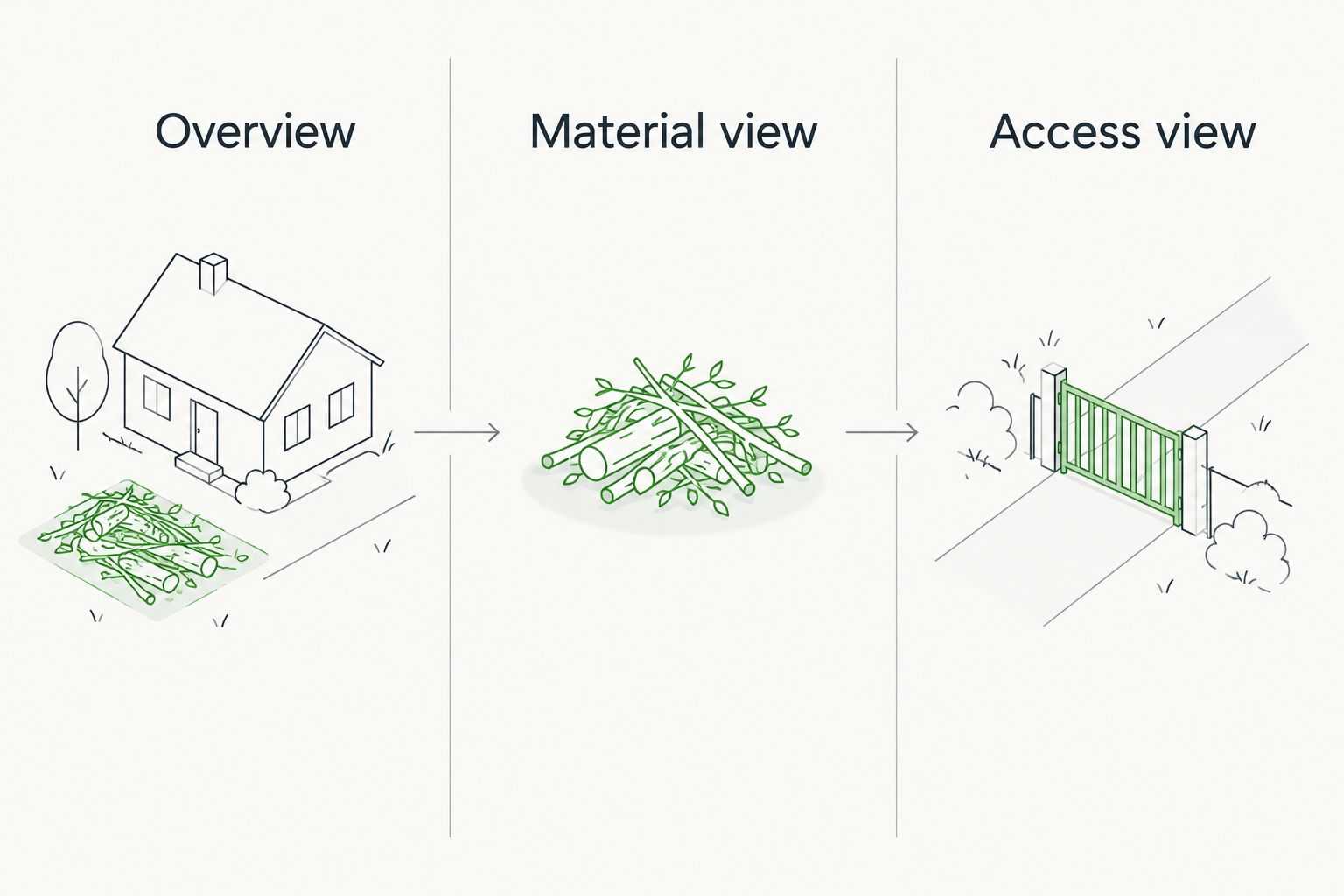
Explain what the photographs leave out. For example, note that another pile sits behind a shed or that a fence blocks the view of the full route.
Photos support an initial discussion; they do not establish that a damaged tree or suspended limb is safe. For more detail on framing the request, see how to request a tree removal quote using photos.
Explain access from the road to the debris
Describe the actual route, not just the nearest entrance. A gate can open onto a narrow passage, and an unobstructed driveway does not explain how the crew reaches a rear yard.
Include gate width if you already know it, along with sharp turns, steps, steep ground, low branches, or structures along the way. Identify lawns, paved areas, irrigation features, or other surfaces and fixtures you want discussed before work.
For commercial properties, explain who controls access and whether tenants, deliveries, parked vehicles, or public walkways affect the work area. Provide the contact who can authorize access and answer questions about the requested scope.
Do not remove fences or promise access across a neighboring property before the route has been agreed. Ask what access is needed before changing the site.
Flag hazards without investigating them yourself
Report hazards you can see from a safe location. The crew needs to know about overhead wires, limbs caught in other branches, leaning or damaged trees, wood resting against a structure, and debris blocking an entrance.
Do not touch a wire or assume it is safe because it appears inactive. Keep away from trees or debris contacting power lines and report the condition to the utility; use emergency services when there is immediate danger.
Avoid pulling branches out of a tangled pile when you cannot see what supports them. Describe the obstruction instead of moving it to improve a photograph.
If a hazard prevents safe access, say so at the start of your request. Clear communication matters more than a complete set of pictures.
Define what “finished” means before requesting a quote
Set 2 cleanup boundaries: the area included and the material included. A request to clear branches from a driveway does not describe the same work as collecting debris throughout the yard.
State whether you want all identified wood removed or want selected logs left in an agreed location. Ask about the final condition of the work area rather than assuming removal includes every leaf, twig, or existing piece of yard waste.
Keep separate tasks explicit:
- Removing loose branches and logs already on the ground.
- Assessing attached limbs or a damaged standing tree.
- Assessing a stump or exposed root material.
- Clearing brush beyond the original debris area.
- Moving retained wood to an agreed location.
This list defines questions to ask, not services automatically included in a quote. Have the written scope identify what stays as clearly as what leaves.
Why tree debris removal requirements vary
The information needed changes with the conditions the crew must assess. These 5 factors explain why two requests described as debris pickup can require different conversations:
- Material condition: Loose branches, heavy logs, and attached limbs require different assessment details.
- Distribution: A single pile needs a clear location; scattered debris needs an identified collection boundary.
- Access route: Gates, turns, slopes, and surface conditions affect how the crew evaluates reaching the material.
- Nearby hazards: Wires, structures, unstable trees, and occupied areas need to be identified before work is planned.
- Requested finish: Full removal, retained wood, stump assessment, and brush clearing must be distinguished in the scope.
For your 2026 project, describe these conditions before asking for a firm plan. A site assessment addresses details that a message or photograph cannot establish.
What should I include in the first message?
Include the 6 details above, then ask what needs checking on site. Keep the message factual; you do not need to prescribe equipment or a removal method.
Use this format for a 2026 tree debris removal request:
- Location: Property address, county, and debris location on the property.
- Material: What is present and whether it is detached, attached, stacked, or scattered.
- Photos: Available overview, material, and access views, plus anything the pictures miss.
- Access: Entrance, gates, route obstacles, surface concerns, and access authorization.
- Hazards: Visible wires, unstable limbs, damaged trees, or affected structures.
- Finish: Material to remove, material to retain, and other work you want assessed separately.
Add your preferred contact method and any property access restrictions. Ask whether a site visit is needed before the scope can be confirmed.
Pmmidlands provides tree services within Richland, Lexington, Newberry, Orangeburg, Sumter, Kershaw, and Fairfield counties in South Carolina. Include your county so the location is clear from the first exchange.
Request a site-specific quote
Share your location, debris photos, access details, and cleanup expectations.
Can photos replace a site assessment?
Photos can explain the visible debris and access route, but they cannot establish every condition needed to plan the work. Hidden material, uncertain access, attached branches, and nearby hazards need clarification.
Send useful images first, then ask what remains to be assessed. Do not treat a photograph-based discussion as confirmation of a removal method or completion date.
Should I move the debris before the crew arrives?
Leave heavy, unstable, attached, or wire-contacting material alone. Ask the crew what preparation is appropriate before moving anything.
You can explain where vehicles normally park and identify belongings that affect access. Agree on any preparation first so you do not create a new obstruction or disturb material that needs assessment.
How do I compare the proposed cleanup scope?
Compare written inclusions and exclusions, not the phrase tree debris removal alone. For a 2026 quote, check that each proposal describes the same collection area, material, access assumptions, and finish.
Look for unanswered questions: Does retained wood stay where it is or move elsewhere? Is attached material assessed separately? Who authorizes access, and what happens if the crew finds material not described in the request?
Ask for clarification before approving work. A detailed scope makes differences visible without assuming every proposal covers the same job.
FAQ
What information should I send for tree debris removal?
Send the property location, material description, safe-distance photos, access details, known hazards, and cleanup expectations. Explain whether the material is detached or still attached to a tree.
Do I need exact measurements of my branch pile?
You do not need exact measurements to make an initial request. Share approximate dimensions with units if you already know them, but do not climb onto debris or move heavy wood to measure it.
Can a crew quote tree debris removal from photos?
Photos support an initial discussion, but a site assessment is needed when important conditions remain unclear. Show the debris area, visible material, and access route, and identify anything outside the frame.
Does tree debris removal include stumps?
Do not assume tree debris removal includes stump work. Ask for the stump to be assessed separately and have its inclusion or exclusion stated in the written scope.
What should a commercial property manager tell the crew?
A commercial property manager should identify the work boundary, access contact, parking restrictions, occupied areas, and approval authority. Explain any tenant, delivery, or pedestrian access that must be discussed before work.
What should I confirm before approving a 2026 cleanup quote?
Confirm the collection area, included material, retained wood, access arrangements, and expected finish before approving a 2026 cleanup quote. Ask which conditions still require a site assessment.
One last thing
Photograph what you want to keep, not just what you want removed. A retained log, planting bed, fence, or access path deserves a clear note in the request so it becomes part of the scope discussion.
Before contacting Pmmidlands about tree debris removal, check that your message answers both questions: what must leave, and what must remain untouched?