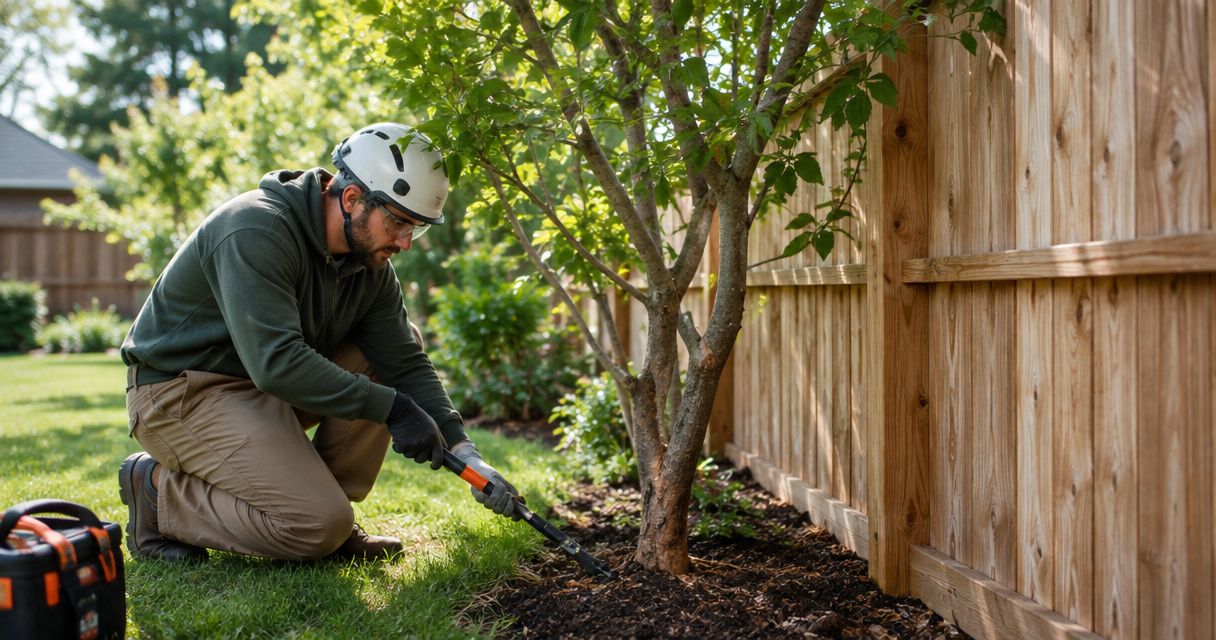
Plan small tree removal beside a fence by confirming the boundary, checking access, and arranging a site assessment before anyone cuts. Ask for a written scope covering fence protection, debris handling, and the stump; a small tree does not automatically mean a simple removal, and those tasks need separate agreement in your 2026 project plan.
- Small tree removal beside a fence needs a boundary check, access review, and site-specific removal plan.
- Confirm who owns the tree and fence before authorizing work or arranging access through neighboring property.
- Keep fence protection, stump work, and debris handling explicit in the written scope.
- Pmmidlands provides tree services in Richland, Lexington, Newberry, Orangeburg, Sumter, Kershaw, and Fairfield counties, South Carolina.
Why this matters: A fence limits where branches and trunk sections can go, while gates and narrow side yards restrict access. Before treating the job as a quick cleanup, review when to hire a professional for small tree removal and identify what sits within reach of the tree.
How do you plan small tree removal beside a fence?
Plan the site before choosing the removal method. Your role is to explain the desired result, identify property constraints, and authorize an agreed scope—not to prescribe cuts or decide how the tree should be lowered.
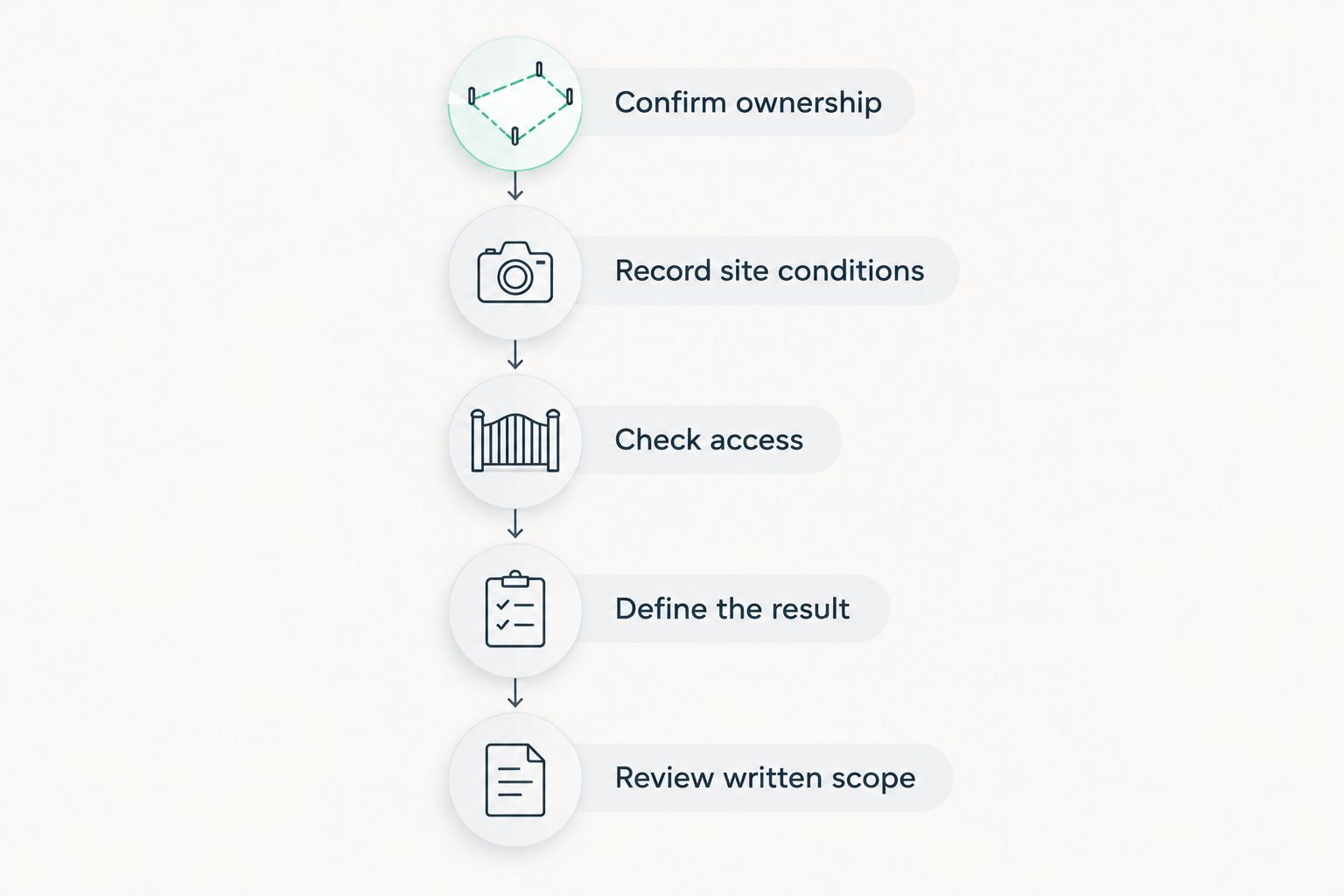
Use these 5 planning steps to organize the assessment:
- Confirm ownership. Establish where the trunk stands relative to the property line and identify who owns the fence. Resolve uncertain boundaries before authorizing removal.
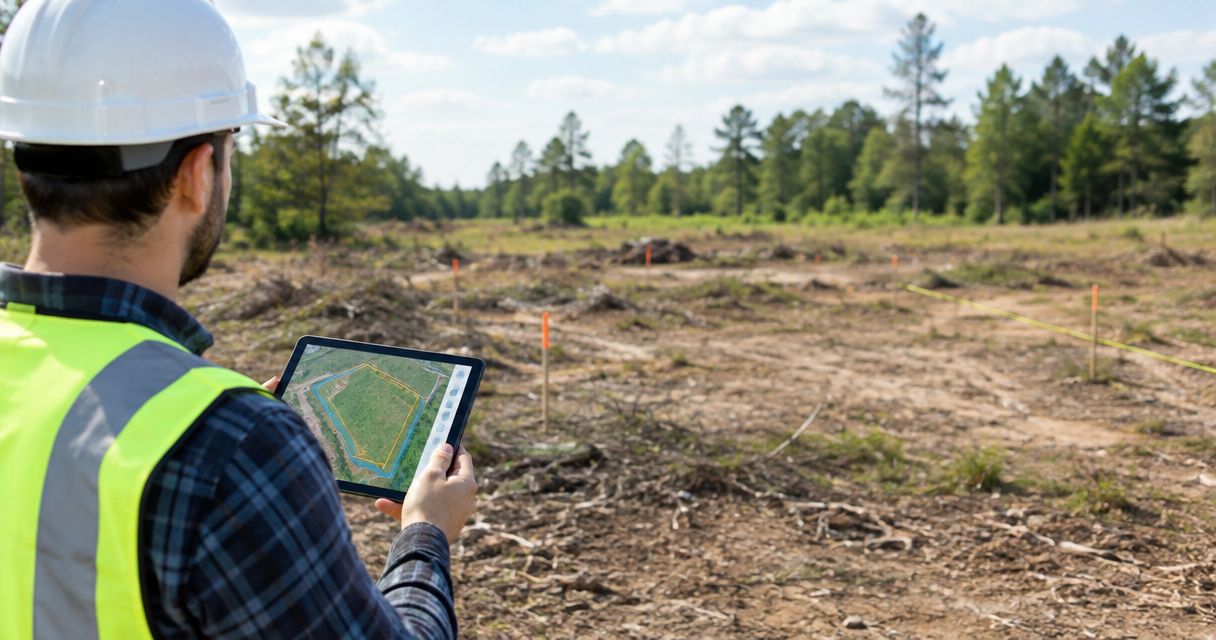
- Record site conditions. Photograph the whole tree, the fence beside it, and the route from the street or driveway. Take pictures from safe ground without climbing or entering restricted areas.
- Check access. Record the gate opening, narrow passages, steps, slopes, and anything that cannot be moved. Tell the contractor whether another route requires permission.
- Define the result. State whether you want the tree removed, debris hauled away, stump work assessed, and the area prepared for a particular use.
- Review the written scope. Confirm protection measures, access arrangements, exclusions, and responsibility for any agreed fence disassembly or restoration.
These steps separate your project decisions from the contractor's work plan. A photograph starts the conversation; a site assessment establishes what the space actually allows.
What should the site assessment check?
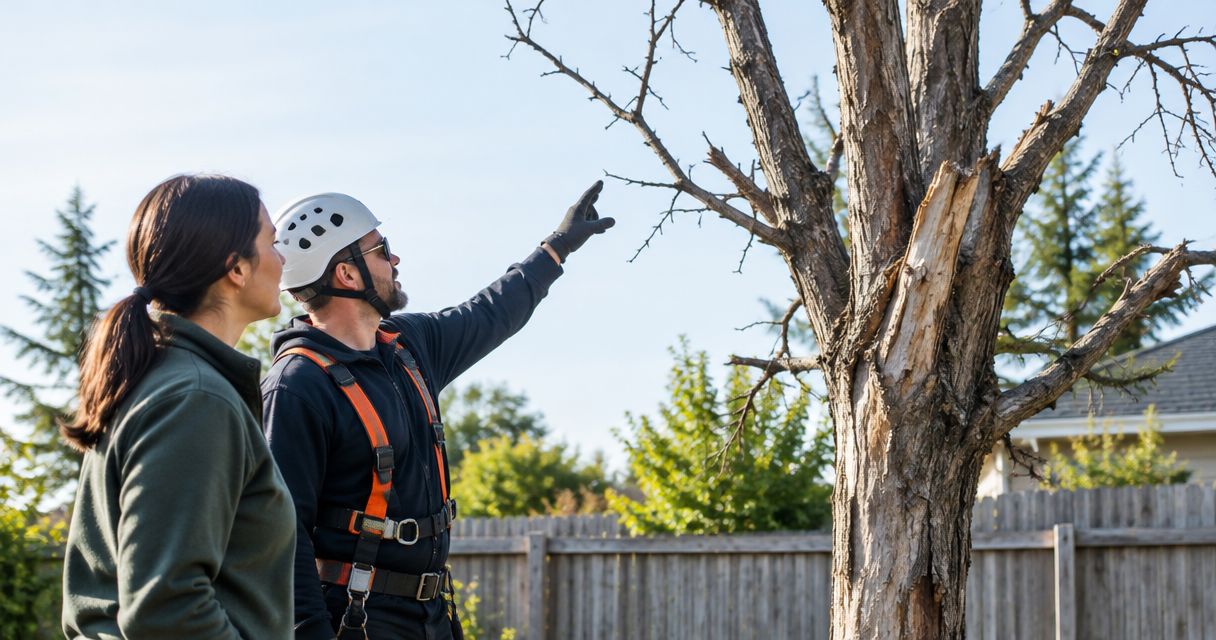
A useful assessment looks beyond the trunk. Branches above the fence, roots near posts, nearby structures, and the available work area all belong in the discussion.
Tell the contractor if the tree touches the fence, grows through it, or has lifted nearby ground. Do not pull branches free or cut roots to make the inspection easier. Those changes can affect the tree, the fence, or both.
Point out features that are easy to miss:
- An irrigation line or outdoor lighting cable near the trunk.
- A shed, greenhouse, play area, or parked vehicle beyond the fence.
- Loose fence panels or posts that already lean.
- A drain, retaining wall, or paved edge beside the roots.
- A gate that opens only partway or a route shared with a neighbor.
Do not move closer to investigate a visibly unstable tree. If branches contact electrical lines, stay away and contact the utility; fence access is secondary to the electrical hazard.
For a 2026 assessment, provide current photographs rather than images taken before a storm, fence repair, or landscaping change. The contractor needs the site as it is now.
Should the fence stay in place during removal?
Keeping the fence in place avoids disassembly, but it leaves an obstacle beside the tree. Temporary panel removal creates a different access arrangement and requires agreement about permission, handling, and restoration.
Neither approach is automatically right. Compare the constraints before accepting a plan:
| Planning option | Best for | Advantage | Limitation to resolve |
|---|---|---|---|
| Keep the fence intact | Sites where the contractor confirms adequate working access | Avoids planned fence disassembly | Fence position still restricts the work area |
| Temporarily remove an agreed section | Sites where an opening provides useful access | Creates an opening without treating the whole fence as removable | Requires ownership permission and a restoration scope |
| Use an alternate access route | Properties with another usable entrance | Avoids changing the fence opening | The route needs assessment and any necessary permission |
Ask who would remove and reinstall a panel if that approach is proposed. Also ask how an already damaged panel will be handled; temporary removal is not an agreement to replace the fence.
Do not authorize work on a neighbor's fence without permission. If ownership is uncertain, settle that issue before treating the panel as available access.
Why small tree removal beside a fence varies
Tree size alone does not describe this job. A small trunk beside a fragile panel presents different constraints from a similar tree in an open lawn.
These factors explain why the contractor needs to assess your particular property:
- Tree condition: Dead branches, visible cracks, and existing lean are observations to report, not conditions to test yourself.
- Fence relationship: A trunk against a post differs from branches extending above a panel. Identify where the tree and fence touch.
- Working space: Sheds, planting beds, paved edges, and neighboring structures restrict the surrounding area.
- Access route: Gate openings, steps, slopes, and tight turns affect how the site can be reached and cleared.
- Stump objective: Leaving the stump and requesting stump work are different scopes, especially beside fence posts or buried services.
- Debris destination: Leaving agreed material on site and hauling it away produce different finished results and handling requirements.
Give the same information to each contractor you approach. Otherwise, you risk comparing proposals that describe different jobs rather than different approaches to the same job.
What photos and measurements should you send?
Start with 3 photo views: the whole tree, the tree beside the fence, and the access route. Add close-ups only where you can take them safely, such as an existing gap between a trunk and panel.
Show the surroundings, not just the bark. A close-up cannot explain whether a roof overhangs the work area or a gate sits around a tight corner.
Measure accessible gate openings and narrow passages from safe ground. Report actual measurements rather than calling the entrance wide or standard, and identify whether hinges, latches, or fixed objects reduce the usable opening.
Include the intended destination for debris if you want material left on the property. A request to leave wood does not explain where it should go or whether the route to that location is usable.
Photos help describe the request, but they do not establish tree stability, ownership, or underground conditions. Use photographs to prepare for an assessment, not to replace one.
What should the written removal scope include?
For a 2026 project, ask for a dated scope that identifies the correct tree and states the agreed result. A description such as tree by fence is ambiguous when several trees stand along the boundary.
The scope should answer these practical questions:
- Which tree is being removed, and which nearby plants must remain?
- What access route has been agreed?
- Will any fence section be moved, and who handles reinstatement?
- What protection arrangements have been discussed for the fence and surrounding property?
- Will branches and trunk material leave the property or remain in an agreed location?
- Is stump work included, excluded, or awaiting assessment?
- What surface cleanup is included after the removal?
Record existing fence damage before work begins. Take photographs of both the affected section and its surroundings so the condition is clear without relying on a close-up alone.
A written exclusion is more useful than an assumption. If stump work or fence repairs are outside the proposal, knowing that before approval lets you arrange the remaining work separately.
How do you request a site-specific assessment?
For homeowners and property managers in the confirmed South Carolina service area, Pmmidlands provides tree services. Describe the fence-side location, access restrictions, and desired cleanup when requesting a quote.
Pmmidlands tree services are for property owners in Richland, Lexington, Newberry, Orangeburg, Sumter, Kershaw, and Fairfield counties, South Carolina. A site-specific request should identify your county and the conditions beside the fence rather than rely on tree size alone.
The practical advantage of a detailed request is a clearer scope discussion. The limitation is that photographs and descriptions do not settle the removal method, fence arrangements, or stump work; those need assessment and written agreement.
Request a site-specific tree removal quote
Describe the fence, access route, stump needs, and debris handling when discussing your project.
Can I remove a small tree beside a fence myself?
Do not use small size as your safety test. A fence, nearby structure, electrical line, unstable branch, or uncertain lean changes the job from simply removing vegetation to managing hazards in a restricted space.
If you cannot establish a safe work area without relying on the fence to catch material, stop and request professional assessment. Do not tie the tree to the fence, use a panel as support, or attempt to free a trunk that has grown through fencing.
Does tree removal include the stump and debris?
Stump work and debris handling belong in the written scope. Do not interpret tree removal as a promise that the ground will be ready for a new fence, planting bed, or paving.
Explain what you want to do with the space afterward. Root work beside posts or buried services needs assessment, and hauling away branches is a separate result from leaving material where agreed.
What if the tree is on the property line?
Resolve boundary and authorization questions before approving removal. A fence's position alone does not establish the legal property line or settle ownership of the tree.
Review available property records and obtain appropriate professional advice where the boundary is disputed. Neighbor access, fence alterations, and tree removal are separate permissions; agreement on one does not establish agreement on the others.
FAQ
What's the first step before removing a small tree beside a fence?
Confirm the tree's location relative to the property boundary and establish who can authorize removal. Then arrange an assessment of the tree, fence, and access route.
Can a contractor quote fence-side tree removal from photos?
Photos help explain the job, but a site assessment is needed to confirm conditions that images do not establish. Send views of the whole tree, its relationship to the fence, and the access route.
Do I need to take down my fence before tree removal?
Do not take down the fence unless an agreed removal plan calls for it. Confirm ownership permission, who handles the work, and how the section will be reinstated.
What should a small tree removal quote include in 2026?
A 2026 quote should identify the tree, agreed access, fence arrangements, debris handling, and whether stump work is included. Ask for exclusions and the intended finished condition in writing.
Can I cut roots that are pushing against a fence post?
Do not cut roots beside a fence post before the tree and surrounding conditions are assessed. Root cutting can affect tree stability, and buried services or post foundations also need consideration.
What if my neighbor owns the fence beside the tree?
Obtain permission before arranging any alteration to your neighbor's fence or access through their property. Keep that agreement separate from authorization to remove the tree.
Where does Pmmidlands provide tree services?
Pmmidlands provides tree services in Richland, Lexington, Newberry, Orangeburg, Sumter, Kershaw, and Fairfield counties in South Carolina. Include your county and fence-side access details when requesting a site-specific quote.
One last thing
Describe the space you want afterward—not just the tree you want gone. A replacement fence, a planting bed, and an area left undisturbed require different conversations about the stump, roots, and cleanup.
Before approving your 2026 removal scope, finish this sentence: the job is complete when the tree is removed and the area is left as agreed. Then replace that final phrase with a specific description everyone can check.