Commercial property managers’ lot clearing is the removal of unwanted vegetation with the aim of preparing a property for its intended use. Unlike a vacant residential yard, a commercial site needs a clearing scope that accounts for tenants, deliveries, public access, retained trees, and the condition required at handover.
- Commercial lot clearing needs a defined end condition, not just an instruction to remove vegetation.
- South Carolina property managers should separate vegetation removal, stump work, and debris removal in the written scope.
- Keep tenant entrances, delivery routes, and retained trees visible on the site plan.
- Request a site-specific quote before committing to a clearing method or completion schedule.
Why lot clearing matters for commercial property managers
A commercial clearing job is complete when the agreed area is usable for its stated purpose—not simply when vegetation is cut. An inspection-ready boundary, an accessible storage area, and a future construction footprint require different finishes.
For your 2026 property plan, define the next use before requesting quotes. Clearing unwanted growth does not automatically include stump removal, grading, drainage work, or preparation for pavement. Treat each as a separate scope question rather than an assumed inclusion.
Start with how to prepare a property for lot clearing if you still need to identify boundaries and access restrictions. That preparation gives contractors a common basis for assessing the work.
For properties in Richland, Lexington, Newberry, Orangeburg, Sumter, Kershaw, and Fairfield counties, give the exact site address with your inquiry. A county name establishes the general location; it does not explain gate access, vegetation density, neighboring structures, or tenant activity.
How to plan commercial lot clearing
Use the following steps to turn an overgrown area into a quote-ready project. Begin with a marked plan and photographs you can prepare yourself; ask the contractor to assess site conditions before agreeing to the work.
Define the finished condition
Write a short description of what the property must support after clearing. Avoid instructions such as clear everything or make it neat. Those phrases leave the contractor to interpret your expectations and give the property owner no clear acceptance standard.
A storage area needs different treatment from a strip being cleared for visibility. If construction will follow, ask the next contractor what condition the area needs before treating vegetation removal as the final preparation step. Keep that requirement attached to the clearing request.
For a 2026 project, record the intended use in the current work order rather than relying on an old maintenance description. Prepare 1 marked site plan showing these distinct areas:
- Work limits: the area included in the requested quote.
- Keep areas: trees, planting beds, and features that must remain.
- Access routes: entrances, loading areas, and routes needed during work.
- Finish requirements: the condition expected when the clearing crew leaves.
Document vegetation and site constraints
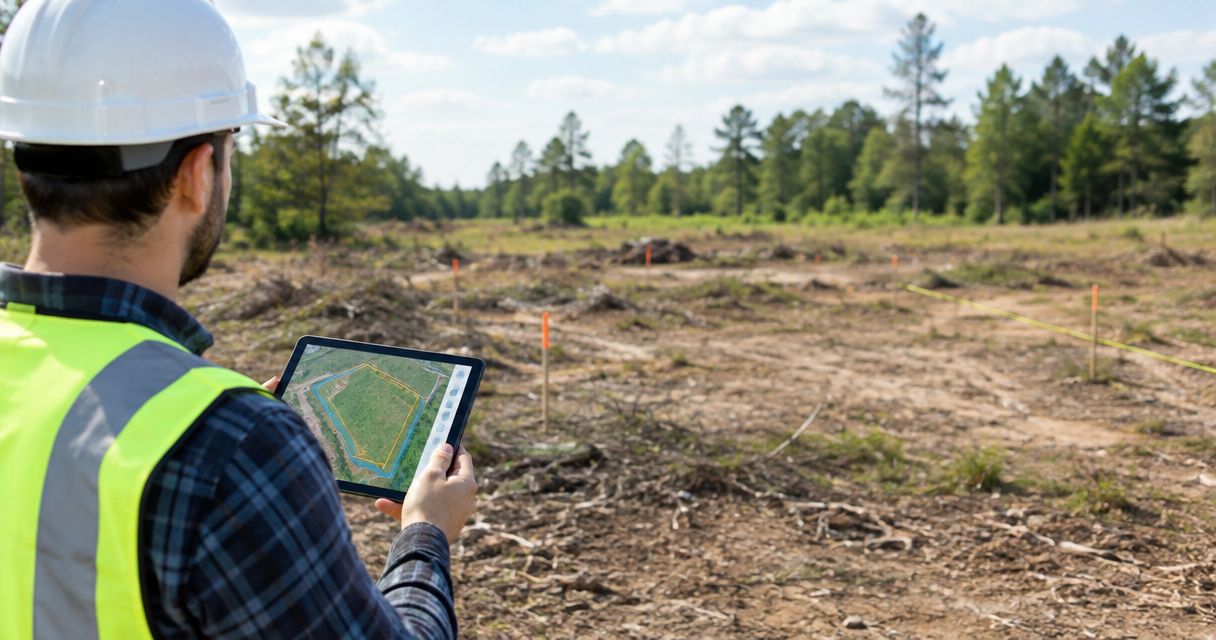
Walk the property from safe, accessible areas and photograph the work zone. Do not enter unstable vegetation, approach suspended limbs, or disturb suspected utility infrastructure to obtain a better photograph. Record an inaccessible area as something the contractor must assess.
Use 3 photo groups: wide views of the work area, views of access points, and close views of visible obstacles taken from a safe position. Aerial imagery alone does not show everything beneath the canopy or explain a narrow entrance.
Photos support an initial conversation; they do not replace a site assessment. Hidden debris, changes in ground level, and vegetation behind buildings need attention before a contractor defines the scope.
- Show vegetation beside fences, buildings, signs, and parked vehicles.
- Photograph gates and approach routes without estimating equipment compatibility.
- Identify irrigation, lighting, drainage features, and known utility locations.
- Note dumped materials separately from trees, brush, and ordinary vegetation.
Request a site-specific assessment
Send the same project brief to each contractor you ask to quote. Include the intended use, marked work area, photographs, access restrictions, and required finish. Consistent information makes differences between proposals easier to identify.
Pmmidlands is best for commercial property managers seeking a local tree-services quote rather than a generic lot clearing estimate. Use Pmmidlands to start an inquiry for a property within the confirmed South Carolina service area. Ask whether the proposed work fits the site's conditions and your required outcome.
Keep your 2026 quote request specific. A request to clear an entire parcel is not equivalent to clearing selected vegetation while protecting existing trees and keeping a business entrance open.
- Provide the property address and an authorized site contact.
- Describe the intended use and required end condition.
- Ask which conditions require an on-site assessment.
- Identify owner approvals needed before accepting a proposal.
- Request written inclusions, exclusions, and access assumptions.
Separate clearing, stump work, and debris handling
Treat vegetation cutting, tree removal, stump treatment, and debris handling as separate decisions. A proposal that covers cutting does not establish what happens to the resulting material or what remains below the finished surface.
Ask the contractor to describe the proposed treatment in plain language. Material left on the property needs an agreed location and condition. Material removed from the property needs a clearly stated removal scope. Do not assume either approach is included.
Pmmidlands lot clearing inquiries should state whether stumps and debris are part of the requested assessment. This keeps the conversation focused on the actual job without assuming a particular method, equipment setup, or service inclusion.
- Identify trees or vegetation included in removal.
- State whether stump work needs a separate assessment.
- Specify whether cut material stays or leaves.
- Describe acceptable placement of any retained material.
- Ask what cleanup means in the written proposal.
Coordinate access with tenants and property operations
Map how people and vehicles use the property before agreeing to work arrangements. A rear service route can be essential even when the main entrance remains open. Include delivery access, waste collection, parking, and emergency access in the discussion.
For an occupied commercial property, identify a manager who can communicate changes to tenants and receive questions from the contractor. Ask the contractor to define the proposed work area and restrictions; do not promise tenants uninterrupted access before those arrangements are confirmed.
Put current operating restrictions into the 2026 project brief. An older site plan does not establish today's delivery arrangements or parking use.
- Identify entrances and routes that need to remain available.
- Record delivery and collection restrictions relevant to the work.
- Assign a contact for tenant notices and site questions.
- Agree where authorized vehicles and materials can be positioned.
- Confirm how changes to access arrangements will be communicated.
Verify approvals and protect retained features
Check ownership boundaries and authorization before approving removal. A fence, mowing line, or apparent edge of vegetation is not a substitute for a verified property boundary. Escalate uncertainty to the owner before the contractor begins work in that area.
Ask the relevant local authority whether the proposed work requires approvals or has restrictions. Requirements depend on the property and work involved; do not assume that every clearing project follows the same rules. Identify who is responsible for confirming requirements in the project documents.
Mark retained trees and other protected features on the plan, then review them during the site assessment. Keeping a trunk standing is not a complete protection plan when work also affects the surrounding ground.
- Resolve unclear boundaries before authorizing clearing.
- Obtain the property owner's approval for the defined scope.
- Confirm responsibility for applicable permissions and utility coordination.
- Identify retained trees, drainage features, fences, and planting areas.
- Ask how the proposed work will avoid damaging retained features.
Agree on acceptance and inspect the result
Define 2 acceptance stages: confirm the marked scope before work begins, then inspect the result against that scope at handover. These checkpoints give you a practical way to distinguish incomplete work from a request for additional work.
Use the written proposal and site plan during the final walkthrough. Check the agreed work area, stump treatment, debris handling, and access routes. Photograph unresolved items and describe the difference between the agreed result and the observed condition.
If conditions change, request a written scope revision before authorizing extra work. Keep the original requirement visible so a larger project does not quietly replace the approved one.
- Confirm work limits and retained features before the start.
- Record authorized scope changes in writing.
- Inspect debris handling against the agreed approach.
- Check the finished area against its stated intended use.
- Document outstanding items and the agreed next action.
Request a site-specific clearing quote
Describe your property, access restrictions, retained trees, and required finish.
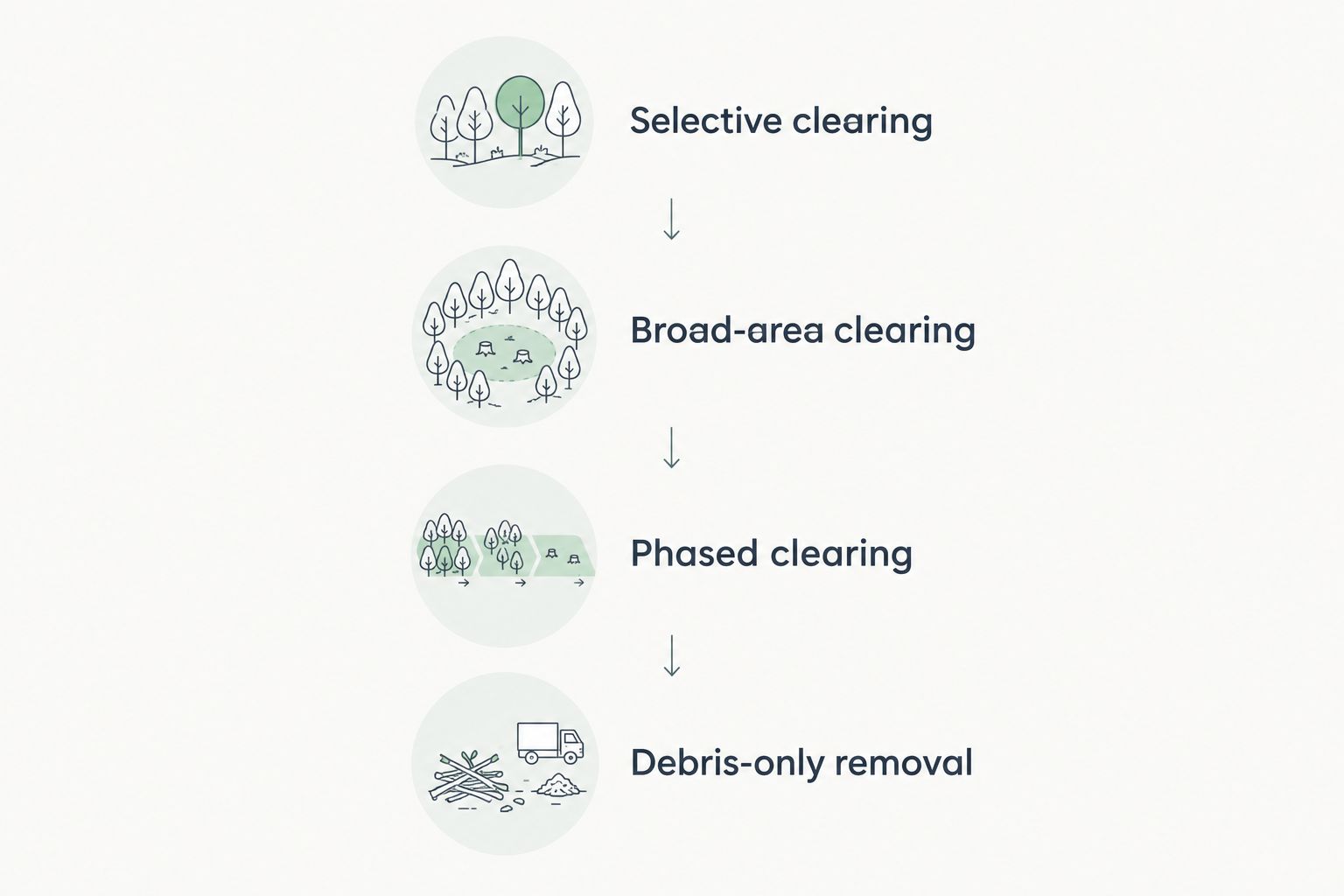
Compare clearing scopes by the intended use
Choose the smallest clearly defined scope that meets the property's actual objective. Removing more vegetation is not automatically a better result, especially when trees, screening, or planted boundaries need to remain.
These are scope options to discuss during an assessment, not a list of confirmed service packages. Each has a useful application and a limitation that belongs in the quote conversation.
| Option | Best for | Main benefit | Key limitation |
|---|---|---|---|
| Selective clearing | Keeping chosen trees or planted areas | Targets unwanted growth while retaining identified features | Requires clear marking and protection planning |
| Broad-area clearing | Removing unwanted vegetation across a defined footprint | Establishes a consistent work boundary | Does not automatically include stumps, grading, or drainage work |
| Phased clearing | Occupied properties with access restrictions | Separates work around defined operational needs | Needs coordination between stages and agreed access arrangements |
| Debris-only removal | Areas where cutting is already complete | Addresses material left on the property | Does not address standing vegetation or remaining stumps |
For your 2026 scope review, compare the options against the property's use rather than selecting a method from photographs alone. The right question is what must remain, what must leave, and how the property needs to function during the work.
Common mistakes commercial property managers make
Requesting quotes before defining the finish
A request to remove overgrowth leaves unanswered questions about stumps, cut material, and surface condition. Define the handover condition first, then compare proposals against it. Otherwise, differences in scope become mistaken for differences in value.
Treating vacant space as unrestricted space
An unused corner can still contain drainage infrastructure, utility routes, neighboring boundaries, or vegetation the owner wants retained. Record those constraints before calling it available for clearing. If ownership or infrastructure is uncertain, resolve the uncertainty before authorizing work there.
Forgetting tenants who use secondary routes
A delivery entrance or waste collection route can be overlooked when the property manager focuses on the main parking lot. Ask tenants which routes they need, then discuss restrictions with the contractor. Do not leave that conversation until access is already affected.
Assuming debris and stump work are included
The terms clearing, removal, and cleanup need written definitions. Ask what stays on site, what leaves, and what remains in the ground. A proposal is easier to assess when those outcomes appear as explicit inclusions or exclusions.
Approving changes without documenting them
An informal request to clear an additional strip changes the work boundary. Record the revised area, retained features, and agreed scope before authorizing the change. Keep the owner informed when the project exceeds the original approval.
FAQ
What does commercial lot clearing include?
Commercial lot clearing includes the vegetation work expressly listed in the proposal. Confirm tree removal, brush cutting, stump treatment, debris handling, and cleanup separately rather than assuming they form one package.
Can a commercial property stay open during lot clearing?
Continued operation requires a site-specific access plan agreed before work begins. Identify tenant entrances, deliveries, parking, and emergency access, then ask the contractor which restrictions the proposed work requires.
Can selected trees stay during lot clearing?
Selected trees can be included as retained features in the clearing scope. Mark them clearly and ask the contractor to assess how surrounding work affects the trees and the ground around them.
Do photos replace a lot clearing site assessment?
Photos support an initial discussion but do not establish every site condition. Access constraints, hidden material, boundaries, and the required finish need assessment before the work scope is agreed.
Does lot clearing include stump removal and grading?
Stump removal and grading are included only when the written scope expressly includes them. Ask for separate clarification because removing standing vegetation does not establish a finished construction surface.
Who should confirm permission for commercial lot clearing?
The property manager should establish who is responsible for checking applicable permissions before authorizing work. Confirm owner approval, property boundaries, and any relevant local requirements for the specific site.
Where can I ask Pmmidlands about a commercial clearing project?
Pmmidlands serves Richland, Lexington, Newberry, Orangeburg, Sumter, Kershaw, and Fairfield counties in South Carolina. Provide the property address, project purpose, photographs, and access restrictions when requesting a site-specific quote.
One last thing
Photograph what must stay, not just what must go. A marked image of a retained shade tree, sign, fence, or drainage feature gives the site discussion a concrete reference that a general instruction cannot provide.
Add those images to the approved scope and bring them to the pre-work walkthrough. The most useful clearing brief defines the boundary between removal and protection. That boundary deserves as much attention as the vegetation itself.