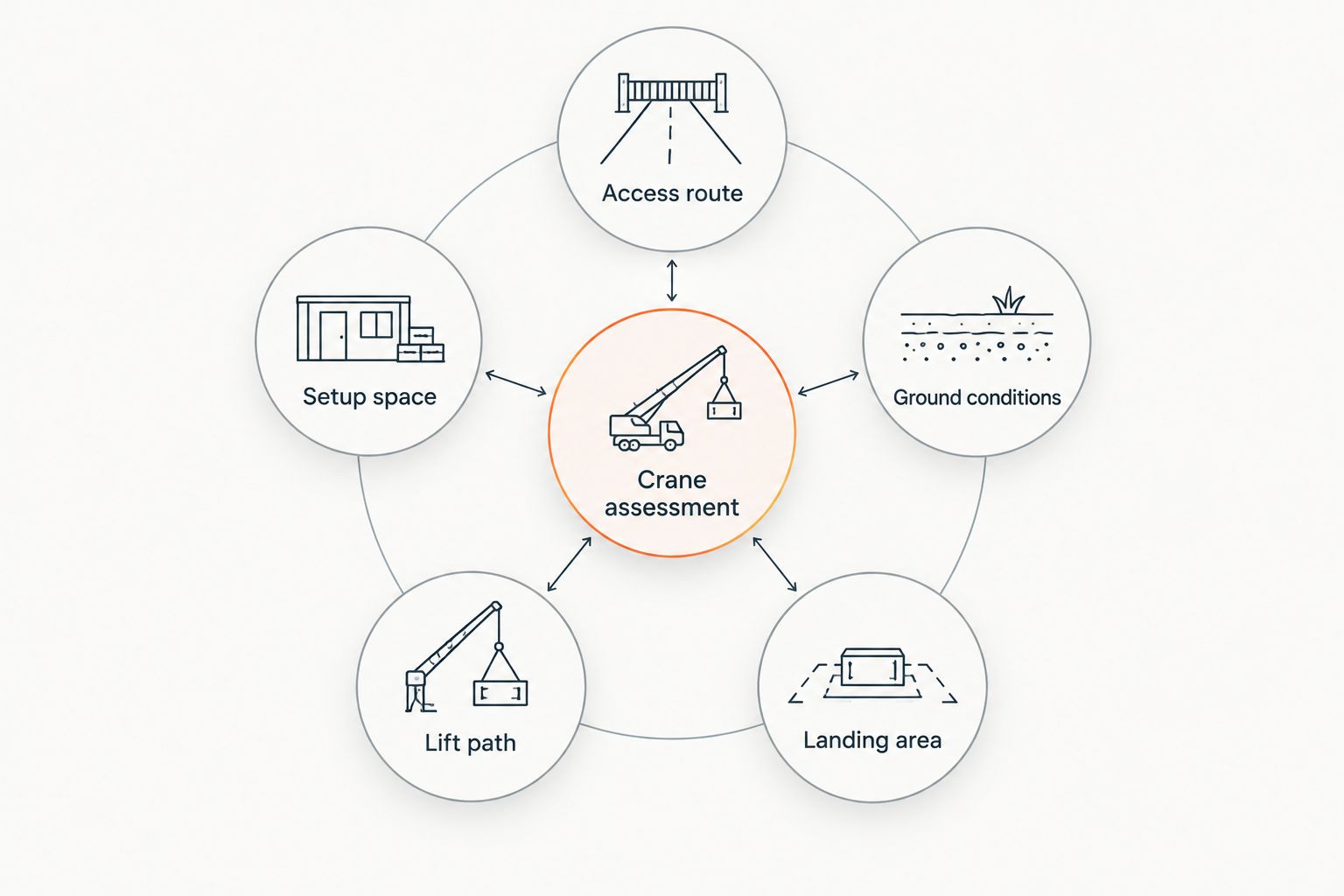
Large tree removal needs a crane assessment when the tree’s condition, nearby buildings, limited landing space, or difficult access makes controlled removal uncertain without lifting assistance. A crane assessment determines whether a crane is suitable; it does not mean a crane is required, and it must account for setup space and ground conditions as well as the tree itself.
- Large tree removal needs a site assessment when buildings, damaged wood, or restricted access complicate controlled removal.
- A crane needs suitable setup space, ground support, and a workable lifting route—not just access to the property.
- Pmmidlands serves property owners seeking tree services within seven confirmed South Carolina counties.
- Request a site-specific quote that separates the removal method, debris handling, stump work, and property-access arrangements.
When does large tree removal need a crane assessment?
Ask for a crane assessment when the removal involves more than a straightforward open-space job. A tree extending over a house, a damaged trunk, or a backyard with no clear landing area requires a closer look at how sections can be controlled and moved.
For your 2026 project, start by describing the constraints when contacting Pmmidlands. Ask whether the site needs an assessment of lifting options rather than requesting a crane as a predetermined solution.
| Removal approach | Best for | Main advantage | Main limitation |
|---|---|---|---|
| Whole-tree felling | Sites with a suitable, unobstructed landing area | Brings the tree down without dismantling the entire crown first | Requires enough suitable space and a sound removal plan |
| Sectional removal with rigging | Jobs where sections can be controlled and lowered through a workable route | Allows removal in smaller sections | Depends on tree condition, suitable rigging arrangements, and landing space |
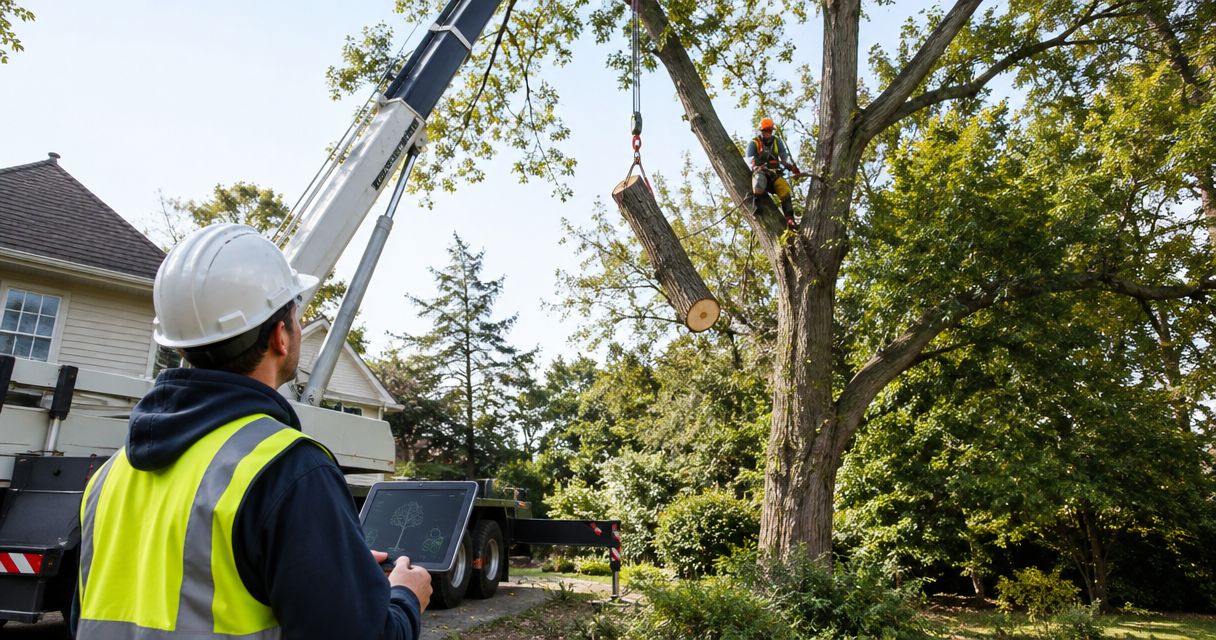
| Crane-assisted removal | Jobs where assessed lifting access offers a suitable way to move sections | Can lift sections away from obstacles | Requires a feasible crane position, ground support, reach, and lifting plan |
These approaches are not interchangeable. Tree size alone does not select the method. The contractor needs to assess the tree and the surrounding property together.
Why this matters
Choosing equipment before assessing the site reverses the decision. A crane parked near the tree still needs adequate support and a suitable lifting route; a narrow yard alone does not establish that crane-assisted removal is feasible.
The distinction also protects your quote comparison. One proposal might include lifting assistance and debris handling, while another describes removal without explaining how material will leave the property. Ask for the scope behind the total, not just the equipment name.
Pmmidlands is a tree-services option for homeowners and property managers in Richland, Lexington, Newberry, Orangeburg, Sumter, Kershaw, and Fairfield counties. Within that service area, request a site-specific assessment rather than treating an online description as a removal plan.
Buildings and limited landing space need closer assessment
A tree growing over a roof creates a different removal problem from a similar tree standing in an open field. The assessor must consider where branches and trunk sections can travel without striking the structure or other retained features.
Describe everything beneath and around the crown, not just the nearest building. Include sheds, fences, parked vehicles, pools, neighboring property, and areas that must remain accessible during the work.
A crane assessment is especially relevant when:
- The crown overhangs structures. There is limited room to move sections away from roofs or walls.
- The landing area is restricted. The yard offers little suitable space for lowering or processing material.
- The removal route crosses obstacles. Sections cannot move directly from the tree to a clear handling area.
- Neighboring property is involved. Access or work boundaries need agreement before the method is finalized.
None of these observations proves that a crane is the correct choice. They establish why a contractor needs to evaluate the removal route before committing to a method.
Tree damage changes the assessment
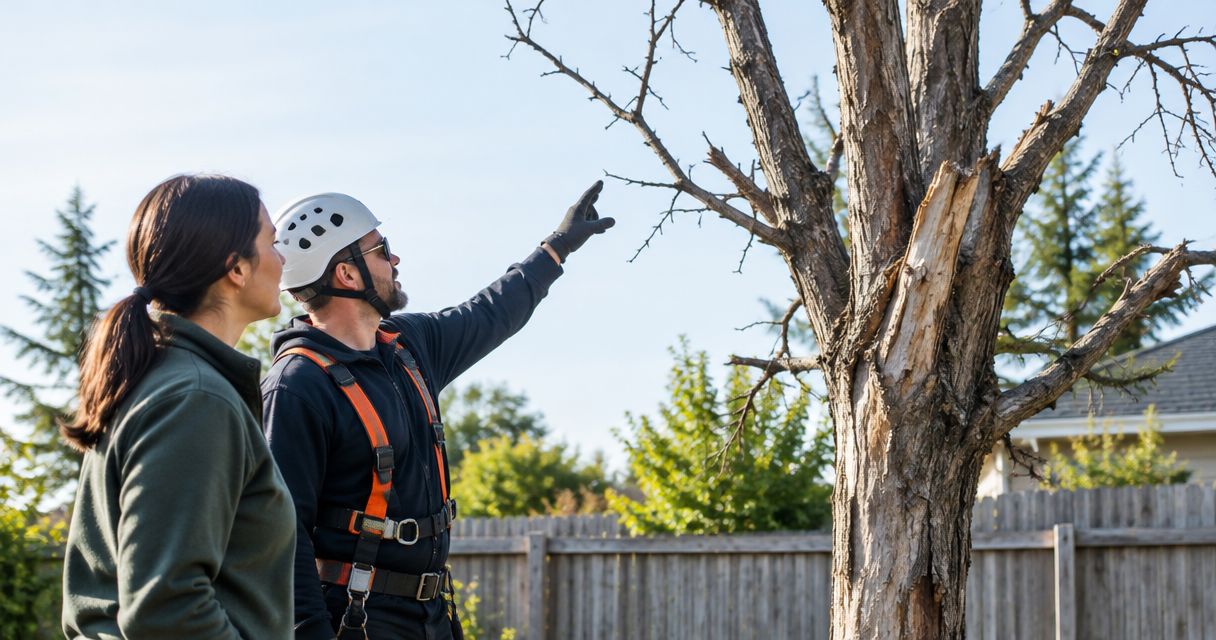
Cracks, cavities, hanging branches, and visible decay belong in your initial description. They affect what the assessor needs to inspect, but photographs cannot establish the internal condition or load-bearing ability of a tree.
Do not walk beneath hanging limbs to obtain a better picture. If the tree has moved, split, or changed after a storm, describe what you observed from a safe location and keep people away from the affected area.
A damaged tree does not automatically become suitable for crane removal. The contractor still needs to assess how sections can be attached, controlled, and lifted without relying on unsound wood.
If you see a tree touching electrical lines, stay away and contact the utility. Do not approach the tree, attempt to move branches, or assume that a crane eliminates the electrical hazard.
Crane access means more than an open driveway
A driveway entrance is only the beginning of an access assessment. The contractor must consider the route to a potential setup position, the space needed there, and the ground supporting the equipment.
For a 2026 site visit, identify known septic components, buried services, drainage features, retaining walls, and recently disturbed ground. Provide records you already have, but do not guess at underground locations or assume a paved surface proves adequate support.
Use these headings when describing the property:
- Access route: Gates, tight turns, overhead obstructions, and changes in slope.
- Setup space: Areas near the tree that appear open, including restrictions on their use.
- Ground conditions: Soft areas, recent excavation, drainage problems, and known underground features.
- Lift path: Buildings, branches, utilities, and other obstacles between the tree and a handling area.
- Landing area: Space where removed sections could be placed and processed.
These observations help frame the assessment; they are not instructions for choosing a crane position. Leave equipment placement and lifting decisions to the professionals responsible for the work.
Why the removal method varies between properties
Two large trees can need different removal plans even when they look similar from the street. The deciding factors concern the tree’s condition and the practical route for moving wood off the property.
- Tree condition: Damage and decay influence which removal arrangements are suitable.
- Nearby structures: Roofs, fences, and other retained features restrict movement and landing choices.
- Available landing space: A clear area changes how sections can be lowered, placed, and handled.
- Equipment access: Gates, turns, slopes, and overhead obstructions affect feasible approaches.
- Ground support: Surface conditions and underground features affect potential setup positions.
- Debris handling: The route from the tree to the processing or loading area shapes the overall job.
For commercial properties, also identify occupied entrances, delivery areas, parking spaces, and pedestrian routes. The removal plan needs to address how those spaces will be managed during the work, rather than leaving access arrangements to the day of removal.
How should you prepare for a crane assessment?
You do not need to diagnose the tree or estimate the weight of its branches. Your role is to explain the property, identify known restrictions, and show the assessor what must be protected.
- Describe the concern. Explain why you are requesting removal and whether you have noticed recent damage or movement.
- Photograph the surroundings. From safe positions, show the whole tree, nearby structures, and the route from the street.
- Identify access restrictions. Note locked gates, shared driveways, parking controls, and areas you cannot authorize others to use.
- Mark known constraints. Point out underground features and property boundaries without presenting uncertain locations as confirmed facts.
- Explain the finished result. State whether you want wood removed, debris hauled away, and stump work considered separately.
- Request the method and scope. Ask what still requires confirmation before the contractor can finalize the proposal.
For a 2026 quote request, attach current photographs rather than older images taken before storm damage or property changes. Date the images and explain any changes since they were taken.
Keep the preparation observational. Do not cut branches, climb the tree, clear beneath unstable limbs, or alter access features merely to make a proposed method possible.
What should a site-specific quote explain?
A useful proposal connects the assessed conditions to the work included. If crane assistance is proposed, ask how the quote addresses equipment access, setup arrangements, material handling, and any permissions that remain unresolved.
Ask Pmmidlands for a site-specific tree-services quote and clarify whether crane assessment or crane-assisted work forms part of the proposed scope. Do not assume that mentioning a crane in your request confirms that the contractor provides one.
Before accepting a 2026 removal proposal, check these scope items:
- Removal method: What approach is proposed, and what site findings still need confirmation?
- Property access: Which gates, driveways, parking areas, or neighboring spaces are required?
- Debris handling: Will branches and trunk sections be removed, processed, or left in an agreed location?
- Stump work: Is it included, excluded, or addressed separately?
- Site protection: What arrangements apply to surfaces and features affected by access or setup?
- Unresolved conditions: What happens if the assessment identifies a different access or removal requirement?
A named piece of equipment is not a complete scope. The written proposal should explain the result you are buying and the responsibilities attached to it.
Request a site-specific tree quote
Describe the tree, nearby structures, access restrictions, and debris-removal needs.
Does a tall tree always require a crane?
A tall tree does not automatically require a crane. Height is only part of the assessment; condition, landing space, access, and nearby obstacles also affect the removal method.
A tree in an open area presents different constraints from a tree of similar height enclosed by buildings. Ask the contractor to explain the site-specific reason for the proposed approach.
Can a crane remove a tree from a tight backyard?
A tight backyard needs an access and lifting assessment before crane removal can be confirmed. The crane does not necessarily need to stand beside the tree, but its proposed position must provide suitable reach, lifting capacity, and ground support.
Do not assume that access from a street, driveway, or neighboring property is available. The assessment must establish feasibility and any required permissions.
Can photos confirm whether crane assistance is necessary?
Photos support an initial discussion but do not confirm crane suitability. They show visible obstacles and access features without establishing internal tree condition, underground constraints, or ground-bearing suitability.
Send wide views as well as detail images. A close-up of the trunk alone leaves out much of the site information needed to discuss removal options.
FAQ
When should I ask about a crane for large tree removal?
Ask about a crane assessment when structures, restricted landing space, tree damage, or difficult access complicate controlled removal. A site assessment determines whether crane assistance is suitable rather than assuming it is necessary.
Is crane-assisted tree removal always better than rigging?
Crane-assisted tree removal is not always better than rigging. The suitable method depends on tree condition, access, ground support, and the route for controlling and handling sections.
What photos should I send before a tree removal assessment?
Send safe, wide views of the whole tree, nearby structures, property entrance, and access route. Include visible damage without approaching hanging branches or other hazards.
Can a crane be set up on my driveway?
A driveway needs an assessment before it can be accepted as a crane setup location. Its appearance alone does not establish adequate support, clearance, or protection from underground constraints.
Does large tree removal include the stump and debris?
Large tree removal includes stump work and debris handling only when the agreed scope says so. Ask for each item to be identified before accepting the proposal.
What should a commercial property manager prepare for a tree assessment?
A commercial property manager should identify access controls, occupied entrances, parking restrictions, pedestrian routes, and approval responsibilities. Explain which spaces must remain usable and which restrictions need coordination.
What should I confirm before accepting a tree removal quote in 2026?
Before accepting a tree removal quote in 2026, confirm the removal method, access arrangements, debris handling, stump scope, and unresolved site conditions. Ask what requires further assessment before work is scheduled.
One last thing
The overlooked detail is often where the wood goes after it leaves the tree. A workable lift still needs a suitable place to set down, process, and load the removed sections.
Before requesting your quote, photograph the route from the tree to the proposed handling area. That view helps connect the removal itself with the access and cleanup work needed to finish the job.